The Mission to Preserve Traditional Table Olive Recipes
Three researchers and communicators launched the Olives Around the Table initiative to collect traditional recipes from 20 Mediterranean countries for a digital archive.
A National Geographic Society-backed project is collecting traditional table olive recipes from across the Mediterranean basin for a new digital archive.
The organizers of Olives Around the Table, a side initiative of the broader Entangled Destiny project, have issued a call for traditional table olive recipes from approximately 20 countries and have already received entries from France, Lebanon, and Turkey.
Magda Bou Dagher Kharrat, a principal scientist at the European Forest Institute’s Mediterranean facility, told Olive Oil Times that the goal is to collect at least one to three traditional recipes from each Mediterranean country.
We are interested in gathering not only the different methods and techniques of preparing table olives, but also the stories, memories, and cultural meanings behind them.
She added that the idea for the initiative came after she and two National Geographic Explorers colleagues “wandered through Lebanon, Italy and Spain tracing how people connect with three emblematic trees: the olive, the carob, and the stone pine.”
“Wherever we went, one thing never failed to appear: olives, always present around the table, quietly linking people, landscapes and stories,” Bou Dagher said. “I saw in this simple fruit a whole world of uncelebrated diversity and decided to give it a voice.”
After formally launching the initiative, she was joined by food journalist David McKenzie and Gabriela Moscardini, now the project’s head of communication.
See Also: The Role of Table Olives in Italy’s Culinary HeritageBou Dagher said the inspiration for creating a “living repository” of the traditional recipes and table olive production methods came after the Covid-19 pandemic, as some furloughed young professionals across the Mediterranean left their adoptive urban homes to return to family villages.
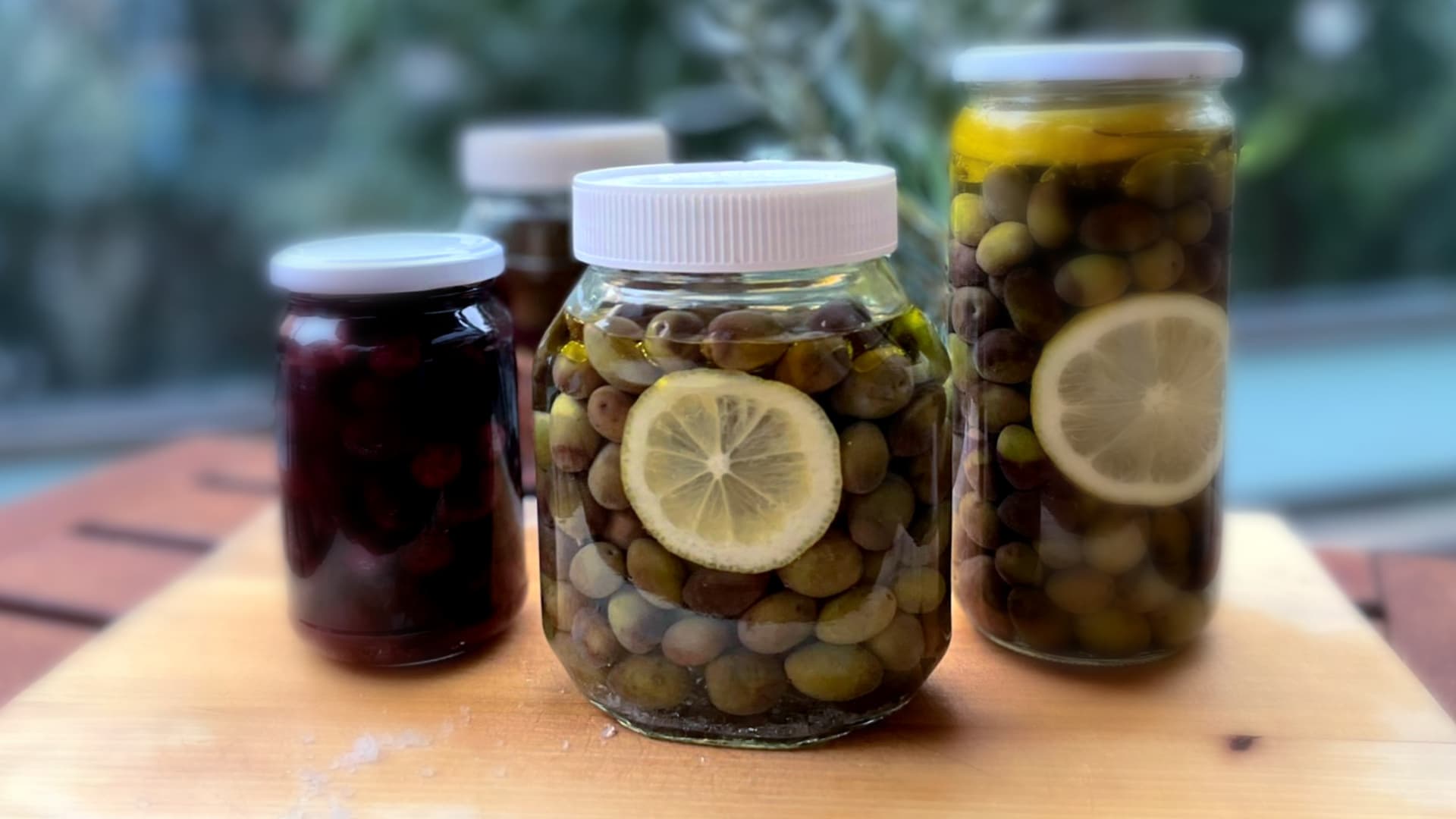
Olives Around the Table seeks to preserve traditional table olive preparations from 20 Mediterranean countries. (Photo: Magda Bou Dagher Kharrat)
“Their return sparked unexpected change: family recipes resurfaced, traditional know-how gained new value, and local products began to reach international markets,” she said. “In the Lebanese village of Bchaaleh, for instance, a local olive variety, Ayrouni, found new life thanks to young people who revived abandoned family groves and businesses.”
The three co-founders also emphasized the need to collect and preserve traditional table olive recipes to prevent them from being lost to history, as “climate change, rural depopulation and globalization” put some cultivars and preparation methods at risk of disappearing.
“Higher temperatures, longer periods of drought and less predictable seasonal weather patterns – especially for critical periods during the olive’s fruiting cycle, such as heavy rainfall during spring flowering or unusually hot, dry autumn conditions just prior to harvest – are among some impacts of climate change that continue to cause problems for many traditional olive-growing regions such as Cyprus, Tunisia and southern Spain,” McKenzie said.
He added that these impacts of climate change are coinciding with an ongoing demographic shift, which has seen younger generations move from rural to urban areas, especially in Greece and Italy, leaving these traditions behind as well.
“Meanwhile, the onset of globalized, industrial long-chain supply markets has also made it harder for local farmers and food producers to compete with imported products, meaning more and more groves are being sold, abandoned, or converted to other uses,” McKenzie said.
“All of these issues are interlinked and have different roles depending on the place and context. But these are some of the factors putting such knowledge and traditions at risk of disappearing,” he added.
While Olives Around the Table has received four submissions, Moscardini said the group is reaching out to communities across the Mediterranean basin for new ones.
“Our goal is to capture as much diversity as possible – in olive varieties, preparation methods, and geographic origins,” she said, “It’s truly a mosaic of the region, celebrating its rich cultural and natural diversity.”
The project is currently limited to table olive recipes, but the group hopes to expand the rubric in future projects to include all olive-based recipes from the region.
So far, Olives Around the Table has published a traditional recipe from Fanar, Lebanon, for pickled and crushed table olives.
“We fill small glass jars with the pickled olives and use a jarra fekharr, a traditional clay vessel, for the crushed ones,” Katia Massoud wrote in her submission. “All we add are lemon slices, coarse salt, and a single chili pepper. Over time, the flavors marry – fresh, salty, and warmly spiced.”
“This recipe, passed down through generations in both my family and my husband’s, feels timeless,” she added. “I couldn’t tell you exactly when it began; I only know it’s always been there, part of our daily life, not reserved for special occasions.”
Another Lebanese recipe, submitted by Lea Kharrat from Kfardebian, details how to preserve local olives with water, coarse salt, and lemon slices. “For extra aroma, some families also add sprigs of rosemary, a dash of chili, or a slice of bitter orange,” she wrote.
For his part, McKenzie also provided a recipe from the Kalin family in Turkey for Sar Ulak table olives, which are protected by a geographical indication.
The olives are either crushed and soaked in water for a week to remove some of their natural bitterness or left whole in lightly salted brine for a month. Occasionally, the family adds mint or sumac for additional flavor.
“Once ready, the olives can be enjoyed plain, or, in true Turkish style, dressed with a drizzle of olive oil and a sprinkling of spices such as mint, cumin or sumac,” McKenzie wrote.
The only entry to date from the European Union comes from the south of France, where Zoé Waller recorded a local recipe for table olives prepared in brine from the village of Eygalières.
“We are interested in gathering not only the different methods and techniques of preparing table olives, but also the stories, memories and cultural meanings behind them,” McKenzie said. “We want to understand who passed on this knowledge, how it has been preserved, and why it still matters today.”
According to Bou Dagher, success in the short term will come in the form of a diverse range of table olive recipes and preparations from across the Mediterranean Basin, accompanied by stories of how these recipes shape and are shaped by the local communities that prepare them.
“But beyond numbers and geographical reach, our deeper measure of success is emotional and cultural,” she said. “We want people to reconnect with their roots and heritage, and to rediscover the value in something as humble as the table olive.”
“If this project helps reframe the table olive not only as food, but as a shared Mediterranean treasure, one that carries memory, identity, and community, then we will have truly succeeded in the long term,” Bou Dagher concluded.