Serra da Mantiqueira: Brazil’s Pioneer Extra Virgin Olive Oil Region
A couple of years before the turn of the century a handful of Brazilian farmers cleared fields and planted small areas of olive trees. The results were impressive and Serra da Mantiqueira became Brazil’s new olive oil darling.
Minas Gerais, a state in southeastern Brazil, once experienced an impetuous gold rush that lasted from the Portuguese colonial period until well after Brazil had gained its independence.
Although the exchange of power was shrouded in contradictions, the extraction of gold continued to enrich the newly formed constitutional monarchy and add opulence to historic cities such as Ouro Preto, Congonhas, and São João del-Rei.
Numerous churches exhibiting baroque styles unique to the region were designed and, oftentimes, sculpted by a crippled architect known as Aleijadinho (Antônio Francisco Lisboa). Although the churches still stand today, such as Igreja de São Francisco de Assis de Ouro Preto and Santuário do Bom Jesus de Matosinhos, Minas Gerais, the gold rush days are a thing of the past.

Nowadays, tucked away in the small southern town of Andradas, a handful of olive growers have congregated in Serra da Mantiqueira to extract Brazil’s newfound liquid gold — extra virgin olive oil.
In the 1950s Brazil’s olive cultivation took root, not in Serra da Mantqueira but in rural areas surrounding the cities of Campos do Jordão (São Paulo) and Uruguaiana (Rio Grande do Sul). The project resulted in nothing more than an overgrowth of weeds and dry bush. Minas Gerais Agricultural Research Firm (EPAMIG) retrieved the last remaining olive seeds and conducted research to identify an adequate locale to cultivate the olives. Serra da Mantiqueira was selected.
A couple of years before the turn of the century, a handful of farmers cleared fields and planted small areas of olive trees. The results were impressive and Serra da Mantiqueira became Brazil’s new olive oil region.
Serra da Mantiqueira holds a modest 8,000 olive trees along its landscape of cascading hills. It’s only the region’s fifth commercial harvest of extra virgin olive oil, a local product that can nevertheless out-compete large, imported brands for its prompt delivery to market and freshness.
Small, yet precise, extraction machines imported from Italy perform the task of converting freshly picked olives to extra virgin liquid gold. “This year we learned how to really tweak the machine and productivity increased a lot. This helped to compensate for the difficulties of this year’s harvest which was greatly impaired by the excess of rain and a much hotter winter,” explained Carla Retuci, producer of Borriello Olive Oil.
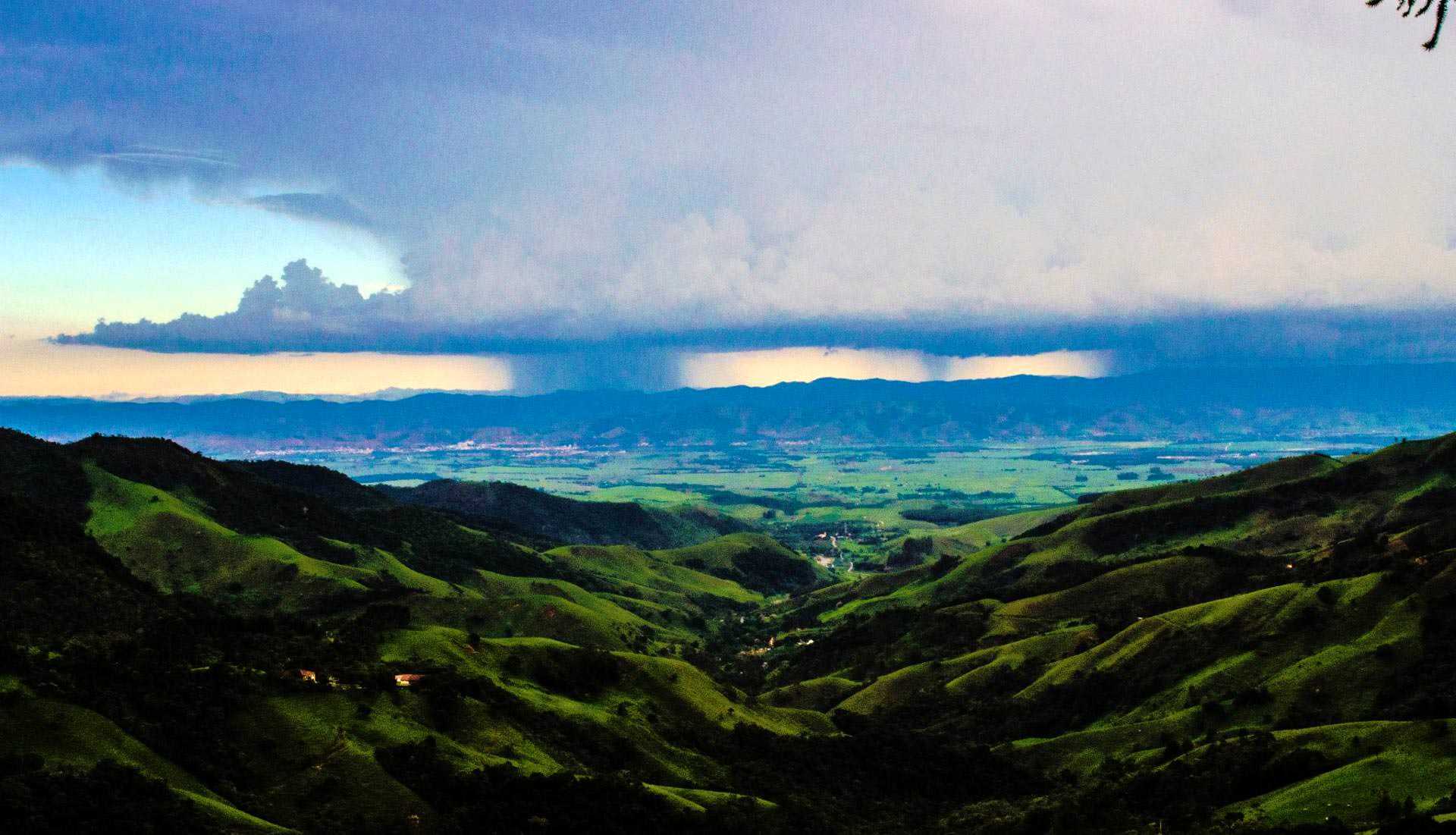
Currently, more than 15 artisanal extra virgin olive oil brands are produced in Serra da Mantiqueira with the help of technology developed by Empresa de Pesquisa Agropecuária de Minas Gerais (EPAMIG).
Seven years after the first test of olive oil extraction in the region, roughly 25,000 liters of olive oil is now being produced annually, making Serra da Mantiqueira a small but growing epicenter of Brazil’s burgeoning olive oil industry.