Australian Company Develops Invisible Technology to Combat Food Fraud
As major markets like China increase their demand for imported luxury foods such as olive oil, an Australian company, YPB Group, has developed an invisible tracking technology they believe will become an industry standard.
An Australian company called YPB Group has developed an all-new anti-fraud technology to assist local and international food product exporters in combating sophisticated food counterfeiters.
The invisible tracer technology contains invisible particles that can be mixed in paint, plastic and ink applied to caps, corks or labels – and even directly to food.
First developed in 2015 with a vision of becoming a scalable solution preventing counterfeiters from copying products, the patented product can be embedded into almost any substrate used to package or seal a product, and is based on inorganic, non-radioactive trace minerals that have been certified by the European, American and Chinese food and drug administrations as safe for direct contact with food. It is already in use by businesses in the Asia Pacific region to safeguard everything from tax certificates to consumer goods and even pharmaceuticals.
According to Jens Michel, CEO of YPB Group, the technology can easily be adopted by local and international olive oil farmers and producers, as “any product that requires protection or certification of authenticity would benefit from our technology protecting the brand’s integrity and decreasing the risk from counterfeit.”
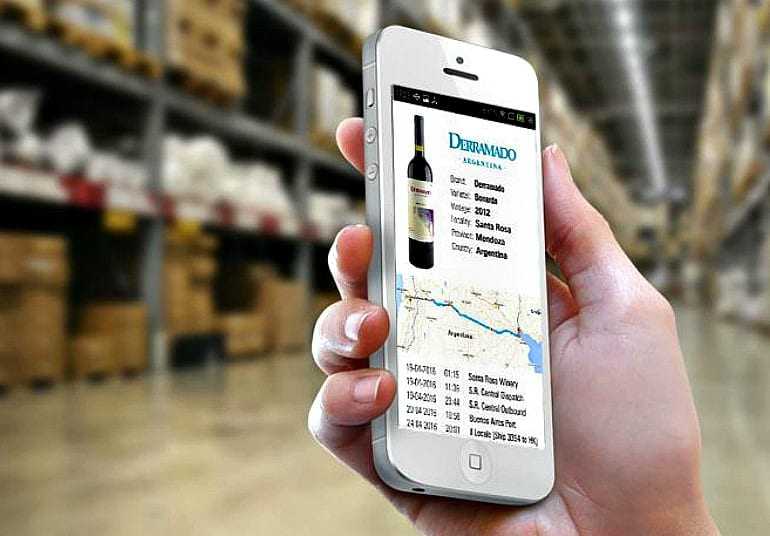
Using a specific formulation, the technology works by enabling illumination in the invisible light spectrum, rendering it invisible to the human eye. Specially equipped scanners can detect the product’s unique signature and provides an authentication response based on the tracer material.
Brands that opt to use the technology in their products or packaging are provided with special scanners so they can verify product authenticity. YPB can either assist the brand from end to end with their product packaging or integrate the solution into the business’s existing processes. They can also provide unique and traceable signatures specific to certain companies and time periods for added authentication.
Unlike other anti-fraud measures, the technology has been recognized by the China Trade Association for Anti-Counterfeiting (CTAAC) as the only invisible tracer company in China – giving it a major advantage over its competitors due to the increasing popularity of Australian food imports.
Food safety and fraud are major concerns for both Chinese consumers and for Australia’s AUD45 billion ($34 billion) agricultural food export market. Research by PWC reveals that olive oil (in addition to alcohol and seafood) is one of Australia’s most counterfeited products and that the average product provides fraudsters with over a 100 tampering opportunities during its journey through the supply chain.
A Pew Internet Research Survey revealed that over 70 percent of Chinese consumers have major concerns over the safety and authenticity of their food, with over 80 percent willing to pay extra for verified products.