A Golden Start to the Harvest in Chile
With the harvest in full swing, producers in Chile reported an overall slip in output, while their brands garnered international acclaim for quality.
Less fruit, but better quality. This is how some Chilean producers summarize the 2019 harvest. A campaign that started slowly in mid-April, but now runs at full speed, while the first international awards crown the efforts of several companies that are committed to quality.
In 2019, the challenge is to continue positioning ourselves as one of the best oils in the world.
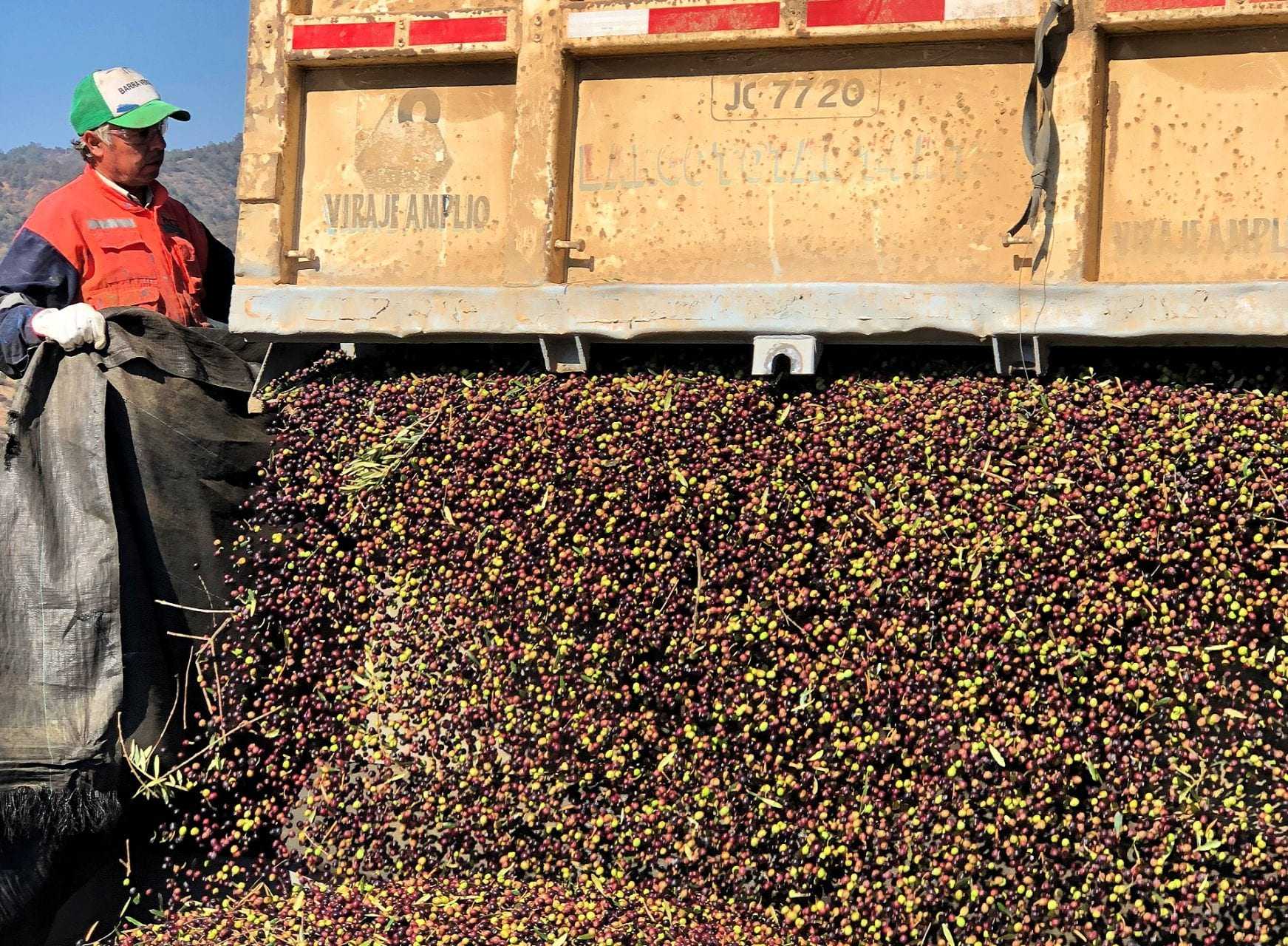
In the south, the harvest of olive trees is at its height. Double shifts of workers collect the olives at their optimum point of maturation and green oil leaves the decanter with the strength of youth. Chile continues to be one of the “newest” producers. Fifteen years do not compare to the thousands of the other side of the world.
See Also: The best olive oils from ChileThe first oil mills began to work at the beginning of April, although only in the middle of that month did the 2019 campaign officially begin. Last year, this South American country produced 22,000 tons of olive oil, and more than 90 percent corresponded to the extra virgin category. That is why, although young, this country has already established itself as a reliable source, so during the first weeks of harvest, buyers from around the world visited the producers in the central valley, reserving the green oils for their clients.
Olive Oil Times visited some Chilean orchards to see how the harvest was going, just before this country achieved its most successful showing in the seven years of the NYIOOC World Olive Oil Competition with three Silver, five Gold and two Best in Class Awards.
Alonso Olive Oil has 450 hectares in Litueche, where the superintensive fields of Arbequina, Arbosana and Koroneiki, harmoniously coexist with the traditional systems for its other cultivars: Leccino, Frantoio, Picual and Coratina. With these varieties, Alonso produces their blend, a wide range of monovarietals and their icon Obsession brand. Its star, undoubtedly, is the Alonso Coratina, which shined again at the NYIOOC obtaining the Best in Class in its category.
Diego Livingstone, commercial director of the company, is optimistic about the quality of this year´s production since the thermal oscillation promises oils with a higher concentration of aromas. “In 2019, the challenge is to continue positioning ourselves as one of the best oils in the world, that our customers see us and recognize us, they are proud to have a bottle of this product,” he said. “We are interested in continuing to grow, increasing participation in Taiwan and Japan, doing a more exhaustive job in Brazil, along with following the trend that we are growing in the USA.”
Monteolivo
A few kilometers further south is the grove of Deleyda in Pumanque, another of the award-winning Chilean producers, winning NYIOOC Gold for its Deleyda Premium. With three blends of different intensities, it has a wide presence in Brazil — one of the main markets for Chile — but it also works intensely to increase its presence in the USA, Japan and China.
Its commercial director, Fernando Carrasco, explained that 2018 was his record year of production, so this campaign will have a lower yield, but with a better concentration of oil and higher quality, according to what he has seen with the varieties already harvested. “We want to consolidate our commercial matrix to a 100 percent packaged oil model,” he said. Currently, 20 percent of their oil is sold in bulk.
The strategy at Monteolivo is different. After several years selling bottled oil, they have opted for the quality bulk business. Manuel Urmeneta, Monteolivo’s general manager, explained how difficult it was to compete with their brands in such a congested market, but then they discovered a group of buyers willing to pay for good extra virgin olive oils, so now the company focus is only on quality. The main customers are in the USA, although they have also successfully started marketing in Japan.
In New York, their oils achieved two Gold, one Silver, and a Best in Class for their namesake Monteolivo brand. “We have made several adjustments in the mill [such as cutting the malaxing time in half and the temperature control of decanters],” Urmeneta told us. “so far, we have 65 percent progress and I would say that almost all production is ultra premium.”
Olisur
Monteolivo has several groves, totaling 800 hectares, and works with some external growers, which complement its offer and allowed it to produce 1,500 tons in the 2018 campaign. Urmeneta predicts that the Chilean production will be down 25 percent from the 2018 campaign (Monteolivo estimated a 15 percent decrease).
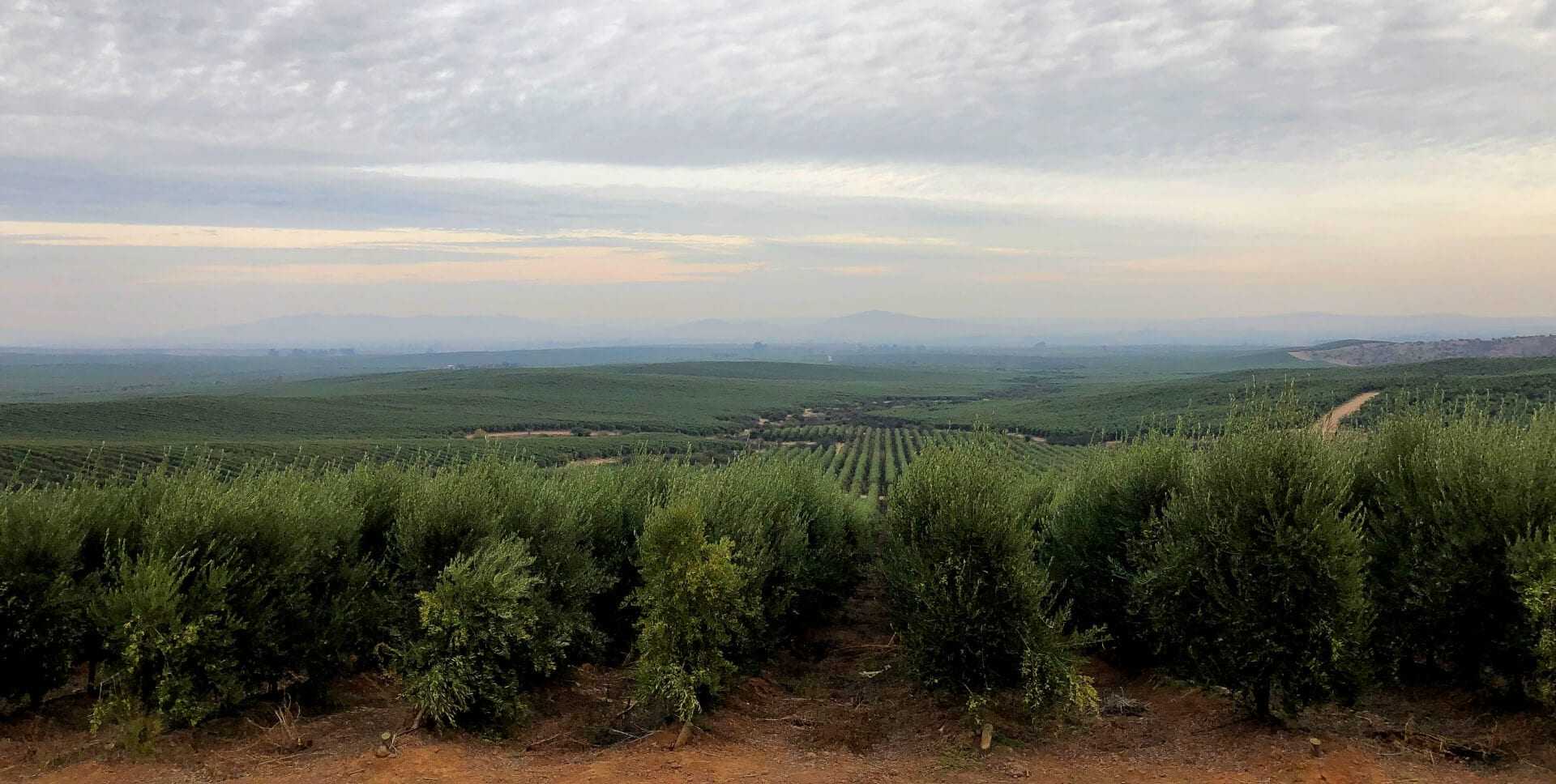
Olisur, with its Olive & Co brand, is the best-selling Chilean oil in the USA. Its Marchigüe orchard of 1,650 hectares, is one of the largest in the country.
For this company, the biggest challenges are in the agricultural sector. Claudio Lovazzano, head of marketing for the company told us, “In mid-2019, we started operating under the Farming Optimization Project [which involved] management of climate, soil and water parameters with the objective of increasing yields and improving productivity in 2020, allowing us to generate a more limited production budget in terms of volume and margins.”
With an estimated 3,000 tons this year, Olisur said it will increase production by 13 percent. But that’s not all. The Chilean company is also developing its own project in the region of Évora (Portugal), where they have 390 hectares in full production — the first orchard with the Chilean flag on the other side of the world.