Frescobaldi: Quality Evolves Along the History of a Tuscan Family
The Frescobaldi company has seven hundred years of history but its vision of quality is fresh as ever.
“The Frescobaldi company has seven hundred years of history,” the youngest member of the thirtieth generation of Tuscan producers, Matteo Frescobaldi said, as we reached an idyllic vantage point over gently sloping hills blanketed with vines and olive trees. “This is the oldest family-owned farm, and our story began here in 1300, closely intertwined with that of the territory.”
At Tenuta Castiglioni, 30 hectares of (74 acres) of olive groves, mainly composed of Frantoio plants, are interspersed with arable crops like wheat and corn, and vines for the production of Chianti.
“In the 1990s we planted some experimental varieties and, over the last decade, we added a plot devoted to research and development,” said the manager in charge of the family’s olive oil business since 2017.
See Also: The Best Olive Oils from Tuscany
This year, thanks to a favorable exposure, the orchards located in the western part of the property gave healthy fruits. However, the different positioning of their farmlands with varied soils and micro-climates, and altitudes ranging from 150 to 500 meters (493 to 1,640 feet) allows them to have a fairly constant productivity every year. “According to the season, we make a selection of the best fruits harvested in our olive groves and use them in our Laudemio,” Frescobaldi explained.
As we walked through the flourishing plants rooted in soft, clayey soil, he pointed out that this year, despite a rainy May and a delay in flowering which led to small drops on the highest groves, they obtained substantial volumes overall, and the start of the harvest in mid-October found many lush trees and fruits in great shape.
As we headed east, toward the Tenuta di Rèmole, the Tuscan farmer explained how these lands have evolved over the centuries and, during the 1950s and 60s, went through a process of modernization.
“Vittorio Frescobaldi and his two younger brothers, Leonardo and Ferdinando, which is my father, started a reorganization that led to the current setup of the estates,” he explained. “If the 1970s were characterized by a growing interest in wine, and this led our company to improve this sector, the mid-80s was the turning point for the extra virgin olive oil.”
Therefore, along with the desire to enhance the quality of production, a new continuous cycle mill became operational in 1984. Soon after, however, the great freeze of 1985 heavily damaged many of their groves. At that point, many farmers, here in the inland areas of Tuscany, were faced with the choice between focusing only on wine or restarting the production of olive oil, to compete again with the industrial leaders of the sector, Frescobaldi revealed.
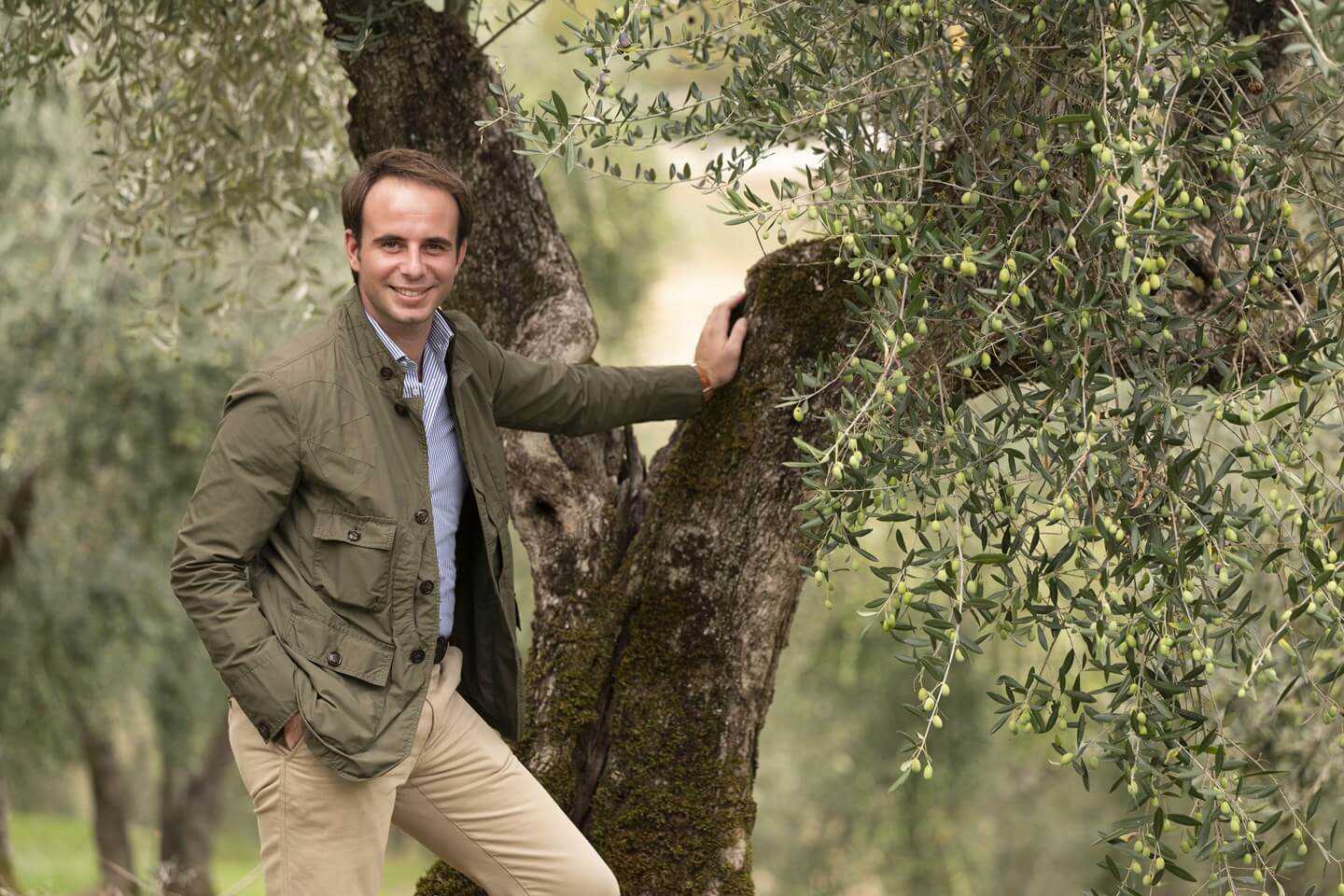
Matteo Frescobaldi
“We made a decision and applied to the olive oil the same philosophy that we had implemented in wine for decades — improving the production through the concept of territory,” he explained. “I think this was the dawn of the qualitative concept of the extra virgin olive oil, which would become a product identified by the origin and specific production methods as it is today.”
Then, after the freeze, in some areas, the harmed olive trees were recovered or reproduced through shoots, while in other plots, they planted new ones following more efficient patterns. The desire to make a quality product bound with the territory was the deciding factor for the birth of Laudemio.
Vittorio Frescobaldi was the project promoter and the founder of the group of twenty-one producers who currently make up the Consortium Laudemio. “The name refers to our region and to production guidelines which meet the highest standards, including a tasting panel that guarantees the high quality of the product,” the brand manager pointed out. “Our first Laudemio was made in 1989.”
“We are farmers and everything we make comes from the lands of Tuscany, a magnificent, multi-faceted territory,” he continued, highlighting that the many forms and nuances of the region are expressed in their motto, Cultivating the diversity of Tuscany.
“Each of our lands gives unique fruits which express rich biodiversity,” he considered. “Respecting and protecting the territory is our main objective, and it goes hand in hand with producing and promoting high-quality products that represent this priceless land.”
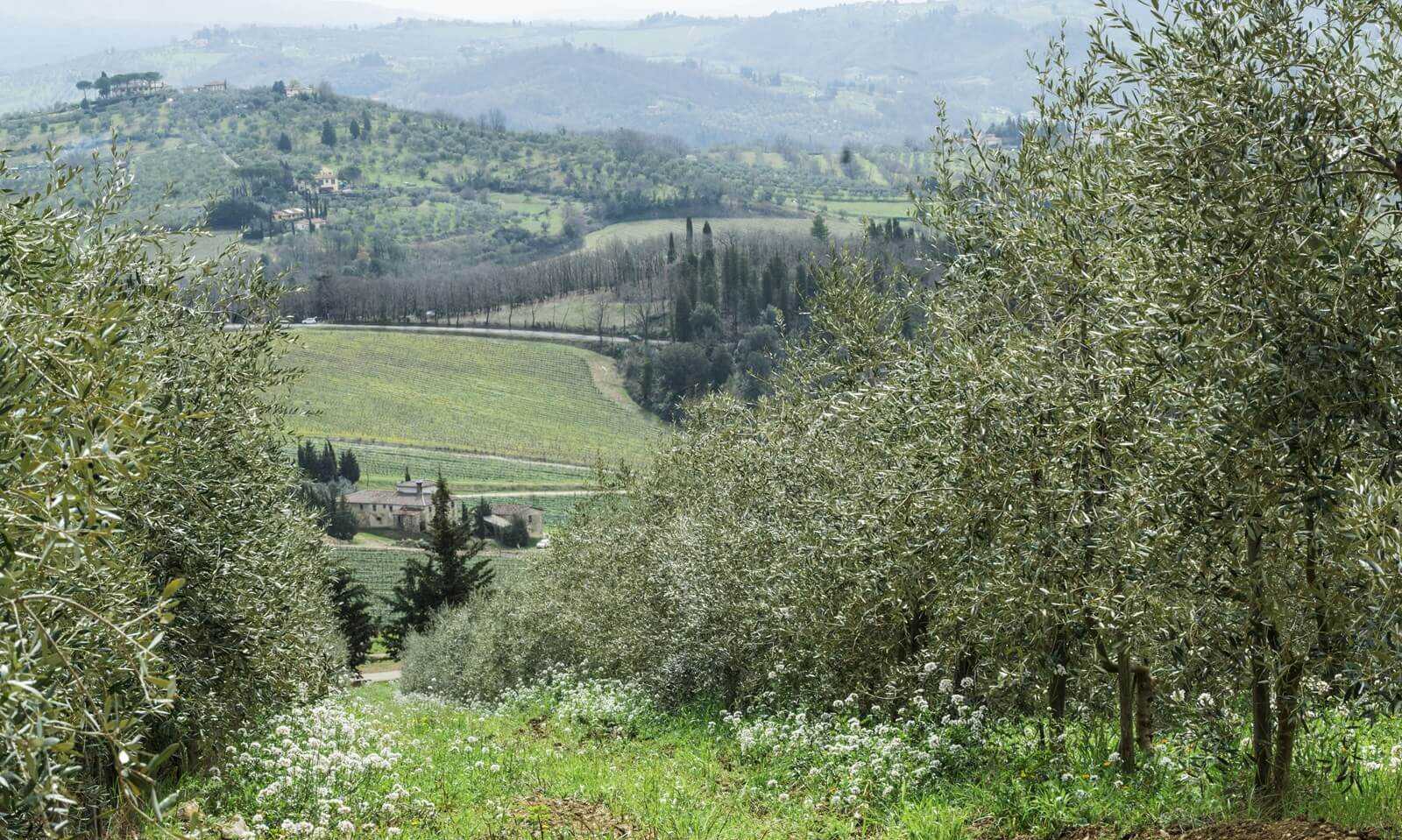
Their environmentally friendly approach to the olive groves is coupled with sustainable management of 2,000 hectares (4,942 acres) of woodland and they obtain energy from biomass plants. “We produce more energy than we consume, thanks to the green power obtained by wood and other byproducts such as pomace,” Frescobaldi specified, adding that all the facilities are equipped with solar panels.
We reach the company mill located in the Tenuta di Nipozzano, which adjoins an 80-hectare (189-acre) olive grove. The fruits from all of the farmlands are delivered here within a few hours from harvest and the extra virgin olive oil obtained is selected and double filtered before becoming Laudemio. “We desire that our extra virgin olive oil is spicy, bright, and fresh for its entire shelf-life,” he pointed out.
Last season, ideal weather conditions led to a great product: herbaceous aromas, artichoke and rocket, and harmony which is brightened up by a spicy hint that refreshingly persists. The 30th edition of Frescobaldi Laudemio won a a Gold Award at the 2019 NYIOOC World Olive Oil Competition.
“We were able to obtain that coveted balance we always look for in our extra virgin olive oil thanks to the hard work of our technician and collaborators, which even in the most complex and difficult moments created the best conditions possible for our olive trees,” Frescobaldi pointed out.
“Last year, very low temperatures between the end of February and the beginning of March were registered while our olive trees were still in vegetative rest,” he added. “It snowed a lot, and we had a record bloom when the snow melted.”
“On the other hand, this year, good weather conditions in the spring favored a good fruit setting, and branches, already in September, were heavy with healthy drupes,” Frescobaldi considered, adding that, thanks to timely harvesting, they avoided the problem of the olive fruit fly. After harvesting, they till the soil and, in order to supply it with useful elements, sow leguminous plants, such as field bean, which grow alongside wild plants.
Glancing over the rows of olive trees, the eye embraces a magnificent view, a harmonious blend of shapes and shades, where limbering white roads and dark green rows of cypress serve as neat, gentle borders between the streaked tones of the vineyards and the silvery hues of the groves, which are even more iridescent in the light of sunset.
“We could not do all this without taking care of the beauty of our land,” Frescobaldi concluded. “I believe that good products come from beautiful places, and beautiful places give good products.”