Heatwave and Power Cuts Aside, South Africans Predict a Production Rebound
While national yields are expected to increase, high temperatures have forced farmers to harvest early.
South African olive farmers expect a good yield in 2024 even as the harvest gets underway earlier than usual due to above-average temperatures.
The Western Cape region, the hub of the country’s olive industry, has experienced record-high temperatures well above 40 ºC over the past few weeks. The South African Weather Services (SAWS) blames climate change and El Niño.
Load shedding always plays a role, but we have been proactive and will have backup power to address this. We expect a much higher crop than 2023 and can’t wait to get going.
Meanwhile, Wendy Petersen, the chief executive of the South African Olive Industry Association (SA Olive), said some producers expect to harvest between 10 and 20 percent more olives than last year.
In 2023, South Africa produced approximately 1.2 million liters of olive oil, compared to 1.7 million liters in 2022.
See Also: 2024 Harvest Updates“A few producers are expecting 50 to 60 percent higher volumes (than last year), but they are in the minority,” Petersen said.
“Over the years, we have seen a significant focus on the quality of our product, and this is very noticeable in the international awards and accolades received by South African olive oil producers on international platforms,” she added.
However, Petersen warned that table olive and olive oil producers are struggling to compete with lower prices imports, which has been a problem for the past few years. She added that fraud remains problematic as unscrupulous importers seek to take advantage of high prices.
“The fact that olive oil is not a value-added tax zero-rated agricultural commodity influences its competitiveness in the market,” Petersen said. “The playing field is uneven for olive oil.”
“We need the government to step in and recognize that olives are a key agricultural commodity that stimulates job creation and employment,” she added. “This also stimulates new emerging entrants to olive farming and the development of rare and required agricultural skill sets internationally.”
Load shedding – rotational power cuts to prevent a national power grid collapse – frustrates the country’s olive farmers by raising operating costs and adding another unpredictable factor during the harvest season.
In 2023, the country spent 1,742 hours with no electricity, which translated to 72.6 days, with the average South African spending nearly 20 percent of the year with no power.
The outlook for 2024 is no better, with reports of the coal-fired base load (the continuing minimum load that a power supply system is required to deliver) of the country’s power utility, Eskom, stagnating.
“Load shedding has caused higher operational costs, which affect farm margins and the final product prices,” Petersen said. “Electricity remains a big challenge in agriculture, and this is the case with the olive industry.”
She added, “Other than affecting the prices, it also directly affects the quality of the final product if not processed immediately after harvesting.”
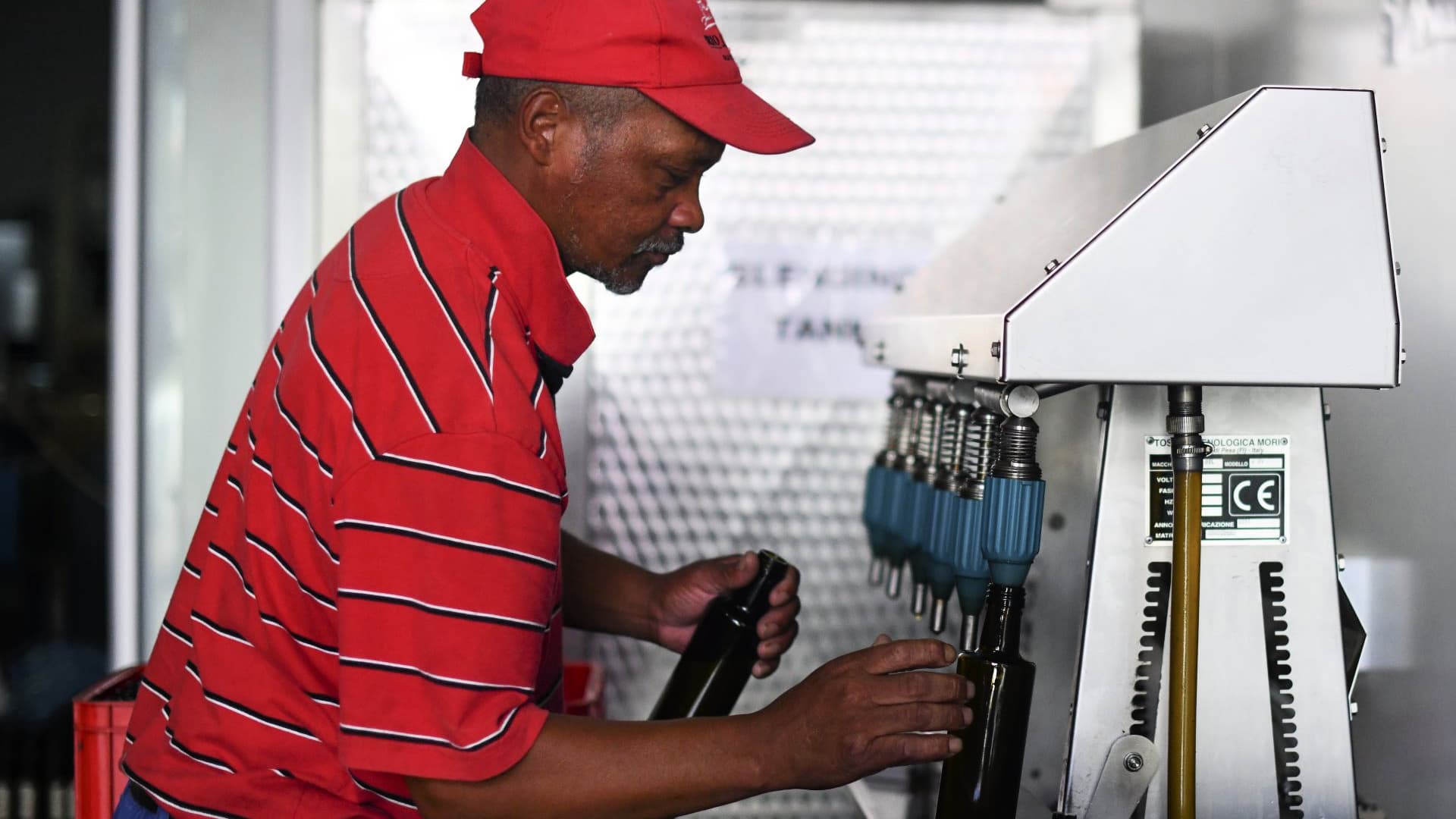
Load shedding complicates olive oil production in South Africa, forcing producers to invest in generators or renewable energy. (Photo: Tobin Jones)
Nick Wilkinson, the co-owner of Rio Largo Olive Estate, located between Robertson and Ashton in South Africa’s Western Cape province, confirmed that the main challenge they see ahead is load shedding, which creates production scheduling issues.
“Whilst we have solar power and generator backup to offset the national power grid blackouts, it does increase the cost of production, and going into winter, we can be without power for up to eight hours a day,” he said.
“We had a very big harvest last year, so expect to be a little down on last year,” Wilkinson added. “But the quality looks exceptional with good growing conditions and no fungal diseases or pest damage. I expect the country’s harvest to be up on last year.”
Not far from Rio Largo, the team at Mardouw Olive Estate will also start harvesting soon.
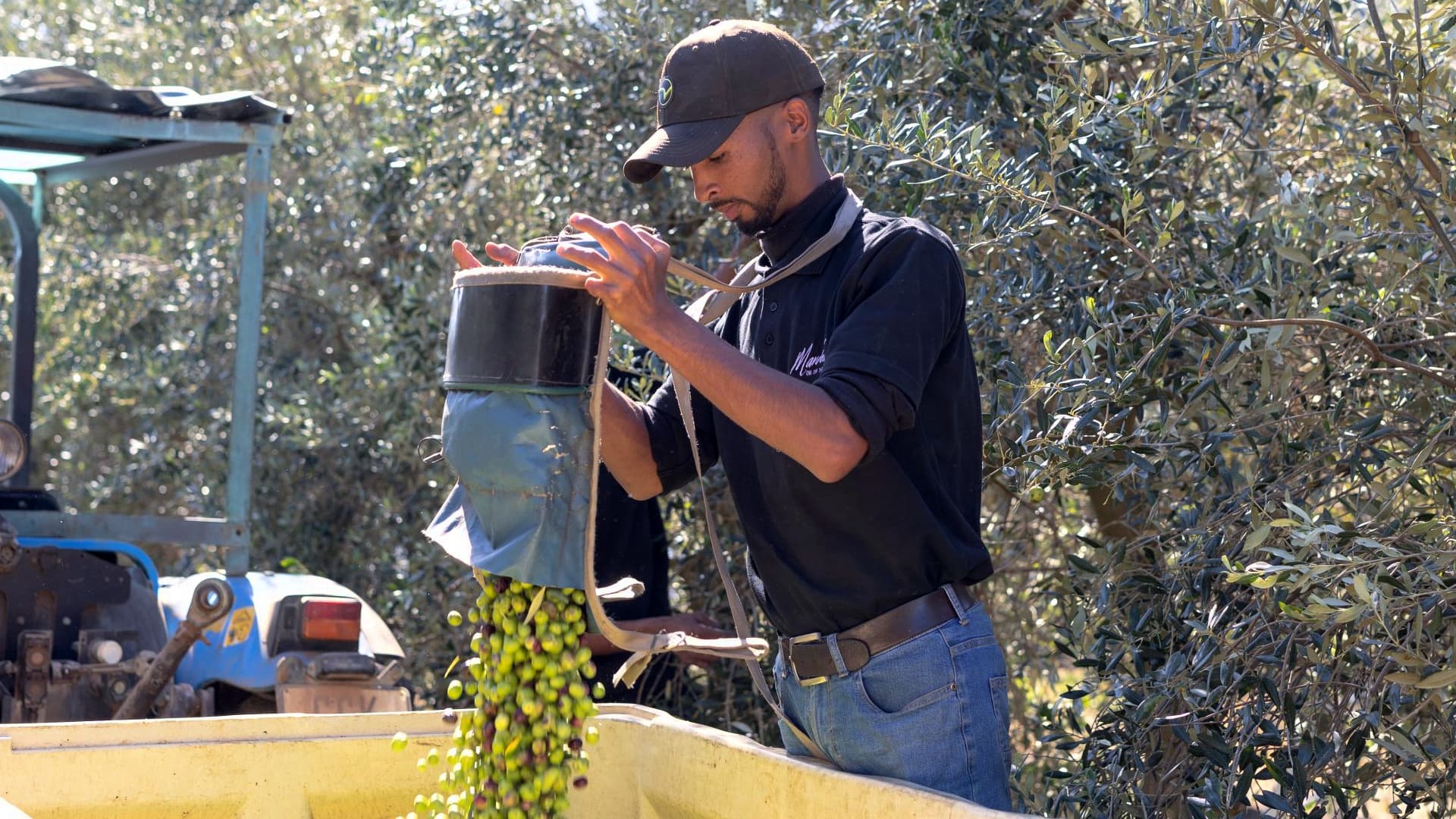
The producers at Mardouw Olive Estate are anticipating a bumper crop. (Photo: Mardouw Olive Estate)
“Normally, we start at the beginning of April, but due to very high temperatures over the past two months, we anticipate the 2024 harvest will start mid-March,” said Philip King, the company’s general manager.
Still, King is in high spirits and does not see any issues complicating the harvest this year. “We are as ready as can be,” he said. “Load shedding always plays a role, but we have been proactive and will have backup power to address this.”
“We expect a much higher crop than 2023 and can’t wait to get going,” King added.
Moving eastwards, Babylonstoren in the Franschhoek wine valley started harvesting some green Manzanilla table olives at the end of February.
They moved to Frantoio for oil production early in March, expecting the harvest to continue until June.
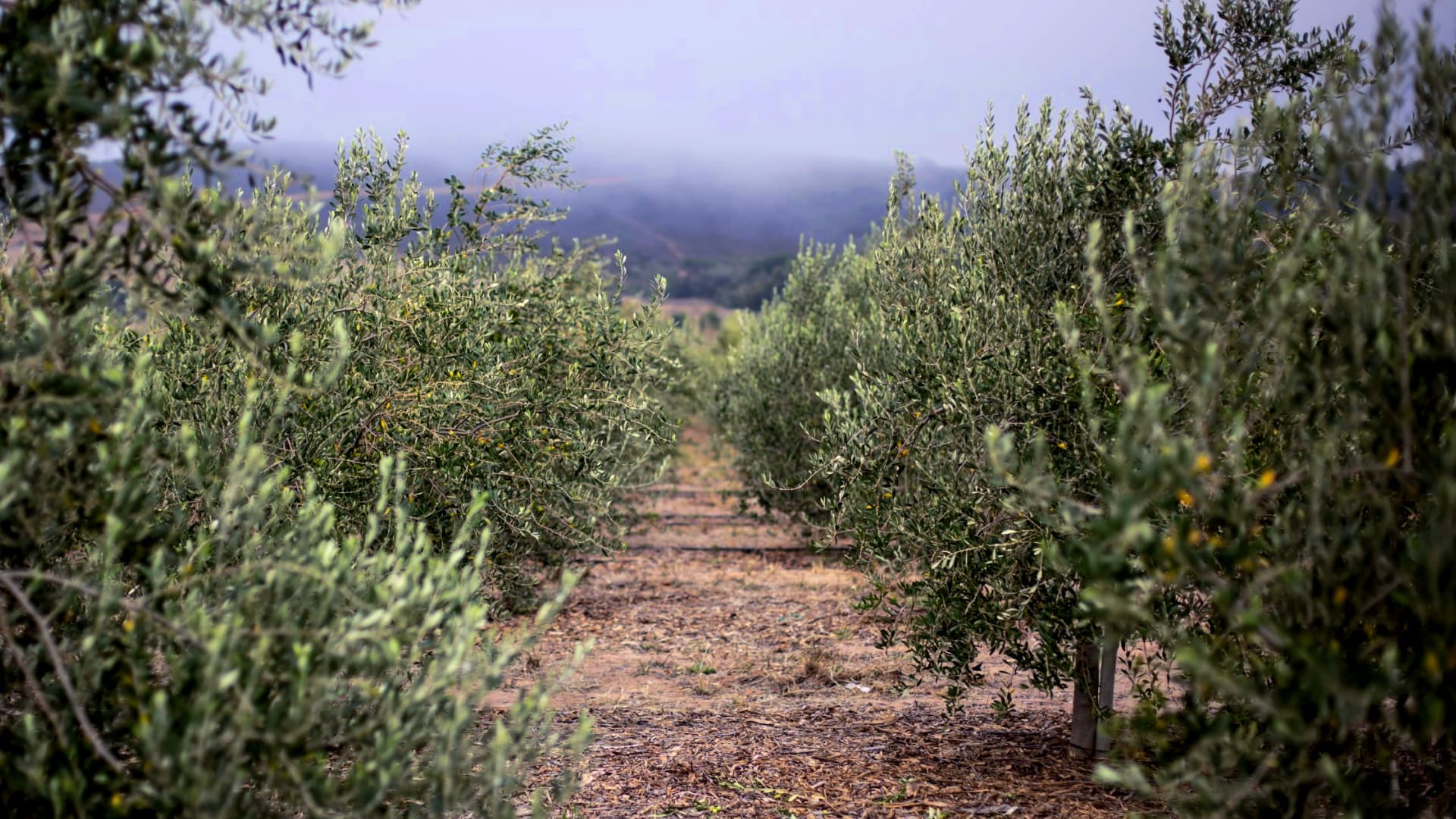
The production team at Babylonstoren said this year’s harvest started earlier due to high heat in the autumn. (Photo: Babylonstoren)
“This year’s harvesting season appears to be commencing earlier than last season, primarily due to the intense heat we experienced in the Franschhoek wine valley this summer,” said Petrus van Eeden, Babylonstoren’s olive specialist.
He added that considering the global market conditions with low oil supply and high olive oil prices, there is uncertainty regarding this year’s harvest compared to the previous one.
“While many farms appear to have a promising crop, it remains unclear if the yield will meet our oil demands as effectively as before,” van Eeden said. “Given the prevailing high prices, consumers might face pressure, potentially leading to a decrease in local demand over time.”
“Given the lower crop yields we saw in Europe and a downturn in production in South Africa last season, it’s reasonable to expect that customers may encounter increased prices for a liter of oil compared to previous years,” he added.