Monumental Olive Trees in Cyprus Destroyed by Wildfires
Wildfires ravaged northern Cyprus last weekend, destroying tens of thousands of acres of crops and forest. Olive growers and oil producers, already struggling as a result of the Covid-19 pandemic, are facing additional challenges in the aftermath of the blaze.
Around 5,000 hectares (12,400 acres) of farmland and forests were destroyed by wildfires, which swept across northern Cyprus last Sunday, wiping out around 90 percent of the regions 2,000 monumental olive trees.
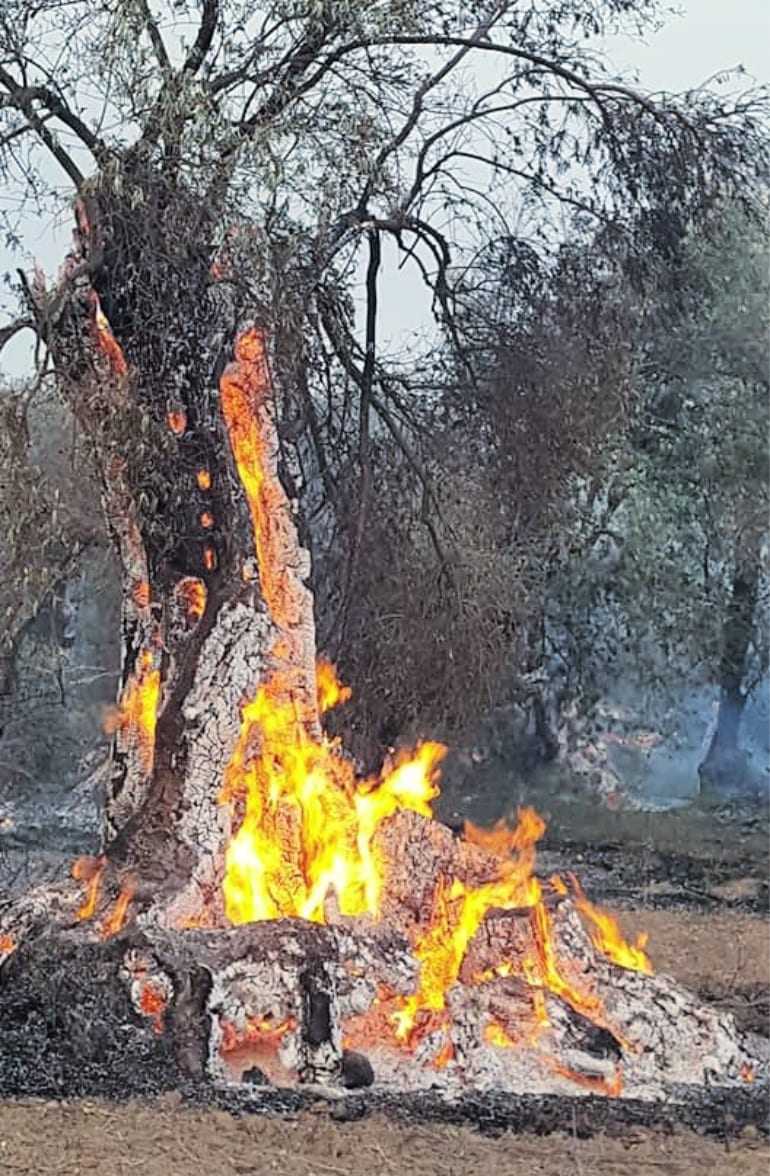
The monumental olive trees of Kalkanli, in northwestern Cyprus, had European Union protected status and were renowned for their size and stature. The oldest trees had dotted the landscape for more than 800 years and a further 400 trees had a 500-year history.
We need to act very quickly to find the best way to protect our forest and nature with new technology.
“As a Cypriot and an olive grower, I was devastated to see these ancient olive trees burnt down,” Hakan Temizyurek, the director of Templos Olive Oil, an award-winning producer from the region, told Olive Oil Times.
Temizyurek’s sentiments were echoed by the deputy community leader of Kormacit, Valentinos Koumettou, who told CyBC radio, “the extent of the destruction is unbelievable,” and added, “the situation is depressing, most tragic.”
See Also: Natural Disaster Updates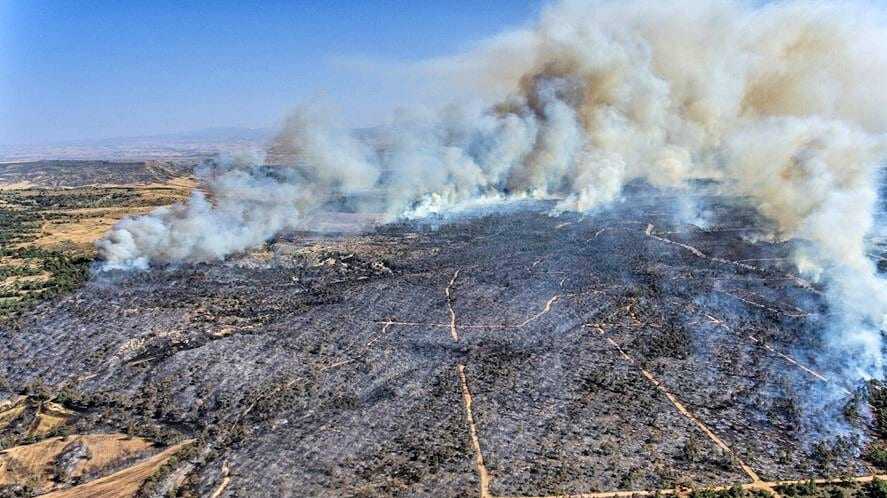
Temizyurek told Olive Oil Times that the immediate priority was to create a plan for cleaning the charred area and to begin planting new trees, including olive saplings.
“We need to act very quickly to find the best way to protect our forest and nature with new technology,” he said. “Also, we need to arrange to rent a fire helicopter or plane during the hot summer months.”
The weekend’s fires dealt a further blow to the region’s farmers, many of whom had been unable to access their land or harvest their crops since crossing restrictions were imposed on the island’s buffer zone, in March.
This attempt to prevent the spread of Covid-19 has forced many farmers to pay laborers to harvest their ripened crops.
Police and the forestry department have begun an investigation into the cause of the two separate fires, which simultaneously swept across the landscape. Initially, a discarded cigarette butt was blamed for sparking one of the fires while the second blaze, which began in the military zone of Diorios, was believed to have been caused by an electrical fault.
A man was later arrested for attempting to start a third fire and is under suspicion of starting the earlier blazes.
Although the Turkish and Greek military put aside past hostilities and rallied to fight the flames engulfing the Maronite village of Kormacit, their efforts largely failed to save either crops or olive trees. However, Cyprus’ president, Nicos Anastasiades was hailed for his rapid response to the Turkish Cypriots call for help.
The Turkish newspaper, Hurriyet Daily News reported that three military helicopters were sent from Ankara to assist two Greek Cypriot air crafts in tackling the fires and Turkish authorities pledged support for the Turkish Cypriot’s Agriculture and Forestry Ministry.
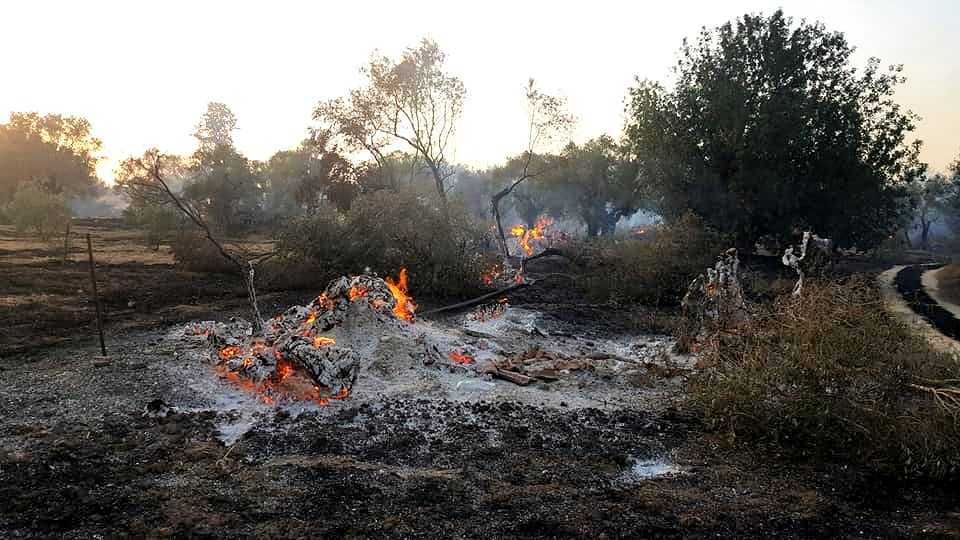
Maronite community leaders have called for state assistance for the Kormacit farmers facing financial hardship after losing their homes, crops and inherited olive trees. The village’s 200 residents are predominantly farmers and the community is made up of 56 residents who have remained in the village since 1974 (when the de facto dividing of Cyprus occurred after the Turkish invasion), plus 150 more recent settlers.
A number of the monumental olive trees had been given names such as Athena (queen) and Afrodit (king). Unfortunately, Afrodit was destroyed by the blaze, but Athena survived the flames.
In 2014, Olive Oil Times reported on an initiative in which Greek and Turkish Cypriot olive oil producers hoped to reunite the divided island with their shared passion for olive oil. Both sides collaborated in an olive oil festival named “Let’s grow together”.
This aimed to bring the communities together and help them to solve common problems. Coping with the aftermath of the wildfires is the newest challenge facing both sides of the divide.