Olive Tree Emerges as Symbol of Interconnected Health and Sustainability
A new review led by Yale researchers highlights the olive tree’s unique role in connecting human, animal, and environmental health — a living model of the “One Health” approach to sustainability.
A new review study placed the olive crop at the center of a modern vision for sustainability and human well-being.
According to the researchers, the unique interconnection between human health, animal health, and the environment that the olive tree and its cultivation engage represents a valuable opportunity to explore and apply the “One Health” approach.
It’s a very interesting set of relationships. And it shows that sustainability isn’t an abstract concept. It is something alive, rooted and growing.
“One Health is really about thinking of our existence as an integrated system,” said Tassos Kyriakides, assistant professor of biostatistics at the Yale School of Public Health and co-author of the study. “Human health, animal health and the environment are not separate silos. They are deeply interconnected,” Kyriakides explained.
One Health represents a growing field of research, collaboration and policy action grounded in a holistic understanding of today’s interconnected conditions.
“This is not about saying, here’s human health, we’ll worry about these things, and here’s animal health, and then the environment is something else,” Kyriakides said. “It’s about recognizing that we’re all connected. If something happens in the environment, it affects humans, it affects animals and then it’s a cycle.”
According to the authors of the review published in Frontiers in Public Health, the olive tree affects all the dimensions considered by One Health.
Environmentally, olive groves act as carbon sinks.
“It’s an evergreen tree. It takes carbon dioxide and puts it in the soil where it belongs,” Kyriakides explained.
According to the research, olive trees help mitigate climate change through the process of carbon sequestration, which involves not only their biomass but also the surrounding soil. As perennial plants, olive trees absorb carbon dioxide over long periods of time. Especially when combined with sustainable practices and the re-use of by-products, olive groves can sequester large quantities of carbon dioxide.
The review found that they can store approximately 2.2 metric tons of carbon per hectare per year. Those figures compare with the 1.9 metric tons sequestered by sustainably managed almond orchards, 1.5 metric tons for vineyards or 0.5 metric tons for corn.
“Olive trees’ extensive root systems help maintain soil organic carbon levels, further promoting long-term carbon storage,” the authors of the review wrote.
According to Kyriakides, soil is at the heart of the One Health system.
“We have to think about soil health not just as agriculture but as environment, as prevention. The olive tree contributes to soil stability, to water retention, to preventing erosion. That dimension is critical.”

Tassos Kyriakides
He suggested that future research could explore how olive cultivation supports resilience against climate-driven threats, including wildfires and drought.
“We’re seeing evidence that olive groves recover faster than anything else after wildfires,” Kyriakides said. “And if you use groves as buffers, they can help prevent soil erosion and even slow the spread of fires. That’s another dimension of One Health: the tree as a tool for prevention and recovery.”
Kyriakides added that a panel focusing specifically on the role of olive trees in wildfire prevention and recovery might be included at the 7th International Yale Symposium on Olive Oil and Health next December.
Regarding the impact of olive trees on human health, the evidence is long-standing and growing.
“We know that olive oil, olives, even teas from olive leaves are good for your health,” Kyriakides noted.
The review considers a substantial body of research that has examined, among other things, the benefits of olive oil consumption on cholesterol levels, atherosclerosis, vascular function, and cardiovascular health, as well as its effects on diabetes and neurodegenerative diseases.
“We’ve known that since six decades ago, and we’re still advancing new areas of research such as brain health, gut microbiome, inflammation and oxidative stress,” Kyriakides explained.
“It’s always twofold,” the researcher said, referring to research on olive oils. “First, the mechanistic level: how bioactive phenols affect inflammation, oxidation and cell signaling. And then the big picture: large clinical studies showing changes in LDL cholesterol, insulin resistance and blood pressure.”
Olive groves are also increasingly being managed as ecosystems that integrate livestock and cultivation.
“I’ve seen it in Italy, Spain, Greece,” he said. “People are incorporating animals, chickens, donkeys, sheep, into groves. It’s not additive, it’s synergistic,” Kyriakides remarked.
“The animals provide manure, they eat weeds or pests, they benefit from leaves and trimmings and in return they help the soil and the trees. It’s a living system.”
Olive cultivation can transform landscapes, having a lasting impact on biodiversity and the local climate.
“Think of what happened in Lesbos in Greece,” Kyriakides said, referring to the island in the Aegean Sea. There, an almost desert-like area was revitalized by the planting of olive groves decades ago. “Temperature went down by three or four degrees Celsius, rainfall increased, birds and animals came back,” Kyriakides noted. “You drive to this place and think, how can they grow olive trees here? And yet the trees create a microclimate that sustains life.”
Kyriakides emphasized the permanence of the olive tree.
“Once you plant it, it’s for hundreds of years,” he said. “It’s a one-time investment that keeps giving. Health, food, resilience, culture. It ties generations together.”
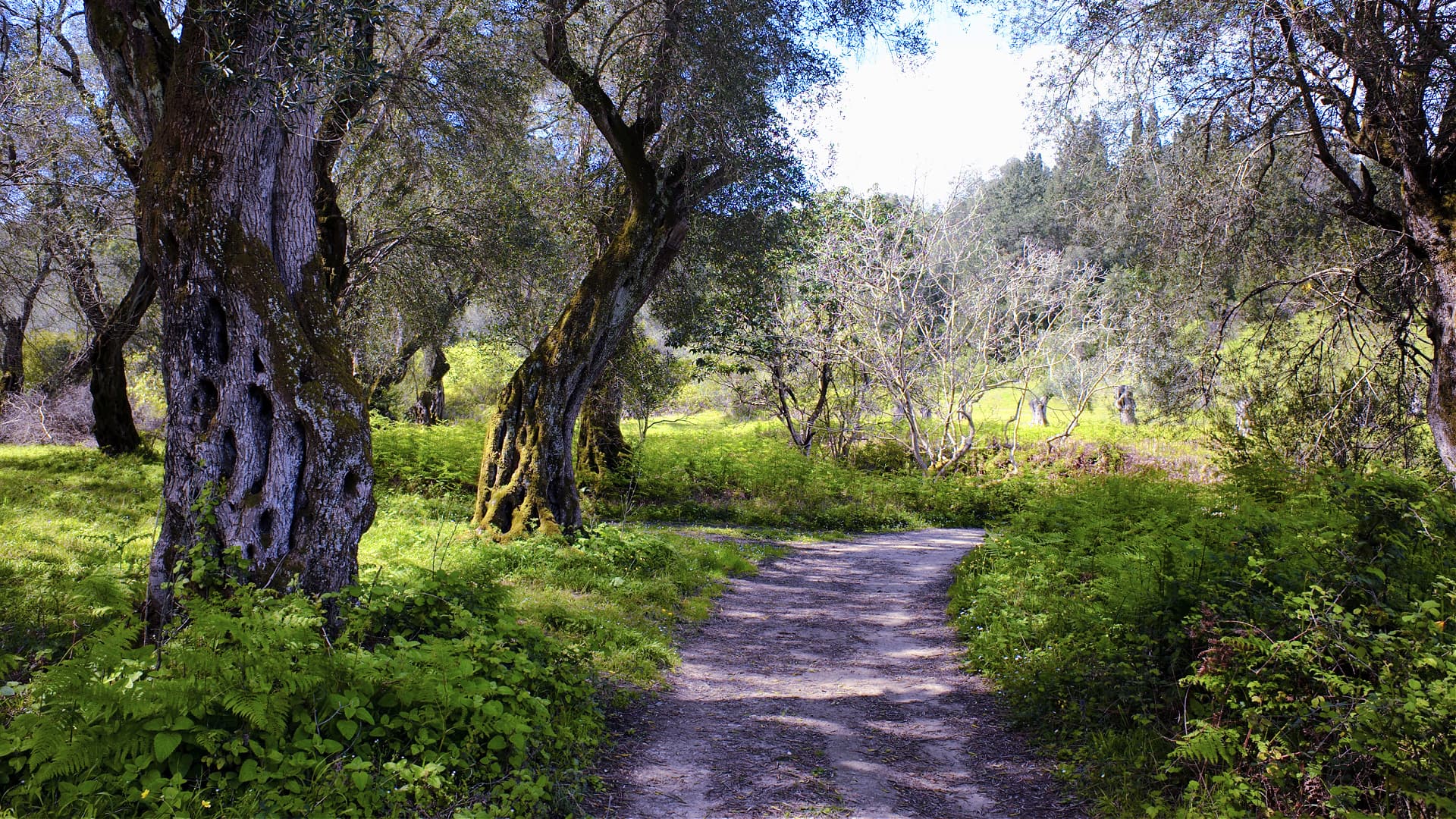
Corfu, Greece
The review also focused on olive crop by-products, which have traditionally been treated as waste but are becoming crucial elements of a sustainable circular economy.
According to Kyriakides, olive oil mills typically produce olive oil as about 20 percent of total output, while the remaining 80 percent becomes a by-product.
“People are getting very creative in approaching this. In Spain, I saw a presentation where they’re making car parts, fenders, out of olive by-products,” Kyriakides said.
“Two years ago in Germany, they used it to make furniture like step stools. In Italy, the University of Bari showed how a mill retrofitted for energy was producing electricity and heat for hundreds of homes,” he explained.
“For three months of the year those families didn’t have to pay for energy. Nothing should go to waste,” the researcher noted.
According to Kyriakides, the new review study is not just about olives but about a vision for agriculture and health.
“Everything ties together,” he said. “When you put the olive tree at the center, you see how human health, animal health and the environment are all connected.”
“And even within each, there’s complexity, the mechanisms at the cellular level, the ecosystems at the landscape level, the cultural traditions that sustain it. It’s fascinating to think it all starts from this tree,” he added.
By framing olive cultivation through the lens of One Health, the researchers invite policymakers, producers and scientists to rethink what agriculture means in the 21st century.
“It’s a very interesting set of relationships,” Kyriakides said. “And it shows that sustainability isn’t an abstract concept. It is something alive, rooted and growing.”