Luberon’s Unique Geology Helps Set One Award-Winning Producer Apart
The producers behind Domaine de la Sénancole have leveraged Luberon’s geology and Provence’s local olive varieties to produce a sustainable and sought-after olive oil.
In the southeast of France, the producer behind Domaine de la Sénancole has leveraged the region’s unique geology and local varieties to produce award-winning organic extra virgin olive oil.
Cuvée Ardente, an organic medium-intensity blend, recently earned global acclaim by winning its second consecutive award at the 2025 NYIOOC World Olive Oil Competition.
“The terroir gives our olive oils an exceptional aromatic richness,” Christophe Andrieux, founder and owner of the farm, told Olive Oil Times. “Cuvée Ardente conveys flavors of fresh grass, raw artichoke, tomato and almond.”
The seasons are becoming increasingly unstable. Between droughts, torrential rains, frost, hail… each growing season is a challenge.
Nestled within the Luberon Regional Park, the domaine lies east of Avignon between the hills of northern Vaucluse and southern Luberon.
The area is part of the European Union’s Natura 2000 network, which protects sites of unique ecological and biodiversity value.
Andrieux highlighted how the estate sits on land shaped during the Quaternary period around 2.6 million years ago, characterized by stony limestone-rich soils with excellent drainage and low organic content.
See Also: Producer ProfilesThese shallow mineral-heavy grounds promote deep root systems and resilient trees.
The deeper geological foundation dates back to the Jurassic period, about 150 million years ago.
“Those are mostly limestone, stony, shallow and well-drained. Their pH, between neutral and alkaline, is ideal for olive trees,” Andrieux said. “Regular additions of compost and green manure compensate for their low organic matter content.”
Andrieux and his family first discovered Luberon more than 30 years ago during their summer holidays.
“It became our haven of peace where we returned every year. In the summer of 2018, we fell in love with an exceptional bastide which we finally acquired in March 2019,” he said.
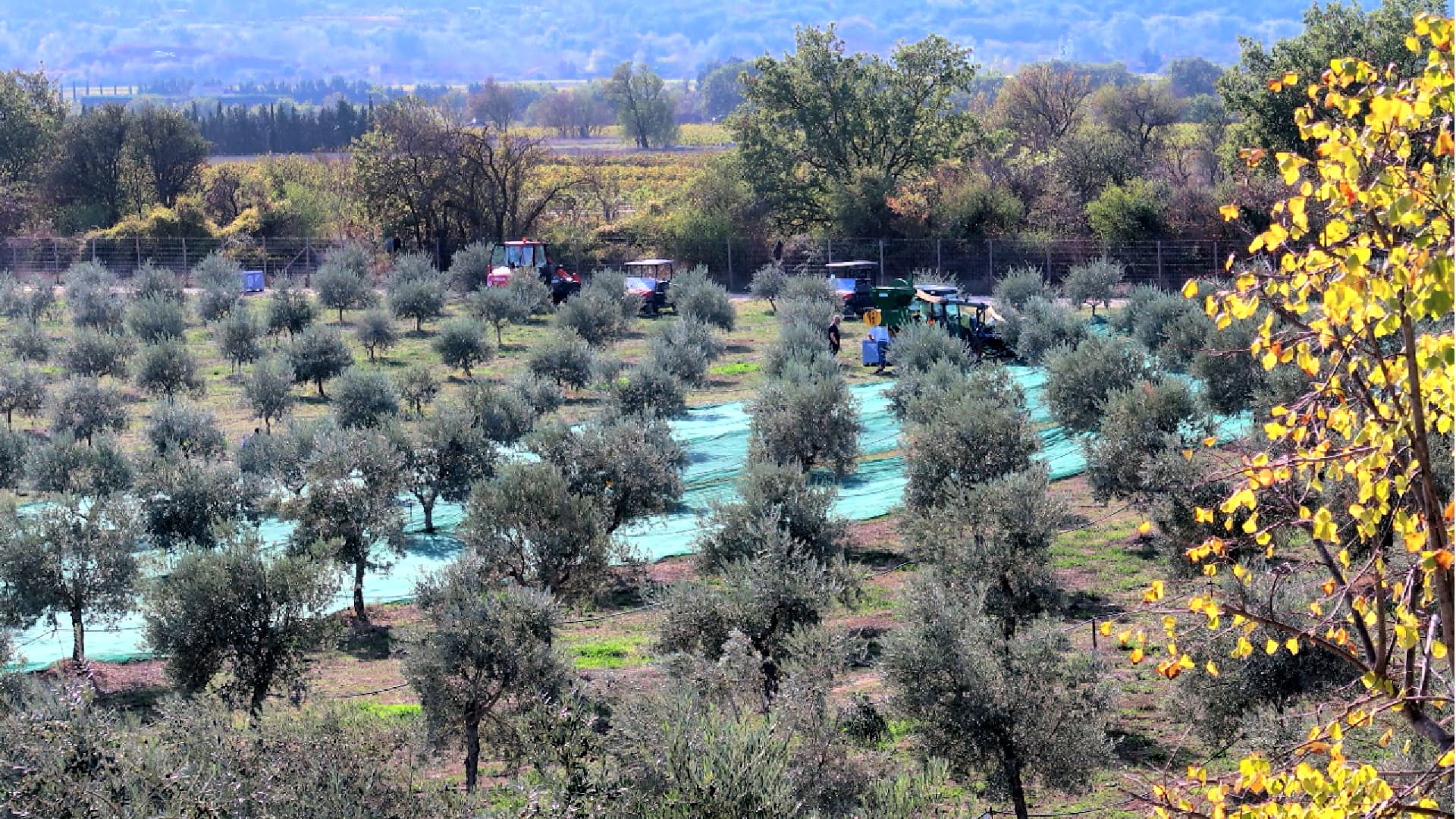
Domaine de la Sénancole boasts 3,000 native olive trees from which a range of organic blends are produced. (Photo: Domaine de la Sénancole)
In keeping with a long-standing family tradition of olive oil and gastronomy, the former vineyard was transformed into a grove with 1,800 olive trees and truffle oaks.
Another 1,200 olive trees were also planted across a dozen plots, each located at slightly different altitudes.
“We chose endemic varieties of the Luberon following the AOP Provence: 90 percent Aglandau, five percent Picholine and five percent Bouteillan,” Andrieux said, referring to the region’s Protected Designation of Origin.
“They offer excellent complementarity both agronomically and in terms of taste and are well suited to the thermal variations of our region,” he said.
Since the beginning, the farm has adopted an organic and biodynamic approach.
“To pursue excellence, we surround ourselves with the best experts and invest in cutting-edge equipment to be more precise, more responsive and more resource-efficient,” Andrieux said.
As operations expanded, the domaine completed the steps to be recognized as both organic and environmentally responsible.
In 2022, the estate earned the high environmental value certification awarded to farms implementing practices that preserve biodiversity, limit pesticide and fertilizer use and ensure efficient water management.
Domaine de la Sénancole earned a high environmental value certification. (Photo: Domaine de la Sénancole)
In 2023, most of the domaine’s plots received organic certification with newer groves currently undergoing the three-year conversion period.
According to Andrieux, all of these efforts form the foundation of quality olive oil production.
“Enriching the soil with compost and green manure, caring for our trees with respect, rigorously selecting the best fruits, pressing them immediately and storing our olive oils in refrigerated tanks under inert gas… Everything is done to preserve the quality and integrity of our juices,” he said.
The farm has also launched a research initiative to reduce or eliminate irrigation by using bacteria to stimulate root absorption of nutrients and water.
Andrieux acknowledged that climate change poses the greatest agronomic challenge in the region.
“The seasons are becoming increasingly unstable,” he said. “Between droughts, torrential rains, frost, hail… each growing season is a challenge.”
Still, the domaine benefits from its unique location. “So far, thanks to our varied altitudes and thermal inversion effect, we have limited the damage,” Andrieux said.
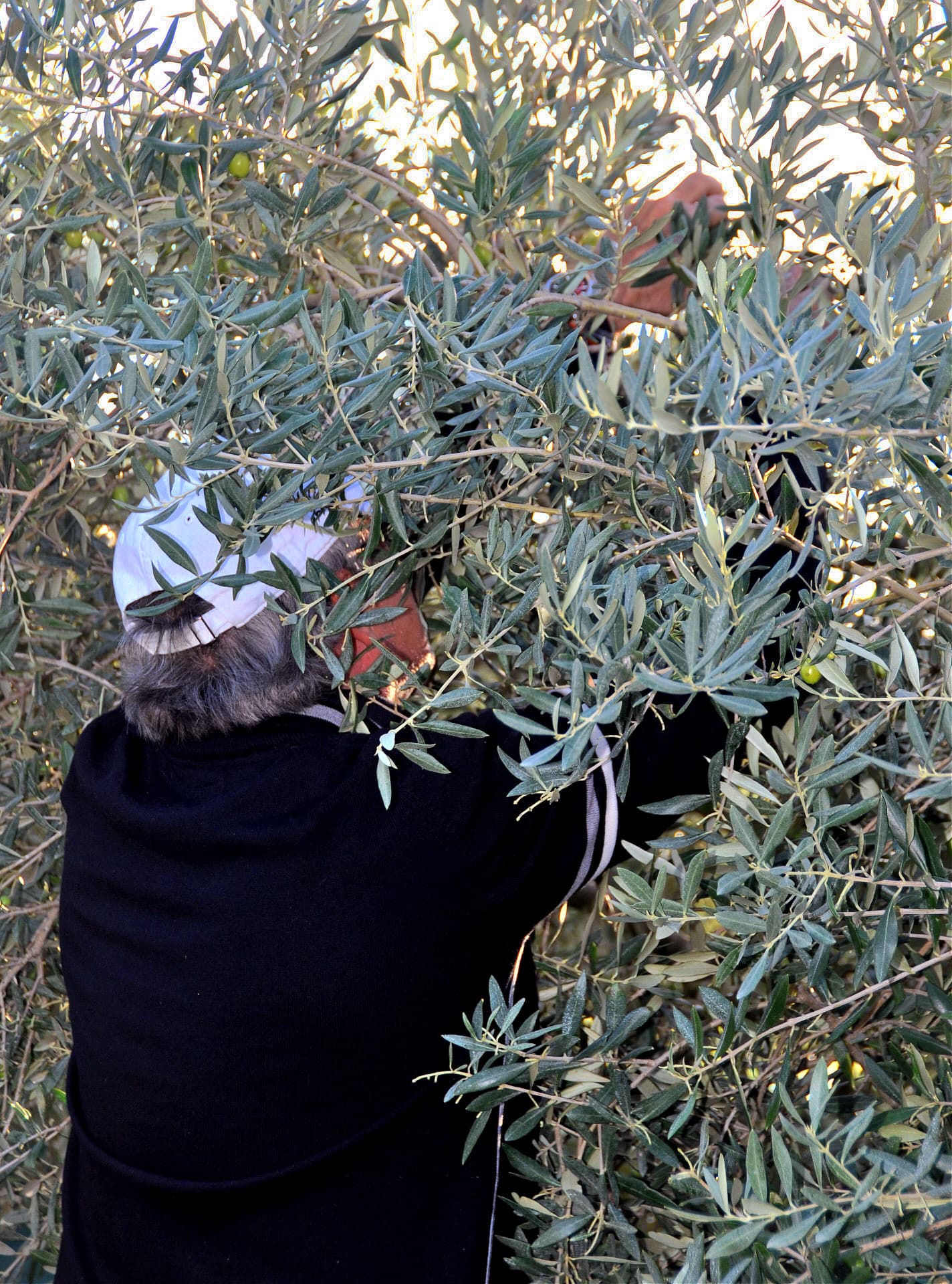
“The annual cycle remains stable with vegetative rest in winter, pruning in February after the risk of frost, spring amendments, flowering in mid-April, fruit set in May and June and harvest between late October and early November, carried out in a very short window,” he added.
“We prioritize early harvesting concentrated over a few sunny days. We separate young trees from older ones to create distinct cuvées,” Andrieux explained.
The family’s dedication to gastronomy is confirmed by the explicit support for its olive oil from renowned chefs, including Christophe Hardiquest.
According to the domaine, these chefs help spread a culture of quality and expand their customer base. “Nothing beats a tasting with no frills. We help beginners identify aromas. It’s a moment of sharing,” Andrieux said.
“We are fortunate to be supported by many Michelin-starred chefs, passionate ambassadors of our olive oils,” he added.
The company collaborates with local consultants and organizes annual visits to different Mediterranean regions to meet other quality producers and exchange knowledge.
“Our olive oils are mostly sold in Europe. This year we won 21 medals, including 15 gold awards. The NYIOOC competition has a major impact,” Andrieux noted.
Future developments at the domaine include the addition of 400 new Bouteillan trees in the Gordes area, with another 900 trees planned later this year.
“We have many plans for the future, including a new Cuvée Charmante made from our young trees as well as soaps and shampoos, homemade blends of Provence herbs and truffle-, citrus- and chili-infused oils,” Andrieux concluded.