



Olive Oil Heads to Space on Bezos Rocket
Olive oil from Messinia will be carried into space, part of an experiment about how food reacts to zero gravity.

Jeff Bezos plans to send olive oil into space on a Blue Origin rocket to study how zero gravity affects food, specifically olive oil and yeast bacteria growth. The experiment is rooted in a high school in Greece and aims to potentially make Mediterranean diet products the food choice for astronauts and passengers of commercial space flights in the future.
Jeff Bezos, the billionaire founder of Amazon and noted space buff, plans to send olive oil into space in an experiment to determine how zero gravity affects food.
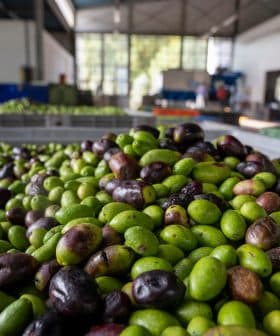
Under the plan, a payload of Messinian products, including Kalamata olives, olive oil, figs and raisins, will be carried beyond the atmosphere on a Blue Origin rocket.
We know that water does not maintain its liquid form in space and it will be interesting to see how olive oil behaves.
The date of the launch has not been released.
The National Herald, an English-language newspaper owned by Greek newspaper Ethnikos Kyrix, reported that the plan has its roots in a high school in Greece.
Blue Origin, the aerospace manufacturer and space flight services company founded by Bezos, declined to comment about the experiment to Olive Oil Times.
Takis Papadopoulos, a teacher at the Bougas high school academy, told the Herald that the purpose of the experiment is two-fold: “first, to observe the behavior of olive oil and specifically to examine if olive oil will maintain its liquid shape once it has left the earth. We know that water does not maintain its liquid form in space and it will be interesting to see how olive oil behaves. And second, the behavior of yeast bacteria growth in space, bread making ability in space.”
Papadopoulos said he proposed that his students participate in the experiment when he met the chief engineer of Blue Origin at a conference in Holland.
The food is expected to spend only seven to eight minutes in zero gravity. But Papadopoulos believes that will be sufficient to gather initial data on how the food reacts.
And if all goes well, Papadopoulos is hopeful that “the Messinian products that are the base of the Mediterranean diet will be the food for the astronauts as well of the passengers of commercial space flights for many years to come.”
Also playing a role in the experiment is Takis’ brother, Periklis Papadopoulo, who is a professor of Aerospace Engineering at San Jose State University in California. Periklis Papadopoulo is involved in an initiative to build a spaceport in Kalamata.
Blue Origin, founded in 2000, aims to dramatically lower the cost of private space travel. The private company takes an incremental approach — moving from suborbital to orbital flight. The company focuses on the development of rocket-powered Vertical Takeoff and Vertical Landing (VTVL) vehicles.
No Blue Origin vehicle has yet orbited the earth. The company’s first manned mission into space is planned for this year.
News of the olive oil experiment comes as Blue Origin undertakes a major expansion of its headquarters outside Seattle, adding a 236,000-square-foot warehouse complex and 102,900 square feet of office space, according to Geekwire. Blue Origin is also building a 750,000-square-foot factory near NASA’s Kennedy Space Center in Florida.
Related Articles
Apr. 15, 2025
Spanish Researchers Study Salt Stress on Olive Trees
The researchers recommend using salt-tolerant cultivars or rootstocks for sustainable agriculture.

Aug. 25, 2025
Compound Found in Olive Oil Boosts mRNA Vaccine Effectiveness and Safety
Incorporating a phenol group found in olive oil into the mRNA vaccine delivery mechanism mitigated the most common side effects of the vaccine while improving efficiency.

Jun. 16, 2025
New Method Detects Olive Oil Adulteration, Reduces Environmental Impact
Researchers have developed a fast, cost-effective method to detect olive oil adulteration using side-front face fluorescence spectroscopy.
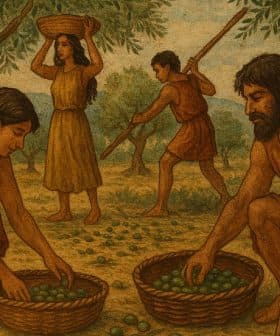
Apr. 22, 2025
Discovery of Ancient Olive Farming in Sicily Challenges Previous Beliefs
Researchers have discovered evidence of ancient olive farming in Sicily, 1,000 years earlier than previously thought, through pollen analysis and historical analysis.
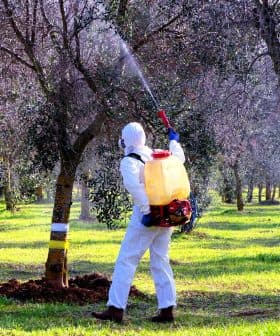
Sep. 20, 2025
New Biopesticides Prove Effective at Mitigating Symptoms of Xylella
Three new biopesticides targeting Xylella fastidiosa developed by Biovexo may soon be available, offering hope in curbing the epidemic.
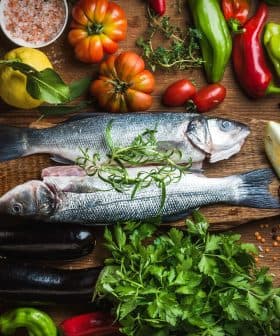
Oct. 20, 2025
Mediterranean Diet Adherence May Reduce Digestive Disorders
Researchers from Mass General Brigham found that close adherence to Mediterranean and plant-based diets was associated with lower instances of chronic constipation.

Nov. 11, 2025
Officials Outline China’s Olive Oil Future at Hubei Conference
Officials and experts expressed optimism about the olive oil sector, touting new varieties and government support while acknowledging the need for innovation, coordinated policy, and consumer-focused production.
Jun. 25, 2025
Yeast Study Finds Solution for Olive Mill Wastewater Treatment
A new study explores using Yarrowia lipolytica yeast to convert olive mill wastewater into valuable compounds, potentially benefiting various industries.