



High Quality, Lower Yields Predicted as Harvest Gets Underway in Italy
We asked farmers how the harvest looks so far and what it holds for the current season. Chances are the quantity will be far below average but slightly better than last season, yet the quality will be high.
 Olive tree at Tenuta Pojana
Italian farmers have begun harvesting olives early due to climate issues, with mills expected to be fully operational until November. Despite a significant drop in olive production last season, experts have slightly higher expectations for the 2017 – 2018 season, with some regions experiencing an increase in production offsetting the overall decrease. High temperatures have prevented diseases but may have affected quality, although farmers are implementing irrigation systems to maintain high-quality olive oil.
Fall had not even begun and some Italian farmers already started to pick olives, as climate issues led them to modify their harvesting operations. Gradually from now until November, when it comes to the production of high-quality olive oil, mills will be fully operational all over the Boot.
High temperatures, on one hand, led to a difficult management of already scarce water resources, but on the other prevented the onset of various diseases.
Last harvest season in Italy, according to estimates by the Institute of Services for the Agricultural and Food Market (ISMEA) based on data gathered by the Italian Agricultural Payments Agency AGEA, amounted to 182,000 tons — a 62 percent drop compared with the previous year and the poorest campaign of the last few decades.
Nevertheless, quality was often very high thanks to the efforts of producers who pursued excellence.
Experts have slightly higher expectations for the 2017 – 2018 season, which still suffered from the effects of a very cold winter followed by spring frosts and summer drought.
“It is too early to provide reliable data, but we can say with certainty that Italian volumes will be far below the average,” said Maria Gabriella Ciofetta, an experienced taster working with the Mediterranean Union of Oil Tasters, UMAO. “Since some regions like Lazio, Tuscany and Campania suffered adverse weather conditions, we may assume a significant decrease.”
An estimated drop in production between 40 and 50 percent below the average will be offset however by an increase of a few percentage points compared with last season, thanks to an upswing in production in regions such as Sicily, Abruzzo and Liguria.
Considering that high temperatures prevented the onset of the olive fruit fly and other diseases, and many farmers implemented irrigation systems during periods of drought, quality can reach very high levels.
“Many are worried since olives suffered from the heat wave at the expense of pulp and this can lead to hay-wood defect in the final product,” Ciofetta observed. “In my opinion, it is too early to tell because extreme temperatures in several areas have postponed the process of oil production in the fruits, limiting the occurrence of some defects. Therefore, we can expect to taste excellent products.”
Frantoi Cutrera, in south-eastern Sicily, was among the first to start harvest. “We carried out a milling test and from September 20 we began to work at full throttle,” Sebastiano Salafia told Olive Oil Times. “We thought we should anticipate operations, but some rains during the first weekend of September allowed us to start in our own time,” he added, pointing out that now their olives look great.
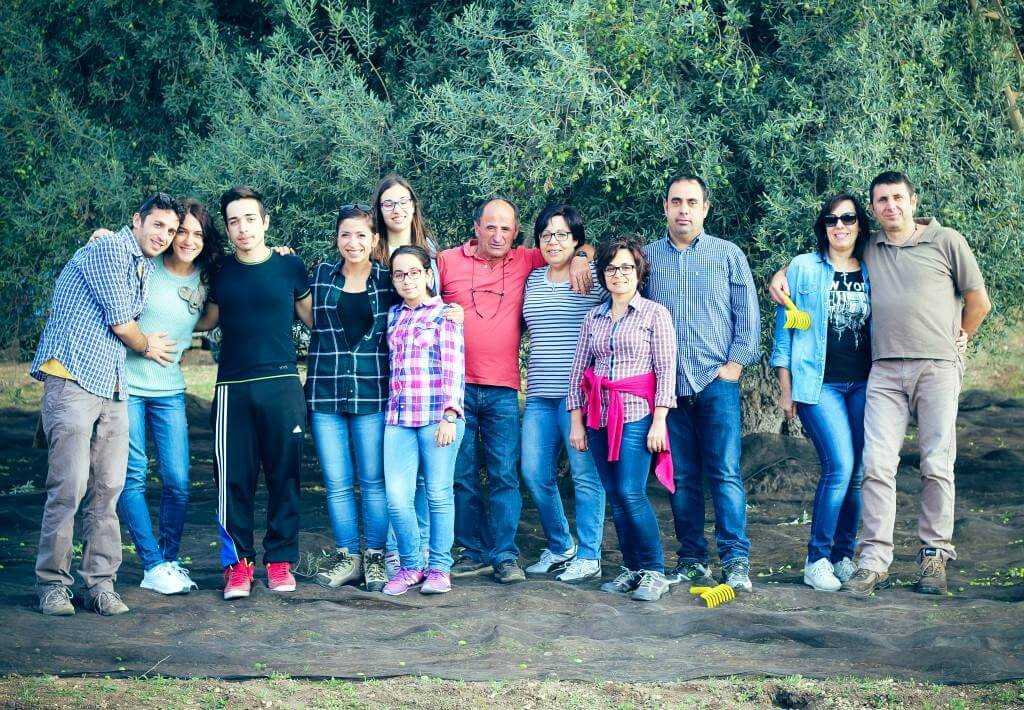
The Cutrera family getting ready to harvest
“We irrigated our groves and this certainly will help to improve quality, even if yields will be lower, partly because the last rains increased the percentage of water in fruits, and partly because pulp suffered a bit from high temperatures. However, under these circumstances, we can reach a very high quality,” Salafia said, adding that their flagship extra virgin olive oil Primo, which won a Silver Award at 2017 NYIOOC, consisted entirely of Tonda Iblea — the first variety they harvested this season.
Thanks to an early ripening due to the farm’s proximity to the sea, Biancolilla and Moresca will be soon delivered to Cutrera’s mills, followed by the fruits of Cerasuola, Nocellara del Belice and Nocellara dell’Etna.
“Due to a very dry winter, as early as March we irrigated our olive trees,” said Mariagrazia Bertaroli of Tenuta La Pojana, who manages 1,500 plants in the rolling hills of Soave and Illasi, east of Verona. “Spring was alternatively dry and rainy, so we continued to moisten the ground to beat the summer heat thereafter,” she told us, explaining that they could count on drip irrigation supplies for a large part of their orchards.
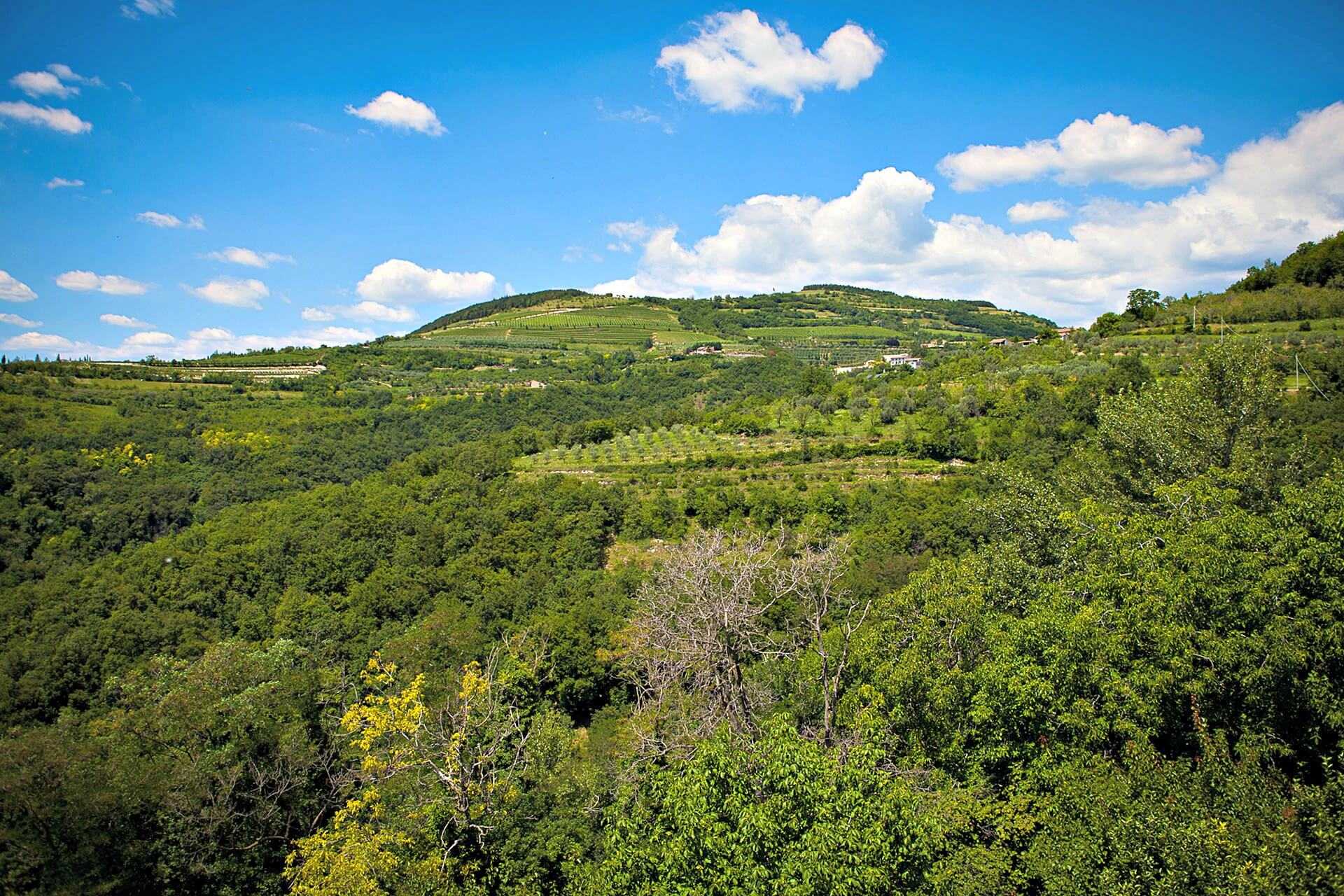
Tenuta Pojana
“We manually irrigated the rest of the plants three times a week at night, according to a well-planned and rational management of water,” Bertaroli said, observing that after a rich setting, fruits continued to develop in a healthy way and the final amount will probably be the same as last year.
Native varieties such as Grignano, Favarol and Trepp organically grown with Maurino, Leccio del Corno, Leccino, Pendolino and Frantoio will be harvested in October to compose high-quality extra virgin olive oils with the inspirational names of Armonia (harmony), Un’arte (an art), Un’opera (an artwork), Un’idea (an idea).
The Lion of Carpineto is a 700-year-old olive tree which alone gives about 30 liters of a rare monovarietal — or rather a single-tree varietal — of Saligna di Larino, and watches over the younger plants of Gentile di Larino, Frantoio, Moraiolo and Leccino at Parco dei Buoi, in Molise. “The area’s microclimate saved our plants from temperatures often over 30°C (86°F) even at night,” said Francesco Travaglini, revealing that cover crops played an important role in keeping soil and roots fresh.
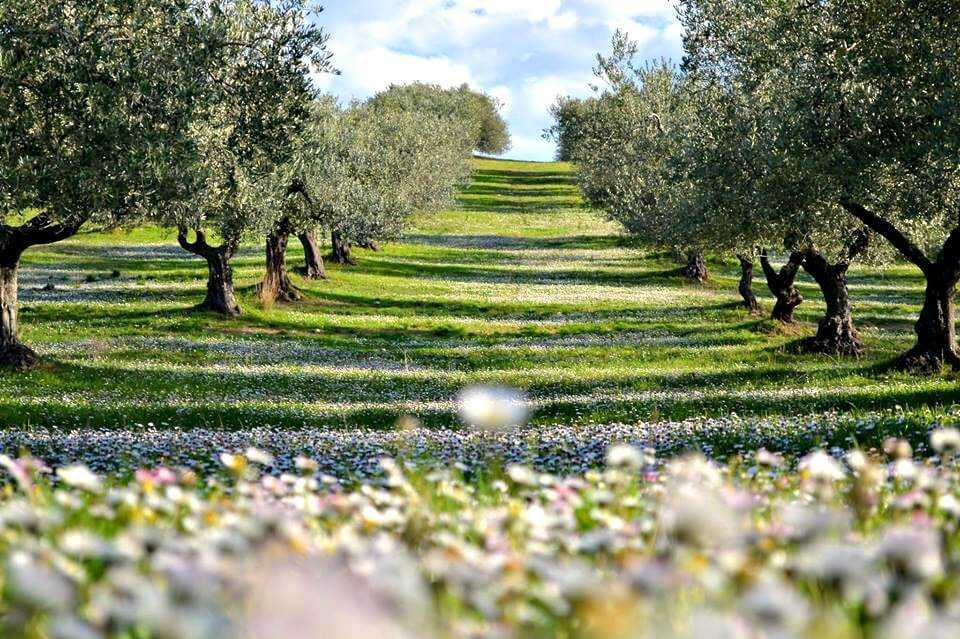
Parco dei Buoi
“High temperatures, on one hand, led to a difficult management of already scarce water resources, but on the other prevented the onset of various diseases,” he observed. In late July, storms gave relief from the heat, but a severe hailstorm knocked about 30 percent of olives to the ground. “Dents on fruits due to hailstones healed fast thanks to the heat and to a copper-based treatment we carried out,” the producer explained. “Despite the quantitative decline, the olives look great and I think we can reach high levels again.”
Related Articles
Apr. 22, 2025
New Xylella Infections Found in Northern Puglia
Xylella fastidiosa, a deadly bacterium, has been found in an olive tree in Bari, causing concern for the region's important olive oil industry.

Jun. 11, 2025
Values of Hospitality, Sustainability Drive Quality at Misciattelli Bernardini Farm
From its historic headquarters in the old town of Allerona to the sustainably managed groves in the neighboring hills, an Umbrian producer preserves tradition while embracing change.
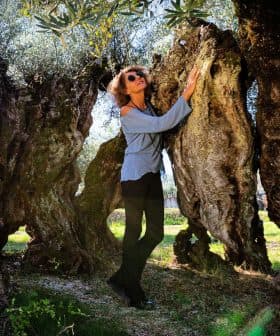
Sep. 29, 2025
Passion for Quality Becomes Legacy at Umbrian Farm
Oro di Giano produces premium extra virgin olive oil in Umbria from native varieties, centered on one of the region’s oldest olive trees. The farm is run by Claudia Pompilj, who built a second career in olive oil with great success.
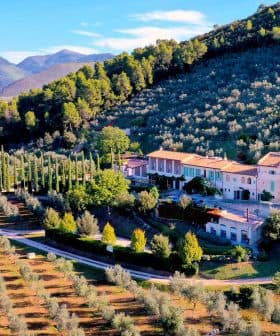
Oct. 3, 2025
Monini Builds on Italy’s Olive Oil Legacy with Modern Investments
Rooted in Umbria and fresh off four Gold Awards at the 2025 NYIOOC, Monini is marrying heritage with modern farming, planting 800,000 olive trees to safeguard Italy’s olive oil supply.
Sep. 9, 2025
New Guidelines for Tourist Olive Picking in Italy
Italy's Città dell'Olio and INL have signed a memorandum to regulate safe and compliant olive picking experiences for tourists.
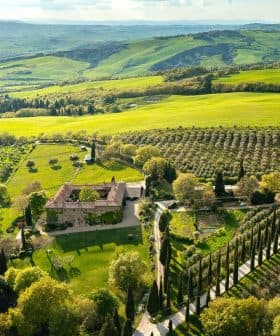
Nov. 4, 2025
Chiarentana: How One Tuscan Estate Shaped Val d’Orcia
Once a refuge during wartime, Chiarentana today produces award-winning olive oils and welcomes visitors to experience the peaceful heart of Val d’Orcia, a UNESCO World Heritage Site.
Sep. 25, 2025
Italian Olive Oil Producers Optimistic Despite Challenges
Italian farmers and millers are optimistic about the upcoming olive harvest, but challenges from weather and pests remain. Prices are expected to remain high.
Oct. 9, 2025
Alarm in Gargano as Xylella Reaches New Northern Front
A new Xylella fastidiosa outbreak near Cagnano Varano marks the bacterium’s northernmost spread in Puglia, prompting containment efforts and genetic analysis to trace its origin.