Georgia’s Largest Olive Oil Producer Gears Up for Its (Very) Early Harvest
While drought is not an issue in the Peach State, humidity and hurricanes are not uncommon during Georgia’s late summer harvest.
Agriculture has long been the engine of economic growth in Georgia. According to the Georgia Farm Bureau, the entire sector is worth $69.4 billion annually and employs one in seven Georgians.
While the state is perenially the largest producer of blueberries, broiler chickens, peanuts, pecans and spring onions, olives maintain a modest foothold, and interest is growing.
We are able to come first to market… This provides us the opportunity to bring a really fresh product to the supermarket shelf before anyone else.
The sector’s potential piqued the interest of Ciriaco Chavez, a fixture of the California olive oil sector. Virtually all olive oil production in the United States comes from the Golden State.
In January, Chavez left Boundary Bend, one of the country’s largest producers, along with posts at the Olive Oil Commission of California and the University of California-Davis Olive Center’s research advisory committee to become the director of agriculture and innovation at Fresh Press Farms.
See Also: Producer Profiles“I saw a very interesting opportunity and certainly lots of unique challenges that are different to growing olives and producing oil in California,” Chavez told Olive Oil Times.
Before officially making the move, he had already started working remotely as a consultant. “I was advising on which varieties to harvest, when to harvest, but was not there in person during the harvest,” he said.
Shortly after Chavez officially joined the largest olive oil producer in the eastern U.S., Fresh Press Farms earned a Silver Award for its medium-intensity blend at the 2023 NYIOOC World Olive Oil Competition.
Chavez might not have been fully involved in last year’s crop, but he is already gearing up for the start of the 2023/24 harvest, which he predicted could begin as early as the end of August in Fresh Press Farms’ 1,600 hectares of olive groves.
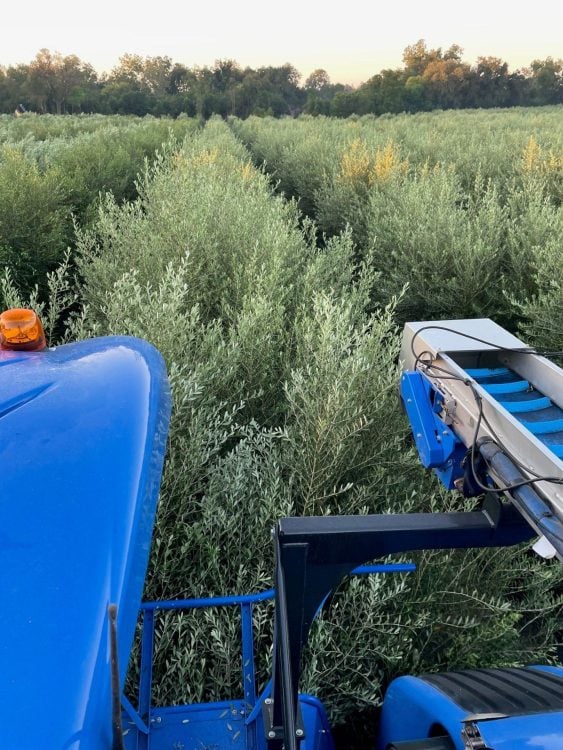
Fresh Press Farms grows Arbequina, Arbosana and Koroneiki olives at super-high-density in southwestern Georgia.
“From what I’m seeing, the harvest looks like it will be a bit of a mixed bag,” he said. “We have some areas of the grove that look fantastic with really strong production, more so than we probably have had in previous years. But other areas are not looking as good.”
Georgia does not face the same set of challenges as California and other traditional olive-growing regions. Chavez said there are no traditional pests or olive tree diseases in the state, and drought is not a significant concern.
“The humidity is probably the biggest challenge,” he said. “Humidity can lead to different fungal diseases that affect the olive leaves and fruit if we’re not careful. To date, we’ve been able to manage it through preventative fungicide programs.”
Along with humidity, the southwestern corner of Georgia, where Fresh Pess Farms is located, is also prone to extreme weather events.
“We’re faced with tornadoes in this part of Georgia,” Chavez said, “and strong thunderstorm.”
Fresh Press Farms sits on the southeastern edge of Dixie Alley, a region of the southeastern U.S. that frequently experiences tornadoes due to its climate and geography.
The farm is also exposed to hurricanes and tropical storms, with trees growing just 110 kilometers away from the Gulf of Mexico.
With harvest beginning at the end of August, one of the wettest times of year in the state, rain is not uncommon.
“We monitor the weather leading up to harvest time and if, if we see active hurricanes, we’ll adjust our harvest schedule accordingly,” Chavez said. “When it is time to harvest, we absolutely get in there and harvest 24 hours a day, seven days a week, with all our equipment.”
Along with the rain, temperatures usually exceed the 27 ºC threshold for producing extra virgin olive oil at this time of year.
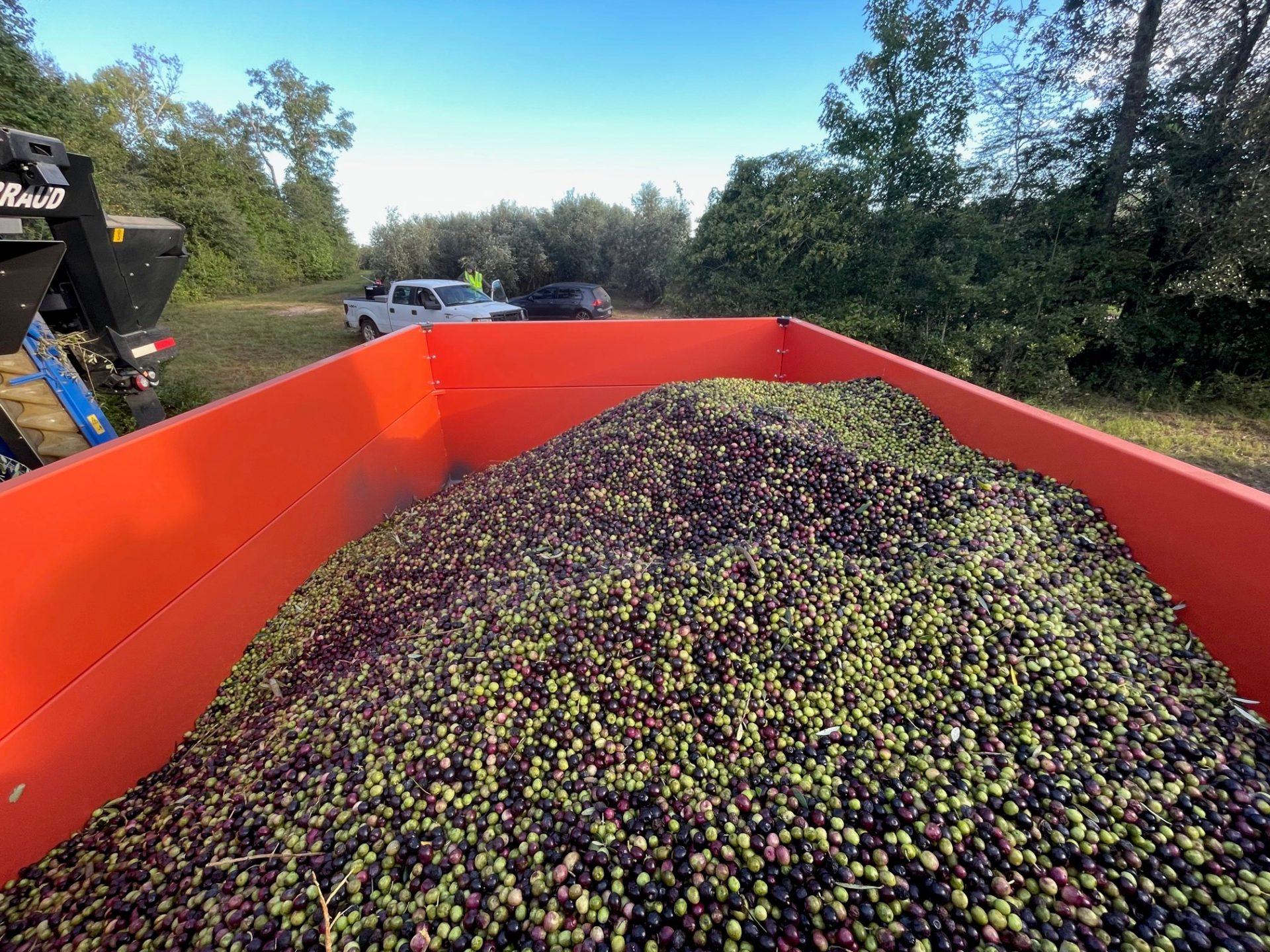
Sending small batches of olives to the mill ensures they are transformed in a controlled environment and not sitting around in the hot Georgia sun.
Chavez said Fresh Press Farms deals with high temperatures by harvesting at night and sending small batches to the mill, which is located at one of the company’s two groves.
“We have plenty of challenges, but we have a great team who knows the area,” Chavez said. “We have local people working for us who know the soils, know the climate and have done a great job growing the trees and preparing them for sizeable production in the future.”
Along with great people, Chavez attributed the company’s rising success to its vertical integration, which allows it to control every step of the process and prevents the spread of pests or diseases.
Fresh Press Farms grows Arbequina, Arbosana and Koroneiki olives in super-high-density olive groves, a common arrangement in the state.
However, the company has planted ten additional varieties at one of its farms, including Chemlali and Picual, to see which will grow best.
“We’re at the very early stages in that trial,” Chavez said. “I’m very curious to see how it evolves and what other varieties could be adept to our unique Georgian climate.”
While the Peach State’s unique climate can complicate a late summer harvest, Chavez said being one of the first northern hemisphere olive oil producers to come to market has distinct advantages.
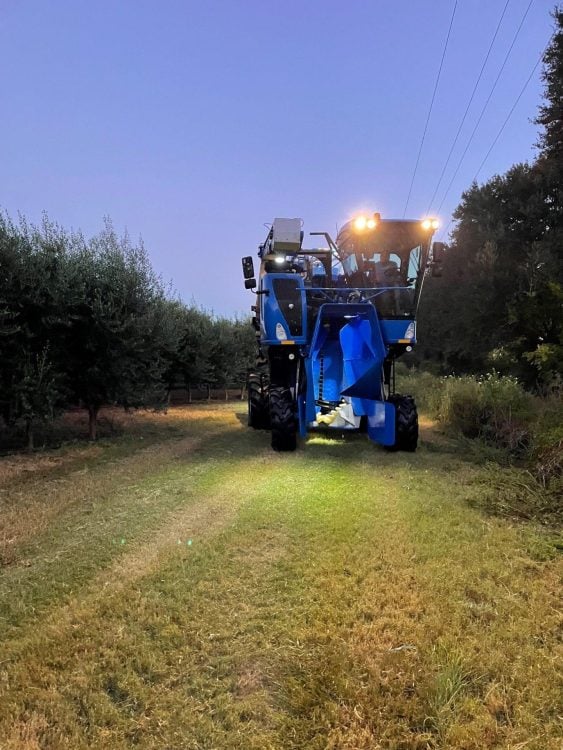
Harvesting at night when temperatures are cooler is one of the ways Fresh Press Farms ensures high-quality production.
“We are able to come first to market, up to a full month or two months ahead of other Northern Hemisphere producers,” Chavez said. “This provides us the opportunity to bring a really fresh product to the supermarket shelf before anyone else.”
He added that Fresh Press Farms is leveraging this opportunity in its marketing and sales strategy; it is even in the name. “Freshness is the name of the game,” Chavez said.
The company sells extra virgin olive oil to grocery stores around the U.S. and is securing deals with some of the nation’s largest retailers and specialty stores. “We’re definitely nationwide,” Chavez said.
While Georgia has seen modest increases in olive oil production since commercial olive farming was first studied two decades ago, Chavez said Georgia would never compete with California in terms of volume.
Still, he sees a future in taking advantage of the state’s early harvest and developing a local olive oil culture.
“Do I think it’s going to become the Olive State, not the Peach State?” Chavez said. “No, I don’t. And we don’t mind that. We like this little niche we’ve carved out for ourselves here and hope to do the most with it.”