Meet the Rocker Composing Award-Winning Olive Oil in Japan
Keisuke Maeda went from winning awards with his rock band to producing world-class extra virgin olive oil.
The bass guitarist of a popular Japanese rock band has also become one of the country’s preeminent olive oil producers.
Keisuke Maeda, one of the three founding members of Remioromen and founder of Maedaya Olive, recently celebrated winning a Gold Award at the 2024 NYIOOC World Olive Oil Competition.
Founded in 2000, Remioromen has been among the best-selling rock groups in Japan and won the Best Pop Video Award at the 2006 MTV Video Music Awards.
After the group disbanded in 2012, Maeda started his second act as an olive farmer. Eleven years later, he celebrated the fruits of his labor with a World Olive Oil Competition award for a medium-intensity Mission. “We are thrilled by this win,” Maeda told Olive Oil Times.
See Also: Producer ProfilesHe cultivates about 500 olive trees on his farm near Fuefuki, in the challenging climate of the Yamanashi Prefecture in central Japan, close to several national parks and Mount Fuji.
“By participating in the NYIOOC, we wanted the best olive oil tasters in the world to evaluate our product,” Maeda said. “We needed them to assess the type of olive oil our farm produces so we could understand the quality we have reached.”
In 2013, after extensive research and several trips to olive oil-producing regions in Italy and Greece, Maeda established his first grove, composed of about 100 olive trees. In 2016, he produced his first batch of extra virgin olive oil.
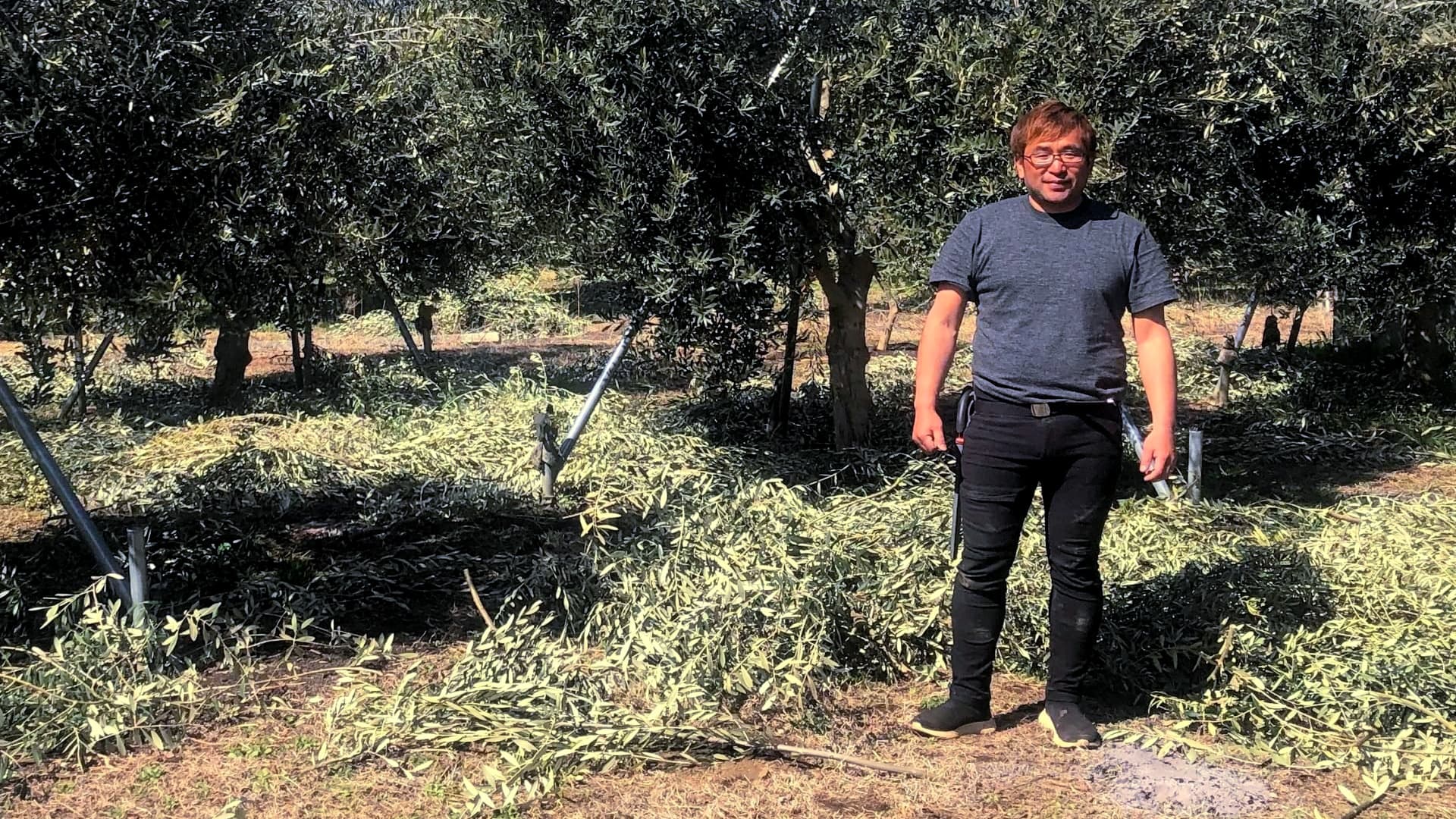
Keisuke Maeda co-founded Japanese rock band Remioromen in 2000 (Photo: Maedaya Olive)
Over time, the original grove has expanded to include many more trees. “At first, I planted Mission and Koroneiki varieties to act as pollinating trees,” Maeda said. “I selected them as they have a long story of cultivation in Japan and after consulting with Sorai Farm in Shodoshima.”
Situated on Shodo island in southern Japan, Shodoshima features a Mediterranean-like climate. The island and surrounding coast on the Japanese mainland are home to most olive oil producers.
“Today, our primary cultivars include Arbequina, Frantoio, Bianchera and Santa Caterina,” Maeda said. “It is amazing that cultivars that grow beautifully in regions that are, on average, way warmer than Yamanashi also grow so well in our orchards.”
Since the beginning, extreme temperatures have been Maeda’s main challenge, with the mercury falling to –10 ºC during the winter and summer temperatures soaring up to 40 ºC.
“The year the seedlings are planted demands utmost attention,” he said. “During the first three winters, we wrap them in straw to protect them from cold and dry weather.”
“As trees grow, the effects of cold weather decrease,” Maeda added. “But the effects of cold are not zero. The summer heat is not a problem so far. But like many other producers around the world, we are keeping a close eye on the effects of global warming.”
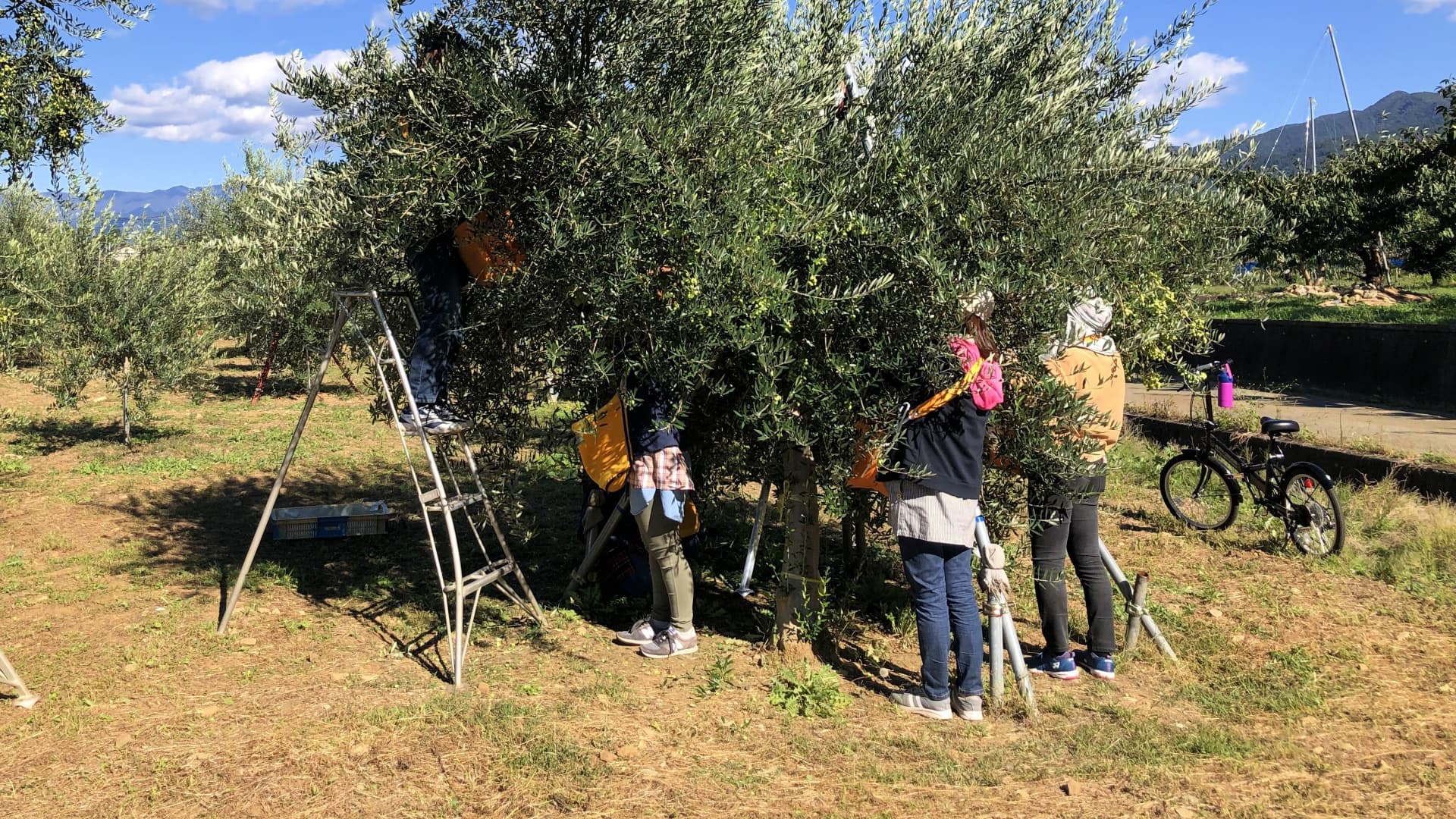
Maeda plans to expand his 500-tree olive grove, experimenting with new olive varieties in the central Japanese region of Fuefuki. (Photo: Maedaya Olive)
The orchard’s expansion will probably continue. “We are still working to research and select cultivars,” he said. “Yamanashi has a short history of olive cultivation, so I believe there is space to find more cultivars suitable for our region.”
Maeda also pointed out that he tends to the olive trees. “This means I must consider the size of the grove,” he said. “I am cautious about expanding too quickly as maintaining the high quality of our olive oil is my priority.”
During harvest, friends and family help Maeda handpick his olives and transform them into monovarietals and blends.
The season that brought to the Gold Award-winning Mission monovarietal was good for the Japanese producer.
“Compared to the year before, the campaign was characterized by good weather for olive cultivation in Yamanashi,” Maeda said. “We had fewer typhoons and little rainfall, with more long sunshine hours.”
“That also means that good-quality olive fruits were grown,” he added. “The results of the evaluations at the NYIOOC provide important messages and meanings, such as understanding the position of the oil I produce, guiding principles for future olive cultivation and olive oil production and a reconfirmation of my work so far.”
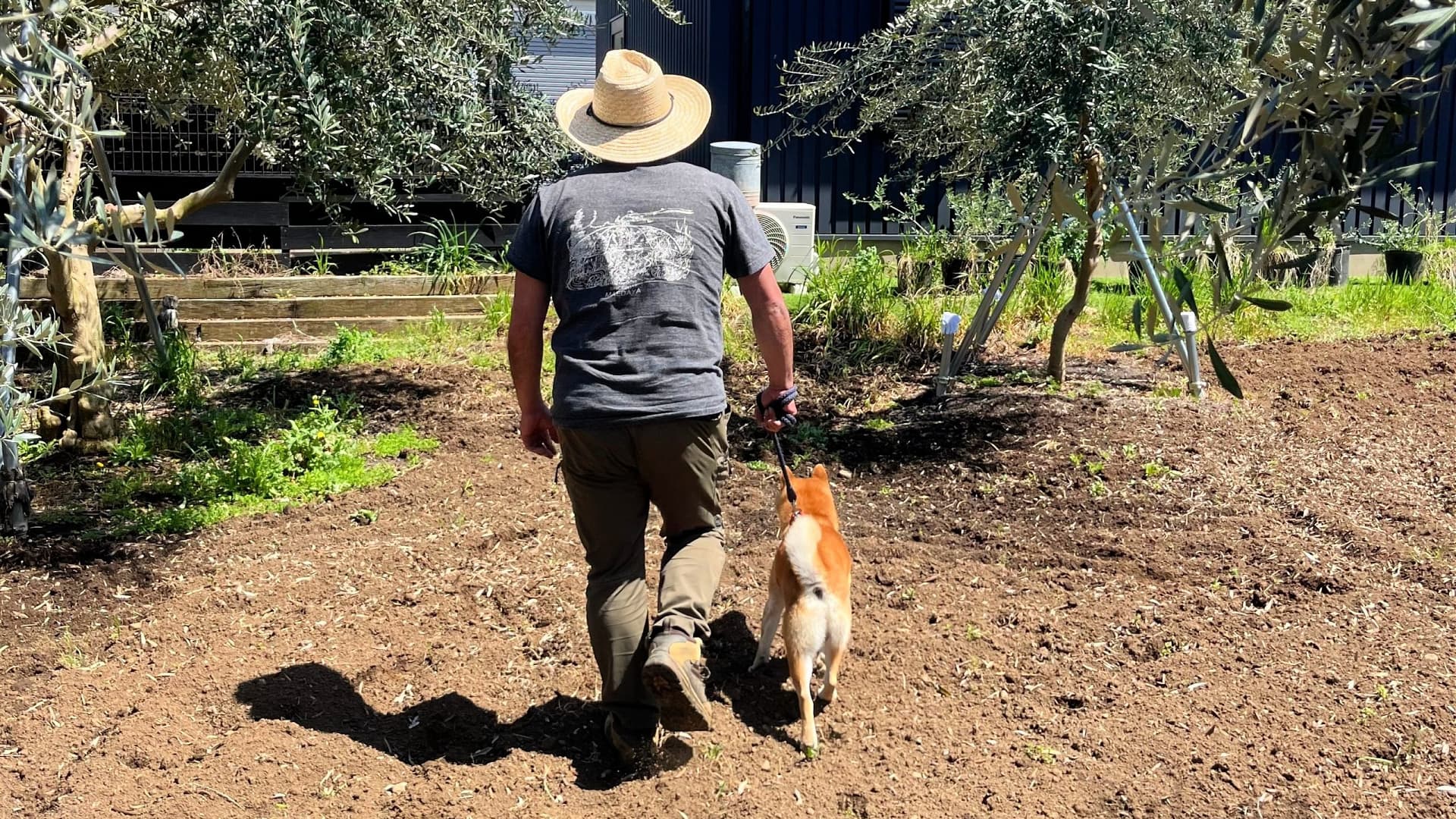
Maeda believes his NYIOOC achievement will help raise the profile of Japanese extra virgin olive oil at home and pave the way for exports. (Photo: Maedaya Olive)
TAE, a local artist, draws Maedaya’s labels. “She drew the leaf labels for our olive oil bottles,” he said. “Then, I commissioned her to draw the origin of all life for our website. And there, birds, turtles, and plants gather around the skeleton of an umbrella. It expresses the importance of water.”
Maeda also manages the farm’s olive mill. “Our olive oil is delicate; it has a good balance of bitterness and spiciness, and it bears the natural sweet aroma of plants,” he said.
According to Maeda, climate change will be the most relevant challenge for high-quality olive oil producers in Japan in the long term.
“Yamanashi is the largest producer of peaches and grapes in Japan and the birthplace of Japanese wine,” he said. “Therefore, all fruit farmers in Yamanashi have begun efforts to find countermeasures against damage from high temperatures and sustainable agricultural production. We need to do the same for olives.”
At the moment, Maedaya Olive does not export olive oil, but Maeda hopes to change this as he expands slowly but steadily.
“I would love that, as I would love people from all over the world to experience Maedaya’s olive oil, flavored by the nuances of the unique Yamanashi terroir, at least once in their lives,” he said.
Still, Maeda believes that the popularity of olive oil in Japan is increasing. “Nowadays, more Japanese are health-conscious and are discovering that high-quality extra virgin olive oil is not only healthy but also delicious,” he concluded.