Sustainability Keeps This Award-Winning Producer Grounded
Treurer is working to establish a circular economy to promote high-quality olive oil production and Mallorca’s natural beauty.
Olive oil production in Spain is once again significantly below the historical average, but producers on the Balearic Islands celebrated a fruitful harvest.
According to data from Spain’s Ministry of Agriculture, Fisheries and Food, the Balearic Islands have produced about 1,240 tons of olive oil in 2023/24, while the whole of Spain has produced 775,320 tons.
“This season has been better in terms of production than the previous one,” said Miguel Miralles Sastre, owner of award-winning Treurer.
See Also: Balearic Islands Tighten Restrictions as Xylella Spreads in Mallorca“Even if it did not rain that much, it did in the most important moments for the olive trees,” he added. “As for the quality, it is extraordinary.”
Treurer is a quaint farm nestled in the municipality of Algaida on Mallorca, the largest island of the Balearics, and stands out for its unique location.
While olive trees are common across the Mediterranean archipelago, Mallorca boasts the most extensive production areas. The island is also notable for its ancient olive trees, some even dating back millennia.
Today, Treurer combines high-quality olive oil production and oleotourism. “The farm lends its name to our family-run business, which was established by my father, Joan, two decades ago,” Miralles Sastre said.
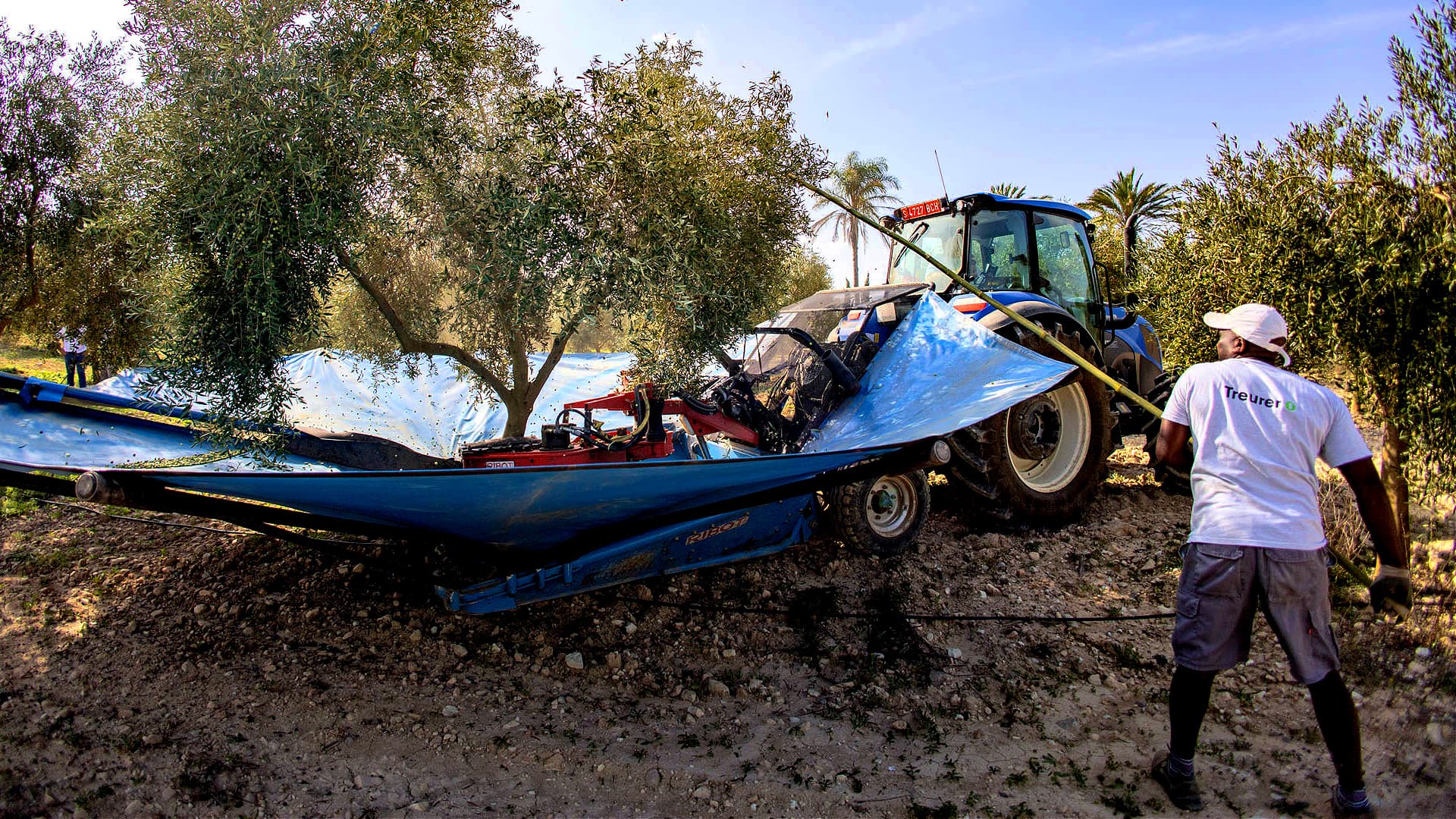
While many producers in Spain experienced another disappointing harvest, Treurer enjoyed a fruitful crop. (Photo: Treurer
“Like many of his peers, my father ventured into tourism, leaving behind agricultural pursuits,” he added. “Yet, after over four decades in tourism, he decided to reconnect with his agricultural roots.”
Treurer ensures its world-class quality by overseeing the entire production chain, from cultivation to bottling.
The farm operates its own mill, transforming olives from more than 3,000 Arbequina trees. Harvesting begins early in October, with olives reaching the mill within an hour of collection.
“The daily commitment to the trees has paid off,” Miralles Sastre said, referencing the Gold Award that won at the 2023 NYIOOC World Olive Oil Competition and its importance for accessing new markets.
Planted in a traditional layout in 2007, Treurer only grows Arbequina olives, which are integral to the Mallorca Protected Denomination of Origin.
Protected Designation of Origin
A Protected Designation of Origin (PDO) is a type of geographical indication (GI) that identifies a product as originating from a specific geographical area and having qualities or characteristics that are essentially attributable to its geographical origin. The PDO designation is a legal label that is used to protect the names of products that are truly unique to a particular region.
“Our olive oil is distinguished by its balanced flavor profile, featuring intense fruitiness and moderate spiciness and bitterness,” Miralles Sastre said. “Its aromatic notes evoke tomato, freshly cut grass, almond, green apple, artichoke, fennel and green banana.”
Along with producing a high-quality product, sustainability is an important tenet of Treurer’s project. The farm adopts a deficit irrigation strategy to manage water efficiently, especially during droughts.
This approach, increasingly popular among Mediterranean olive growers, involves supplying less water than the crops entirely require at specific growth stages, enhancing water use efficiency while potentially improving oil quality.
“Deficit irrigation demands precise control over the annual water supply to the trees, inducing mild water stress that has been shown to enhance olive oil quality,” Miralles Sastre said.
“Our foremost aim is to cultivate healthy, robust trees that yield exceptional fruit, the foundation of our olive oil,” he added. “The milling process further infuses our oil with a unique character.”
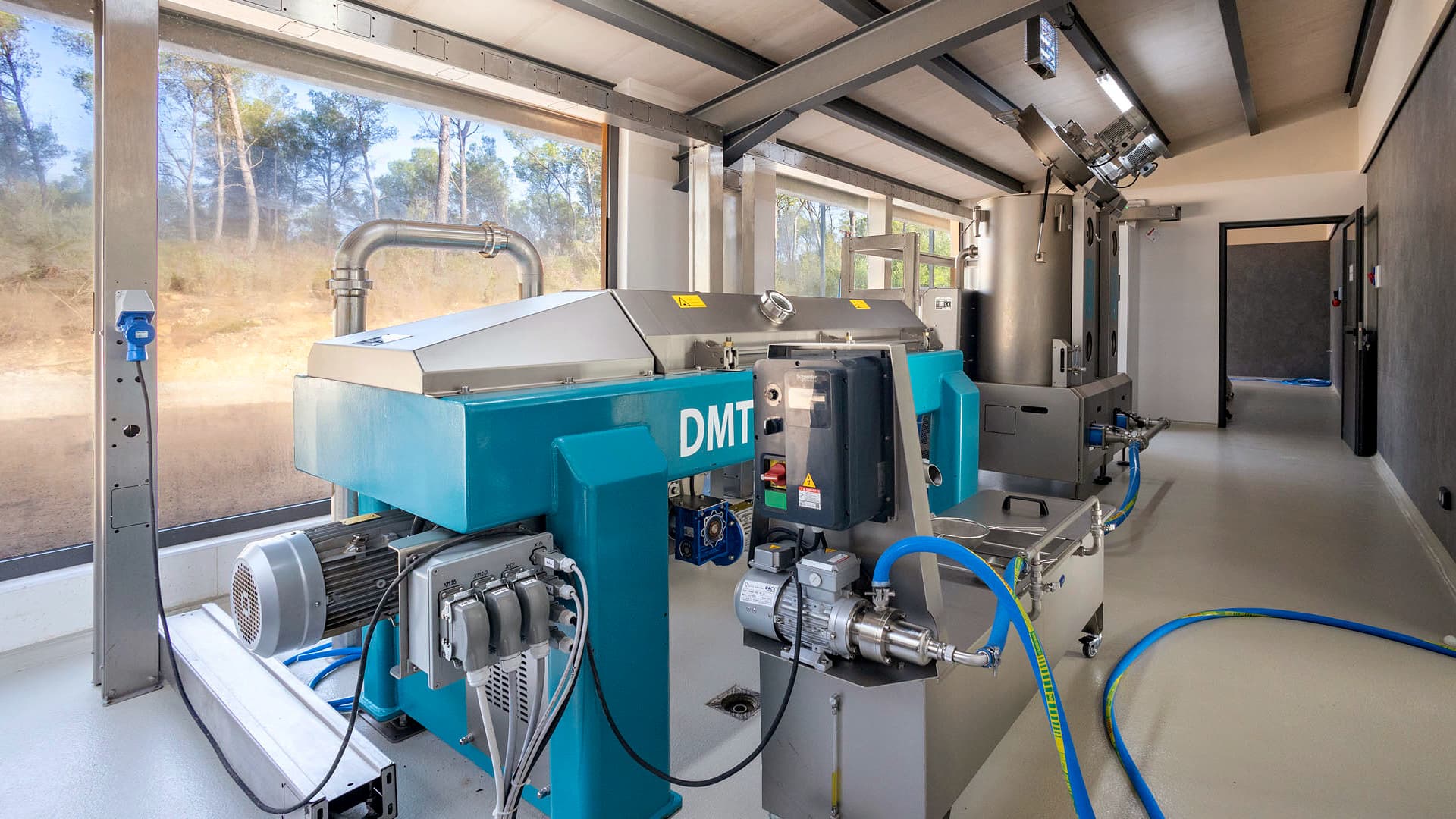
Along with agricultural techniques, Treurer’s modern mill contributes to the company’s award-winning quality. (Photo: Treurer)
After milling, Treurer also uses advanced storage techniques, keeping the olive oil in nitrogen-capped stainless steel tanks at a constant temperature.
“This way, customers who buy directly from us can enjoy the same olive oil that my family consumes at home,” Miralles Sastre said. “This is exceptional in the agri-food sector, a real example of the from-tree-to-table principle.”
The producer also highlighted the farm’s commitment to developing a circular economy, a regenerative system where resources are reused, recycled, and restored, minimizing waste and promoting sustainability throughout the product life cycle.
“At Treurer farm, sustainability is at the core of our olive oil production,” Miralles Sastre said. “My family lives here, so we are dedicated to preserving our natural surroundings.”
Embracing circular economy principles, the farm uses the pomace from olive oil production as compost, enriching the soil for future harvests.
The goal is to lessen environmental impact through various measures, including renewable energy use, water conservation, waste reduction and recycling.
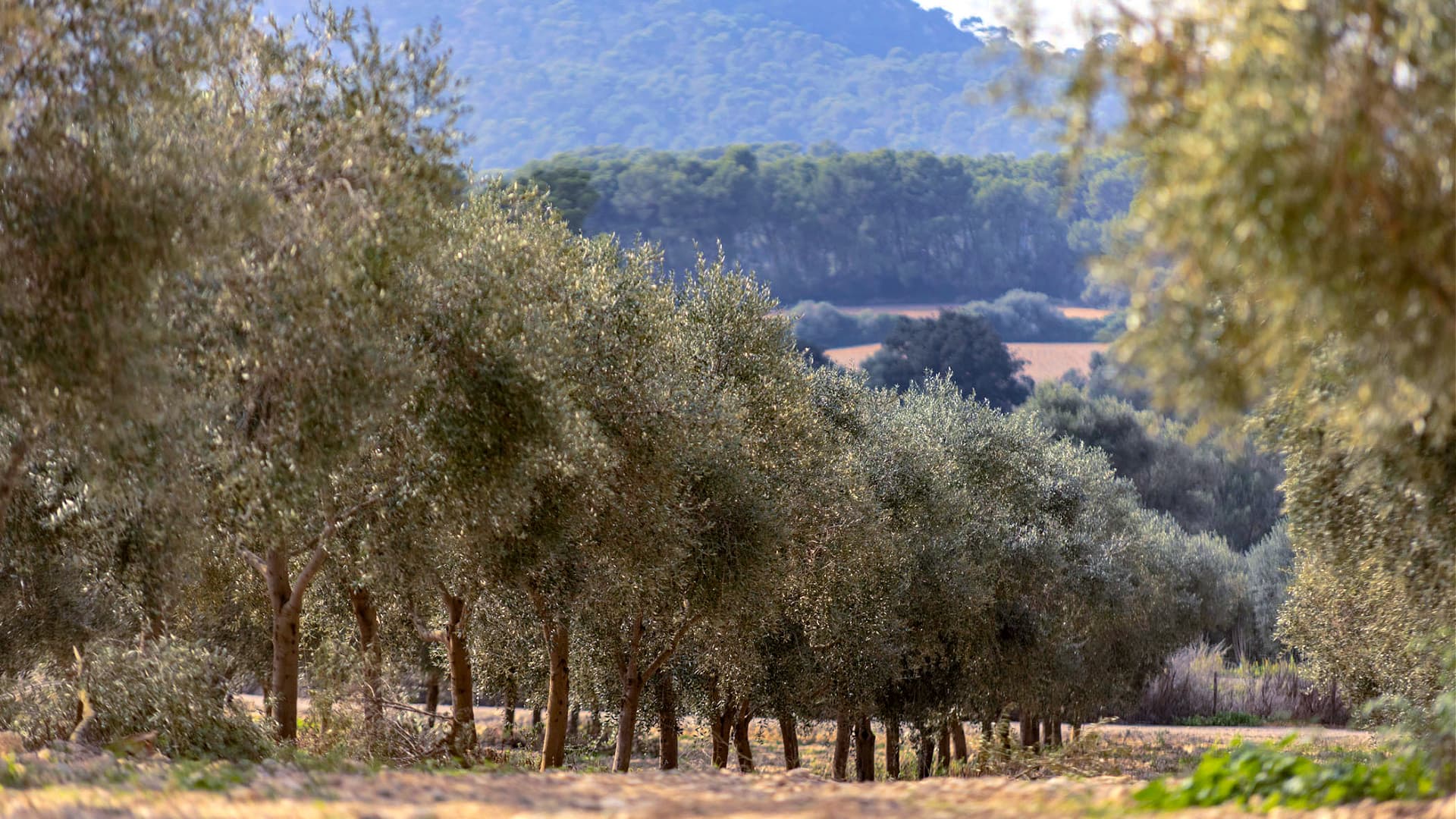
Treurer only grows Arbequina olives to produce its Mallorca PDO-certified extra virgin olive oil. (Photo: Treurer)
A significant part of Treurer’s tourism activities involves welcoming guests to the farmhouse, introducing them to high-quality olive oil, and promoting the island’s olive oil culture, a concept Miralles Sastre said his father pioneered a decade ago.
“Ten years ago, when nobody was talking about oleotourism, my father began hosting visits to our farm to promote the culture associated with olive oil,” he said. “Since then, thousands of people have passed through, and many have become our clients and friends.”
Miralles Sastre leads biweekly tours, encouraging visitors to explore the olive grove and mill, participate in tastings and enjoy traditional Mallorcan food while emphasizing the importance of olive oil.
“Raising awareness about the benefits of extra virgin olive oil is crucial, especially among younger consumers who represent the future market,” he added. “Continuous education on its qualities is necessary.”