Against the Odds, Colombia’s Only Olive Farm Turns to Tourism
After decades of experimentation, a pioneering family has defied Colombia’s subtropical climate to produce small quantities of extra virgin olive oil.
Situated in Villa de Leyva, a relatively dry stretch of the Andes Mountains about three hours north of Bogotá, Colombia’s only functioning olive farm has managed to overcome the subtropical climate to produce modest quantities of extra virgin olive oil.
“It turns out that in Villa de Leyva… is the only place in Colombia where the climate makes olive cultivation possible,” said William Cortés, owner of Huerto Olivanto.
Olive trees were introduced to Colombia centuries ago by the Spanish conquistadores. However, most were planted in unsuitable regions and later abandoned.
“Olive trees arrived in Villa de Leyva long ago, but in the last century, more than half were lost and olive production stopped,” Cortés said. “There are trees here as old as 200 years, and possibly one or two approaching 400, though not all are well documented.”
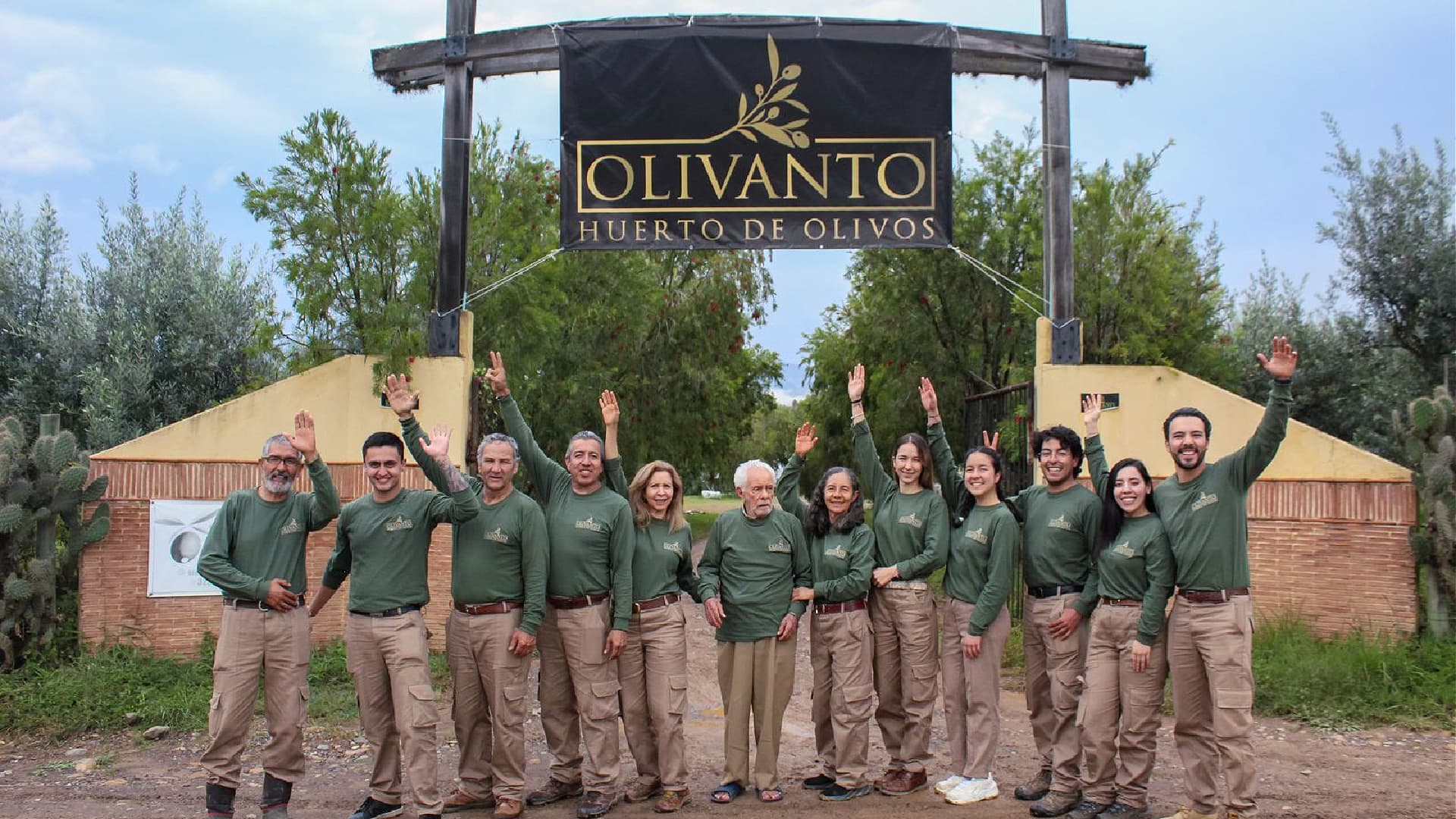
After decades of experimentation, Antonio María Cortés Robles (center) identified three olive varieties suitable for Villa de Leyva. (Photo: Huerto Olivanto)
Over the decades, more than 70 varieties were brought to Colombia for planting and grafting.
“Out of those 70 varieties, maybe ten or twelve bear fruit, but only every three years and in very small quantities – a pound or two, just a handful of olives – so they’re not truly productive,” Cortés said.
His father, Antonio María Cortés Robles, led much of this research and eventually identified the three most successful varieties: Arbosana, Picual and an adapted cultivar known as Levanto.
“We’ve temporarily named it Levanto while we identify it genetically with Parma University. That result should be ready later this year,” Cortés explained. “We believe this variety may have characteristics of acebuche, the wild olive.”

Huerto Olivanto has three hectares of olive groves in Villa de Leyva, the only productive olive-growing region in Colombia. (Photo: Huerto Olivanto)
Even these better-performing varieties yield far less in Colombia than in Mediterranean regions. In a good year, Cortés estimates about 10 kilograms of olives per tree—compared with 40 to 60 kilograms in parts of Europe.
“The olive trees don’t produce like in Europe, neither in quantity nor frequency, but they do bear fruit,” he said. “Production isn’t large; it’s quite small per tree.”
Villa de Leyva’s subtropical highland climate is the country’s most suitable for olive growing, yet it differs sharply from Mediterranean conditions.
The region receives roughly 1,500 millimeters of rain each year—far less than many Colombian regions but more than double that of most Mediterranean olive-growing areas.
Most rain falls from November to April, followed by drier months lasting from June to October. This pattern, Cortés said, allows a small harvest in October or November.
Beyond rainfall, temperatures remain stable year-round, giving the trees very few chill hours, which olives need to flower and fruit. “The varieties that adapt best are those requiring fewer chill hours,” Cortés said.

Due to the inconsistent nature of the harvest, Huerto Olivanto has increasingly become an oleotourism destination. (Photo: Huerto Olivanto)
Economic pressures also weigh heavily on the operation. Imported olive oil sells cheaply, and harvesting is labor-intensive.
“Harvesting is done by hand, like coffee, so labor and maintenance costs are high,” Cortés said. “Profitability isn’t guaranteed. Even though green olive oil fetches a good price – about 30,000 Colombian pesos (€7) per kilogram – the climate plays the decisive role.”
Some years bring long dry spells during flowering, resulting in almost no fruit set. In other years, heat waves eliminate the few chill hours the trees would typically receive.
“This makes production unpredictable. We depend entirely on the weather,” he said.
Huerto Olivanto now has three hectares of groves, a nursery and facilities for olive oil tastings.
“We have a nursery where we propagate and sell these varieties so people can plant trees that are at least productive,” Cortés said. “But ‘productive’ doesn’t necessarily mean ‘profitable,’ since yields are smaller here.”
“The trees also grow faster and taller due to the high light intensity,” he added. “They must be pruned regularly; otherwise they reach 12 meters or more.”
Because of these challenges, the farm has only achieved a few successful harvests.
“We’ve made olive oil only three times, when we had slightly larger harvests,” he said. “We’re not consistent producers – quantities are small, more a curiosity than a business. But the oil we’ve produced is excellent: high-altitude groves give oils richer in antioxidants and polyphenols.”
“When we do make it, we sell it unfiltered in small bottles to visiting tourists,” he added. “We’ve turned what used to be an olive production project into an oleotourism venture. The oil sells easily, at about five times the price of regular olive oil in Colombia, in 100-milliliter bottles presented as an artisanal product.”
In years without olives, Cortés imports extra virgin olive oil from cooperatives in Jaén and producers in Catalonia, seeking bitter, pungent profiles to sell at the farm and potentially through specialty retailers.
“Our goal is to bring in fresh oil – harvested that same year – without intermediaries or blends, as is common with imported brands,” he said.
“Our olive oil will be priced slightly higher than most on the market because we don’t import large volumes,” Cortés added. “That’s why we’re starting with specialty shops and, in the medium term, aim to enter supermarkets once we’ve built brand recognition.”