In Puglia, Producers at Mimì Pursue Excellence Through Innovation and Research
Donato and Michele Conserva produce award-winning extra virgin olive oils from century-old trees using the latest technology at their family mill.
“It all started from a dream,” Donato Conserva told Olive Oil Times. “Our father Domenico, known by all as Mimì, had an olive grove and he dreamt of someday opening his own olive mill.”
Taking up his legacy, Donato and his brother Michele became the producers of premium extra virgin olive oils, including Mimì, Mimì Coratina and Mimì Peranzana, all of which have earned numerous awards at the NYIOOC World Olive Oil Competition.
We carry out experimentation on every aspect of production… We can say that every harvest season, our mill becomes an experimental lab.
A renowned transport operator, Mimì devoted his free time to the olive trees, relying on the local facilities to press the fruits.
“The oil was a gift for his customers who really appreciated that,” Conserva said. “Sadly, he passed away too soon. We found ourselves at a crossroads: to sell the land and devote our efforts to the transport company or to carry on his plan and produce our own extra virgin olive oil.”
See Also: Producer ProfilesWith the support of their mother, Giuditta, the two brothers decided to focus on the land and later established their mill.
Designed with large glass windows that allow visitors to see the whole production process, the building is harmoniously nestled at the heart of a 75-hectare property with 23,000 trees of several varieties.
Ogliarola barese, Coratina, Peranzana, Cima di Melfi and Nocellara del Belice trees, many of which are a century old, are located on rolling hills between Modugno and the surrounding villages in the province of Bari, not far from the Adriatic coast.
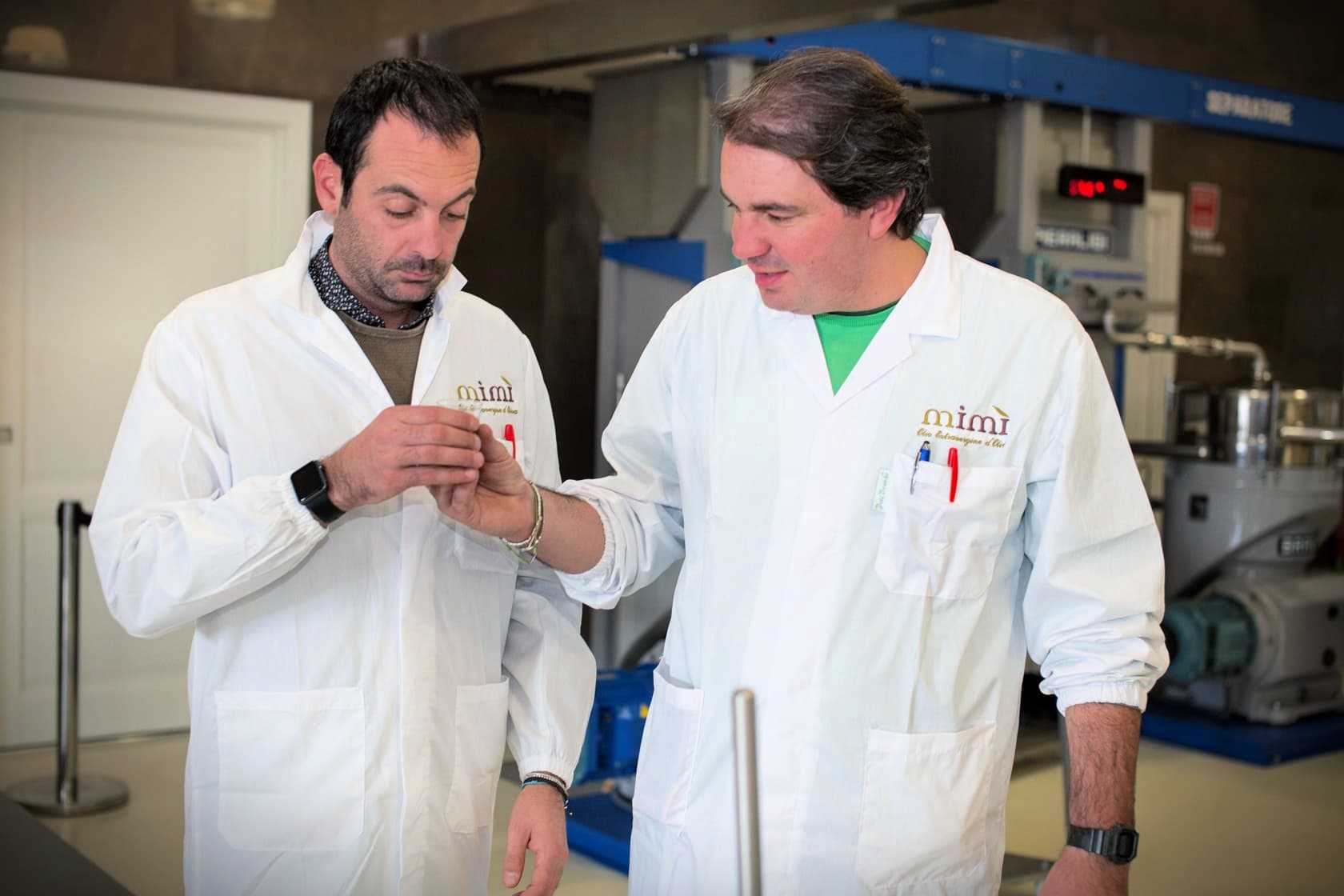
Michele and Donato Conserva
“Our work is focused mainly on monovarietals,” Conserva said. “We managed to reach high levels of quality thanks to a careful selection of fruits and an ad hoc milling process for each variety.”
The olives, collected with the help of mechanical harvesters, are crushed a couple of hours after harvesting in the mill, which boasts cutting-edge technology and an energy-saving system.
It consists of two types of machinery, one of which is supplied with a vertical malaxer, which reduces the extraction times and prevents time and temperature from negatively affecting the product.
“We pay special attention to these aspects,” Conserva said. “The oil undergoes immediate and direct filtration without going through the separator. Then, we store it in stainless steel tanks under nitrogen to ensure optimal conservation.”
Every year, a part of the budget is allocated to technical adjustments of the milling equipment. “Periodically, we make small changes to improve the production process,” Conserva said.
This constant updating allowed them to achieve their quality objectives and produced outstanding results, even in difficult seasons.
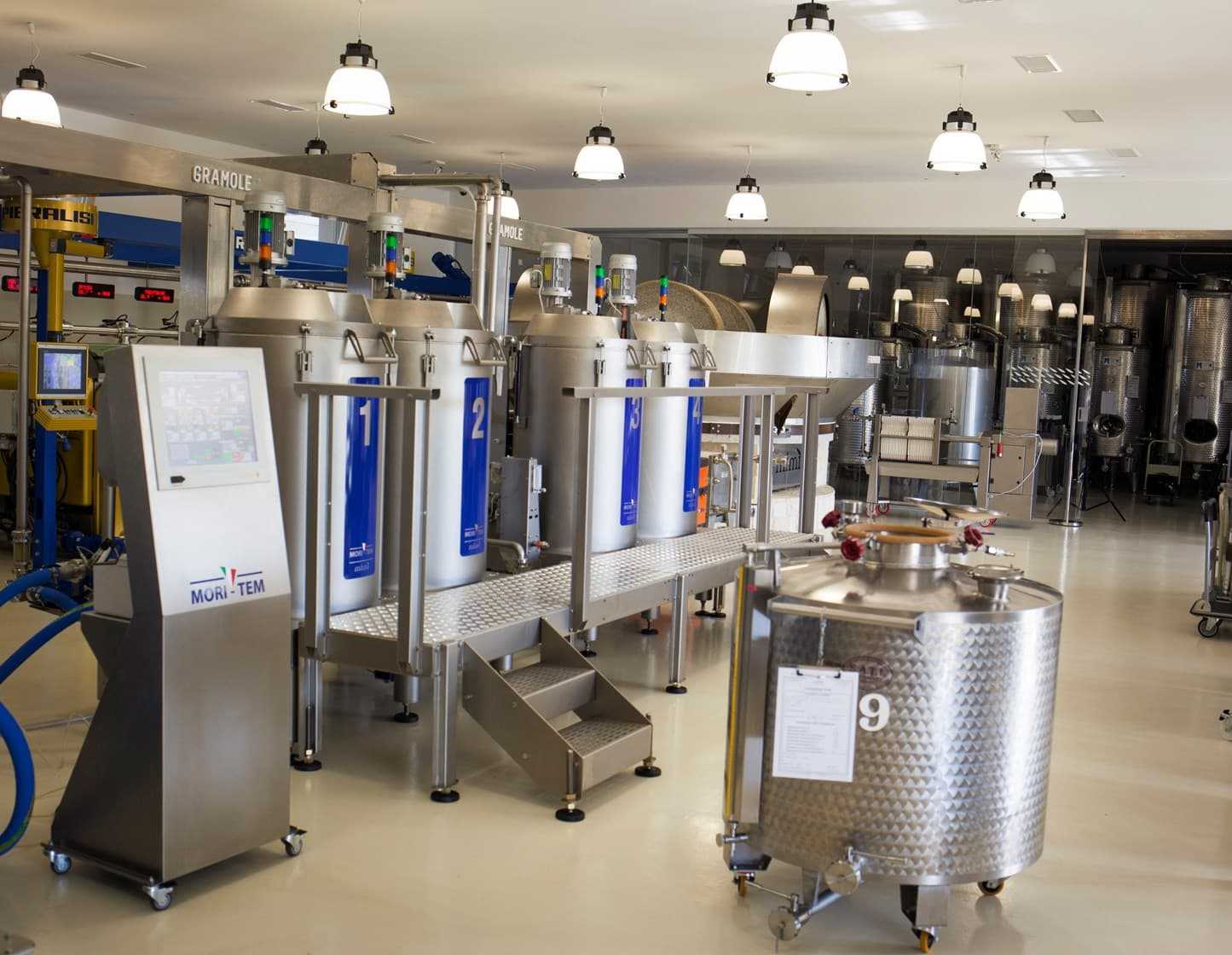
The mill at Mimi
“We can count on an irrigation system that helped in times of drought,” Conserva said. “However, in the last years, we have noticed an early flowering that pushed us to anticipate the harvest.”
“Taking this into account, the last season was great,” he added. “From our point of view, it was even better than the previous one, since some hectares of trees recently planted finally went into full production.”
Nonetheless, the increasing production trend in this part of Puglia was bolstered by favorable weather conditions, unlike other parts of the region. Over the last two years, the typically Mediterranean climate of the orchards did not suffer from dramatic swings, Conserva explained.
“Ours is not only a quality work but also a research work,” he said. “We are collaborating with researchers from the Polyclinic of Bari, who conduct studies on the nutraceutical properties of extra virgin olive oil with a high polyphenol content and their benefits to the gastrointestinal system thanks to their anti-inflammatory, preventive properties.”
“Great results in this sense have been achieved with our Coratina, which proves to be a source of health with an impressive organoleptic profile,” Conserva added.
This monovarietal owes its success at the NYIOOC to an intense fruitiness, which is rich and enveloping, with hints of olive leaf and artichoke accompanied by elegant spicy notes. In the mouth, powerful vegetal notes of leafy vegetables are combined with fresh almond and wild chicory, followed by an aftertaste of thistle. Bitterness and pungency are firm yet harmonious.
“We carry out experimentation on every aspect of production,” Conserva said. “With the Polytechnic University of Bari, we conducted extraction tests with ultrasounds. We can say that every harvest season, our mill becomes an experimental lab.”
“Our efforts are aimed at treasuring the experience gained in the field and the mill, year after year, and trying to obtain a product of extreme excellence at all levels,” he continued. “I truly believe that the olive oil sector still has a lot to give in terms of quality.”
“We are among those oil millers who, in recent years, have constantly been striving to discover what the olive tree can still offer,” Conserva added. “We are well on track, but I am convinced that there is still a lot to do.”
“We do this driven by a strong commitment based on the value of respect for the customer,” he concluded. “Needless to say, at the root of our job also lies the love and respect for our territory. When you taste our extra virgin olive oils, you can feel the aromas and flavors of our beautiful land.”