New Study Tracks Populations and Movements of Major Xylella Carrier
Tracking spittlebug movements throughout their lifespan, researchers have made recommendations to help curb the spread of the pest.
A landmark study on the phenology of spittlebugs may help olive farmers and local governments combat the spread of Xylella fastidiosa in the Mediterranean basin.
Over a period of three years, a team of researchers from Italy’s Institute for Sustainable Plant Protection, the University of Turin, the University of Brescia and the University of Bari, studied the reproductive traits and population movements of three species of spittlebugs at two different sites in Italy: one in Puglia (southern Italy) and one in Liguria (northern Italy).
Any control measure applied after the fourth instar peak could potentially target the whole nymphal population before the onset of the adults, thus achieving the maximum efficacy (in preventing the spread of Xylella fastidiosa).
The spittlebug is the only proven vector of Xylella fastidiosa ST53 – the pathogen responsible for the massive olive tree die-off in Puglia.
The researchers believe that what they have learned during the course of the study, which ran from 2016 to 2018, will help farmers make informed decisions when taking measures against the spread of Xylella fastidiosa.
See Also: Xylella fastidiosa News“The present work provides a large amount of data on the life cycle of the spittlebugs within an olive agroecosystem that can be used to design effective control programs against these vectors in infected areas and to assess the risk of the establishment and spread of Xylella fastidiosa to Xylella-free areas,” the researchers wrote.
Prior to the publication of this study in the journal Nature, very little was known about the reproductive habits and life cycles of spittlebugs.
Based on their observations, the researchers found that spittlebug nymphs begin to emerge in the second week of March, with the vast majority hatching by mid-April, which also coincided with the fourth instar (fourth phase of development) for many of the nymphs. The emergence of the first adults was only recorded after this peak.
This finding led the researchers to recommend applying insecticides or any other control measures in mid-April in order to eliminate as many of the nymphs as possible before they develop into adults.
“Any control measure applied after the fourth instar peak could potentially target the whole nymphal population before the onset of the adults, thus achieving the maximum efficacy,” the researchers wrote.
By the end of May, the vast majority of the adult spittlebugs were counted, generally being found on the herbaceous cover surrounding the olive trees as well as on the trees themselves.
Starting in late June, many of the spittlebugs began to migrate from the olive trees to other wild woody host plans, mainly coniferous trees and shrubs (however, some remained behind in the olive groves, most notably one specific species of spittlebug in Liguria). The researchers hypothesized this was due to the lack of water inside the olive trees compared to other woody and vascular plant species.
The researchers also theorized these wild trees and shrubs, some of which are known reservoirs for Xylella fastidiosa, were likely where spittlebugs become infected with the pathogen.
By the end of the summer, the spittlebugs began to move back to the olive groves, where the females laid their eggs. This is the moment in time when spittlebugs are most likely to infect olive trees with Xylella fastidiosa, although the danger of transmitting the disease remains constant once the spittlebugs have matured.
“The period immediately after adult emergence is the crucial moment for both Xylella fastidiosa acquisition and transmission to olives by insect vectors,” the researchers wrote. “It is worth pointing out that, once infected, vectors are persistently infectious.”
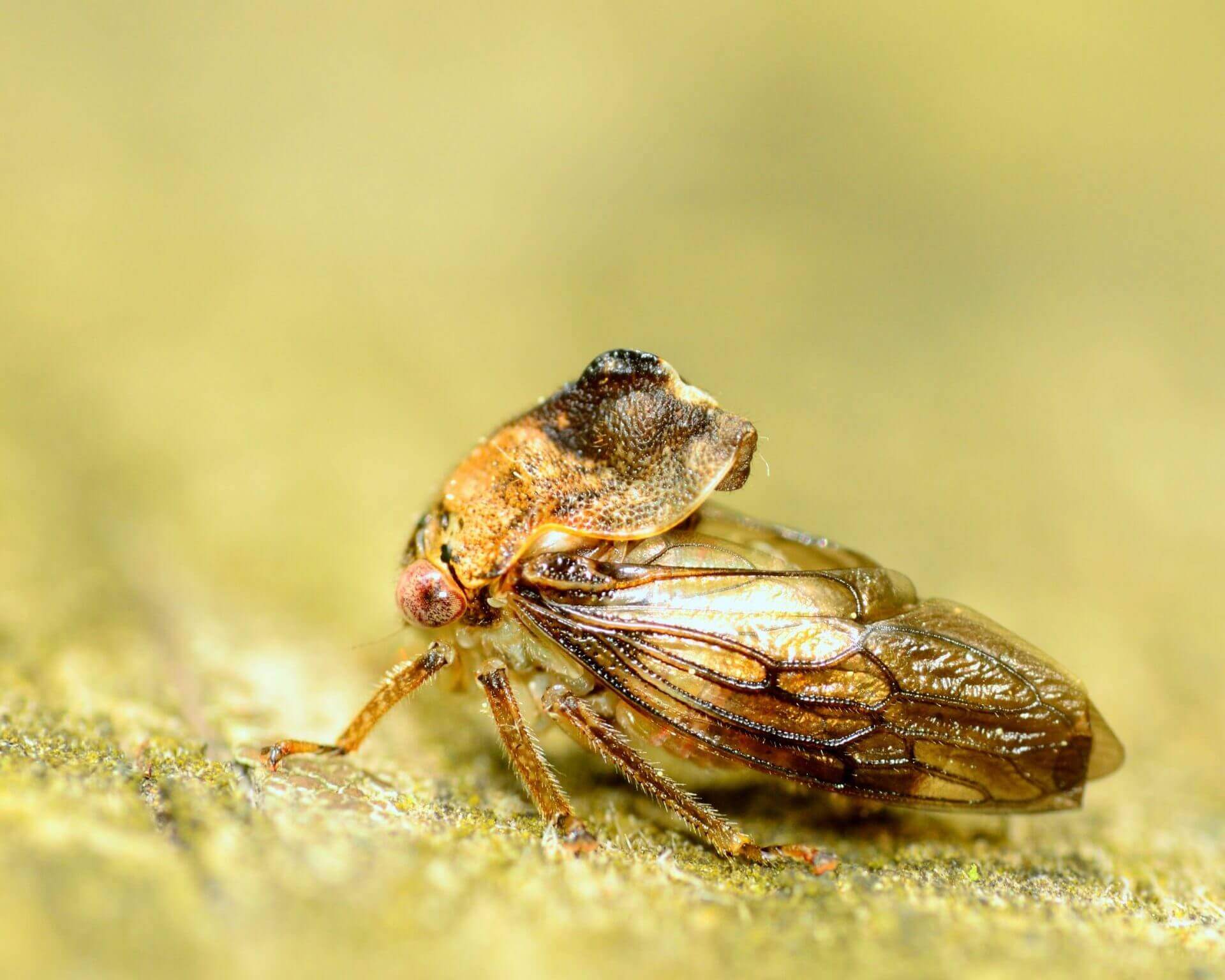
Spittlebug
“Insecticides targeting the adult stages should be applied timely to the olive canopy, mainly in this period, in order to prevent the spread of the disease during the year,” the researchers added.
From the end of October to early November, the team began to notice the decline in the spittlebug populations, with very few spittlebugs surviving through the winter.
Along with observing the movements and population dynamics of the spittlebugs, researchers also noticed how differences in the landscapes impacted the insect populations.
In the part of Puglia in which the study took place (a part that has so far remained Xylella fastidiosa-free), the researchers found that spittlebug populations thrived in olive groves that were largely undisturbed and natural.
“Different levels of insect disturbance, as a result of agronomic measures, such as soil tillage – which is usually carried out in summer in Puglia – can have an impact on the adult population, thereby determining mass movements to olive trees and other woody hosts,” the researchers wrote.
For this reason, researchers warned that less cultivated olive groves, such as those that were observed in Liguria, pose the highest risk for being infected and allowing the spread of Xylella fastidiosa.
While this research is a good first step in building up the collective knowledge about spittlebugs, the team acknowledged that a lot more work needs to be done in order to better understand the relationship between spittlebugs and the spread of Xylella fastidiosa.
“There is still a general lack of information on both the abiotic and biotic factors that influence the composition of xylem-sap feeder communities in olive groves and on species abundance,” the researchers concluded.
“Further studies on vectors in olive, almond and other agroecosystems potentially at risk to the spread of Xylella fastidiosa in Europe are urgently needed to improve control efforts and to contribute towards limiting the spread of Xylella fastidiosa epidemics.”