



Early NYIOOC Award Highlights Montenegro’s Growing Inland Olive Sector
Balša Baletić, an olive grower in Zeta near Podgorica, earned a Silver Award at the NYIOOC World Olive Oil Competition for Oro, a blend of Oblica, Istarska bjelica, Leccino and Pendolino.
 Baletić said the grove has benefited from healthy fruit and limited olive fly damage, which he credited to site conditions and farming practices.
Balša Baletić, a Montenegrin olive grower, won a Silver Award at the NYIOOC World Olive Oil Competition for his blend Oro, marking Montenegro’s first award in the competition. Baletić’s inland location in Zeta, along with his dedication to quality and sustainability, has led to successful olive oil production and recognition in the industry.
A Montenegrin producer has won the country’s first award at the 2026 NYIOOC World Olive Oil Competition, a milestone that supporters say could accelerate interest in olive growing beyond the Adriatic coast.
Balša Baletić, an olive grower and economist from Zeta, about 50 kilometers north of the sea, earned a Silver Award for Oro, a blend led by Oblica and Istarska bjelica with smaller amounts of Leccino and Pendolino. “This is my first competition ever,” Baletić told Olive Oil Times. “The award means a lot to me and confirms I’m on the right path.”
Baletić said the inland location helps shape both yields and flavor. He attributes the oil’s pungency and aroma to a microclimate that combines Mediterranean influences with a fertile plain and pronounced day – night temperature swings. Warm days and cooler nights, he said, can intensify sensory characteristics compared with some coastal sites.
Friends describe Baletić as someone who built an “American dream” in Montenegro. He left Podgorica in 2004, visiting relatives in Los Angeles before establishing businesses in Florida. Miami remains his commercial base, where he has worked in construction and trade, but family considerations led him to spend part of the year back home.

The Baletić family
“I wanted the children to have a childhood like we did,” he said, describing a family routine split between school in Montenegro and holidays in the United States. “I won’t impose either America or Montenegro on them; let them choose when they grow up.”
Baletić began planting olives in 2018 with 35 trees. He expanded rapidly, building an approximately seven-hectare grove that now includes about 3,000 trees and a Pieralisi mill, allowing him to control the entire process from harvest to bottling — an approach he says is central to quality.
“Olive oil production doesn’t determine our livelihood — this is a side story based on love,” Baletić said in an interview with a local publication, explaining that the family prioritizes quality over volume. He said he chose varieties associated with high polyphenol potential and tested nursery stock sourced from both Croatia and Italy to compare performance.
He also warned that inadequate controls on imported saplings can spread disease, noting that a single infected tree can jeopardize an entire grove. The risk underscores why many producers are paying closer attention to pest pressure and plant health as new plantings expand inland.
During the most recent harvest, Baletić said the family pressed fruit immediately in their on-site mill, which has a capacity of 500 kilograms per hour. “It’s crucial that the fruit is milled as soon as possible after harvest and stored properly so it doesn’t oxidize,” he said, describing cold extraction and storage in sealed stainless steel tanks in a cool cellar.
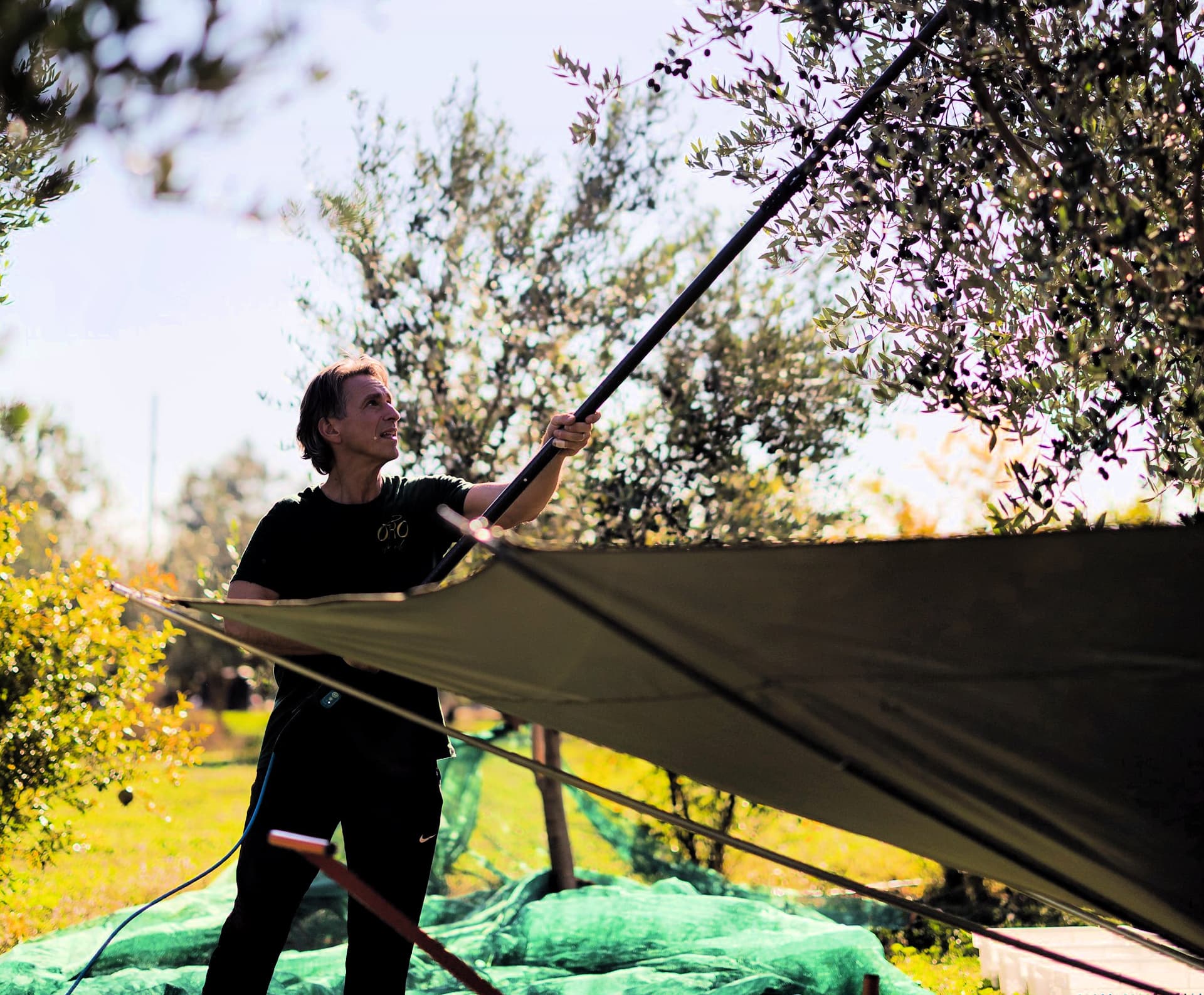
Baletić said he chose varieties associated with high polyphenol potential and tested nursery stock sourced from both Croatia and Italy to compare performance.
Baletić said the grove has benefited from healthy fruit and limited olive fly damage, which he credited to site conditions and farming practices. For other potential pests, he said poultry roaming the property helps reduce insect pressure, adding an element of low-input sustainability while providing manure for soil fertility.
News of the award prompted congratulatory messages from across Montenegro’s olive sector. Ćazim Alković, an olive grower and president of the Bar Olive Growers’ Association, called the competition the “Champions League” for producers and said the result showed unusual confidence for a first-time entrant. He argued that the medal also points to the suitability of the Zeta area for modern groves, where careful variety selection and tightly managed processing can yield competitive results.
Montenegro’s traditional olive heartland remains along the coast, from the Bay of Kotor through Bar and Ulcinj, where some groves include centuries-old trees and the famed ancient olive in Mirovica. But growers and local officials say new inland plantings around Zeta, Tuzi and Podgorica have expanded over the past two decades, reflecting changing investment patterns and growing confidence in non-coastal sites for olive farming.
Baletić said he sees no need to choose between the two countries he calls home. With planning, he said, the family can maintain business ties in Miami while building a long-term agricultural project in Montenegro — one that he hopes will stand as an example for other producers and, eventually, a destination linked to local food and rural life.
Share this article
Related Articles

Oct. 28, 2025
Olive Oil Train Enlivens 'Frantoi Aperti' in Umbria
The annual Frantoi Aperti celebration is underway in Umbria, where vintage railcars and guided tastings are adding new momentum to one of Italy’s most beloved olive oil events.
Apr. 7, 2026
Portuguese Olive Oils Find New Path to U.S. Market
A network of Portuguese producers working with Wildly Virgin is bringing small-batch olive oils from Alentejo, Trás-os-Montes and Ribatejo to U.S. consumers, backed by three Gold Awards at the NYIOOC.
May. 6, 2025
Producers in Spain Cap Strong Harvest with Quality Awards
Spain's olive industry thrived in 2025, producing 1.41 million metric tons and winning 93 awards at the NYIOOC World Olive Oil Competition.
May. 6, 2025
Olive Council Tests Plan to Help Olive Farmers Sell Carbon Credits
The Carbon Balance project assesses olive groves as natural carbon sinks, generating carbon credits for farmers through sustainable land management.
Nov. 4, 2025
Chiarentana: How One Tuscan Estate Shaped Val d’Orcia
Once a refuge during wartime, Chiarentana today produces award-winning olive oils and welcomes visitors to experience the peaceful heart of Val d’Orcia, a UNESCO World Heritage Site.

Oct. 1, 2025
Regulators Investigate After Newspaper Identifies Olive Oil Fraud in Belgium
Authorities in Belgium are investigating after a newspaper found 20 out of 32 olive oil brands failed quality standards and one was adulterated.
Mar. 1, 2026
Early Harvest Signals Record Year in Brazil’s Minas Gerais
Olive growers in Brazil’s Minas Gerais say an early harvest, strong flowering and favorable winter conditions are setting the stage for a record year, even as heavy summer rains shape quality and milling decisions.
Jun. 11, 2025
Values of Hospitality, Sustainability Drive Quality at Misciattelli Bernardini Farm
From its historic headquarters in the old town of Allerona to the sustainably managed groves in the neighboring hills, an Umbrian producer preserves tradition while embracing change.