



Gold Award Marks a Standout NYIOOC Debut for Jaén Picual
Pago de Espejo earned a Gold Award at the 2026 NYIOOC, with co-owner Rosario Minchón Espejo crediting early harvesting, careful milling and a focus on balance for the debut win.
 Pago de Espejo's Rosario Espejo, Mercedes Minchón and Rosario Minchón
Pago de Espejo, a family olive oil producer from Andalusia, won a Gold Award at the 2026 NYIOOC World, marking a significant milestone for the brand and shaping their export strategy. The company focuses on early harvesting and consistency in quality across markets, emphasizing the importance of balance and energy in their olive oil.
A solid red bottle, defined by white type and black merlons, triumphed at the 2026 NYIOOC World. The Gold Award won by Pago de Espejo caps a family tradition dating to 1920 and a quality-focused olive oil project launched 15 years ago.
There is a race in Spain to be the first to release early harvest olive oils. You should harvest early, yes, but not before the fruit is ready to give its best.
“I followed Olive Oil Times from the beginning. At that time, we were not ready,” Rosario Minchón Espejo, co-owner at Pago de Espejo, told Olive Oil Times. “Bit by bit we have been building our presence, and this year we decided we could participate in the NYIOOC.”
Known locally for quality, the farm’s Picual monovarietal extra virgin olive oil won on its debut. “For us, winning a Gold Award the first year we participated was an extraordinary validation of our work,” Minchón said. “There are so many brands from all over the world, so being selected the first time and receiving the Gold Award was a powerful international confirmation.”
She added that the recognition is already shaping the company’s export strategy. “We have already started to develop our selling points in the United States, and to have our quality confirmed in New York is very important for our family and our brand,” Minchón said.
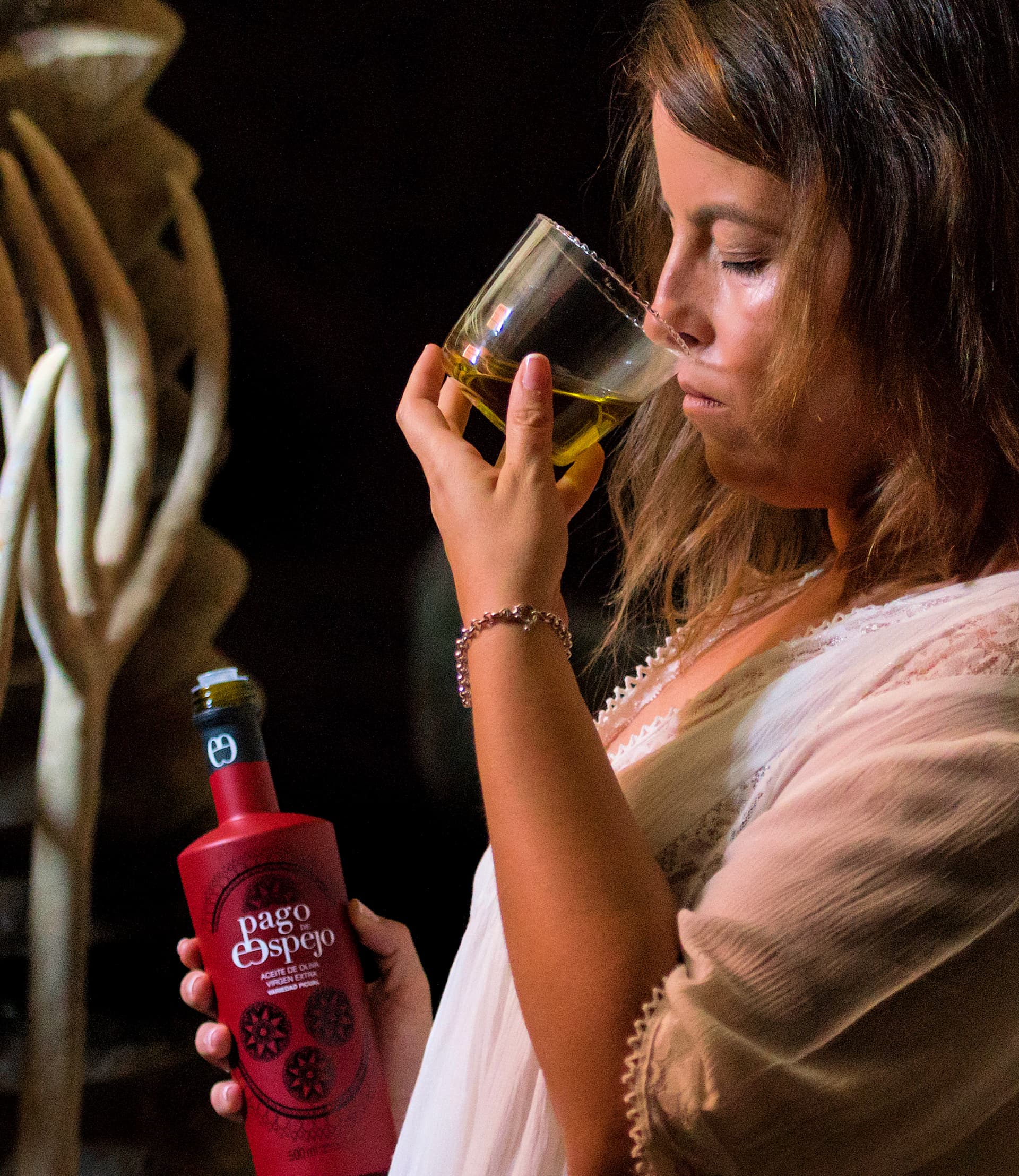
Rosario Minchón
Pago de Espejo’s groves sit among the olive orchards surrounding Jaén, in the heart of Andalusia. “Our town is Villanueva de la Reina. It has its own regional denomination and very special conditions that allow us and others in this area to produce quality,” Minchón said.
Extra virgin olive oil has been produced by Minchón’s family for four generations. “Fifteen years ago, my sister and I became involved and decided to develop the brand, whose name comes from our mother’s surname,” she said.
From the outset, the goal was to raise quality further through field practices and a defined sensory profile. The producer said it aims for lively green notes with a rounded finish — energy and tension without harsh edges — qualities the NYIOOC panelists cited in its evaluation.
Minchón said the cornerstone is a truly early harvest. “When we say early harvest, we truly mean early. It is not just a marketing term,” she said. “It changes everything in the orchard. If you harvest early, you must adapt every agricultural practice to that decision, especially pruning, so the tree has time to recover and prepare properly for the next season.”
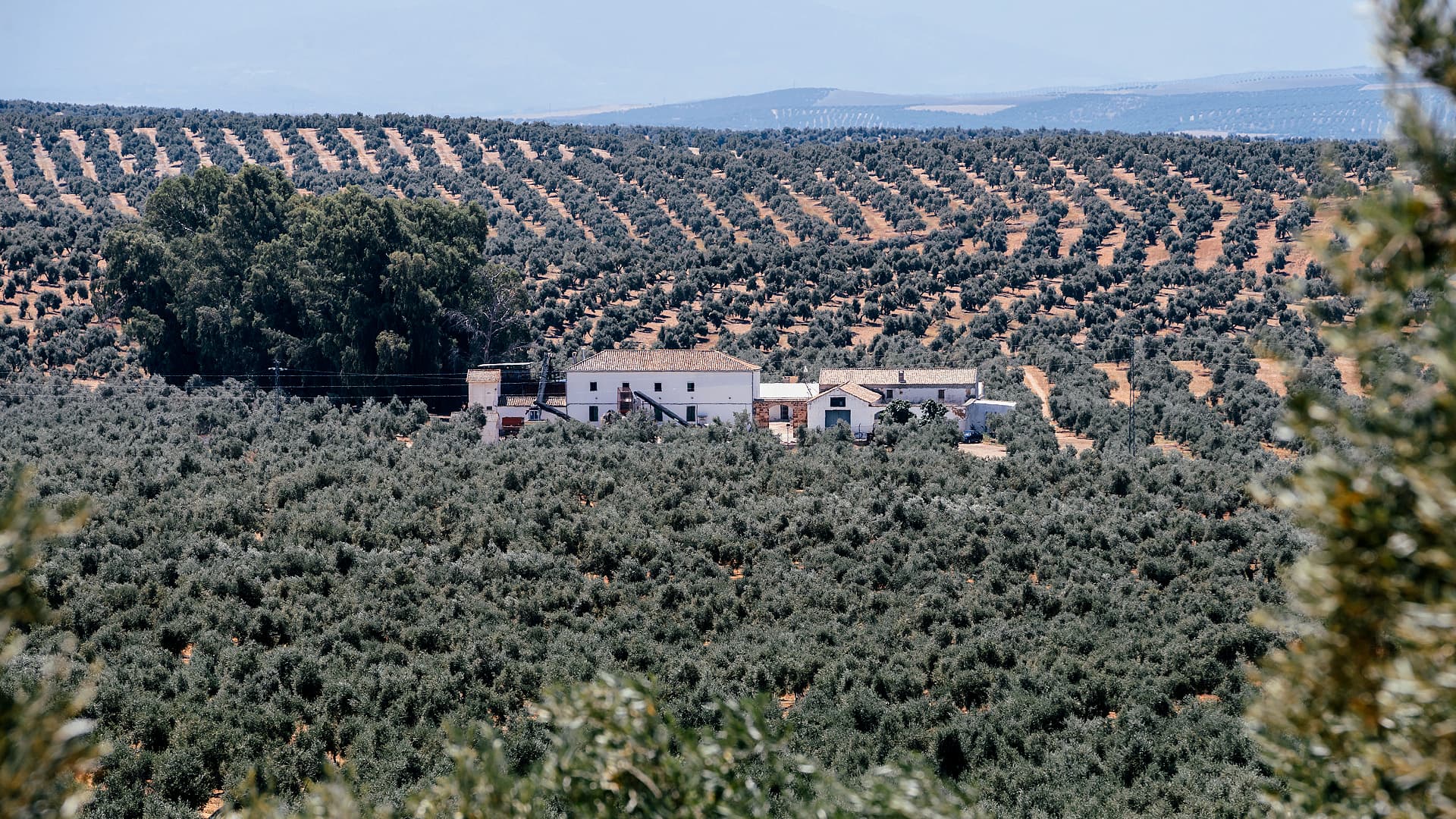
Pago de Espejo’s groves
She said the goal is consistency across markets. “We aim for balance above everything else. We sell the same quality and taste in Japan, Poland, the United States, and Spain. We do not make different versions,” Minchón said. “We have one identity. We want our oil to have energy and character, but never to overwhelm the palate.”
Unpredictable weather continues to shape decisions in the groves. The extremes reported in Spain affected parts of the region, but Minchón said Pago de Espejo had finished harvesting before conditions worsened.
“This season we had two months of continuous rain, which made harvesting impossible in many areas. We started in October and finished at the end of October,” she said.
In the mill, Minchón emphasized temperature control as a key quality safeguard in olive oil milling. “Without tight control, you can see bitterness building up,” she said. “If it becomes too intense, most consumers will not like it.”
She also cautioned against harvesting too early to pursue marketing headlines. “There is a race in Spain to be the first to release early harvest olive oils. In my opinion, that race can damage quality,” Minchón said. “You should harvest early, yes, but not before the fruit is ready to give its best. In October, even 20 days can completely change the balance of an oil.”
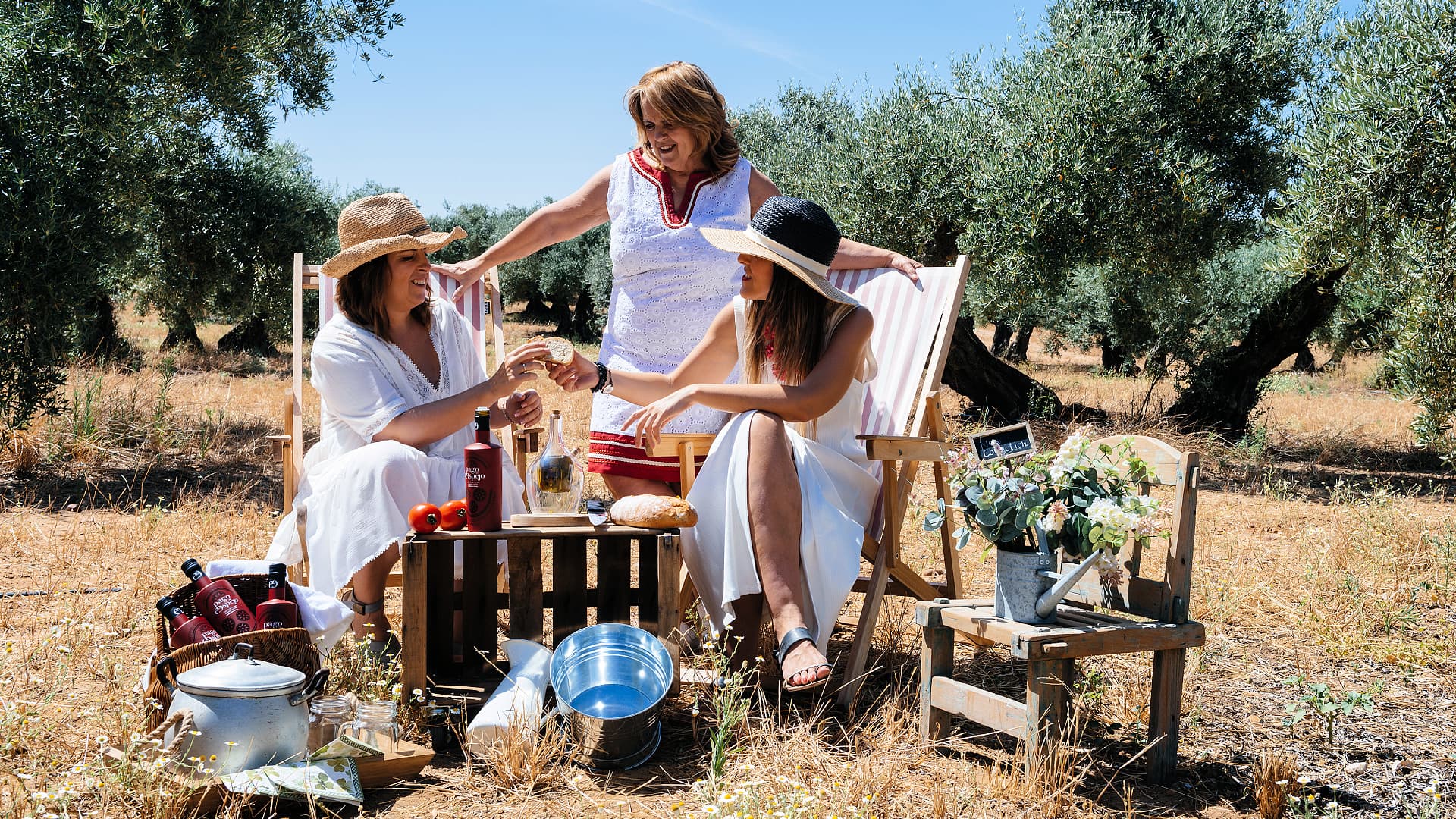
Rosario Minchón, Rosario Espejo and Mercedes Minchón
At season’s end, the company also made a limited run of very early-harvest extra virgin olive oil — 1,000 bottles with a more robust profile. “I can tell it is stronger and less balanced than the oil we presented in New York,” Minchón said. “Still, some consumers look for it.”
In the groves, Pago de Espejo follows an integrated approach to olive farming. “Integrated production is a middle way between conventional and organic,” Minchón said. “As a fourth generation of olive growers, we believe the tree sometimes needs support, but always in a controlled and responsible way.”
She said the method reflects both sustainability goals and economic constraints. “I am not completely convinced that organic is always the best solution in every year and every harvest,” Minchón added. “In my opinion, integrated production is currently one of the best ways to balance sustainability and economic reality.”
Minchón said variability is a defining feature of the Mediterranean climate. “Some years are very rainy and some years are completely dry. That is why the Romans built aqueducts,” she said, arguing that planning should focus on water resilience as much as the broader climate change debate.
“For us, soil erosion is even more urgent than the climate debate itself,” Minchón said. “Spain has lost significant amounts of soil over the decades. Protecting and rebuilding our soil must become a priority if we want future generations to continue producing olive oil here.”
She described water availability as the central challenge for growers and called for investment in infrastructure. “If water is the problem, then let us act,” Minchón said, pointing to options such as dams, distribution projects and desalination.
Minchón also cited consumer awareness as a hurdle for premium producers. “It is surprising that sometimes premium extra virgin olive oil is better appreciated abroad than here in Spain,” she said.
“We are the largest olive oil producers in the world, yet Spain is still, in many ways, a sunflower country,” Minchón added. “That shows how much education is still needed.”
Those concerns have pushed the farm to organize tastings in different settings. “You have to educate people,” Minchón said. “The other day we held a tasting in Seville. People were surprised by how different our olive oil tasted.”
For Minchón, tastings can be a turning point for consumers. “Once people try a true premium extra virgin olive oil, something shifts,” she said. “From that moment on, going back to low quality is not even an option.”
Share this article
Related Articles
Jun. 11, 2025
Values of Hospitality, Sustainability Drive Quality at Misciattelli Bernardini Farm
From its historic headquarters in the old town of Allerona to the sustainably managed groves in the neighboring hills, an Umbrian producer preserves tradition while embracing change.
Oct. 29, 2025
Hot, Dry Start to Autumn Lowers Production Estimates in Spain
The lack of rain and high temperatures at the start of autumn have led Spain’s leading cooperative to lower its harvest estimate.
Mar. 1, 2026
Inside Séka Hills’ Quality-First Approach in California’s Capay Valley
Séka Hills won one Gold and four Silver Awards at the 2026 NYIOOC, with its Coratina earning top honors. The Capay Valley estate credited cool harvest conditions and a long-term focus on quality and land stewardship.
Apr. 7, 2026
On Etna’s Volcanic Slopes, Sikulus Revives a Family Olive Oil Legacy
At Sikulus, centuries-old Nocellara Etnea trees, volcanic soils and an early-harvest strategy define a quality-focused approach that has helped carry Sicilian olive oil to markets around the world.

Mar. 11, 2026
Students Use Podcast to Preserve Heritage of Karaburun’s Date Olives
In the Karaburun Peninsula, students are using audio storytelling to connect climate change, rural depopulation and intergenerational knowledge to the future of the region’s distinctive date olives.
Mar. 22, 2026
Award-Winning Olive Oil Anchors a Slower Way of Life on Lefkada
On the Greek island of Lefkada, Andreas Dimitrakopoulos has transformed a neglected family grove into an award-winning olive oil farm that also offers tastings, cooking classes and slow-food dining.
Dec. 18, 2025
Climate Pressures Drive Search for New Olive Varieties Suited to Modern Groves
Climate change and labor shortages are pushing olive growers to explore new varieties that offer greater resilience, productivity and flavor diversity.
Aug. 6, 2025
Southern Hemisphere NYIOOC Nears Registration Deadline as September Results Loom
Registration for the Southern Hemisphere edition of the 2025 NYIOOC World Olive Oil Competition is closing soon, with organizers preparing to reveal award winners beginning in September.