



Auburn University Raising Money for Olive Oil and Alzheimer's Research
Researchers at Auburn University have found that a compound in extra virgin olive oil might be valuable for helping prevent or slow the progression of Alzheimer’s disease.
 Photo courtesy of Magnus Manske
Auburn University is hosting Tiger Giving Day on February 21 to raise funds for research on oleocanthal in extra virgin olive oil as a potential treatment for Alzheimer’s disease, with a focus on preventing or reversing the progression of the disorder. The research conducted by Amal Kaddoumi and her team has shown promising results in reducing behaviors related to Alzheimer’s in mice, leading to hope for potential clinical trials and a new treatment for the disease.
On February 21, Auburn University will host Tiger Giving Day, a 24-hour effort to raise funds for the institution.
Part of the revenue will be designated for promising research that shows oleocanthal, a naturally occurring compound in extra virgin olive oil, can help Alzheimer’s patients.
I’d like to invite Olive Oil Times’ readers to join me in supporting this project by giving to it and by sharing the information through social media and email.
In an interview with Olive Oil Times, Amal Kaddoumi related the staggering prevalence of the disorder and touches on what her team is doing in the fight against it.
“According to the Alzheimer’s Association, 5.7 million Americans are living with Alzheimer’s, with the number projected to double by 2050,” she said in a written statement. “Currently one in 10 people over the age of 65 have Alzheimer’s dementia. If you look around your office, your home or your neighborhood and do the math, it quickly becomes a worrisome number.”
See Also:Alzheimer’s and Olive Oil“However, we at Auburn University would like to make it a thing of the past, using something that you probably have in your kitchen right now,” she added. “My team and I are working to understand how oleocanthal in extra virgin olive oil may be able to prevent or even reverse the progression of Alzheimer’s disease. This compound, when given separately or as part of the oil, has already shown a lot of promise in our previous research, and we would like to see if it works in people.”
“On February 21, we will have one 24-hour day to raise money so more people can try this therapy out in our clinical trial,” she continued. “It’s part of a larger Auburn University effort called ‘Tiger Giving Day,’ and we are excited to be a part of it! Since the time window is so short, everything will be done online. We are getting things ready and setting up a special website for the big day.”
“I’d like to invite Olive Oil Times’ readers to join me in supporting this project by giving to it and by sharing the information through social media and email,” she added. “If you have any questions, please don’t hesitate to contact me.”
Kaddoumi has good reason to be hopeful about the research. In November of 2018, she reported on her multidisciplinary team’s investigation of oleocanthal as a novel treatment for Alzheimer’s disease. The compound is a strong antioxidant and a non-steroidal anti-inflammatory agent.
Her studies reveal oleocanthal-rich extra virgin olive oil is highly effective in reducing behaviors related to Alzheimer’s.
“We are very excited about our findings with oleocanthal, which demonstrated several positive effects against Alzheimer’s in mice that express the disease, such as enhancing the blood-brain barrier function and reducing the formation of amyloid-beta plaques and neuroinflammation, all of which are hallmarks of Alzheimer’s,” Kaddoumi said in a press release.
Kaddoumi added that the results suggest oleocanthal could be beneficial for protecting memory and learning ability in patients with the disorder. Her team is hoping their work leads to clinical trials and results in a new treatment for Alzheimer’s and related conditions.
Related Articles

Apr. 29, 2025
Botanical Pesticide Outperforms Synthetic Alternative in Killing Olive Bark Beetle
A natural, garlic-based pesticide is found to be more effective than the closest artificial alternative, with none of the hazards.
Mar. 26, 2025
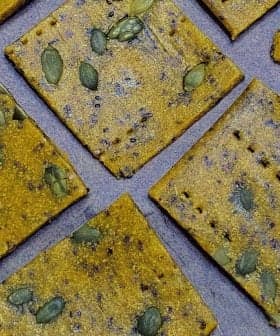
Using Extra Virgin Olive Oil and Olive Mill Byproducts to Create Healthy Snacks
Researchers use extra virgin olive oil and a proprietary olive mill byproduct to bake polyphenol-enriched crackers.

Aug. 5, 2025
Olive Pulp-Enriched Diet Benefits Cattle and Reduces Costs
New research shows feeding olive pulp to cattle improves fatty acid profiles in milk and beef, lowers feed costs, and improves sensory analysis.
Jun. 25, 2025
Yeast Study Finds Solution for Olive Mill Wastewater Treatment
A new study explores using Yarrowia lipolytica yeast to convert olive mill wastewater into valuable compounds, potentially benefiting various industries.

Jan. 28, 2025
Mill Wastewater Extract Yields Promising Health Benefits
A dietary supplement made with hydroxytyrosol extracted from olive mill wastewater inhibited the production of inflammatory compounds and showed antibacterial properties.
Dec. 18, 2025
Climate Pressures Drive Search for New Olive Varieties Suited to Modern Groves
Climate change and labor shortages are pushing olive growers to explore new varieties that offer greater resilience, productivity and flavor diversity.
Jun. 28, 2025
Oleacein: The Promising Phenolic Compound in Extra Virgin Olive Oil
Oleacein, a phenolic compound found in extra virgin olive oil, has antioxidant, anti-inflammatory, and potential anti-atherosclerotic properties with significant impacts on human health.
Dec. 30, 2024
Spain Tackles the Salty Truth About Table Olives
High sodium levels in table olives concern public health officials, but the pollution from the production process is even greater.