Turkey Expecting Near-Record Olive Oil Production
As the harvest is about to get underway, producers estimate total production will be between 200,000 and 250,000 tons. However, not all producers faired equally with the south having a better year than the north.
Turkish olive oil production is predicted to continue following its upward trend in the 2019/20 crop year.
Producers and officials in the Turkish olive oil sector are expecting to see the second highest yield in the country’s history, with this year’s crop expected to exceed 200,000 tons for only the third time.
In general the groves located in the southern parts of Turkey are more productive this year, whereas the North Aegean parts of Turkey suffered strong rain and high heat during the blooming period, which led to serious production losses.
“At the moment everything seems ok and I think we will have a yield of around 250,000 tons,” Levent Bilginogulları, the head of the Aegean Exporters Association, told Olive Oil Times.
More conservative estimates put this year’s yield at 200,000 tons or more.
See Also: 2019 Olive Harvest News“We like to talk big,” Chris Dologh, the general manager at Kristal Oil and board member of the International Olive Council, told Olive Oil Times. “But let’s wait and see. I would say [production will be] at least 200,000 tons.”
“The harvest expectations look good in the field at the moment. The rain helped the trees to cope with the heatwaves,” he added. “Fingers crossed, it should be a better year than the previous, quality and quantity-wise.”
Last year, Turkey produced 183,000 tons of olive oil, a disappointment for many after the record-breaking harvest of 2016/17 in which 263,000 tons of olive oil were produced.
However, producers will not have to wait much longer to find out what this year’s production numbers will look like. In the North Aegean region, in which many of Turkey’s older and more traditionally farmed olive groves are located, the harvest will begin in the coming days.
“This is two weeks earlier than the previous year,” Bahar Alan, the co-owner of Nova Vera, told Olive Oil Times. “While the olive quality is better compared to last year, the amount of olives varies from region to region.”
Alan expects to produce about 100 tons from his olive groves. He said that while Turkey as a whole is expecting a production increase, mainly fueled by more modern and intensive olive groves in the southwest of the country, heavy spring rains followed by high heat-damaged many olive trees in his region.
“In general the groves located in the southern parts of Turkey (Mugla, Antakya, Mersin) are more productive this year, whereas the North Aegean parts of Turkey (mainly Manisa) suffered strong rain and high heat during the blooming period, which led to serious production losses,” he said.
However, the hot summer means that for surviving olives to maintain their quality, more rain is now needed in the North Aegean region.
“In the areas where no irrigation is made, the best thing that can happen now is a ‘normal’ smooth rain, which rarely happens any more due to climate change,” Alan said. “One good thing about this season is that in general, the olive quality is much better than last year. In case we do not face any extreme conditions, this year we will continue to produce higher quality olive oils.”
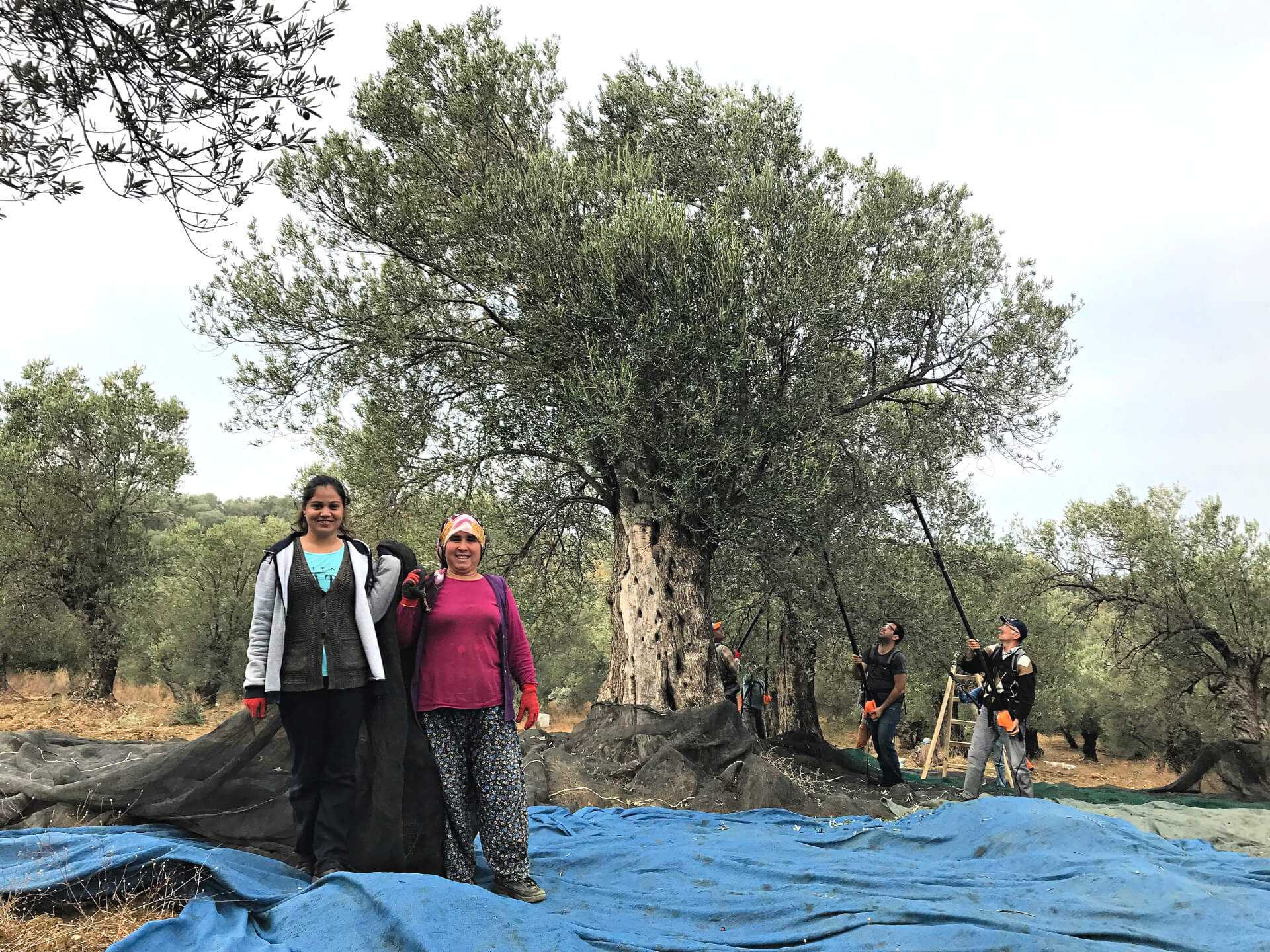
Ethem Bey, Turkey (OOT Archive)
Further south of Ayvalık-based Nova Vera, too much rain is not usually the problem for producers. Last year, high heats combined with drought-like conditions significantly depleted the harvest. However, climatic conditions have been much better this year.
“We are anticipating this year’s harvest to be significantly stronger than last year,” Merve Doran, the co-owner of Oleamea, told Olive Oil Times. “The conditions have been good for olive cultivation, but we experienced a hot summer along with elevated levels of humidity.”
Doran expects to produce 60 to 70 tons of organic extra virgin olive oil this year. She added that one of the biggest challenges facing olive oil producers in her part of southwestern Turkey is water shortages.
“In order to maximize our harvest, rain in late September or early October would be beneficial,” she said. “Rain would certainly help rejuvenate the trees to ensure an optimal harvest.”
Doran believes the whole Aegean region of western Turkey will continue to get hotter and drier, which means those who are able will need to begin investing in irrigation systems.
“This type of climate pattern has seemingly become the new reality so we are attempting to adapt to these conditions,” Doran said. “In some of our lands, we can irrigate but others are located in challenging terrain, so we have limited options regarding water accessibility.”
The forecast throughout the Aegean region remains hot and dry, with little to no rain predicted for September and the majority of October. While producers and their olives may not get the respite that rain would bring, optimism remains about the upward trajectory of the sector.