Q&A With IOC Director Jean-Louis Barjol
The executive director of the International Olive Council discusses Australian standards, mixed results in India and China and his ambitions in the United States.
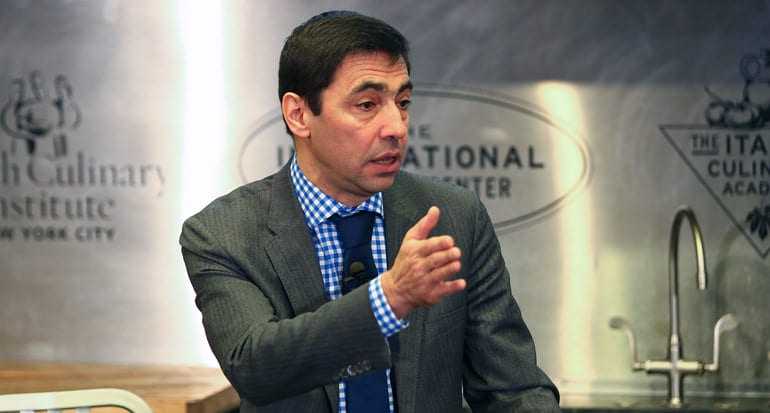
Jean-Louis Barjol is the newly appointed executive director of the International Olive Council in Madrid. For the past two years, he served as deputy director for the IOC in the Administrative and Financial, and the Survey and Assessment divisions.
Before joining IOC, Barjol was the director general of the Comité Européen des Fabricants de Sucre (CEFS) known as the European Committee of Sugar Manufacturers.
He will head this international, intergovernmental body until December 2014 looking at policy-making issues and facing the challenge of bringing olive producing countries to work more effectively together.
Barjol holds a Master’s degree in agricultural economics from the Institut National Agronomique de Paris and was knighted Chevalier du Mérite Agricole Français for his services in Spain between 1995 and 1998.
He is married with two children. He enjoys reading history books; he feels we can learn much by studying the trends, customs and habits of past generations.
We spoke with Barjol by telephone.
Mr. Barjol, your first official visit was to the United States where you attended the North American Olive Oil Association’s (NAOOA) mid-year meeting. What are IOC’s plans to promote olive oil there? Is this a priority market for IOC?
The US is the world’s largest market for imports of olive oil if you consider the EU as one market and ignore intra-EU trade.
For me, developing this market is a top priority. We hope to begin a campaign in July this year for the promotion of olive oil and table olives in North America for 2011 and 2012.
Invitations to tenders will be sent out as early as April this year and an agency will be selected for the launch in the United States and Canada. IOC plans to spend 1.2 million euros on the project.
Australia is considering the adoption of standards that depart from IOC. Is this a concern for you? Do you find this worrying?
It’s worrying for them, not for us. Australia does not belong to the IOC. For reasons I don’t understand, they have never wanted to become a member. They use our laboratories every year; they attend our meetings and they come to be recognized by IOC for their competence in chemical and sensory characteristics.
I say it’s worrying for them because after all, 98 percent of the world’s export comes from members of IOC.

Why do you think this is happening?
I’m not sure. Australians are quite demanding but in this specific case they are not respecting IOC and Codex standards; there are quite a few discrepancies which seem to favor home producers more than importers.
Could you give me an example of one discrepancy?
The Australian limit for campesterol of 4.8 percent is higher than the IOC and Codex standard which fixes a limit of 4 percent.
For us, the quality of olive oil is a key factor.
Can you tell me about the situation in India?
Promotion campaigns were carried out in India by IOC but the results have been disappointing. I can’t commit too much here as I have only just taken on my new role, but India has been a much slower market to develop olive oil consumption compared to China where the market is developing very quickly. But things can evolve.
You will be going to China soon. What do you plan to do during your visit?
I will be in Shanghai for the opening ceremony of the 7th International Exhibition of Olive Oil and Edible Oils starting on the 18th of April. I will meet with members of the agricultural ministry as well as the press, and IOC will have a stand (at the exhibition).
Can you comment on the situation in Spain at the moment regarding the low prices of olive oil?
This is indeed a preoccupying situation. Studies carried out by the Spanish Olive Oil Agency have shown that over the years the added value in the olive oil production chain has been very low; hardly 2.5 percent. Also, because of Spain’s important position in world production, the price of olive oil set in Spain will influence the price of olive oil in other exporting countries.
Economically, this situation cannot be maintained; certainly, some of the planned investments will have to be put on hold and we will stop harvesting a certain number of olives. This will then cause a reduction in production in relation to demand. The result would be the risk of having a sudden surge of price increase.
We’re entering a kind of yo- yo phase where we would have a lack of production generating high prices for a relatively long period, as we would need to plant new crops and allow enough time for harvesting. This would indeed have an effect on all the exporting countries.
There have been recent reports of fraud. What is the cause?
I’d like to clarify a point that is not always understood. IOC is an intergovernmental organization with very high chemical and sensory standards. The member countries belonging to our organization have undertaken to respect these standards for the products they export and import.
It is important to know two things when talking about the quality of olive oil. The useful life cycle and conditions of storage, and when the analyses are carried out
The IOC specifies that analyses must be done at the time of international trading; this is vital. Light, heat and bad storage will deteriorate the quality of olive oil. We must respect this product; store it away from light, from heat so as to appreciate all its fine qualities.
Is your new role at IOC very different from that of CEFS?
Yes, very different; by the size of the industry and the product. Olive oil is a much more sophisticated product than sugar. Here at IOC, I am applying my experience of working in the public sector and in an agro-industry federation.
Do you read Olive Oil Times?
Yes, I do; I find it dynamic, I like it.
Thank you for your time, Mr. Barjol.