



Adoption Program Saves Town, One Tree at a Time
For decades, people fled Oliete, mostly to Barcelona, and left their secular olive groves behind. In 2014, a group of young locals came up with an idea to bring their village’s forgotten resource back to life.

Oliete, a once prosperous town with over 100,000 olive trees and almost 3,000 residents, has seen a decline in population and abandoned olive groves, prompting a group of young locals to create an online platform for people to adopt and revive the neglected olive trees. Through the Apadrina un Olivo project, 5,000 olive trees have been recovered, producing olive oil and providing sustainable rural development opportunities in the region.
In its heyday at the beginning of the 20th century, Oliete was a prosperous little town.
Over 100,000 olive trees were the way of life for the almost 3,000 people who used to reside in this corner of Teruel, in the remote mountains of Eastern Spain.
This is a social entrepreneurship project where we apply innovation and new technologies to generate sustainable rural development.
Those times are long gone. For decades, people fled Oliete, mostly to Barcelona, and left their secular olive groves behind.
Now, Oliete’s population is less than 400 and 70 percent of its olive trees lay abandoned. The last of the three olive oil mills that once functioned here was closed 10 years ago as Oliete — like many other villages in the region — seemed headed toward relinquishment.
This is an isolated area. The distance to the Mediterranean is just 120 km (75 mi), but the sea lies beyond a high mountain range. Zaragoza, the nearest major city, is 100 km away.
But some “Olietans” believed their village’s fate could still take a different path. In 2014, a group of young locals came up with an idea to bring their village’s forgotten resource back to life: they would create an online platform to allow people all over the world to adopt abandoned olive trees from Oliete.
Their ultimate objective was to offer a new opportunity for people to stay and work in their hometown by recovering uncultivated fields.
That’s how the association Apadrina un Olivo (adopt an olive tree) for the recovery of Oliete’s uncultivated olive trees was born.
Alberto Alfonso and Sira Plana, the main promoters of the project, meet an Olive Oil Times reporter at the association’s brand new olive oil mill.
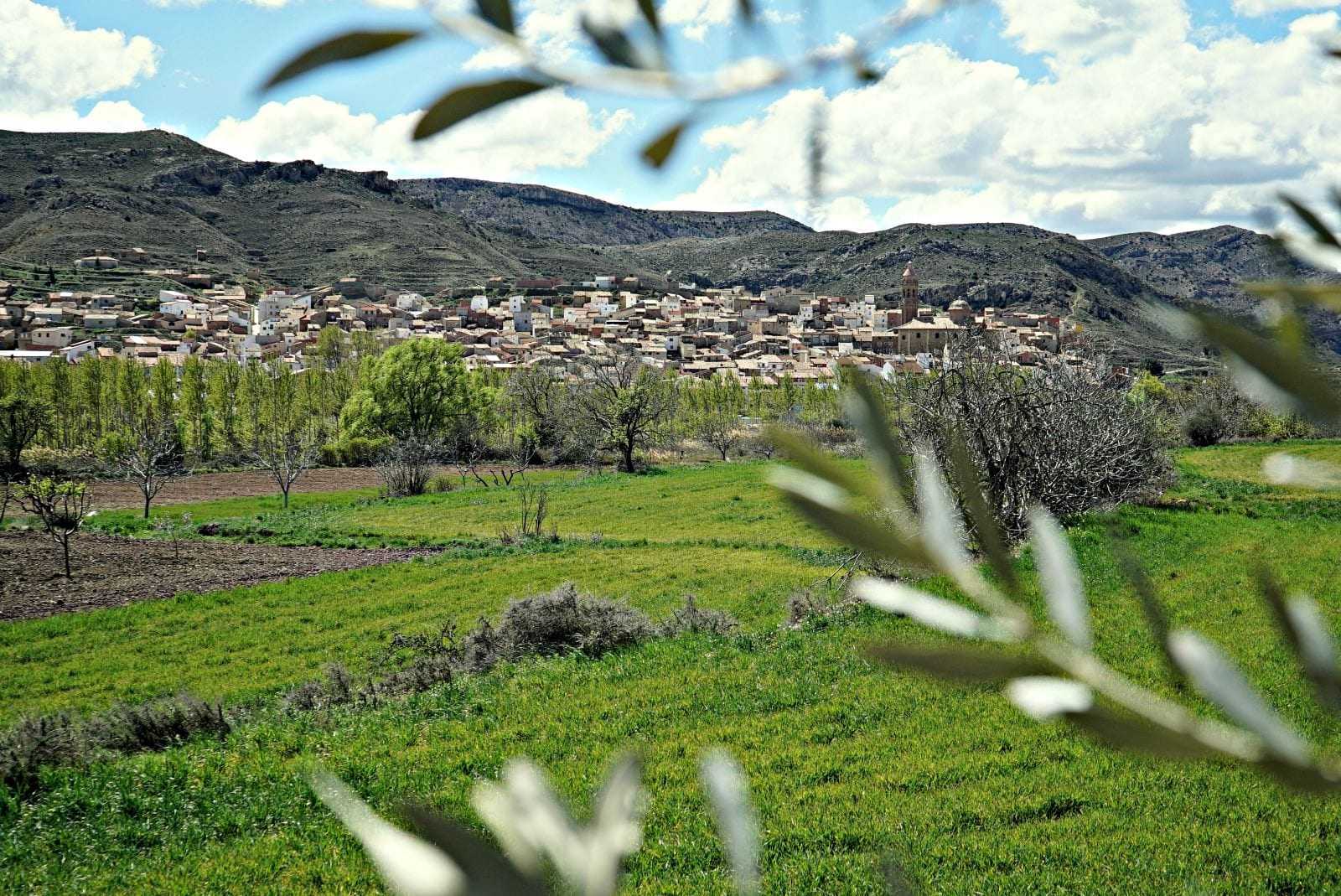
Oliete, Spain
Just across the Martín River, Oliete’s ancient skyline overlooks this new facility which, for the first time in years, has produced oil from locally milled olives from the 2016 – 17 campaign.
Alfonso told OOT how it all started: “More than three years ago, we were picking olives with my family and we noticed that every time there were fewer people harvesting. People here did not regard taking care of their olive trees as profitable and they started abandoning their olive groves. So we thought of a new way to give value to them with the help of society.”
The way the project works is simple: for €50 ($52.96) per year the “padrinos” (literally “godfathers”) can choose which tree they want to adopt, give it a name and visit Oliete to meet it whenever they want.
They get constant updates on the evolution of their tree through the app “Mi olivo” (My olive tree) and they receive two liters of olive oil made from Oliete’s recovered olive trees.
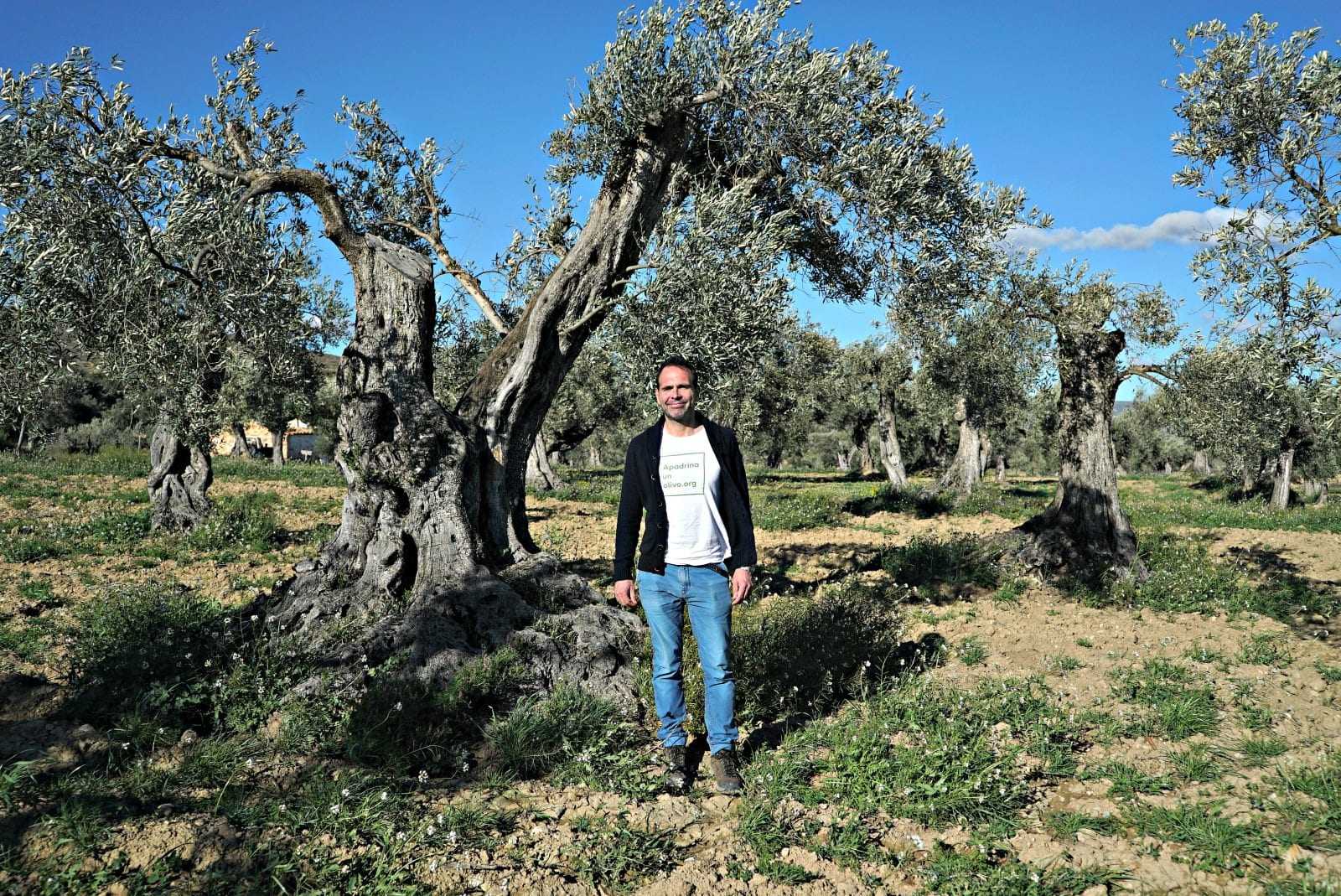
“This is a social entrepreneurship project where we apply innovation and new technologies to generate sustainable rural development,” Alfonso said.
Three years after its creation, Apadrina un Olivo has managed to recover 5,000 olive trees and has started producing its own olive oil thanks to the help of 2,000 supporters, as well as public institutions and private sponsors.
The association provides work for five staff and cooperates with a local association of people with disabilities who take part in the tasks of recovering the abandoned trees.
“We produce a responsible olive oil: it is solidary because the supporters are the ones making this possible thanks to their contribution, it is social because we work with people with intellectual disabilities and it is sustainable because we practice organic agriculture,” Alfonso explained.
“We wanted to be part of that change in the village and to create a project with a soul,” added Sira.
Oliete’s project is often seen as a model for further rural development actions in the so-called Laponia of the South, an informal region which comprises parts of the provinces of Teruel, Cuenca, Guadalajara, Soria and Valencia.
This huge rural area in central and Eastern Spain, with an average of 5 inhabitants per square kilometer, is one of the less populated — and most aging — regions in Europe.
Projects like Apadrina un Olivo, as Alfonso puts it, “shine a light in the middle of desolation.”
Related Articles

Dec. 18, 2025
Spanish Olive Oil Exports Top One Million Tons as Prices Fall
Spanish olive oil exports exceeded one million metric tons for the first time since 2021/22, driven by a strong harvest, even as export values and prices declined.

Mar. 13, 2025
Philippe Starck Reflects on Olive Mill's Bold Design
In the Andalusian town of Ronda, the mill is envisioned as an homage to Andalusian culture and practical space for high-quality olive oil production.
May. 6, 2025
Producers in Spain Cap Strong Harvest with Quality Awards
Spain's olive industry thrived in 2025, producing 1.41 million metric tons and winning 93 awards at the NYIOOC World Olive Oil Competition.

Mar. 11, 2025
How Two Ancient Olive Trees in Molise Help Fund Meals in New York
Proceeds from the olive oil produced from two centuries-old olive trees supply meals for a Harlem outreach program.

Dec. 19, 2024
Olive Polyphenols Show Promise as Aquaculture Feed Ingredient
A new study demonstrates the benefits of polyphenols derived from olive industry waste in aquacultural feeds.
Apr. 7, 2025
Revitalizing Salento: Entrepreneurs Fight Xylella with New Ideas
Puglia's new generation of entrepreneurs is reviving the region's devastated olive industry, using innovative ideas and technologies to rebuild.

Jun. 23, 2025
Olive Pomace Ash Shows Promise as Eco-Friendly Cement Substitute
Replacing up to 20 percent of the cement used in mortar production with olive pomace ash lowers the environmental impact of cement production without compromising mortar quality.
Dec. 5, 2025
Archaeologists Uncover Massive Roman Olive Oil Complex in Tunisia
Archaeologists excavating Henchir el-Begar in central Tunisia have uncovered one of the largest olive-oil production complexes of the Roman world, complete with monumental beam presses.