Patience and Investment Yield Award-Winning Olive Oil from Hills of Verona
The Cordioli family continues to overcome climatic challenges to produce their extra virgin olive oils in one of the world’s northernmost olive-growing regions.
The Cordioli family, olive oil producers near Verona, Italy, won a Gold Award at the 2023 NYIOOC World Olive Oil Competition. It was the third time their extra virgin olive oils had secured the industry’s most coveted award.
Growing olives is work for crazy people. It is spiritually satisfying, but it’s very hard work, even harder when there are dramatic weather events.
“We are very happy with the award, as it acknowledges all the passion and the work we as small producers put into olive growing all year round,” co-owner Ceil Friedman told Olive Oil Times.
Cordioli’s olive trees cope with the challenging weather conditions of the northern Veneto region, where olive trees bear fewer fruits than in Italy’s central and southern regions. “We never looked for quantity, so we put all our efforts into quality,” Friedman said.
See Also: Producer Profiles“Besides work in the groves, you are dependent on a few elements you can control, and to many more, you cannot control at all, such as the climate,” Friedman said. “It is patient work of economic commitment and, of course, time,” she added.
Veneto was once considered the most northern region in the world to grow olive trees, with the unique location adding distinctive and surprising flavors to locally produced olive oil.
The wide variation in the relatively small producing region, where approximately 5,000 hectares of olive trees are planted, has been recognized with four Protected Designation of Origin certifications established by the European Union.
Cordioli’s trees populate three separate lots, each with specific cultivars, some of which thrived on Verona’s hills for centuries, including the Grignano and Favarol varieties. From each lot, the company produces a different blend.
This year’s winning blend is Campo delle Marogne, an extra virgin olive oil named after the dry stone walls known as marogne, a typical feature of the local landscape. The walls border farmland terraces, known as campo.
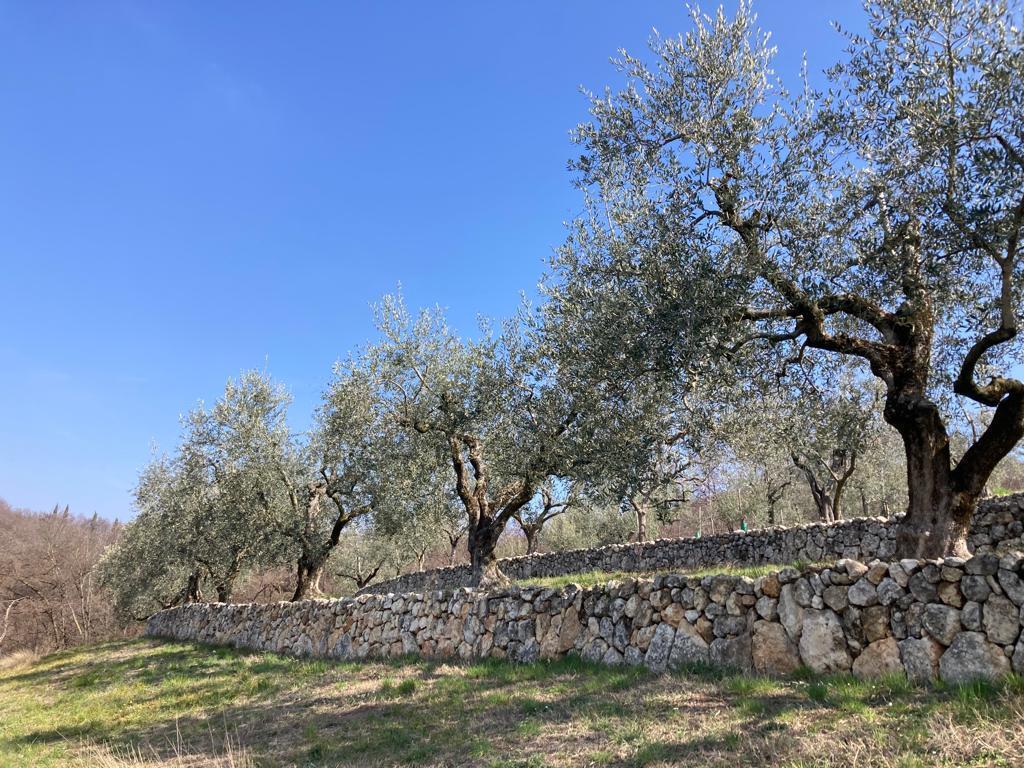
Co-owner Erminio Cordioli restored the marogne in the company’s terraced groves.
The dry walls protect the soil from erosion caused by rainwater, and the marogne stones have been a crucial part of local agriculture for hundreds of years, providing and maintaining fertile soil across generations.
The roots of the olive trees contribute to the stability of the terraces. “Since the beginning, my husband, who works in construction, dedicated himself to restoring the marogne in our orchard, as they not only protect the soil from rainwater erosion, they are also an essential piece of history of the area,” Friedman said.
“We restored 11 great marogne walls,” she added. “Some of them are really large walls. It was a very big intervention in the grove. It was also a very relevant economic commitment for us.”
Campo delle Marogne’s surface slightly exceeds 1 hectare, home to approximately 200 olive trees; some were planted more than 150 years ago.
Friedman and her husband Erminio Cordioli began taking care of the olive trees with a professional approach a few decades ago when her father-in-law passed away, leaving behind an olive grove they named Campo Storico (historical grove) with about 300 olive trees.

Erminio Cordioli and Cecil Friedman
“This choice of ours, olive oil production, was quite unusual in an area well known for its wines, such as Valpolicella,” Friedman said. “Wine tends to deliver more profits, which is also why the previous owners sold us a small olive grove of theirs a few years ago.”
“They were more interested in the large vineyards they manage,” she added. “Should one look at the economics of the area, only a few would focus on olive oil making.”
Over time, Campo delle Marogne was added to the family’s orchards, with a third area where more than 180 new olive trees of several varieties, including Itrana, were planted.
For the first time this year, Cordioli crafted an Itrana olive oil, its Grand Cru Augusto brand, named after Erminio’s father, to whom it is dedicated.
“It has been just a small production, no more than 100 bottles, but we plan to make it every year to celebrate Augusto’s memory,” she said. “Itrana is such an extraordinary cultivar.”
“We believe that the original proprietor of Campo delle Marogne was an affluent farmer of his time and had the means to set up a special orchard,” Friedman added. “While we only have local cultivars in Campo Storico, Campo delle Marogne is also home to olive trees from different regions, such as Frantoio and some Moraiolo. There is even Coratina and just a little bit of Grignano.”
According to the producer, a well-managed orchard in the area does not require chemical products. “Even if we are not yet certified as organic, that is our approach to olive oil making, for the wellbeing of our family and customers,” she said.
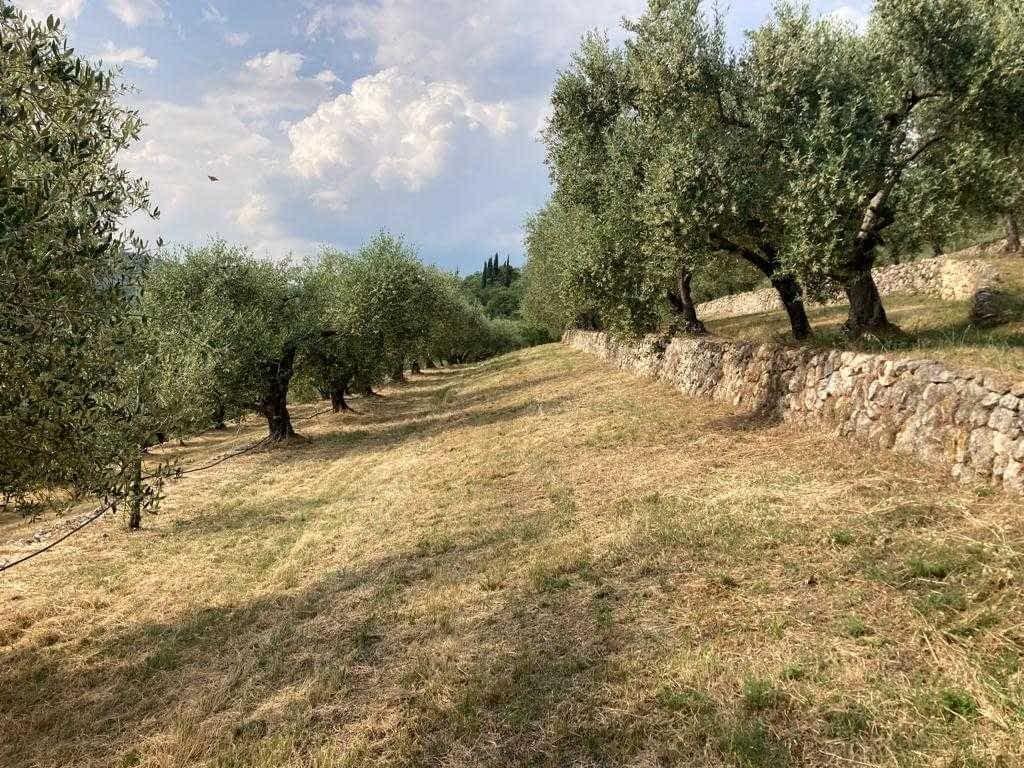
Along with restoring historical features, Cordioli follow strictly organi practices.
Campo delle Marogne is also a rainfed orchard. “Given the challenging weather in the last season, we provided the trees with some emergency irrigation,” Friedman said, noting how a careful day-by-day approach is essential to achieve maximum quality.
Across the last 14 harvests, Cordioli has relied on an expert agronomist. “Every day, she tastes the new olive oil being produced. By doing this, she can suggest to the olive miller some adjustments that might be applied in the mill during extraction to reach the maximum quality,” she said.
Friedman, also a certified olive oil taster, noted how this continuous dialogue with the agronomist allows the farm to craft their blends with the profile and character they intend to achieve year after year. “Olive oil is then stored in argon-filled steel tanks, and bottling happens only in small lots when needed,” she said.
Besides sales to local shops and restaurants, Cordioli’s olive oil is distributed by a couple of shops in the United States, where Cordioli also sells directly.
According to Friedman, a more recent trend has seen customers coming from northern European countries, such as Norway, Germany, Austria and France.
“Sometimes you feel that abroad there is even more appreciation for such high-quality products than here, even if here we have some very affectionate customers that totally understand high quality,” she said.
“2022 has been a very special year full of awards and acknowledgments for our work,” Friedman added.
In 2020 the farm produced more than 2,000 liters of olive oil, and 1,500 were produced last year. Still, in 2021, almost no olive oil was produced due to a severe hailstorm and powerful winds.
“We can only hope every season will be like 2022, but of course, much of that is on the shoulders of Mother Nature,” Friedman said. “The climate is changing tremendously over the years, so every year is a different adventure.”
“I am sure I am not the only one to say that growing olives is work for crazy people,” she added. “It is spiritually satisfying, but it’s very hard work, even harder when there are dramatic weather events.”
“Such impacts affect us so much,” Friedman concluded. “It is so heartbreaking when you see how all your work falling on the ground under the impact of a new extreme weather event.”