Acclaimed Producer Prepares for Fruitful Harvest in Tunisia
The award-winning French-Tunisian olive oil producers behind the Parcelle 26 brand focus on quality in the groves and at the mill.
The olive harvest in the northern Tunisian region of Zaghouan is underway.
“We anticipate a promising season with at least an average yield and excellent quality olives,” said Michaël Zeitoun, owner of the award-winning French brand Parcelle 26 by HDMP.
There’s no secret formula or special trick. Our holistic approach to olive growing results in our high-quality olive oil.
In early October, around 90 workers will fan out across Zeitoun’s 50-hectare farm, reviving an ancient tradition that dates back 2,500 years to the Phoenicians and Romans’ first introduction of olives to the region.
“I’ll be there alongside our workers. It’s a meticulous process, with olives handpicked and meticulously selected,” Zeitoun shared. “We have five specialized full-time employees at the farm, supported by four additional workers. Being on-site allows us to monitor the harvest closely as it progresses.”
See Also: Producer Profiles“My wife manages the brand and distribution aspects. This is truly a family business,” he added. “But this wasn’t part of our original plan.”
The orchards were planted in 2006 and 2007 by Zeitoun’s father.
“At 86, after battling a long illness, my father returned to his homeland to plant olives,” Zeitoun said. “He came from an olive farming background but had left the country as a young man around the time of Tunisia’s independence.”
Tunisia gained independence from French rule in 1956.
“I wasn’t initially interested in the project since I already had, and still have, my real estate business in France,” Zeitoun said. “At that time, I knew nothing about agriculture or olive cultivation. I barely even knew the location of the farm.”
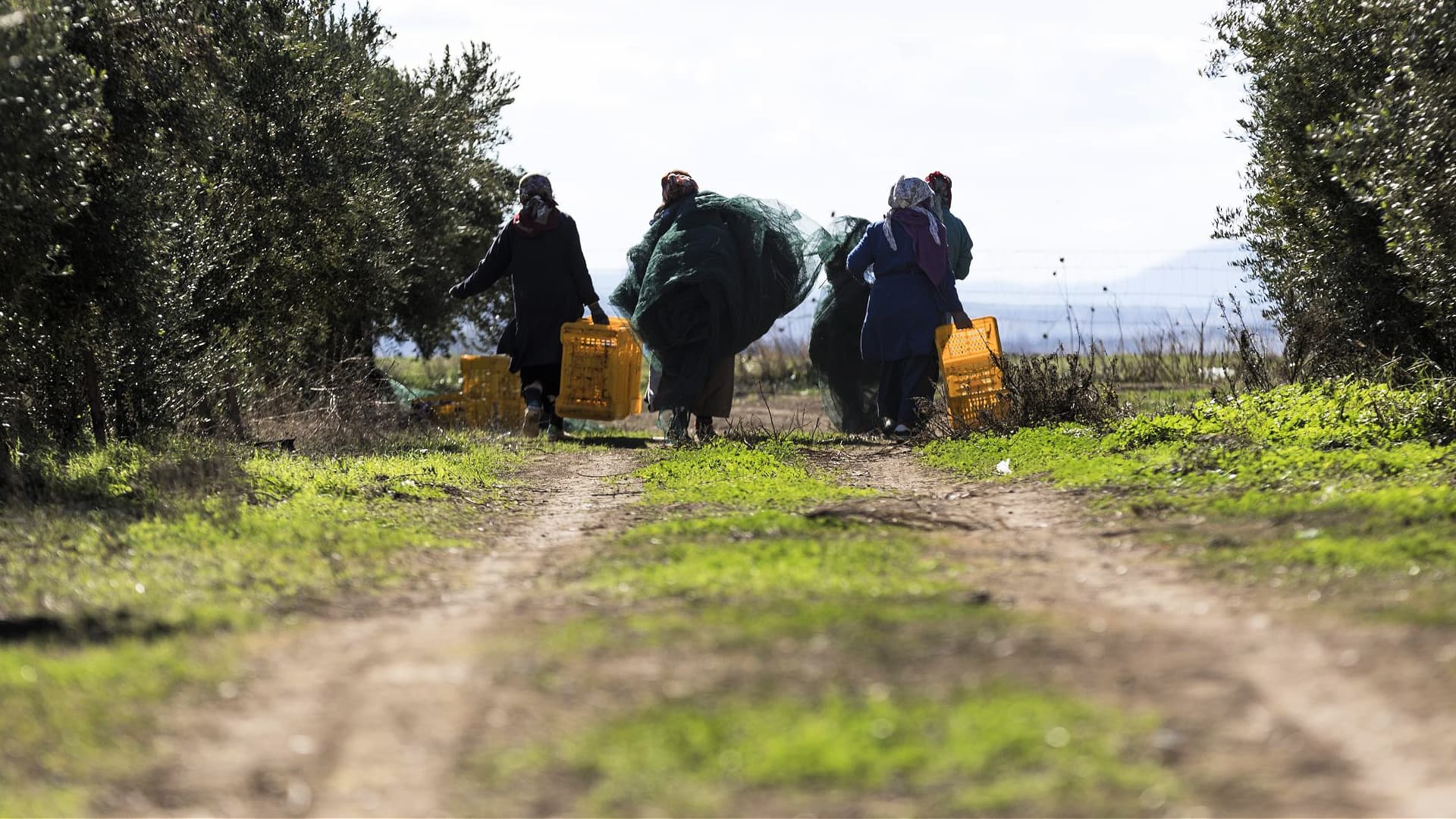
Ninety workers will fan out across HDMP’s 50 hectares to harvest. (Photo: HDMP)
Zeitoun’s olive-growing heritage grew increasingly meaningful for him and his family as the years passed. Eventually, the orchards became a fully-fledged family business, and Zeitoun frequently traveled between Paris and Zaghouan.
“After three years of hard work, in 2018, we officially established our brand and extracted olive oil for the first time,” Zeitoun said.
“My father didn’t live to see that achievement; he passed away just a month before,” he added. “That’s when we decided to enter the NYIOOC World Olive Oil Competition.”
In 2019, Parcelle 26 earned Gold and Silver Awards for its line of products, which included three distinct extra virgin olive oils made from Arbequina olives.
Since then, these extra virgin olive oils have won numerous additional awards, including a Gold and two Silver Awards at the 2024 NYIOOC.
“We were fortunate with Arbequina; my father planted those trees back then, and they proved to be the ideal choice for our farm,” Zeitoun said.
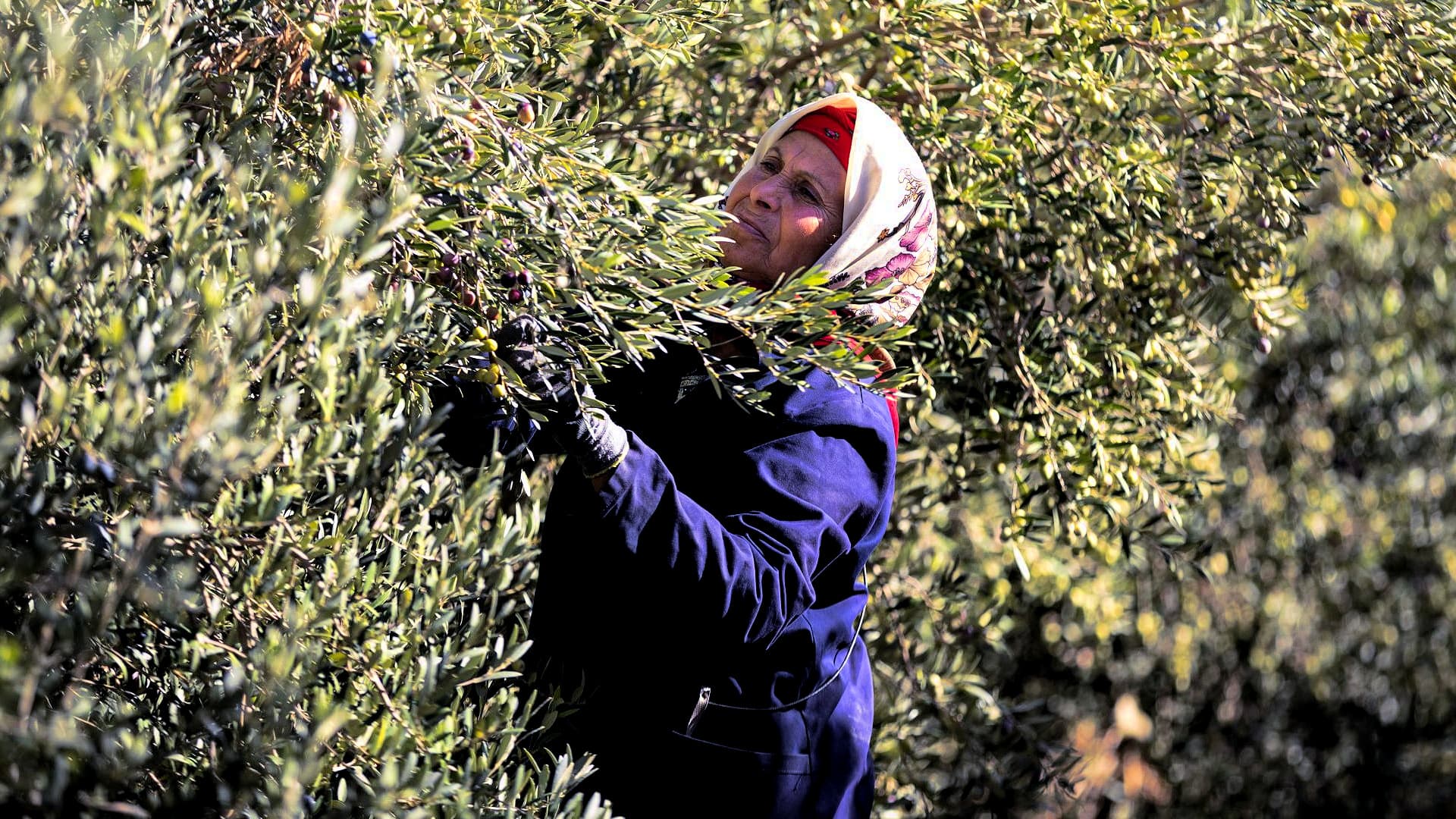
HDMP is working with Arbequina olives from intensive groves, though it plans to expand its offerings with conventional Koroneiki and Arbosana plantings. (Photo: HDMP)
He credits the quality of his olive oil to a comprehensive set of practices, from handpicking and selecting olives to managing a dedicated olive oil mill on the farm.
“There’s no secret formula or special trick. Our holistic approach to olive growing results in our high-quality olive oil,” he said. “For instance, we select trees that produce the best fruits, which our specialists then re-examine during harvest. Once the olives arrive at the mill, typically within two to four hours after being picked, they undergo a final selection.”
“Another key practice is maintaining low temperatures throughout the extraction process,” Zeitoun added. “We employ very cold extraction, keeping temperatures between 17 ºC and 20 ºC.”
“Additionally, Parcelle 26 stores its olive oil at a consistent 18 ºC throughout the year in nitrogen-pressurized, oxygen-free steel tanks,” he continued. “This ensures that our olive oil remains fresh and high-quality when bottled for our customers. By the end of the season, our extra virgin olive oil’s acidity never exceeds 0.3 percent, or 0.35 percent at the most.”
Free acidity is a crucial parameter in evaluating olive oil grades. It typically increases over time in stored olive oil. To qualify as extra virgin, olive oil must have an acidity below 0.8 percent.
“As an olive oil mill, we don’t purchase olives from external sources because we can’t fully ensure how they were grown and handled,” Zeitoun said.
His trees are planted in fully irrigated intensive (high-density) groves, although water availability is often highly restricted.
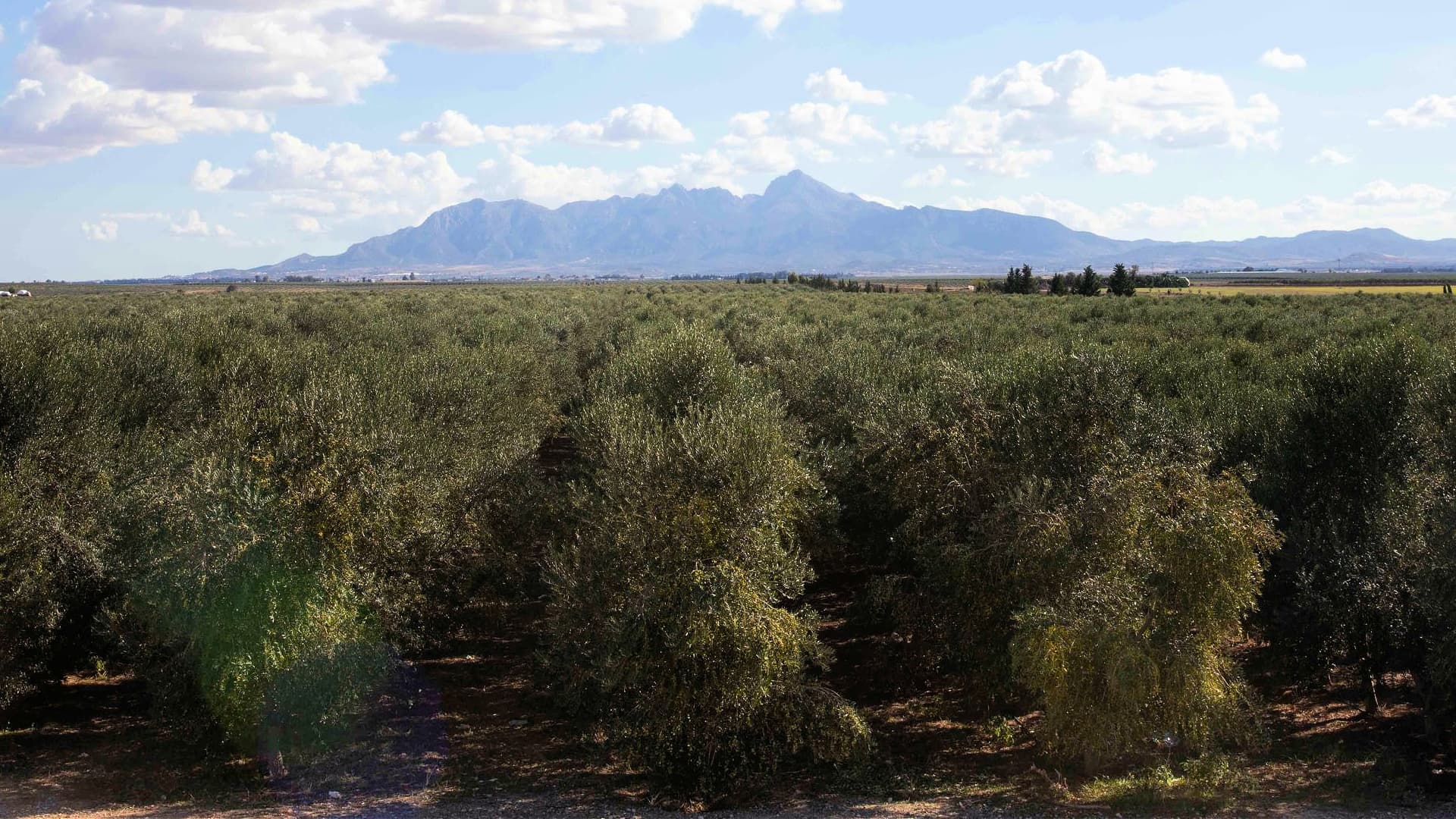
HDMP’s olive groves are in the northern Tunisian region of Zaghouan. (Photo: HDMP)
“However, we also maintain some traditional groves and practices, blending modern agricultural techniques with a traditional vision,” Zeitoun said, referencing the few hectares dedicated to Arbosana and Koroneiki olive trees.
“While we don’t have organic certification, all of our practices align with those principles,” he added.
Like elsewhere, weather fluctuations can significantly affect olive oil production.
“Last year was particularly challenging due to extreme heat and drought conditions,” Zeitoun said. “We faced trees with olives at varying stages of ripeness, from green to fully mature, which made the selection process time-consuming and labor-intensive.”
“Climate change is the top challenge for high-quality producers,” he emphasized.
Zeitoun also highlighted the challenge of increasing consumer awareness about olive oil’s sensory qualities and health benefits.
“We cater to two distinct customer segments: retail consumers and professionals. The average consumer is just beginning to appreciate the value of extra virgin olive oil,” Zeitoun said. “Professional buyers can discern quality extra virgin olive oil, and it’s gratifying to see them enjoy ours.”
“It’s a different story with the average consumer, who often doesn’t know what to look for in olive oil,” he added. “Many consumers are accustomed to standard olive oils and can be puzzled by the flavors and nuances of quality extra virgin olive oil.”
The company plans to expand its product line by introducing new olive oils in the coming years.
“We have many ideas in the pipeline, and we’re currently in discussions with some French chefs to develop additional products related to olive oil,” Zeitoun concluded.