Drones Carry Spanish Producers Into the Next Era of Olive Farming
Spain’s Atlas experimental flight center furnishes drone technology that is changing how producers approach olive farming.
Forever associated with culinary pleasures rich in quality olive oil, Spain devotes 2.5 million hectares of land to olive groves. In some regions, each commercial olive tree has its own GPS coordinates to track and monitor this precious resource. As the leader in the worldwide market for EVOO, Spain is also on the cutting edge when it comes to new olive farming technologies.
Traditional olive cultivation and ultra-modern farms coexist in Jaén, which makes the region an ideal setting for technological developments.
With a production of over 1.5 million tons per year, half of which comes from the province of Jaén, Spain has known olive farming since Roman times. The ancient dwellers of the Iberian Peninsula might have never imagined an army of drones hovering over crops to ensure olives grow to perfection, but this seemingly futuristic vision constitutes Jaén’s thriving present.
To learn more about Spain’s latest technological developments as applied to olive groves, Olive Oil Times spoke with Anastasio Sánchez, director of the Atlas Experimental Flight Center in Villcarrillo, Jaén.
What does ATLAS do, and how is its work relevant to olive oil production in Spain?
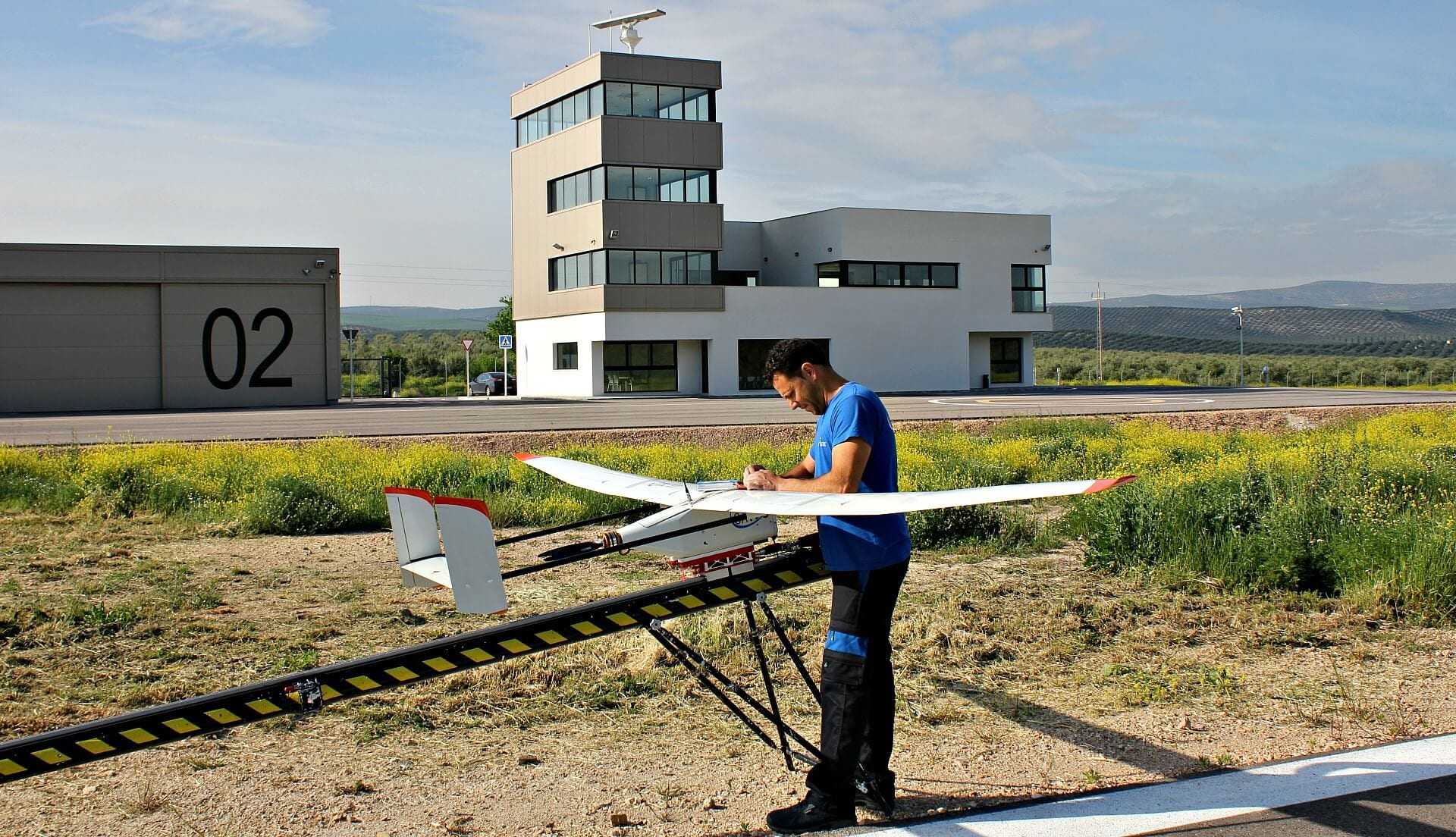
The Atlas Experimental Flight Center offers the international aeronautical community an aerodrome equipped with technological facilities and services of excellence and airspace suitable for conducting flight tests with unmanned aircraft systems (UAS / RPAS, commonly known as “drones”). Its pioneering infrastructure is unique in Spain and Europe.

Anastasio Sánchez
Atlas will play a central role during the UNVEX Eco-Agro conference, to be held from October 9th to 11th in Seville and at the Atlas Center. This event will be a kind of national summit on the application of drones for agriculture and environmental projects. It will focus on promoting the application of new technologies to improve productivity and competitiveness in agriculture, as well as for the protection of natural spaces.
What are the benefits of applying aerial robotics and drones to agriculture and olive groves?
Sánchez: The main advantage of precision agriculture, to which this type of technology is applied, is cost reduction. Being able to focus treatments needed to optimize harvests in particular areas of the farms greatly improves the profitability of crops. All of this leads to a reduction of the environmental impact of farming activities, saving water and phytosanitary products.
What have been the most significant recent contributions from technological advances in the drones sector to olive cultivation?
From a technical point of view, the application of these technologies to olive groves enables farmers to evaluate, in a very localized way, indices of humidity, water stress, etc. Measurements of other parameters in olive groves, such as the amount of nutrients and microelements present, are in development and both ATLAS and CATEC (Center for Advanced Aerospace Technologies) are very involved in this.
How is Atlas contributing to these developments, in Jaén, Andalusia, and the rest of Spain?
Atlas is already contributing significantly to these advances. It has, in fact, been home to the Mochuelo project, an endeavor funded by the Provincial Council of Jaén and aimed at carrying out a feasibility study for the use of drones in the monitoring of olive groves. Some of the companies that have made their flights at Atlas are actively engaged in developing precision agriculture services. In addition, CATEC and Atlas have been integrated into a consortium led by ASAJA-Jaén (Agricultural Association of Young Farmers), where Atlas will host a project to explore the advantages of precision farming exclusively targeting olive grove farming.
Also, as one of the venues for the UNVEX Eco-Agro forum this month, Atlas will become the center of attention for the application of drone-based techniques to agriculture.

In your opinion, how does the technological development of olive farming in Jaén compare to that of other regions around the world?
As the main olive oil producing region in the world, Jaén has to be a spearhead in the application of new techniques and new technologies. Today, both traditional olive cultivation and ultra-modern farms coexist in Jaén, which makes the region an ideal setting for technological developments, since it is possible to apply these innovations to all types of crops. The involvement of farmers in the modernization process brings with it an efficiency in all areas, from the purely agricultural to both economic and environmental aspects. This is a synergy that ultimately boosts the international standing of Spanish olive oil as a whole, and of Jaén’s oil in particular.
What do you think will be the most immediate challenges for the Spanish industry in the application of these technologies for agriculture, and how do you think they could be overcome?
There are several aspects that will be important; the regulatory framework should pave the way for the proper development of new techniques; of course, including the necessary restrictions to maintain a total commitment to the safety of operations. The involvement of administrations, universities, and research centers will bring advances in R&D that will create a flow of knowledge that is needed for the widespread application of these techniques.
On the other hand, private companies need to be able to apply these techniques efficiently and at an affordable cost, both to large plantations and to more modest farms (which are the majority in Jaén). And finally, associations of farmers, irrigators, and other involved parties will eventually apply these techniques not as an added cost but as an investment that will, in the medium term, result in increased efficiency in the use of water and phytosanitary products, and therefore boost profits.