Harvest in New Zealand Shows Promise
New Zealand’s 2025 olive harvest is off to a promising start, with challenges reported in northern regions but overall optimism for a strong yield.
The 2025 harvest is still ongoing in New Zealand, and while it is too early to draw a complete picture, early signs point to a promising yield for the country.
The most significant challenges for olive oil production have been reported in the northern regions of the North Island, where the harvest began at the end of March.
Overall, there is a significant increase in fruit volume compared to the past two or three years, and many are feeling positive. However, due to the additional rain, yields have dropped a few percentage points across regions and cultivars.
“They had lighter crops this year, and unfortunately, many groves were hit with wild winds and heavy rain just as they were about to start their main harvest, losing a lot of fruit,” Emma Grover, the executive officer of Olives New Zealand, told Olive Oil Times.
Despite the difficulties, some producers in the area found reasons for optimism.
See Also: 2025 Olive HarvestOn the picturesque Waiheke Island, the long-established Allpress Olive Groves is reporting lower yields compared to last year.
“Following a large harvest in 2024 and high rainfall during our 2025 season, fruit volume was significantly reduced,” said Neil Smith, the groves and grounds operations manager of the company.
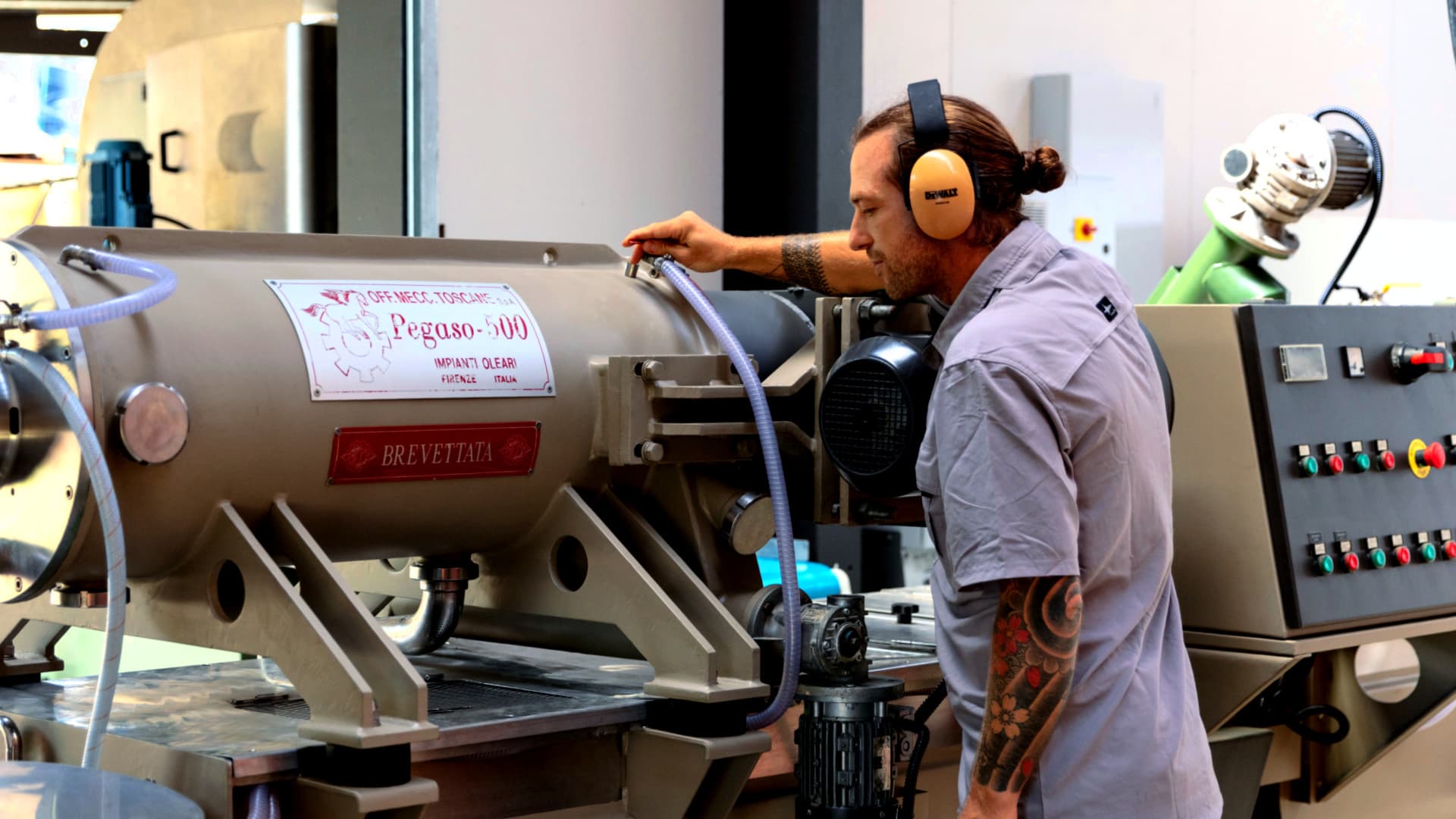
Waiheke Island-based Allpress Olive Grove anticipates a lower harvest this year than in 2024. (Photo: Allpress Olive Grove)
“Fortunately, favorable summer conditions resulted in high oil yields of nearly 24 percent. The quality and flavor of the oil produced this season have been great,” he added. “Our Koroneiki did particularly well, which we attribute to the heavy regenerative pruning regime we’ve implemented in recent seasons.”
The company’s long experience helped it deal with some specific challenges.
“Our main constraint during harvest this season was fruit rot, brought on by unusually heavy rainfall and a warm maritime climate,” Smith said.
“These conditions made certain varieties particularly susceptible, and some of the fruit on lightly cropped trees matured more rapidly, reducing our harvest window to just eight weeks, down from the usual 12,” he added.
Overall volume was also affected by a poor fruit set, an issue the company is working to improve by addressing the alternate bearing pattern of the olive tree.
“To ensure more consistent production and reduce biennial swings, we’re continuing our grove management practices, focusing on regenerative pruning, disease control and soil health improvements,” Smith explained.
Beyond the northern regions, most growers across Aotearoa are optimistic.
“The rest of the country has had a much heavier crop, extending the harvest season as they wait for the fruit to ripen,” Grover said.
“The exterior of the fruit has colored well, but the actual ripening is taking longer than expected, catching a few growers off guard,” she added.
Strong winds were another widespread challenge.
“There has been a lot of wind, rain and machinery breakdowns throughout the country this harvest, causing delays and frustration,” Grover said. “On the bright side, there have been no significant frosts to damage the fruit.”
In the southern part of the North Island, Kapiti Olives is enjoying the results of its early harvest.
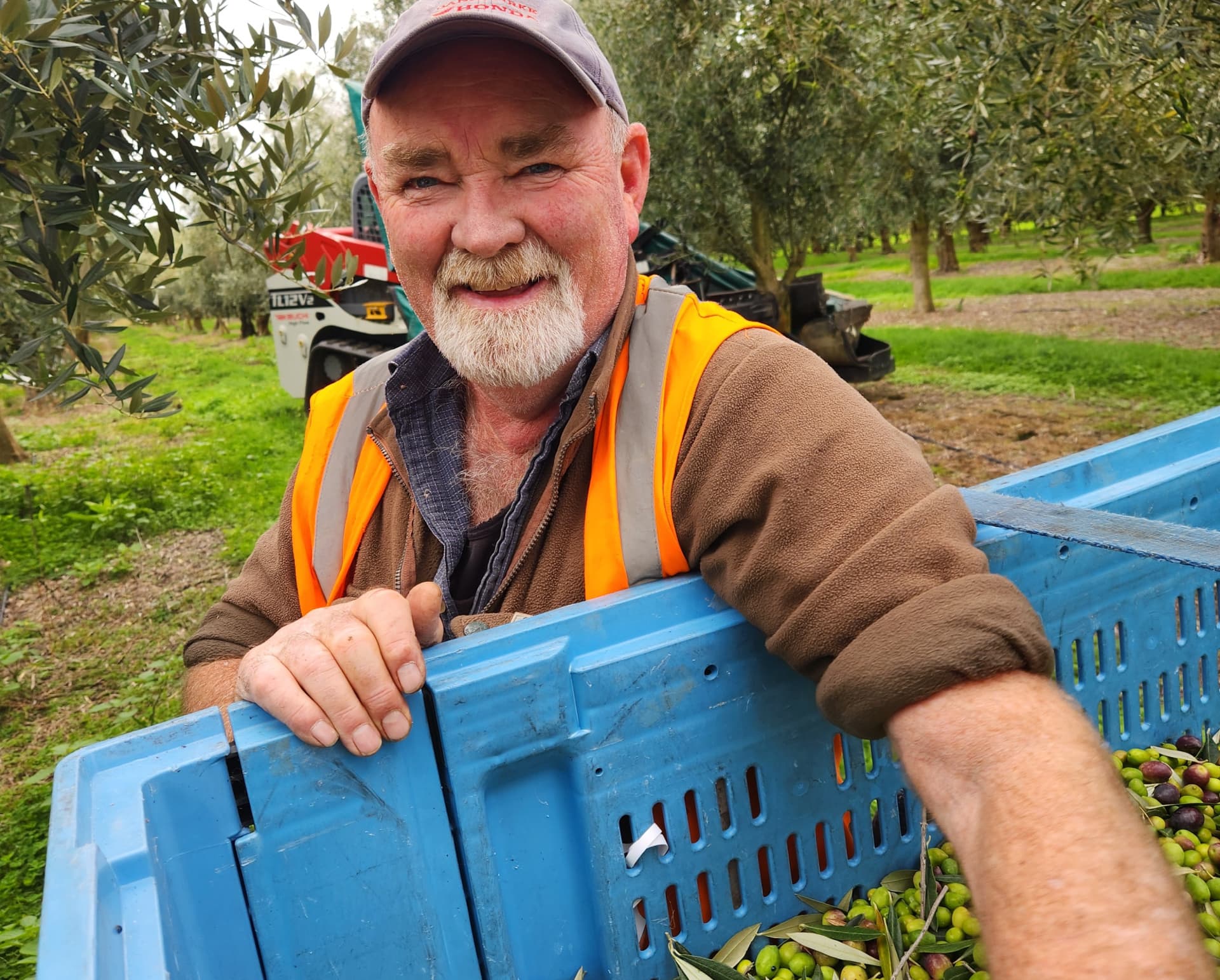
Grant Crosse is enjoying the results of an early harvest despite heavy autumn rain leading to lower oil yields. (Photo: Kapiti)
“We are in the middle of harvesting. Our Picual came off the trees very well, cropping about 22 kilograms per tree, though the oil yield was only ten percent,” said Diana and Grant Crosse, the owners at Kapiti Olives. “The olive oil tastes amazing.”
“We’re attributing the low yield to a very wet autumn, which left the fruit full of water. After one day of shaking, the Leccino gave 30 kilograms per tree and yielded 12.8 percent,” they added.
“Overall, aside from the wet autumn, the growing season has been great. The trees are healthy and full of fruit. We’re hopeful as we move on to the Frantoio and Koroneiki, which are laden with olives,” the Crosses continued.
See Also: Using Effective Microbes to Boost Organic Olive Yields in New ZealandIn the hilly region of Wairarapa, also in the southern North Island, Juno Olives is reporting a strong season.
“Much better than last year, with higher fruit volumes and oil yields. There’s more flavor variation across our different cultivars this year,” said Andrew Liley, owner of the company.
Still, Juno’s groves faced adverse weather. “The winds during flowering and frosts closer to harvest were a concern. But we were more fortunate than many,” Liley said.
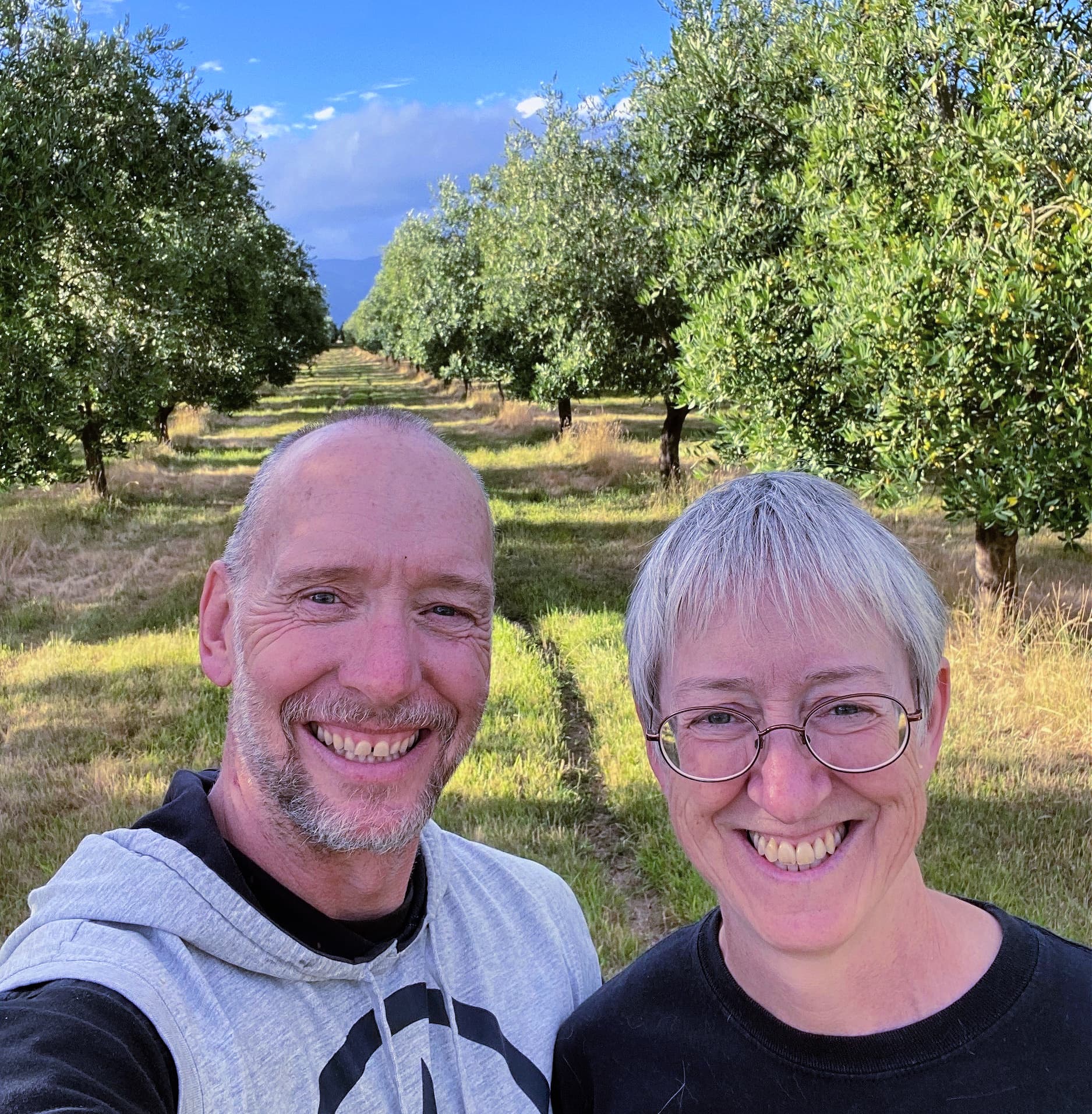
Andy and Helen Liley report a strong season from their grove in In the hilly region of Wairarapa. (Photo: Juno)
Nearby, the Olivo farm also reported a successful harvest.
“The 2025 season has been much better than 2024, both in terms of crop and oil volumes,” said Helen Meehan, co-owner of the company.
“Our Tuscan varietals gave us ten times more than last year, and our Barnea, some of the oldest commercial olive trees in New Zealand, produced double,” she said.
Meehan also noted some difficulties. “Unfortunately, the Frantoio was very sticky on the trees. We could have increased the quantity, but even so, we were satisfied. We machine-harvest most of our 1,200 trees,” she added.
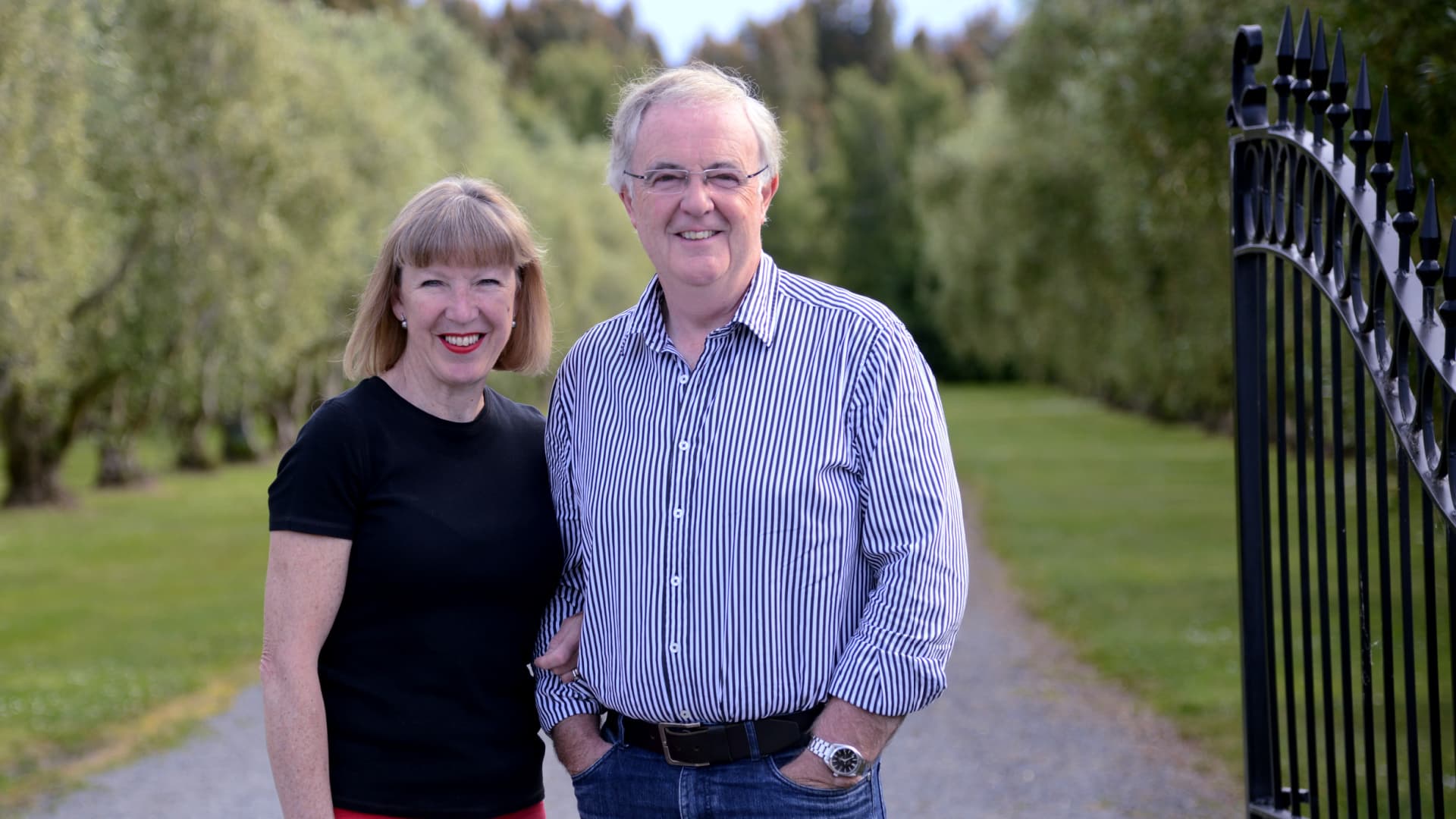
Helen and John Meehan said the 2025 season was much better than 2024, both in terms of crop and oil volumes. (Photo: Olivo)
Aquiferra, a producer in Hawke’s Bay, on the North Island’s eastern coast, also reported strong results.
“We feel the season has been great. We finished our harvest about six weeks ago and are pleased with both the quality and the volume of the oil,” said Tim Groves, co-owner of the farm.
“From our two-hectare block, we harvested ten tons, one of the highest totals in the past six years,” he added.
Managing time remains a challenge. “As this is not our full-time job, fitting everything around our work schedules is a constant juggling act,” Groves explained. “Keeping up with spraying and especially pruning has been tough.”
He noted that recent summers brought abundant rainfall, causing rapid tree growth.
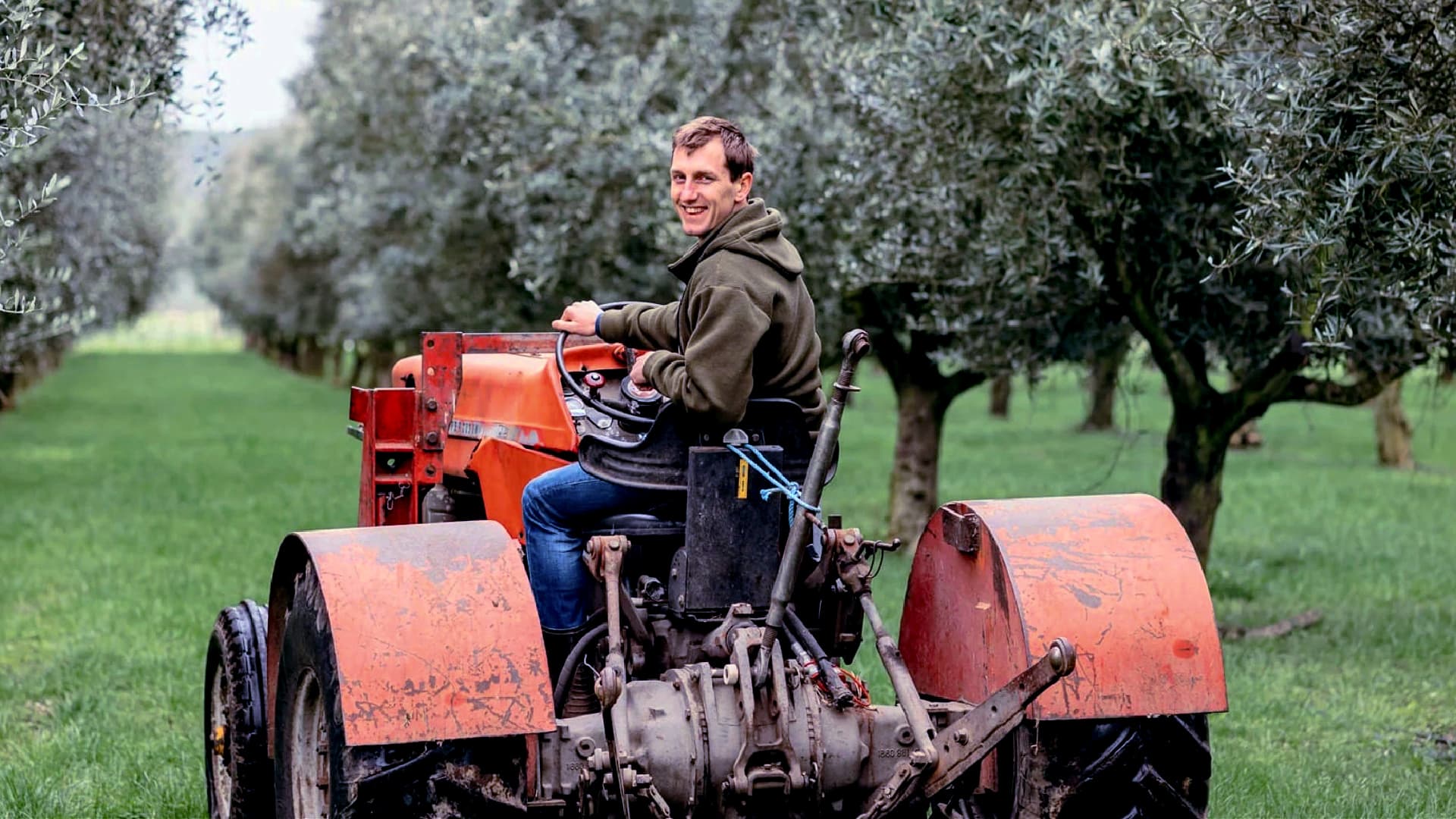
Tim Groves said his company enjoyed good yields and high-quality in the 2025 harvest. (Photo: Aquiferra)
“This made the trees very tall very quickly, complicating spraying and mechanical harvesting,” Groves said.
“Our strategy moving forward is to prune more aggressively than in previous years to manage tree size, improve spray coverage and make harvesting more efficient. It’s been a big year for firewood,” he added.
While results from the South Island are still to come, the outlook for the country as a whole appears strong.
“Overall, there is a significant increase in fruit volume compared to the past two or three years, and many are feeling positive,” Grover confirmed. “However, due to the additional rain, [oil] yields have dropped a few percentage points across regions and cultivars.”