In Chile’s Curicó Valley, Agroindustrial Siracusa Builds an Olive Oil Success Story
Leveraging decades of engineering experience, Agroindustrial Siracusa has built an efficient, high-density olive operation in Chile’s Curicó Valley.
In less than two decades, the engineering and industrial firm Agroindustrial Siracusa has transformed the fertile soils of a small corner of Chile’s Curicó Valley into an award-winning olive farming and milling operation.
General manager Felipe Juillerat told Olive Oil Times that the journey to the company’s second award-winning year at the 2025 NYIOOC World Olive Oil Competition began when the Agroindustrial Siracusa’s owners sought to diversify into the agriculture business back in 2006.
The company was already involved in salmon farming and house construction, and the owners wanted to invest in a crop involving an industrial process, given the group’s engineering background.
See Also: Producer ProfilesAt the time in Chile, the olive oil industry was beginning to take root, with many new super-high-density olive groves being planted in hedgerows, centered around a large mill.
The owners eventually settled on a piece of land in the Curicó Valley, approximately three hours south of Santiago, and planted 500 hectares of olive trees in 2007, followed by an additional 750 hectares in 2010.
The first olive varieties the company planted were Arbequina and Arbosana, followed by Frantoio, Leccino and Coratina.
“The Italian varieties did not do so well compared to the Spanish ones, so we had to take them out,” Juillerat said, noting the impacts of the climatic conditions on their production as well as the practical limitations of not being able to perform a mechanical harvest.
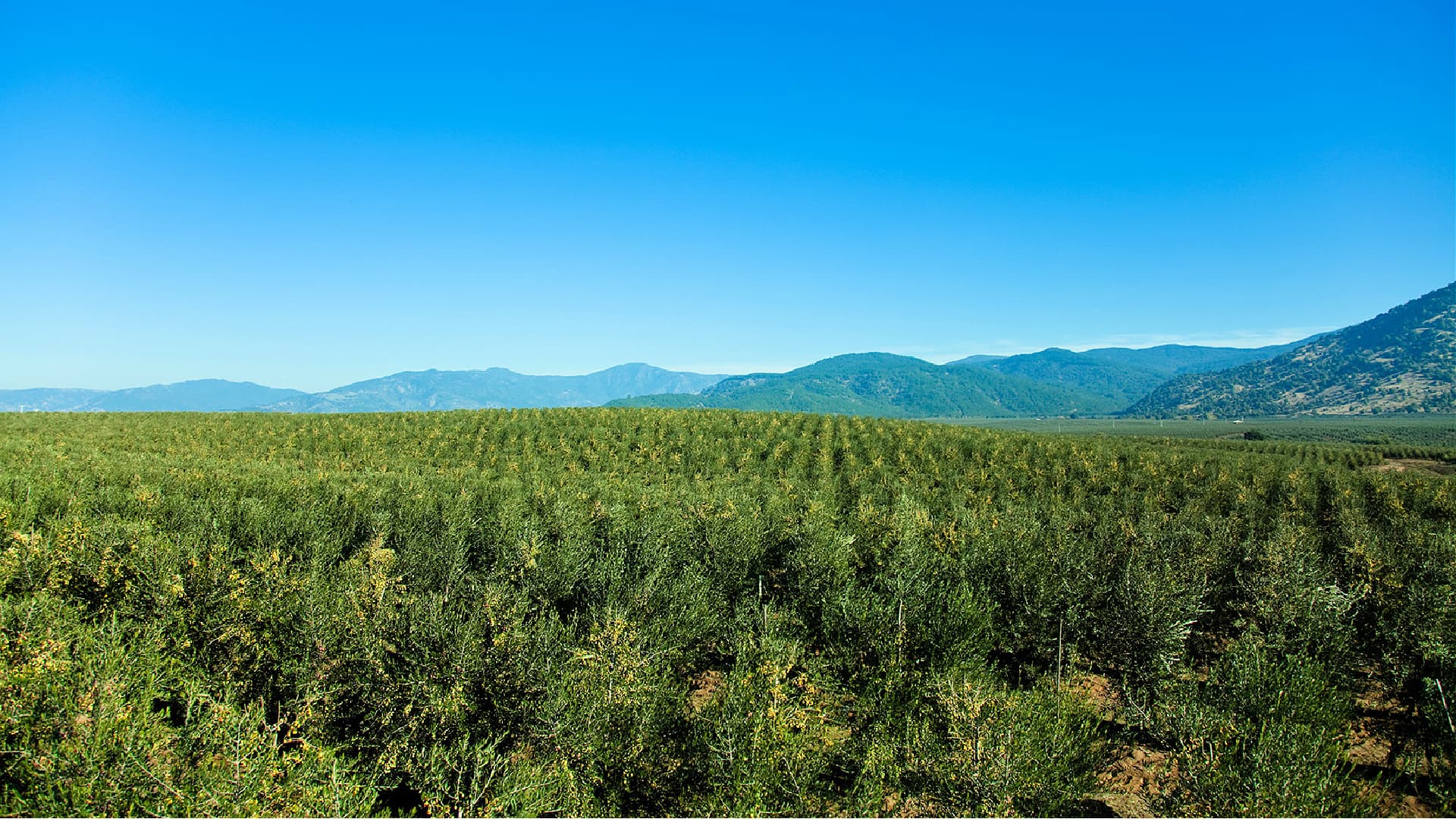
Arbequina and Arbosana planted at super-high-density are Aura Olive Oil’s oldest and most dominant varieties. (Photo: Aura Olive Oil)
“The two Spanish ones worked much better,” he added. Later on, the company also planted Picual and Koroneiki, which contribute to its blends. Even so, Arbequina and Arbosana remain the dominant varieties.
Among the main challenges facing the producers of Aura Olive Oil and its three brands, Aura Classic, Aura Arbequina, and Aura Special Edition, is the relatively short window the company has to harvest, which typically begins in mid-April and lasts for about 40 to 45 days.
“Our area is on the southern limits of olive oil production, and we have a short stretch of time to harvest our fruit to avoid the start of the winter rains from June 15th onwards,” Juillerat said.
The company also aims to wrap up the harvest in the first weeks of June to avoid late autumn frosts, which can damage the olives and result in defects in the oil.
“That’s a challenge, but on the other hand, what we can get in this small window is a very good, premium olive oil,” Juillerat said.
While the olives are still green at the start of the harvest, Juillerat said the higher polyphenol contents and intense green fruity aromas and flavors more than make up for the low oil yields.
He estimated that at the start of the harvest, oil yields sit around 13 percent, rising to about 17 percent at the end of the harvest.
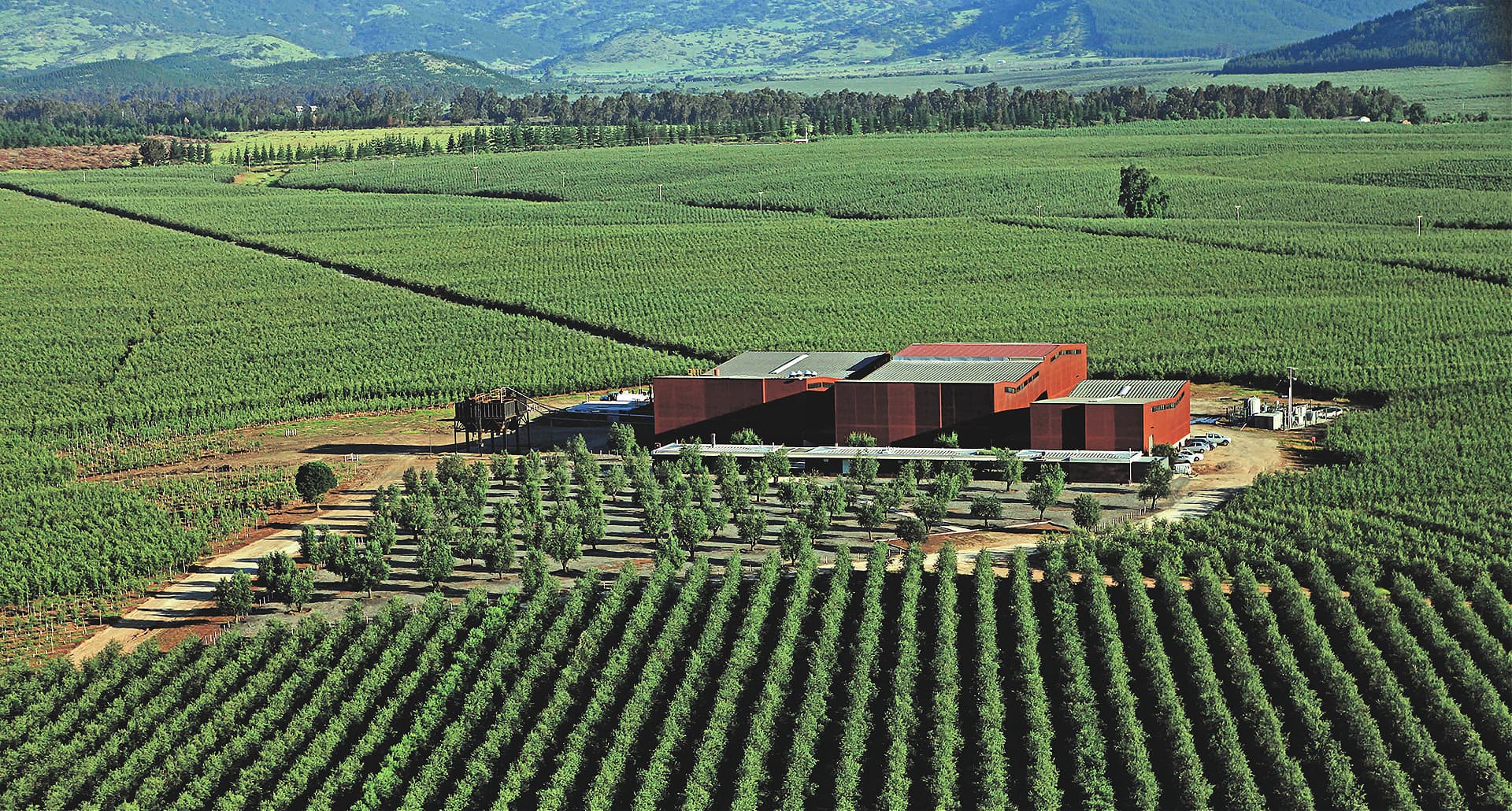
The central location of the company’s mill allows olives to arrive within hours of harvesting. (Photo: Aura Olive Oil)
Juillerat added that this puts the company at a competitive disadvantage in terms of volume compared to the yields of 20 percent or more that producers in the north of the country receive at the end of June and into July, where rain and frost are not limiting factors to the same degree.
While many producers in Chile, especially in the north of the country, have had to deal with the impacts of drought and water shortages in recent years, Juillerat said these issues were less pressing in the south of the country.
Furthermore, one of the first investments Agroindustrial Siracusa made when it bought the property was in water and irrigation infrastructure.
The company installed tubing to bring water from a nearby river to fill a series of reservoirs, ranging in size from five to 730 million liters. Along with drawing some water from the river, the reservoirs also capture winter runoff from the surrounding Andes mountains.
Even though average precipitation has been normal for the past few years, Juillerat said the company has invested significantly in precision agriculture, installing sensors to measure soil humidity and a small weather station to record temperature, humidity and precipitation.
Similar to many producers across the country, Juillerat reported that the company enjoyed a rebound harvest in 2025, with production rising by eight percent compared to the historically poor harvest of 2024.
“We had a winter with relatively normal rainfall, allowing us to start spring with the reservoir at full capacity,” he said. “Spring followed with normal to high temperatures into summer, and budbreak and flowering were normal.”
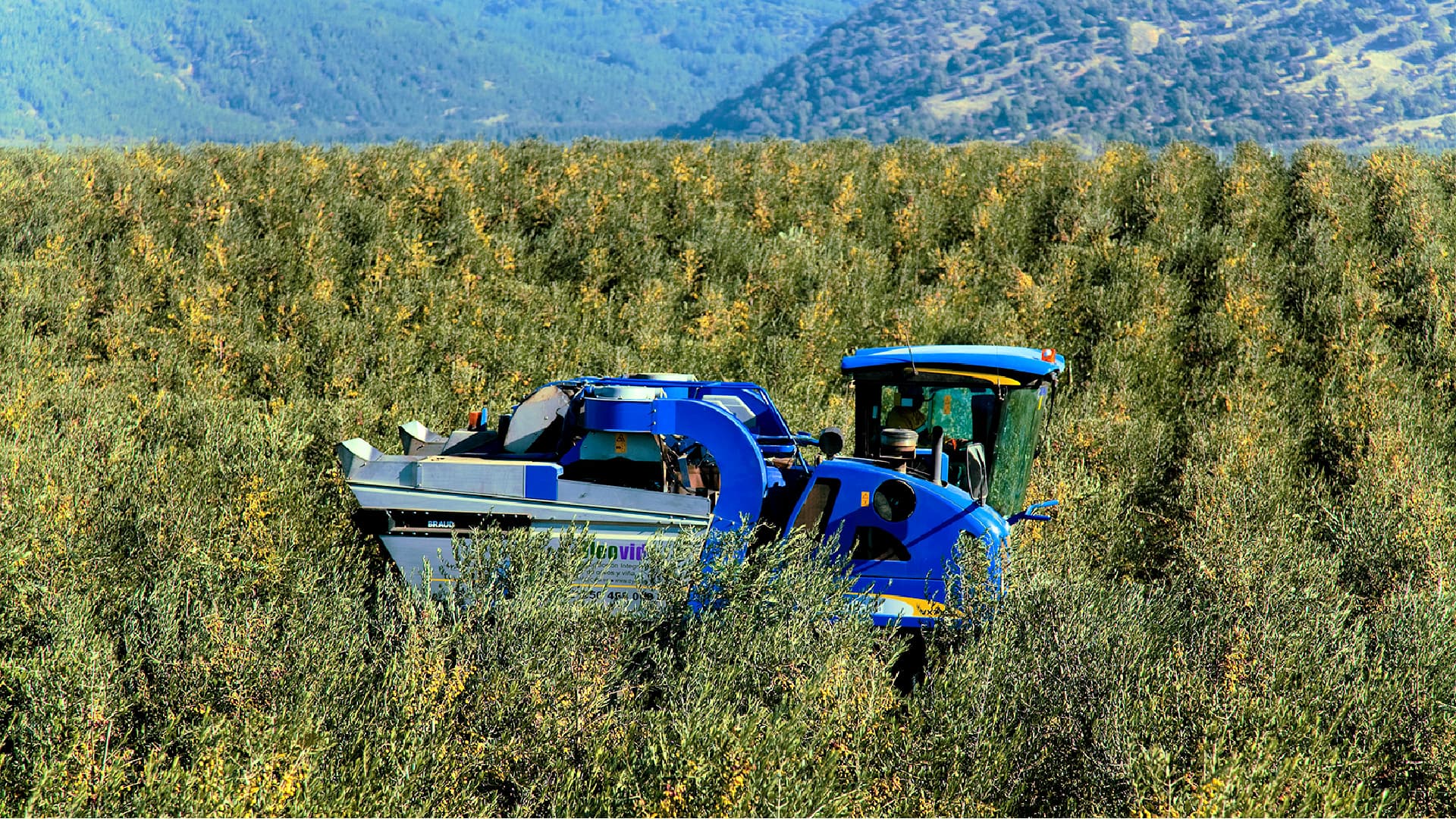
The harvest gets underway in mid-April at Agroindustrial Siracusa, with the team racing to complete it by mid-June. (Photo: Aura Olive Oil)
However, extreme summer temperatures and a lack of water in February contributed to smaller fruit sizes in the Arbosana, creating challenges in the mill to maximize yield while preserving quality.
“In terms of oil quality, we didn’t have any major difficulties; perhaps the biggest challenge was that we were faced with a lot of very small fruit, with a high percentage of pits in the paste,” Juillerat said. “But we were ultimately able to obtain good oils of varying intensities.”
Despite the challenges, Agroindustrial Siracusa earned a Silver Award for its Aurora Arbequina monovarietal at the 2025 edition of the World Competition.
“The NYIOOC is very important to us because we see the importance of this award to our clients,” Juillerat said, adding that Aura Olive Oil would continue to participate in the NYIOOC and two or three other competitions in key markets.
Juillerat also highlighted how the accolades, including a Gold Award at the 2021 NYIOOC for its Aurora Premium blend, have increased the value of the company’s sales in its largest export market.
Despite the ten percent tariff that Chilean olive oil exports to the U.S. face, Juillerat said the Aura Olive Oil continues to work with its usual clients and has not seen any change in demand.
“We’re at a certain advantage against other markets that face higher tariffs than we do,” he said, citing the 15 percent tariff imposed by the U.S. on European Union exports. “In the end, the tariff has not gone against our prices.”
Outside the U.S., the company also exports significant quantities to Colombia and Paraguay, and makes smaller shipments of its olive oil to Brazil, Japan, South Korea, and Taiwan.
Aura Olive Oil’s sales are almost evenly divided between exports and the domestic market, with the company selling its three brands through several retailers across the country and producing private-label olive oil.
“We’re very balanced between exports, which are about 85 percent in bulk, and what we sell here in Chile, which is about 95 percent bottled,” he said.
According to International Olive Council data, Chile has consumed an average of 7,666 metric tons of olive oil annually since the start of the Covid-19 pandemic in 2020, when annual consumption momentarily spiked to 14,000 tons.
Since the pandemic, Juillerat said that stubborn inflation has plagued the country and driven down consumer spending.
“However, olive oil consumption didn’t fall as much as expected,” he said. “We concluded that people are recognizing the benefits of olive oil and continue to consume it.”
The nature of the country’s olive oil consumption has also changed. Whereas it used to be focused on the Santiago metropolitan area, home to just under seven million people, slightly more than one-third of the population, Juillerat said the company is increasingly selling to restaurants and consumers outside of the capital, particularly in Patagonia.
“We have restaurants and distributors here in Santiago, and we have distributors down in Patagonia,” he said. “A lot of young professionals are moving down there,” and bringing their olive oil consumption habits with them.
Looking ahead to the 2026 harvest, Juillerat warned that it is still too early in the season to make any predictions, but he is already seeing mixed indicators in the groves.
“We’re already in the budding stage, and it looks varied. Arbequina has a greater flower supply, while Arbosana has a more varied appearance; there are areas with good budding and others with more decline,” he said. “Extreme summer temperatures and water availability are the main causes of the budding we’re seeing now.”