Chile’s Olive Farmers Report Rebound Harvest
Chile’s olive growers and millers reported a 33 percent increase in production, attributing the rebound to improved weather conditions and the European Union’s removal of tariffs on Chilean olive oil imports.
Olive farmers and millers in Chile celebrated a rebound harvest, with production in the South American country rising by 33 percent compared to the previous year.
“Olive oil production during the 2025 season reached 20,000 metric tons, a value that is above the average of national productions of the last 12 years,” Gabriela Moglia, the general manager of producer group ChileOliva, told Olive Oil Times.
Officials from the country’s agriculture ministry cited better climatic conditions as the main reason for the bumper crop.
The 2025 harvest has been very positive for us, despite a context marked by adverse and extreme weather conditions, which have represented one of the greatest challenges in recent years.
In 2024, high winter temperatures in the north and relentless rain in central Chile resulted in one of the country’s lowest harvests on record.
“Unlike previous years, the weather was much more normal, with only a few days of temperatures below freezing at the end of June,” said Ismael Heiremans, the production manager at Olivos del Sur, the country’s largest producer. “This helped us significantly in obtaining excellent-quality oil.”
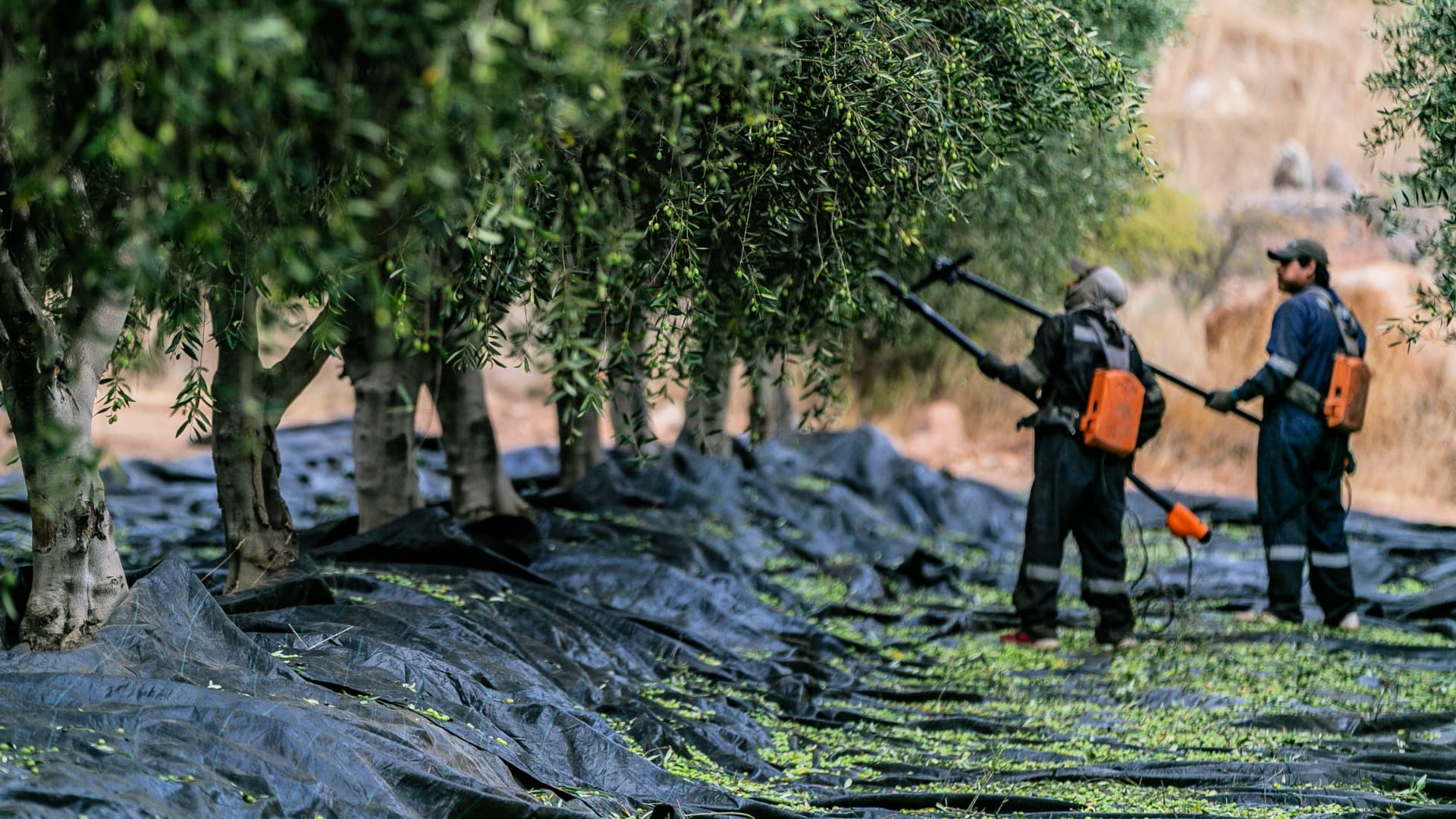
Chile’s farmers and millers celebrated a bumper cop in 2025 with production reaching 20,000 metric tons. (Photo: Agrícola Pobeña)
He added that the main challenge was harvesting the company’s 1,700-hectare olive grove before the middle of June, both to avoid late autumn frost and produce extra virgin olive oil from greener olives.
See Also: 2025 Harvest UpdatesFelipe Juillerat, the general manager of Agroindustria Siracusa, which produces Aura Olive Oil, attributed the company’s production rebound to more favorable climate conditions. He said Aura Olive Oil produced eight percent more olive oil this year than in 2024.
“We had a winter with relatively normal rainfall, allowing us to start spring with the reservoir at full capacity. Spring followed with normal to high temperatures into summer, and budbreak and flowering were normal,” he said.
“The summer saw more extreme temperatures, and we faced a lack of water in February, just as the fruit-filling stage began,” Juillerat added.
Situated in the Cúrcio Valley, about 100 kilometers south of Santiago, Juillerat said Aura Olive Oil faced the usual challenge of completing the harvest ahead of the winter rains in June.
In particular for this year, he added that the small size of the fruit, especially the Arbosana variety, and the greater degree of ripeness created additional challenges. “But we were ultimately able to obtain good oils of varying intensities,” Juillerat said.
However, not all of Chile’s producers experienced a harvest rebound. Javier Sahli, the head of production at CIS Agro, stated that the Alcones-based producer registered a record harvest in 2024 and experienced a slight decline in production in 2025.
“The main challenge was the orchards’ recovery after such a demanding season as 2024,” Sahli said. “This involved balanced fertilization, recovery pruning, and scheduled applications to maintain a healthy and vegetatively active orchard. During the harvest process, the challenge was to make the most of a lower fruit load, but with a higher caliber and good oil yield.”
Carlos Díaz of Colchagua-based Guerrero Díaz added that his company experienced “relatively mediocre yields, starting at 12 percent and at the end of the campaign, we did not exceed 18 percent.”
Despite what he described as generally good climatic conditions in the lead up to the harvest, Díaz added that autumn rains further complicated the harvest.
About 100 kilometers northwest of Santiago, the producers behind Olivos Ruta del Sol reported a 19 percent increase in production compared to 2024.
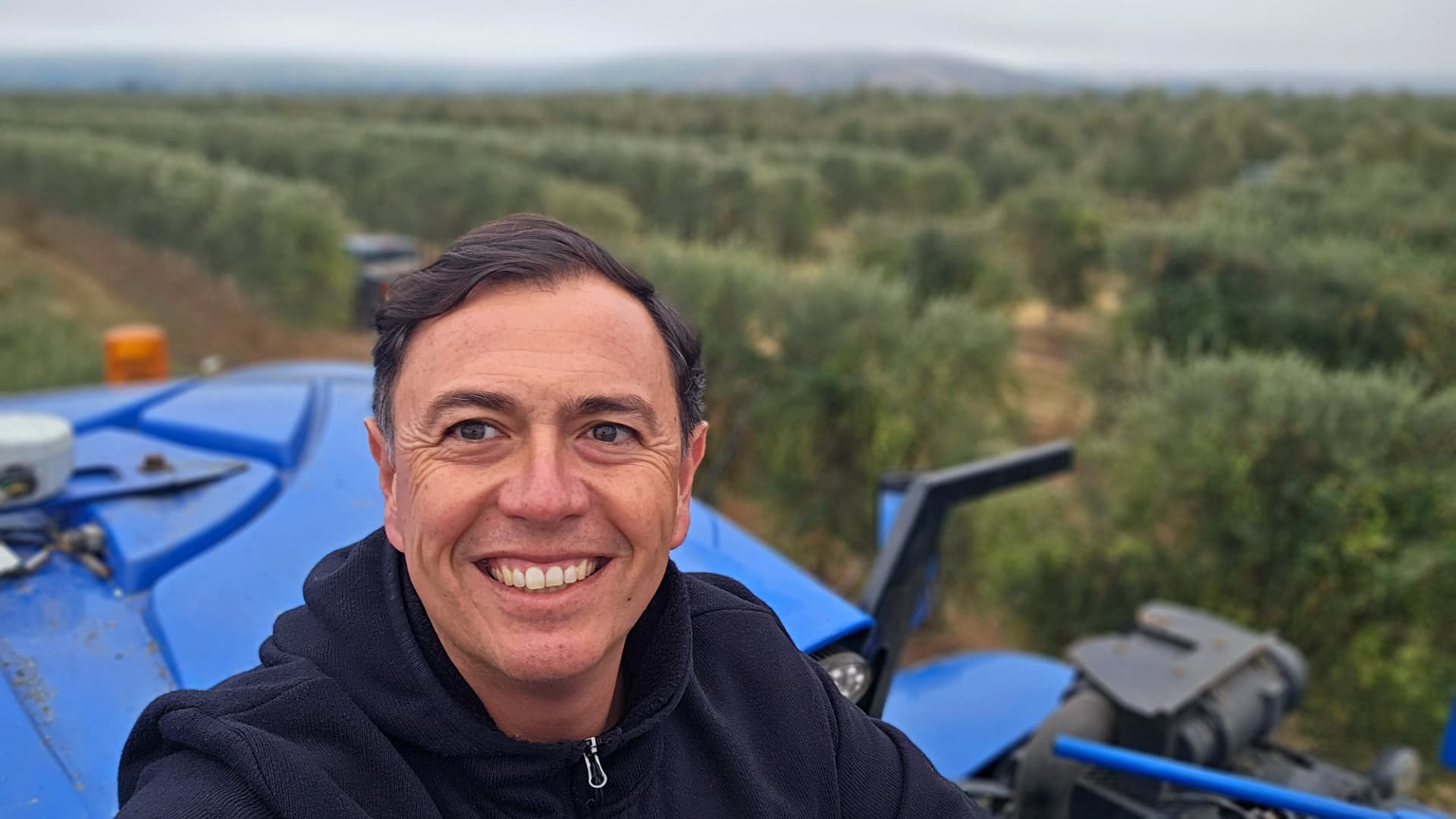
Along with a bumper crop, Fernando Carrasco Spano said the E.U.’s decision to drop tariffs on olive oils was another highlight in 2025. (Photo: Olivos Ruta del Sol)
“The Chilean summer in the Colchagua Valley, where our orchard is located, had long periods of high and favorable temperatures that helped improve production leading up to the harvest,” said chief executive Fernando Carraso Spano.
“The biggest challenge was achieving extremely high quality, considering the high volumes of Italian varieties obtained from the 2025 harvest,” he added. “These varieties are harvested using a vibrating arm system at a rate of one to 1.5 hectares per day.”
Meanwhile, José Manuel Reyes, the commercial manager at Agrícola Pobeña, which produces Alonso Olive Oil, stated that the company had experienced a 15 percent increase in production.
“This growth, although slightly lower than the national average reported by ChileOliva, reflects greater production efficiency and favorable weather conditions, especially thanks to the increase in rainfall last winter, which benefited crop development,” he said.
“The 2025 harvest has been very positive for us, despite a context marked by adverse and extreme weather conditions, which have represented one of the greatest challenges in recent years,” Manuel Reyes added. “The intense rains and frosts recorded during the harvest period threatened to delay the harvest and affect the quality of our oils.”
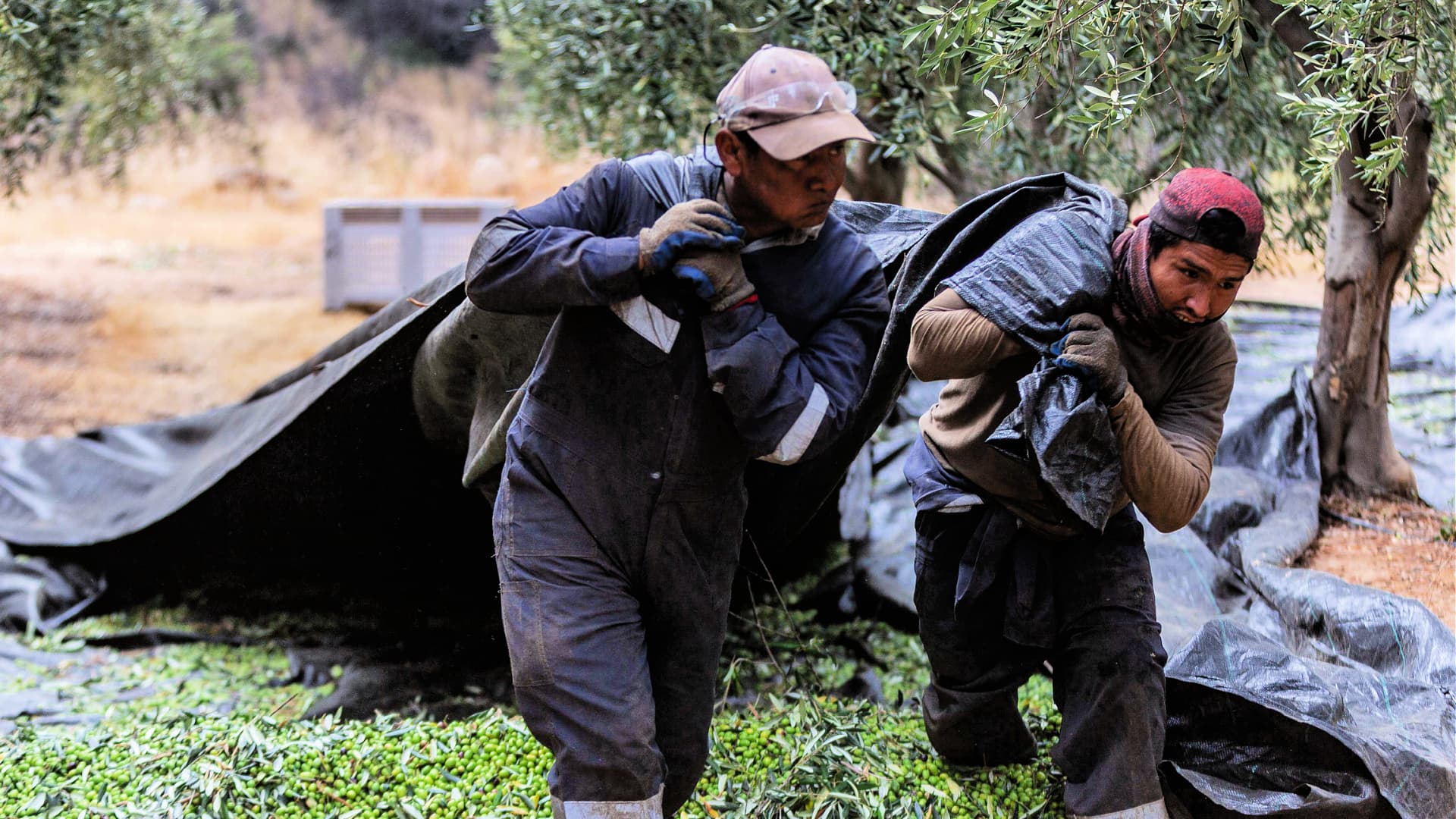
Agrícola Pobeña overcame significant challenges from the climate to celebrate a significant harvest rebound. (Photo: Agrícola Pobeña)
Bumper harvests across the country followed the European Union’s decision to remove tariffs on Chilean olive oil imports in March.
Impacted producers hailed the decision as an opportunity for the country to transition from being mostly providers of bulk oil to large bottlers, selling proprietary brands at higher-end retailers.
“It has been a tremendous opportunity for our company,” said Carraso Spano of Olivos Ruta del Sol. “We are already coordinating our participation in food fairs in Europe to make our high-quality product available to markets in Italy, Spain and the rest of Europe.”
“The new agreement opens a real opportunity to expand our presence in Europe, especially in high-quality niches, which we have been working on for some time,” added Manuel Reyes of Agrícola Pobeña. “We are confident that this step will allow us to consolidate our position in the European market.”
Looking ahead to the 2026 harvest, Chile’s olive oil producers are feeling optimistic based on the strong budding and favorable winter and spring weather.
“A good harvest is expected,” said Heiremans of Olivos del Sur. “Environmental conditions during the 2025 winter have been quite favorable. There has been a good amount of rainfall, ensuring a water supply for irrigation during the summer, and good spring conditions for the start of budding. We hope these conditions will continue for the flowering period (late October).”
Sahli reported that CIS Agro’s groves are currently in the flower clustering stage, and the orchards are looking healthy.
“The lateral pruning carried out, along with the late rains, allows us to start fertigation later than usual,” he said. “These factors indicate that we could have above-average production, although offset by the effects of pruning.”
Juillerat of Agroidustria Siracusa said that his company’s feoves are also in the budding stage, but the outcome so far looks varied.
“Arbequina has a greater flower supply, while Arbosana has a more varied appearance; there are areas with good budding and others with more decline,” he said. “Extreme summer temperatures and water availability are the main causes of the budding we’re seeing now.”