The Last Charcoal Man of Seville
Years ago, Spanish cities had a store in every neighborhood. José Luis Aguilar is the last charcoal merchant in Seville.
When Olive Oil Times asked José Luis Aguilar why he is so passionate about charcoal there was a moment of silence.
It seemed like it was the first time he was asked this question and by his facial expression he gave the impression that he thought it was obvious. After a long pause, he said, “I grew up here playing on these heaps of charcoal. It has been my family´s livelihood for over a century.” A friend who stopped in to say hello on her way home chimed in, it is his way of life.
Years ago, Spanish cities had a store in every neighborhood to purchase charcoal. Today Aguilar is the last traditional charcoal merchant in Seville.
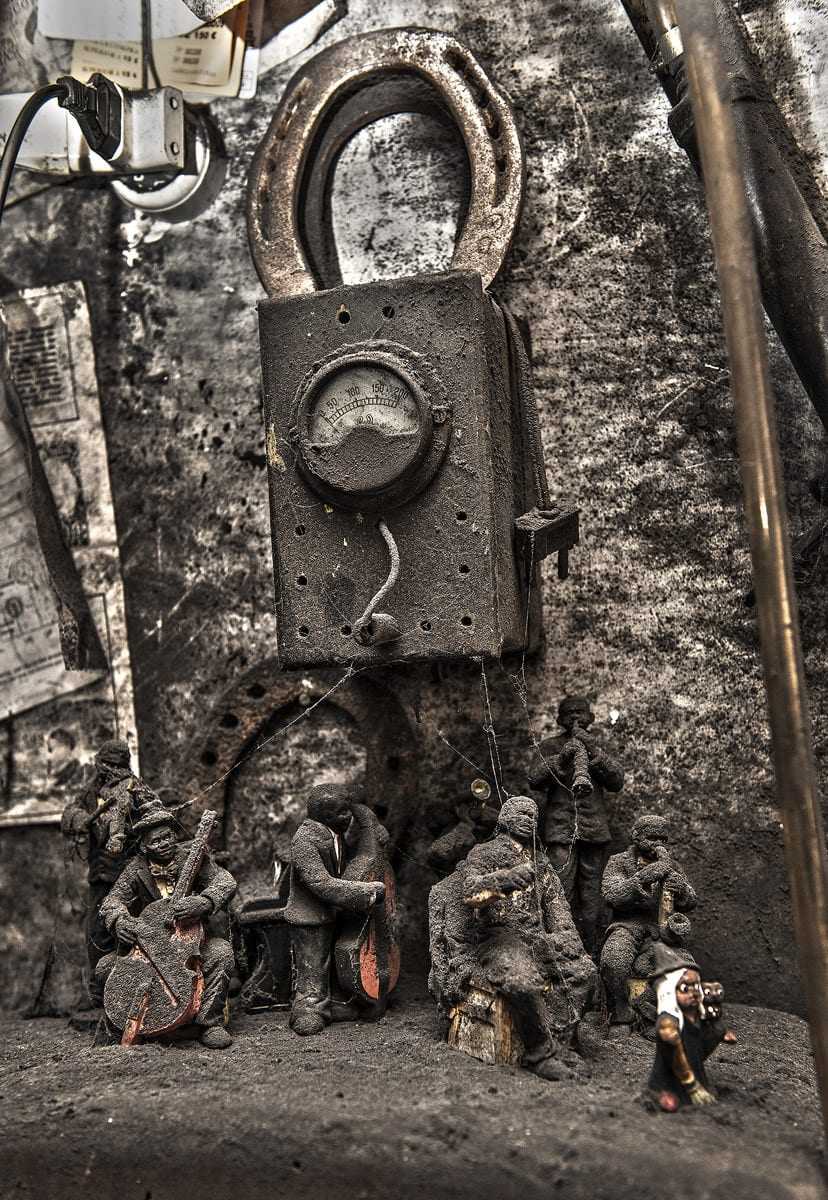
His store is decorated with old objects covered in black dust from years of charcoal dispensing and his prices are listed on a chalkboard. He asks for a mere €1.10 per Kg ($0.50/Lb), for holly oak charcoal, or carbon de encina, that comes in from Zahino, a small town in Extremadura.
He recommended his charcoal for cooking fish, meat or whatever you want to taste better. There is nothing like slow-cooked meat on the BBQ. Customers who came in all agreed. There was nothing like it.
In the summer, beachgoers stop by for a sac before heading out of the city. In the spring, Sevillians use it to cook favorites like marinated skewered chicken, sausages and pork loin. They need to eat well since they spend countless hours at the April Fair dancing, singing and drinking. In the winter, Aguilar says his customers buy it for their brazier, a fire basket that is placed under the table to keep your legs and feet warm.

José Luis Aguilar (All photos by Pepe Nieto)
When asked about eating the charcoal Aguilar laughed. “No. You can´t eat this. It is for cooking.” He thought for a second and then he remembered a story he once heard about a group of African monkeys that ate charcoal to help digest a poisonous plant they were thriving on. Perhaps, he said, but that was with monkeys.
Bakers and chefs, however, are demonstrating that charcoal is not just for the BBQ and winter brazier. Activated charcoal, specially prepared to have a negative charge, is now popping up in breads, pastries and other gourmet plates. It can be fun to see an all black loaf but is it better than sliced bread?
There is historical evidence that charcoal has been used medicinally since Ancient Egypt to help digestion. A study from the 17th century demonstrated that activated charcoal had properties that could absorb many substances. The French chemist Gabriel Bertrand later demonstrated this by surviving after swallowing a lethal dose of arsenic trioxide mixed with activated charcoal.
The trend of mixing activates carbon into the bread dough and other foods is thought to help with digestion, reducing flatulence and bloating. However, many doctors agree that there is not enough evidence on its effectiveness and that consumption of this ingredient should be done in moderation.
According to Alessandro Targhetta, a specialist in homeopathic medicine and physical therapy, “there is very little amount of charcoal in the bread dough to make the bread more digestible and even less to help reduce a bloated belly.” He believes that the only effective remedy is to take active charcoal supplements.
However, he advises that natural remedies should not be taken lightly because they can cause unwanted secondary effects. Daily consumption of activated charcoal can reduce the effectiveness of birth control, diabetic and thyroid medications.
Furthermore, activated charcoal (E153) has been prohibited in the United States and in Europe in baked goods for its content of benzopyrene, a wood derived carcinogen.
Final verdict? Activated charcoal in its legal forms can add a unique element to a plate but it is not an ingredient that should be abused.