Differences of Canola and Olive Oil Examined at ‘Olearum’ Congress
Olearum, a nonprofit association, celebrates its 9th annual congress in Jaén, Spain. Members, residents of Jaén and even a few international attendees showed to attend workshops and learn the benefits of olive oil over canola.
In the 1970s, little Paco Lorenzo Tapia ran through his grandfather´s olive oil mill in Monda, Malaga and ate fresh baked bread from the family´s bakery. Although he was not aware of it then, his childhood would later play a major part in his life and the preservation of olive oil culture.
Paco went on to become a doctor, taking special interest in the impact that nutrition and the Mediterranean diet has on our health. However, what has made Lorenzo Tapia unique is his deep appreciation for the history and the cultural heritage that surrounds the Mediterranean diet and olive oil.
He told Olive Oil Times that it was this zest that led him to publish a book called Museos del Aceite en España (Oil Museums in Spain). After researching and traveling to emblematic sites around Spain, he realized the importance of preserving and promoting them, as well as, connecting the people that had them in their possession. With this idea in mind, in 2007 he founded Olearum as a nonprofit association that brings producers, millers, specialists, and olive oil professionals together to defend and raise awareness about olive oil and its history.
Olearum now has over 30 members who have all demonstrated special dedication to olive oil and work towards a common purpose. The association´s goals are to conserve and keep inventory of the heritage sites; promote olive oil culture and its products; defend quality olive oil; establish international and national collaboration; cooperate with schools, governmental organizations, and the press to educate the public; and recognize individuals or groups dedicated to promoting Olearum´s objectives.
To achieve these targets, Olearum organizes different activities for members, as well as, the young and old. Participants can enjoy gastronomy events, oleo-tourism, olive oil fairs, countryside outings, and much more.
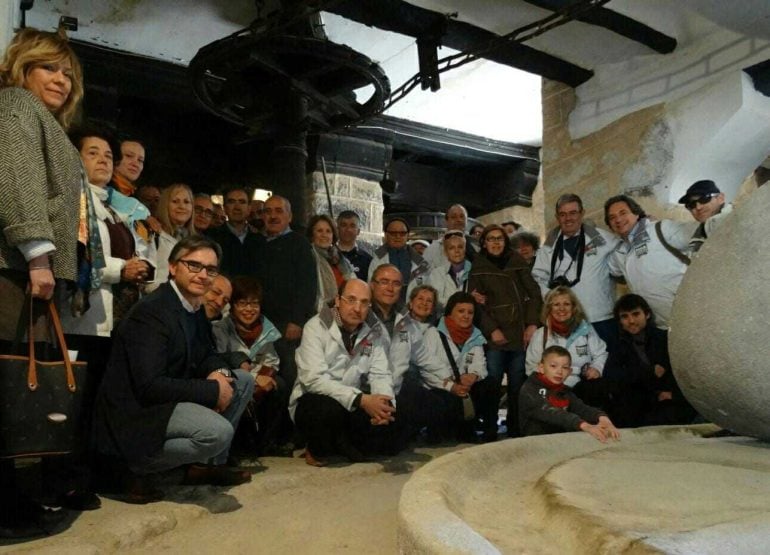
This past week, Olearum held their 9th Annual Congress. Every year it takes place in a different location. In 2020, the group plans to go to Japan with member Tomiko Tanaka, however, this year members gathered closer to home in Jaen, Spain.
The event included workshops on artesian olive oil making, an art show, documentaries on olive groves, as well as many interesting speakers.
One such speaker was Jose Juan Gaforio Martinez who is the Director of the Center for Advanced Studies on Olive Groves and Olive Oil at the University of Jaén. People came as far as London to come hear him speak on the health effects of canola (rapeseed oil) and olive oil.
He began by telling the audience about a Peruvian man who said he was told he should never fry with olive oil because it can cause cancer. He was also confronted by a famous chef that declared he only uses coconut oil because of its high smoke point. Many attendees recognized these points that are often made around the globe.
The truth, Gaforio explained, really does not matter. It is the perception that consumers have around the world and the stories that they believe to be true. It is up to olive oil professionals to help educate consumers so that they can make healthy choices based on scientific evidence and years of studies.
The canola industry presents various marketing points. It compares their oil to olive oil and claims that canola has less saturated fat, is richer in omega 3, and has a higher smoke point for frying.
Gaforio made a strong case for extra virgin olive oil. He stated that olive oil does not have significantly higher levels of saturated fat than canola.
He went on to say that although, canola oil has higher amounts of both omega 3 and omega 6, which are polyunsaturated fats that do not remain stable under heat. The consumption of too much omega 6 can also lead to inflammation in the body. On the other hand, olive oil is lower in omega 3 and 6. It contains higher levels of oleic acid, which is an omega 9-monounsaturated fat that does not degrade quickly when heated. Oils that are high in omega 3 and 6, Gaforio explained, are best consumed raw.
Contrary to the rumor that olive oil has a low smoke point it can take the heat. Not only because of its content in heat resistant omega 9 (oleic acid) but because extra virgin and virgin olive oils contain antioxidants (phenols) that help protect the oil from oxidizing when the temperature rises. Extra virgin olive oil´s smoke point can get up to 400ºF (205ºC) compared to canola at 455ºF (235ºC). Conversely, the temperature needed for frying is around 356ºF (180ºF).
In case the attendees were not convinced on switching from canola oil to virgin olive oil, Gaforio finished his talk by showing strong scientific evidence that has demonstrated time and again the positive health benefits of extra virgin olive oil.
After the event, members enjoyed lunch at a local restaurant where some of the best olive oils of Jaén were set on the tables to enhance the traditional Jaénense cuisine. As fresh baked bread was torn into small pieces for dipping, no one complained that there was no canola.