Third-Generation Producer Brings the World’s Best Olive Oils to London
Danilo Manco opened The Olive Oil Co. more than 20 years ago to help nourish the United Kingdom’s growing olive oil culture.
Since opening its doors more than 20 years ago in Borough Market, on the bank of the Thames, The Olive Oil Co. has become a stalwart of the London olive oil scene.
Owner Danilo Manco first moved to London from his native Puglia in 1997 to study and decided to stay.
Our objective is for people to come in, try the product and understand more about it. They will always come back to buy.
“I stayed and started my business,” he told Olive Oil Times. “My grandfather had land in Puglia, so I was always connected with olive oil.”
Recently, Manco returned to his grandfather’s land, restoring existing olive groves and planting new ones. Along with the selection of imported oils, he also sells his own.
See Also: Olive Oil Aisles Result in Superior Supermarket SalesIn addition to his shop in the market, Manco also imports olive oil in bulk for food service. Most of the extra virgin olive oil comes from Puglia, but Manco also sources his selection from around the olive oil world.
“Every year, we have a selection of different producers that send us their samples, and we test them,” he said. “Then we decide who is in and who is out.”
A range of factors – from climatic conditions to harvest timing – can impact the quality of the oil. “That’s why we keep rotating them,” Manco said. “We decide every year by December what we’re going to have for the next year.”
The shop boasts an impressive variety of renowned brands, including a dozen or so NYIOOC World Olive Oil Competition award winners.
Over the past two decades, Manco has seen a steadily increasing appreciation and knowledge of extra virgin olive oil in London.
“Twenty years ago, it was extremely difficult to explain why a bottle would cost £25 for a half liter, but there is much more knowledge now,” he said.
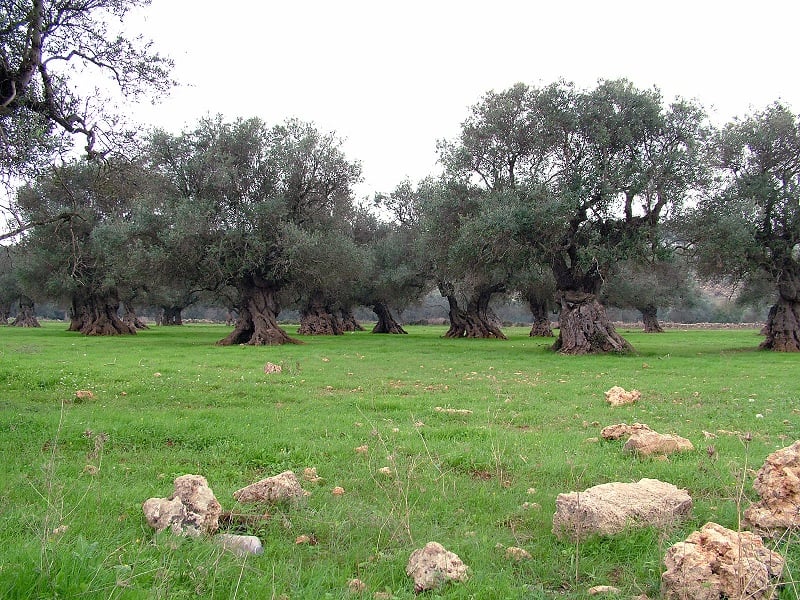
Manco’s olive groves in Puglia
The data bear out Manco’s observations. According to the International Olive Council, olive oil consumption in the United Kingdom increased dramatically, rising from 33,8000 tons in the 2000/01 crop year to 72,300 tons in 2019/20 (the last year for which IOC data are available).
Additionally, a November 2022 report from the Center for the Promotion of Imports, an agency of the Netherlands Ministry of Foreign Affairs, said the U.K. was among the five non-producing European countries to see the most significant increase in consumption over the past half-decade.
Manco mainly attributed this to the advent of low-cost air fairs in Europe in the mid-2000s, which allowed people on the continent to travel more affordably to producing countries and increased awareness of olive oil health benefits.
While visiting southern Europe, he believes Londoners gained a better appreciation of olive cultivars, how extra virgin olive oil is produced and what differentiates high-quality and low-quality olive oil. “One thing is to explain,” Manco said. “Another is to see. It’s always different.”
“In our Borough Market stand, we have noticed that customers ask more specific questions about the product such as harvest, pressing, cultivar and scent,” Manco said. “Some of them already know what they are looking form while others ask for suggestions for a particular dish. For all visitors, there is an opportunity to get to know more and taste the product.”
Even though olive oil consumption continues to rise, the Italian-British dual citizen said the United Kingdom’s decision to leave the European Union in 2016 had made his job more difficult.
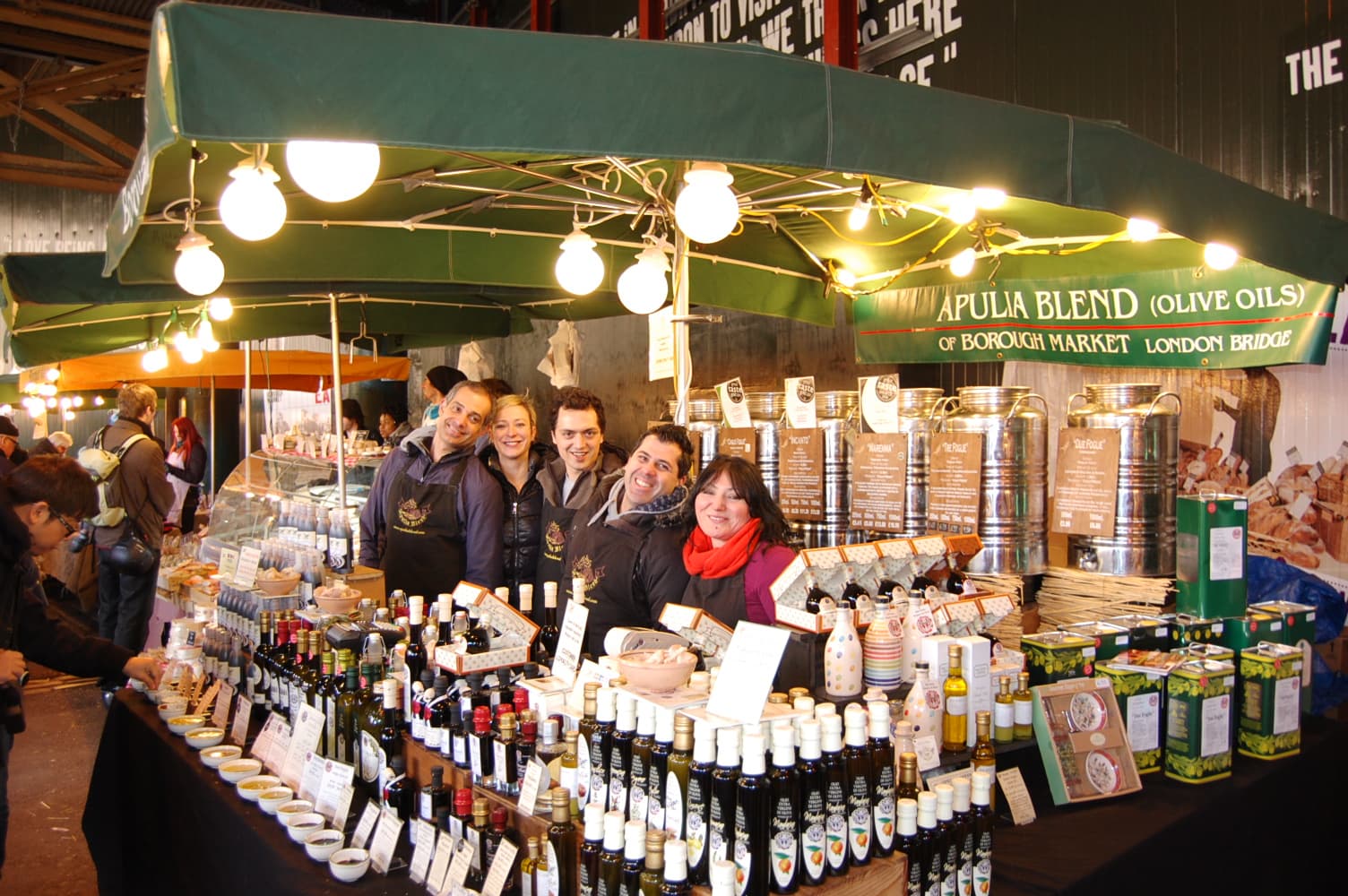
Danilo Manco (fourth from left) at The Olive Oil Co. at Borough Market
Brexit did not result in new tariffs on European olive oil imports but increased bureaucracy and transport times.
“Brexit has impacted our business like any other,” he said. “There has been an increase in paperwork. It takes five or six days longer to have the goods clear customs.”
“The main issue for us is the extra cost in terms of the extra days that we need for the transit time,” Manco added. “Brexit just made everything much harder.”
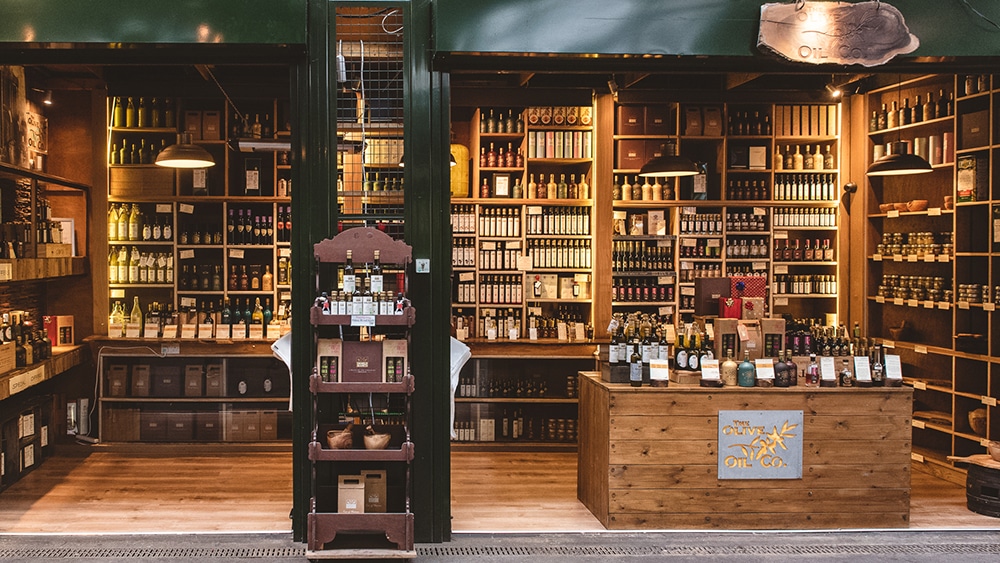
The Olive Oil Co.
The Olive Oil Co. is not the only Italian importer feeling the pinch of Brexit. In 2021, Coldiretti, a farmers’ association, said Brexit resulted in a significant decrease in Italian olive oil, pasta, cheese, wine and tomato sauce exports to the U.K.
Despite the inconveniences created by the decision to leave the E.U., Manco continues to promote olive oil consumption in the U.K., where butter has long been the dominant fat. He does this by educating restaurant purchasers and the general public at his shop.
“Sometimes we arrange an evening about olive oil for my restaurant customers,” he said. “We get 10 to 15 people together, and we make a first approach of olive oil. Our job is to make the product more interesting for people to know more about it.”
“The salespeople in the store also are trained in olive oil,” he concluded. “We don’t care whether the person buys olive oil or not. Our objective is for people to come in, try the product and understand more about it. They will always come back to buy.”