Production Dips in Portugal, but Not for Long
The completion of a $6-billion dam in the south of the country could hold the key to sustaining Portugal’s dramatic increase in olive oil production, but it does not come without its critics and controversies.
Portugal expects a 15 percent dip in its olive oil yield this year. Yet, despite the decrease, there is a sense of optimism in the world’s seventh-largest olive oil producer nation as swaths of previously fallow territory are becoming newly available for olive cultivation.
Thanks to the remarkable work that has been done by our olive growers and agricultural entrepreneurs, it has been possible to move from a deficit scenario to a situation which generates surpluses.
According to figures from the International Olive Council, Portuguese producers are largely experiencing an off-year in this campaign but still managed to produce 115,00 tons of olive oil. This represents a 65 percent increase from the previous off-year and is the second-highest yield for Portugal in the past half-decade.
Luís Medeiros Vieira, the Secretary of State of Agriculture and Food, told Olive Oil Times that the small Iberian nation has experienced substantial growth in the olive oil production sector, moving from a net importer to a net exporter in a decade.
“Ten years ago, Portugal was a country with a deficit of olive oil,” he said. “In the last decade, thanks to the remarkable work that has been done by our olive growers and agricultural entrepreneurs, it has been possible to move from a deficit scenario to a situation which generates surpluses.”
A large portion of this growth has been due to agricultural developments in the southern region of Alentejo. Stretching from the Atlantic Ocean to the Spanish border, Alentejo makes up more than one-quarter of the country’s land area and is home to about 85 percent of Portugal’s olive groves.
“This is a region that has grown very strongly in recent years, because it has made a very significant investment in irrigation, in dams to make water retention and irrigate new olive groves,” Medeiros Vieira said.
One notable project allowing olive groves to prosper in a region facing increasingly hot and dry conditions is the Alqueva Dam. The dam has created Europe’s largest human-made lake on the River Guadiana in the northwestern corner of Alentejo.
This new reservoir now irrigates slightly more than 240,000 acres of land and is set to increase its total irrigation capacity by an additional 180,000 acres by 2020.
According to the EDIA, a public company responsible for the dam’s construction, the Alqueva reservoir can provide farmers with sufficient water for four years without rain.

Luís Medeiros Vieira (Photo by Ivan Markelov for Olive Oil Times)
“We have enough water to the point when I’m five years into a drought and not worried about water,” José Dariush Leal de Costa, a local farmer, told Reuters.
However, not everyone in this region that is steeped in long-held traditions is in favor of the expansion. Environmental activists warn that the newly flooded areas will destroy wildlife habitats and that more productive land will encourage the increased use of intensive and polluting agricultural practices.
In a place where cork is still harvested using locally handmade axes and agricultural investment has been low, lifelong farmers are skeptical of new investment from big businesses.
Some, such as José Núncio, the president of Portugal’s National Federation of Irrigators, worry that central control of water distribution by EDIA will hurt farmers and called for the management of the dam by a cooperative.
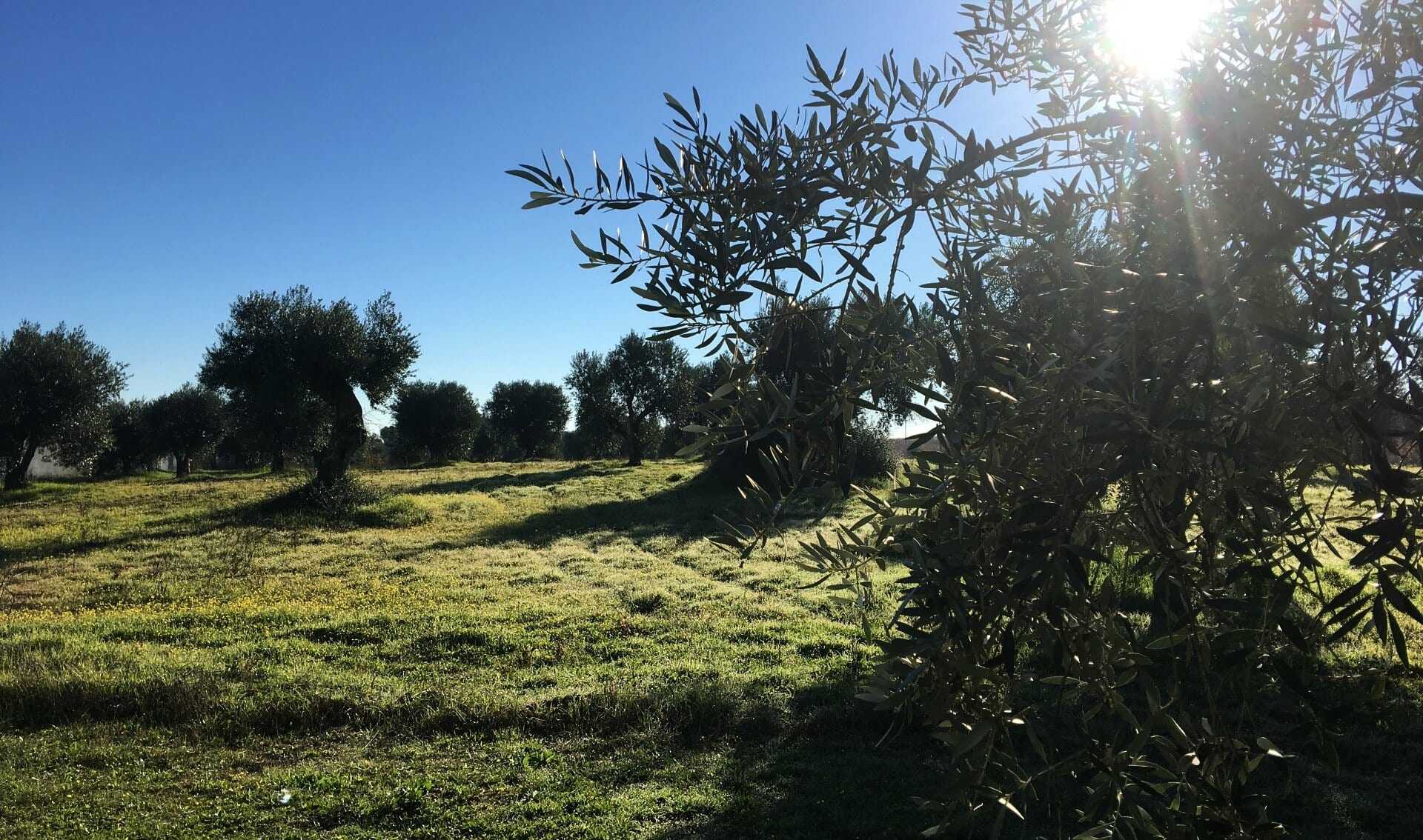
Photo: Curtis Cord
“Farmers should be given the possibility to choose whether the secondary network of the irrigation block in which they are integrated, is managed centrally or by an association of irrigators,” he told a local radio station.
José Salema, EDIA’s chief executive, quickly dispels these types of criticism. He called the project a “green barrier to desertification” and said the most efficient way to manage the reservoir water usage is centrally.
Salema also asserted that the Alqueva Dam increases environmental awareness. He pointed to new investments in drip irrigation as proof that farmers are taking water conservation just as seriously despite the lifeline created by the dam.
Some local olive oil producers are worried about the proliferation of the high-density farms set up by multinational firms in the new irrigated tracts of land. Alentejo has developed an international reputation for its prized PDO oils with indigenous varieties like Galega, Bical and Cordovil. There are concerns that the mass production of intensively-farmed Arbequina and Hojiblanca for bulk export will “water down” the hard-earned reputation of the region.
Meanwhile, it is hard to argue against the economic results of the dam. Unemployment in Alentejo fell to 8.4 percent last year, well below the national average, and the dam has gotten a lot of the credit.
“There are more jobs, new crops, which is always great for the region,” Helder Martins, a local farmer, told Reuters.
While the dam and reservoir bring much-needed reprieve to an area that suffered from a severe wildfire earlier in the year, Secretary Vieira said that olive growers and farmers must continue to innovate as problems caused by climate change will continue.
“Climate change will pose challenges to agriculture in general terms,” he said. “We have to find ways to mitigate the effects since we cannot fully resolve these situations.”
“On the one hand, water retention, investing in infrastructures such as dams; and, on the other hand, finding varieties that are more adjusted and resistant to drought,” he added. “Deep down, that’s what we’re doing.”