



At Barcelona's La Boqueria, Extra Virgin Olive Oil Runs in the Family
Xelo Morilla says that even in Barcelona, high-quality olive oils are undervalued. “It is something we have so internalized since we were children," she said. Her shop, El Mas del Mercader, is trying to change that.
 All photos by Pablo Esparza for Olive Oil Times
The Boqueria market in Barcelona, which opened in 1853, is a bustling hub of fresh food stalls visited by over 25,000 people daily, where olive oil was not previously valued. Xelo Morilla, an olive oil merchant at the market, opened El Mas del Mercader in 2011 to offer a selection of extra virgin olive oils from different regions of Spain, aiming to educate locals on the variety and quality of the product.
The heart of Barcelona beats within a maze of 300 stalls packed with fresh fish and vegetables, cheese and Iberian ham, wine and olive oil. This is the Boqueria market. For many, one of the best food markets in the world.
Many local people think that they know all about olive oil just because they have always had it at home. But it has never been properly valued.
This iron building opened its doors for the first time in 1853. Before that, an open air market and a Carmelite convent had been at the same place for centuries.
Now, the Boqueria is one of the most visited attractions of the city. Over 25,000 people pass through its alleys every day. Tourists taking pictures of the colorful stands and locals buying their daily groceries mix with apparent easiness.
“For Barcelonans, the Boqueria used to be the place where you could buy and find anything to eat that you could not find anywhere else… You found it at the Boqueria. It’s always been that way and it still is”, said Xelo Morilla.
We meet this olive oil merchant at El Mas del Mercader (the Merchant’s Country House), a shop specialized in olive oil set at one of the stone arcades surrounding the market.
Morilla and her brothers decided to open the shop in 2011. Later on, they started selling some wines and offering olive oil and wine tastings in the basement.
For years, she told Olive Oil Times, finding a wide variety of extra virgin olive oils at the Boqueria was, ironically, not so easy.
“One of the reasons we decided to open an olive oil shop is we saw that there were shops of everything here, but not of oil. Of good olive oil, there was none,” she explained.
Of course, olive oil — a basic product in every Spanish kitchen — was sold at the market.
It could be found at the olives merchant’s shop, maybe even at the butcher’s or at the cheesemonger’s. But there were no specialized merchants as there were for other products such as wine.
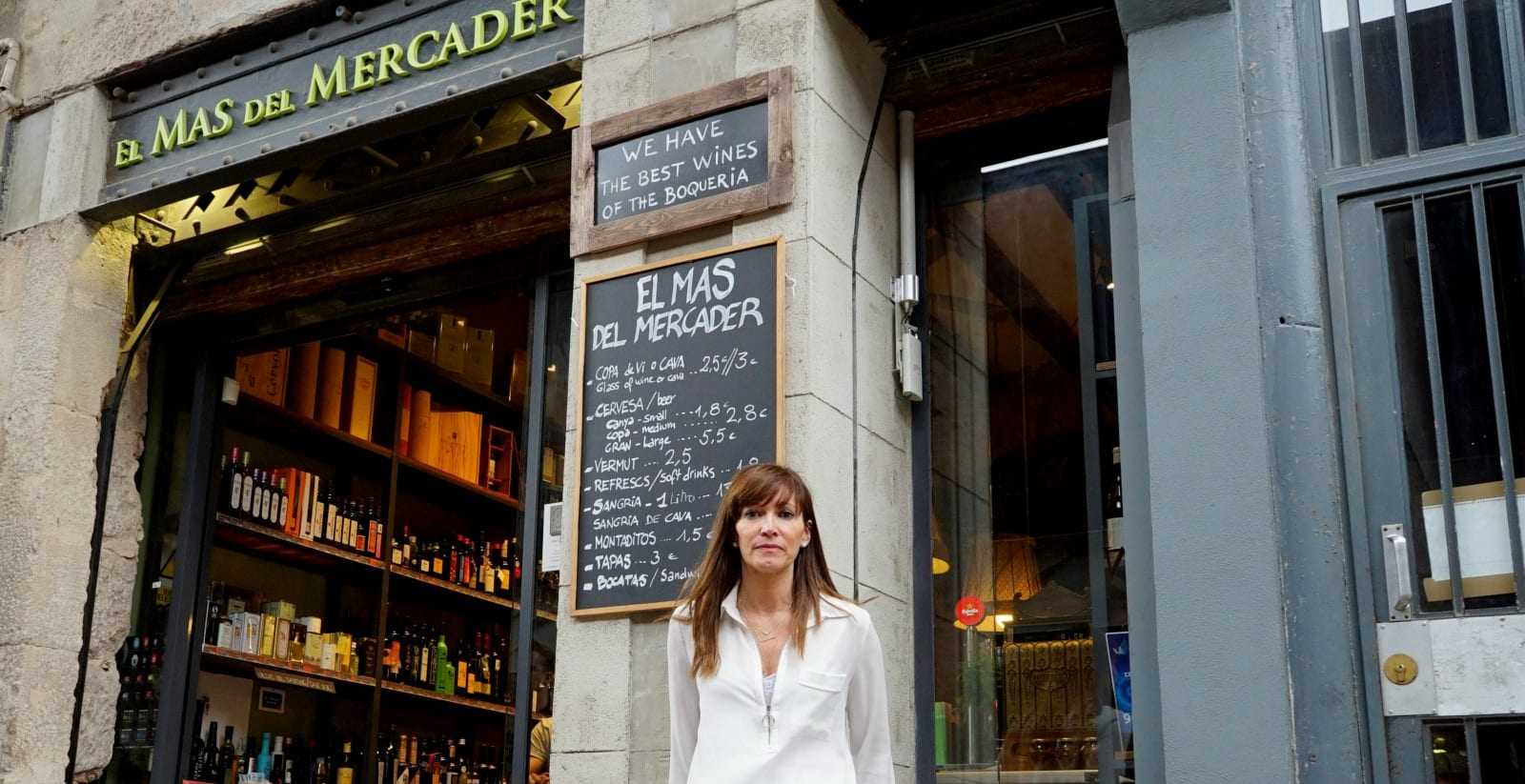
Xelo Morilla
“We are the last ones to value the good things we have. The cooperatives knew that their production was sold locally and the surplus was sold to the Italians. So olive oil was not given its real value here,” Morilla said.
“It is something we have so internalized since we were children. It is seen as a first-need product so it has never been properly valued. And learning to appreciate it is a long process. Many local people think that they know all about olive oil just because they have always had it at home. But it is not like that,” she added.
However, she argues, things are changing in the last few years and good quality olive oils are being increasingly demanded both by foreigners and locals at the Boqueria. El Mas del Mercader’s selection consists only of extra virgin olive oils from Spain.
“We try to make a selection of those varieties that are characteristic of each area as every region in Spain has its own typical varieties,” said Morilla, as she pointed to bottles of different origins covering the wall shelves of the shop.

All photos by Pablo Esparza for Olive Oil Times
She names the varieties they are made from: Arbequina, Empeltre, Farga, Hojiblanca. They come from Catalonia, Aragón, Valencia, Mallorca, Jaén, Córdoba…almost from every corner in the country.
Morilla’s family has been linked to the market for decades. Xelo’s father and uncles owned stalls of dried fruits, species and wines at the Boqueria.
Her mother’s family, on the other hand, has peasant origins and cultivates fields of olive and almond trees in Lleida, West of Barcelona, and they produce their own olive oil. The match seemed obvious.
“After a life living in the world of the olive oil, the olive trees fields, the peasantry… this was the step that lacked. It was the element that closed the circle, at least in my family’s case,” she said.
Related Articles

Oct. 15, 2025
Madrid Region Bans Solar Panels on Agricultural Land
Local authorities said the ban is necessary to protect olive and vine cultivation and comes as part of a wider effort to add value to local olive oil production.

Oct. 28, 2025
UK Consumers Seek Value as Prices Reach Record Highs
Surging retail prices are reshaping Britain’s cooking-oil habits, pushing shoppers toward supermarket extra virgin olive oils and prompting fresh debate over substitutes.
Oct. 29, 2025
Spain Sets Surplus Mechanism for Olive Oil
Spain published a marketing rule allowing temporary olive oil withdrawals in surplus years, aiming to stabilize prices and protect farmgate income ahead of the 2025–2026 campaign.

Jul. 25, 2025
Economy Minister Warns Spain’s Olive Oil Exports Vulnerable to U.S. Tariffs
With U.S. tariffs on imports from Europe expected to rise to 15 percent, new data suggests some producers are frontloading exports.
Oct. 8, 2025
Summer Heat Trims Andalusian Olive Oil Output
Andalusian olive oil production is forecast to fall 5.5 percent to 1.08 million tons in the 2025/26 crop year, as an exceptionally hot and dry summer offset the benefits of abundant spring rains.
Dec. 4, 2025
Study Links €1.1 B in Losses to Tasting-Panel Variability in Spain
Researchers say tasting-panel variability continues to undermine Spain’s olive oil sector, with misclassifications costing growers more than €1.1 billion in ten years.
Apr. 23, 2025
Spain Moves to Mitigate Impacts of New U.S. Tariffs
Spain's Minister of Agriculture reassured agri-food producers about potential impact of US tariffs, emphasizing EU collaboration and market diversification.
Mar. 28, 2025
Filippo Berio Execs See Equilibrium Returning to The Global Olive Oil Market
A harvest rebound in Spain and strong harvests elsewhere, have resulted in falling prices at origin and portend a decrease in retail prices, say Berio officials.