Award-Winning Extra Virgin Olive Oil the Latest Chapter in a Storied Slovenian Family Legacy
The Brataševec family has helped olive groves flourish in western Slovenia once again after the crop nearly disappeared following a 1929 cold snap.
Known as wine country, the charming hills of Goriška Brda present a unique landscape on Slovenia’s border with Italy, where olive growing has ancient roots and some of the best extra virgin olive oil in the world is being produced.
“Looking over the hills that shape this landscape, you can see a diverse array of scenery from the Adriatic Sea to the Julian Alps,” Timon Brataševec, manager of Villa Eva, told Olive Oil Times. “The borgos [small villages with traditional architecture] remind us of the villages dotting southern France or Tuscany.”
The harvesting season is crucial, as it is the moment when a whole year of work sees the light.
Along with the terrain, the area is defined by its history. In the aftermath of World War II, the city of Gorizia was divided between Italy and Slovenia.
However, friendship and cooperation led the divided municipalities of Gorizia, Italy, and Nova Gorica, Slovenia, to reunite in a strategic partnership that helped the social and economic development of the area.
See Also: Producer ProfilesVilla Eva is among the winners of both the 2021 and 2022 editions of the NYIOOC World Olive Oil Competition, the world’s largest olive oil quality competition. Brataševec and his family are currently busy with the 2022 olive harvest.
His award-winning olive oil production represents a magnificent comeback. Growers in the area had lost faith in olive farming after the catastrophic winter of 1929 when a -15 °C cold snap almost wiped out the olive tree population.
Over time, farmers started to plant other crops, and it took decades for olive farming to once again flourish in the area, where world-famous vineyards now grow.
Brataševec’s groves are some of the farthest north in the Mediterranean basin, which presents plenty of challenges, especially with the added uncertainty of climate change. However, he believes that the northerly location of the groves also contributes to the oil’s fruity aroma.
Brataševec added that the team behind Villa Eva is dedicated to organic production and the protection of biodiversity, which the family sees as crucial for the well-being of their olive groves.
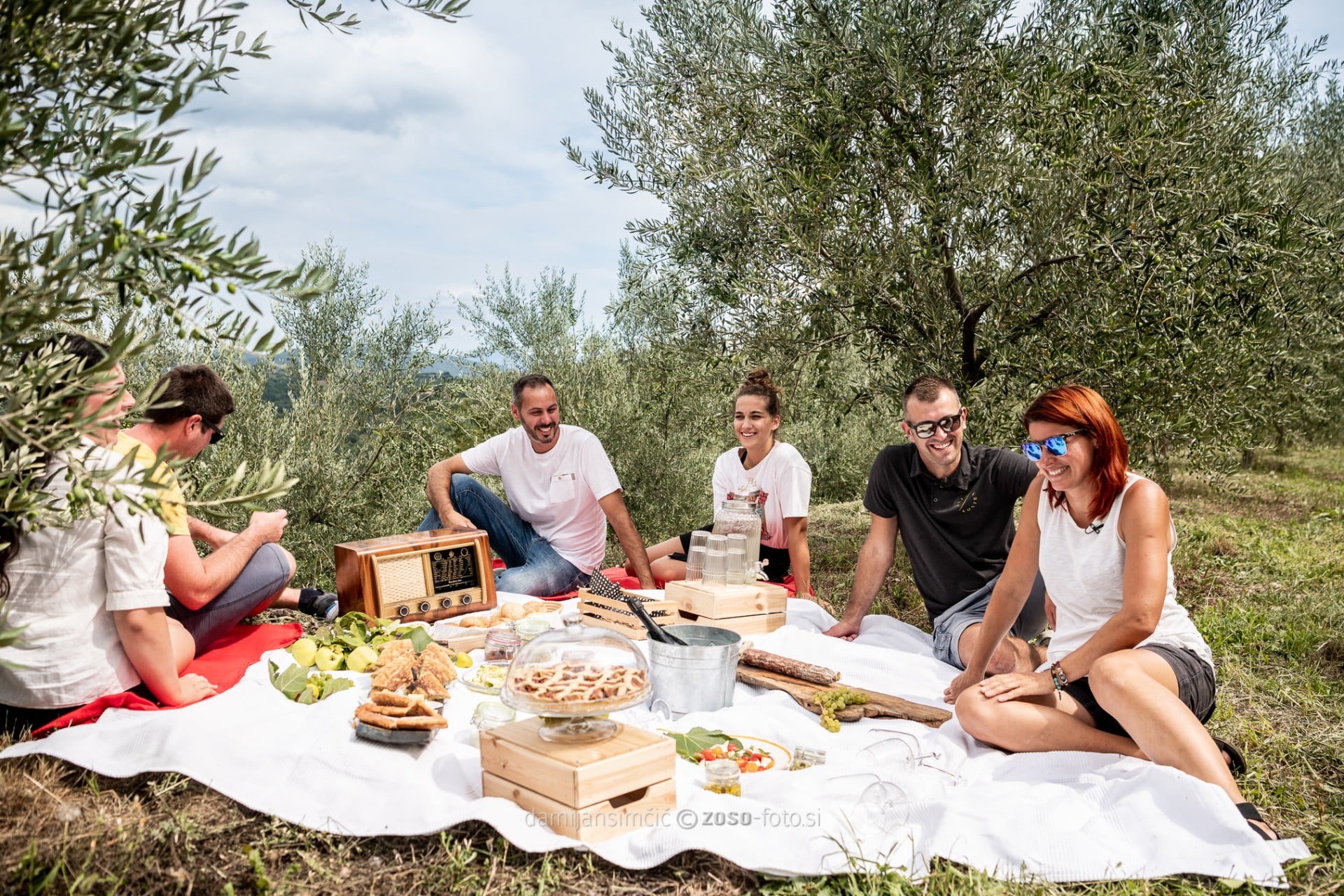
The Brataševec family
“In our olive groves, we gave life to environmentally optimal conditions for the ideal development of the olive trees,” he said. “They are surrounded by woods through which a small river flows and where many species of birds and insects interact.”
“We have found that this ecological niche exerts a crucial role in defending our olive trees against the olive fruit fly, olive moth and olive thrips [small insects],” Brataševec added.
Currently, the Brataševec family is hard at work hand-harvesting their olives, which will continue until the second half of November.
“The whole family is involved in the farm, from the owner, Vanessa, to the agro-engineer Kris, who takes care of olive oil quality, while Miranda and Nedjan are in charge of promotion and sales of our products,” Brataševec said.
He explained how Villa Eva is an acronym coming from his great-grandmother, Emilia, who sowed the seeds of the family farm, and her two daughters, Vanda and Adriana.
“Their initials are our brand,” he said. “In 1920, Emilia opened a food shop selling olive oil and wine. Two years later, she opened the first bakery in Goriška Brda.”
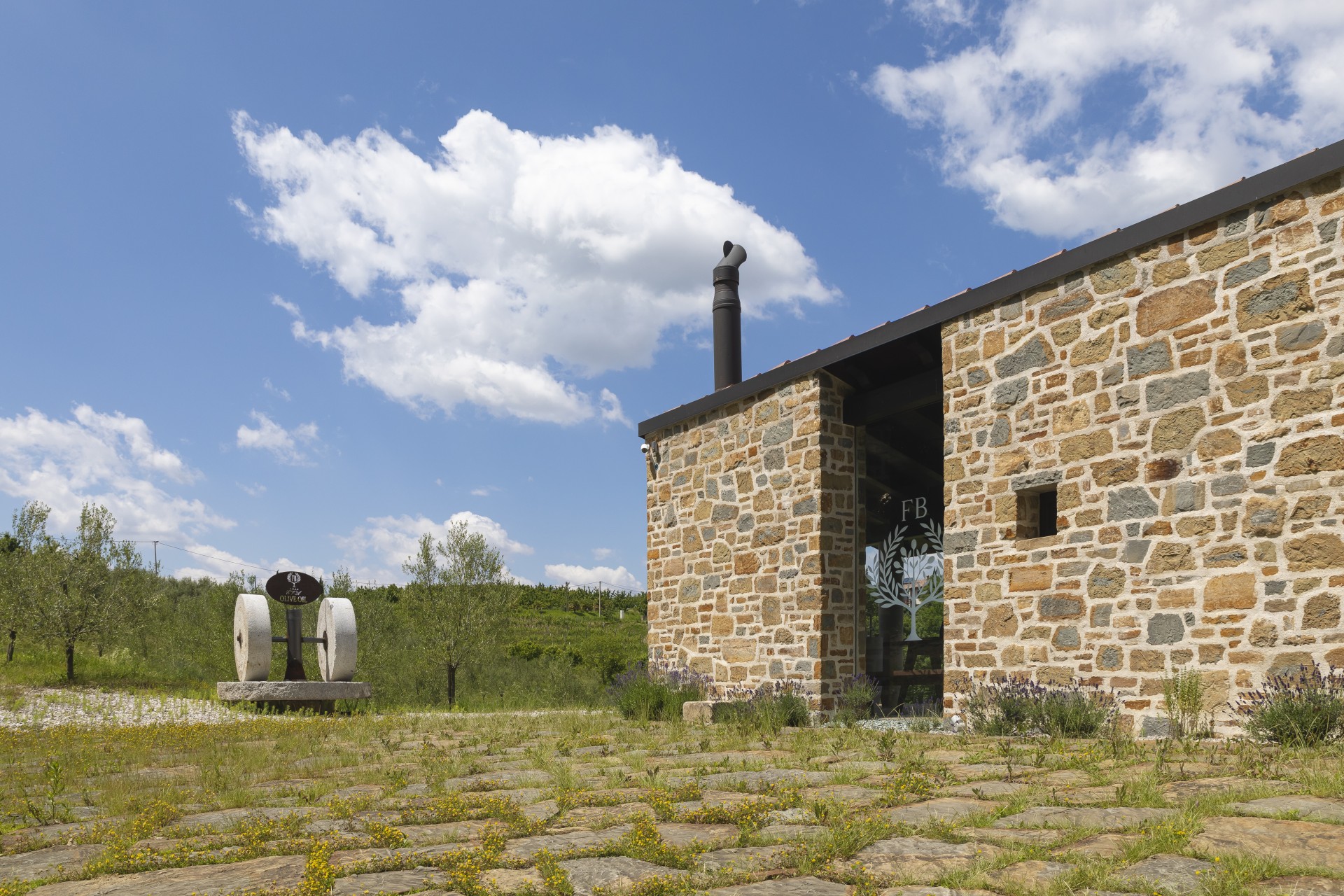
Traditional stone buildings at the heart of Villa Eva olive groves
“Business was good, and that allowed Emilia to buy two more houses where we created a touristic center with pool and spa,” Brataševec added. “In the stone building, at the heart of the olive grove, we offer olive oil tastings.”
Generations of experience have taught the family that timing is everything, especially in olive oil production.
“Harvest timing is crucial to obtain the best nutritional qualities and a pleasant aroma for the olive oil,” Brataševec said. “It took many years of experience in the field to reach the point when one can choose the exact moment to proceed with the harvest.”
He added that he is satisfied with the amount of olives harvested so far this year. While many growers in central and western Europe suffered from the worst drought of the past 500 years, Villa Eva’s electronically-managed underground irrigation system allowed the family to water their trees at all the right moments.
“We expect a very good season,” he said. “Drought has taken a toll on many producers, but we managed to go through it thanks to an irrigation system that reaches all our groves.”
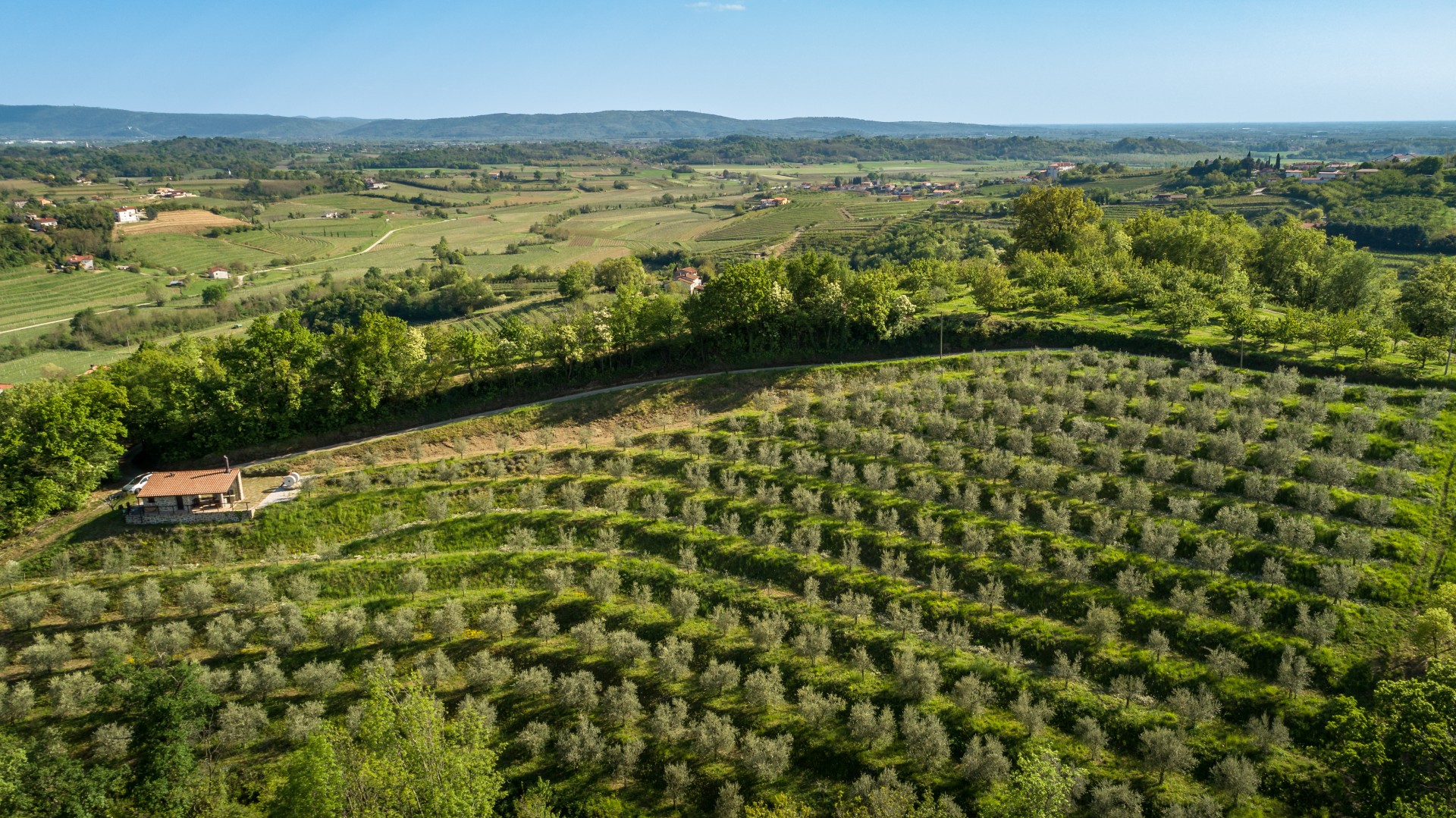
“The harvesting season is crucial, as it is the moment when a whole year of work sees the light,” Brataševec added. “The olives are collected in small perforated canisters which are then sent to the mill for transformation, just as provided for by the Protected Designation of Origin (PDO) protocols.”
Villa Eva’s olive groves are dominated by two local cultivars, Črnica and Drobnica. The family also planted the Istrska Belica, renowned for its piquant flavor, Bianchera, Maurino and Leccino, with the aim of making different blends.
Despite the farm’s sustained success, Brataševec said the family would not rest on its laurels, and new innovations are on the way.
“In the future, we will further improve our product so as to satisfy even the most exacting demands of our clients,” he concluded. “Next year, we plan to open our own mill, which will shorten the time between harvest and pressing of the olives.”