Esporão Celebrates 50th Anniversary with Top Awards for Organic Olive Oils
What started as a family winery expanded into significant olive farming and oil production after a friendly challenge from an uncle to a nephew.
As Esporão celebrated its 50th birthday this year, the Portuguese company added two Gold Awards at the NYIOOC World Olive Oil Competition to its growing collection of accolades.
Ana Carrilho, Esporão’s production director, told Olive Oil Times that the company had won 155 awards for its extra virgin olive oils since 2012.
What appeared to be the mere dream of two friends in 1973, 50 years ago, has grown into an international and generational project.
Carrilho ascribed their success to Esporão’s mission: “to make the best products from what nature provides.”
“Esporão’s olive oils aim to adopt the expression of the land they come from, produced exclusively from olives of the Alentejo region, using native varieties,” she explained.
See Also: Producer Profiles“Our team plays a crucial role in ensuring the quality and consistency of Esporão’s olive oils, from harvesting olives to the entire production process and finally delivering the olive oils to consumers,” Carrilho added.
She also praised the efforts of the company’s 60 olive farming partners, who “help us preserve the native varieties and the traditional agriculture of the Alentejo.”
In 1950 the company’s current owner, José Roquette, and Joachim Bandeira bought a 1,840-hectare estate in Alentejo, Portugal’s largest olive oil-producing region.
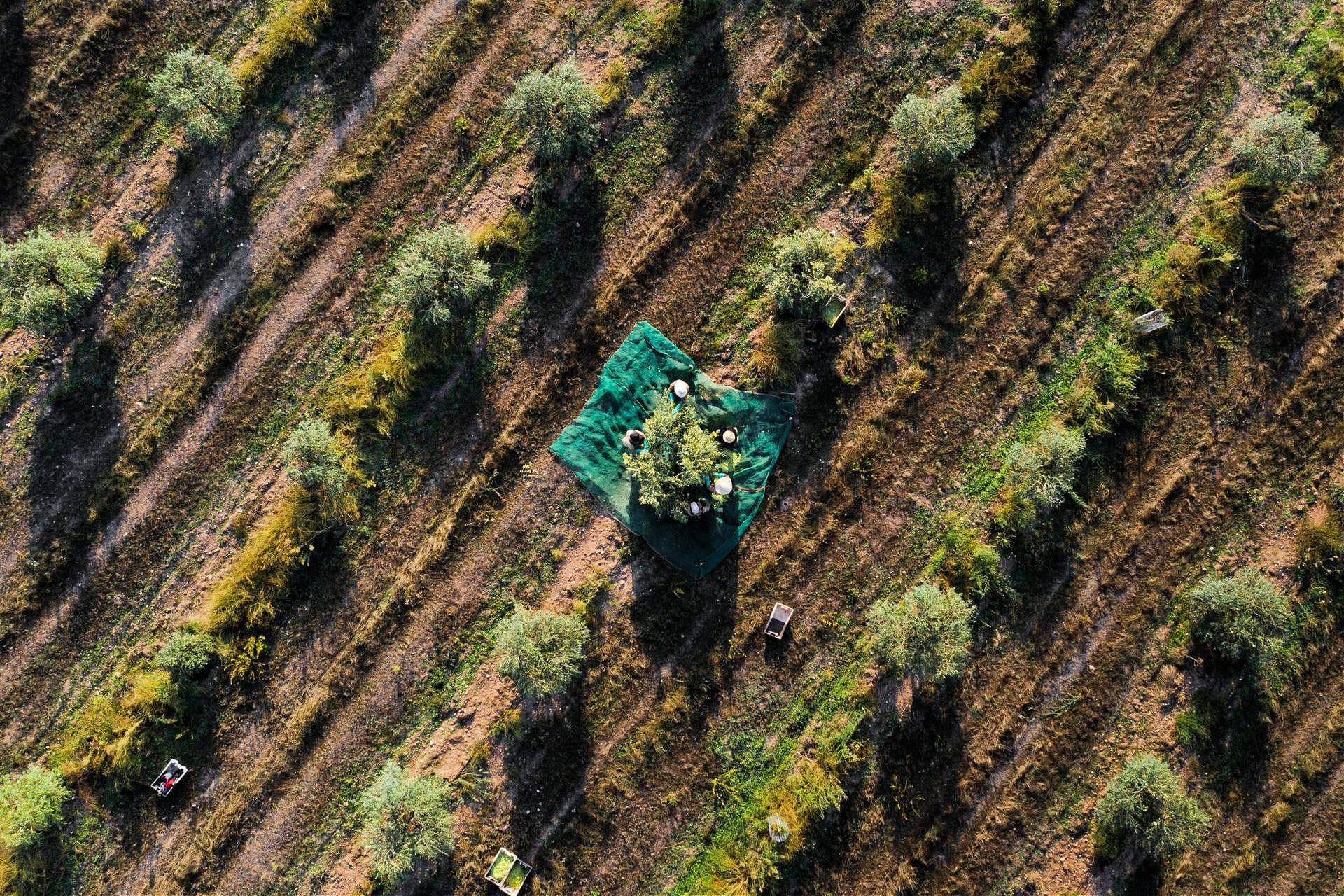
The expansion of super-high-density olive groves have changed the face of Alentejo. (Photo: Esporão)
Esporão’s boundaries have been unchanged for centuries – since 1267. “It has unique agricultural conditions: wide temperature variations, seven different types of soil and extraordinary biodiversity,” she said.
Roquette and Bandeira initially planted vineyards, harvesting their first grapes in 1985 and producing their first wines shortly thereafter.
See Also: In Portugal, a Tough Season Ends with Stronger Determination“Esporão’s first two decades are a story of fight, faith and a vision so powerful that it has left indelible marks on the modern history of Portuguese wine,” Carrilho said.
Since then, Esporão’s wines have been exported internationally and have won multiple awards. Carrilho said the estate is now home to 441 hectares of vineyards with 40 grape cultivars. Aragonês, Trincadeira, Touriga Nacional, Antão Vaz, Gouveio and Roupeiro are the predominant local varieties, along with Alicante Bouschet from France.

Ana Carrilho (Photo: Esporão)
In 1997, Esporão started writing a new chapter in its story when the company started producing olive oil. Carrilho said it started with Roquette’s uncle challenging him to produce olive oils of the same quality as their wines, and the rest is history.
“Currently, Esporão has 111 hectares of olive groves at Herdade do Esporão and Herdade dos Perdigões in Alentejo and at Quinta dos Murças in the Douro region,” Carrilho said.
Roquette’s son, João, followed in his footsteps by joining the company in 2005. “His vision and strategy have brought internationalization and sustainability to the heart of the company’s culture,” Carrilho said.
See Also: Portugal Enjoys Record-High Off-Year Harvest“Values passed down from generation to generation have contributed to a culture of responsibility, hard work and excellence, which is reflected in everything Esporão does,” she added.
In 2007, Esporão started expanding its organic olive groves, and today 93 hectares are certified organic.
The company’s organic ambitions began when they planted olives at Olival dos Arrives in 2007 with 80 hectares of Arbequina and Cobrançosa trees.
“The name Arrifes derives from where it stands: an area of cliffs with rocky soil, making the olive tree more resilient in a balanced ecosystem rich in biodiversity,” Carrilho said.
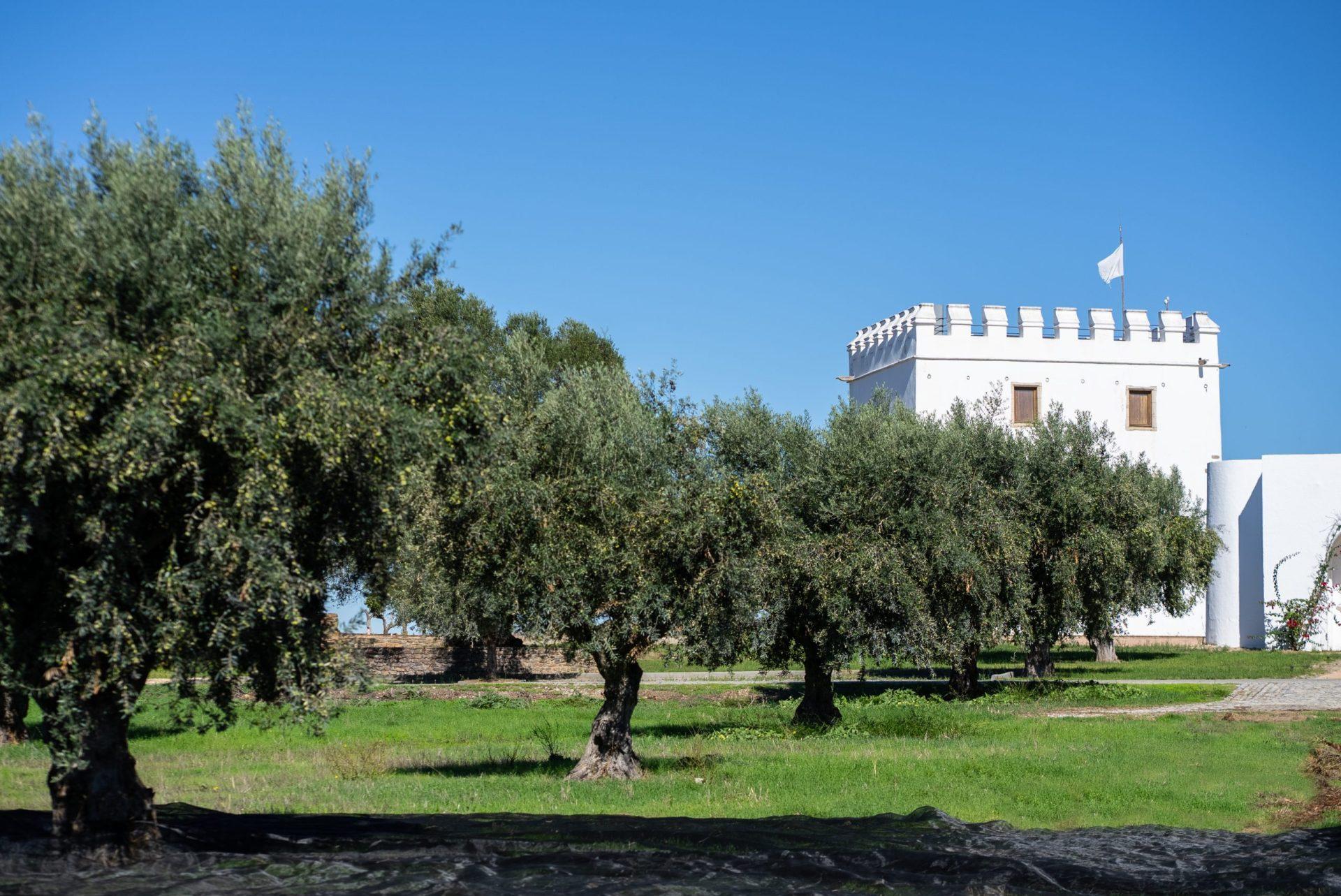
Organic Galega trees grow next to the historical Herdade do Esporão Tower. (Photo: Esporão)
This grove was an addition to their organic Galega grove next to the estate’s historical Herdade do Esporão Tower which dates back to the Middle Ages and houses a museum. The company started growing another 9 hectares of Cordovil olive trees in 2019, Carrilho said.
“At Quinta dos Murças, in Douro, the organic olive grove of 15 hectares has around 6,000 olive trees featuring different altitudes, sun exposures, schist soils and the characteristic climate of the Douro Valley,” she said. “This olive grove has Galega and Negrinha de Freixo olive varieties.”
“What appeared to be the mere dream of two friends in 1973, 50 years ago, has grown into an international and generational project,” Carrilho concluded.