Domaine Adonis Bets on Traditional Orchards and Organic Production
The renowned Tunisian producer centers on local cultivars, working with the terroir, and earning global recognition.
In the five years since its first olive campaign in 2019, Domaine Adonis’s Tunisian extra virgin olive oils have collected the industry’s most coveted awards.
Four of Domaine Adonis’s monovarietals and one blend received Gold Awards at the 2022 New York International Olive Oil Competition (NYIOOC).
The olive trees we have planted, I feel them as they were my children. You worry if one of them gets sick. And looking at them growing up fills me with joy.
“Such awards mean a lot for our company. We are a very small business. Winning this kind of competition contributed substantially to make our EVOOs compete on the world stage. Domaine Adonis did not need to go looking for clients — they come looking for our EVOOs,” Salah Ben Ayed, owner of the farm, told Olive Oil Times.
See Also: The World’s Best Olive OilsIn 2015, Ayed, who owns other agri-food enterprises, bought an olive farm in northwest Tunisia, on the hills of Mjez El Beb, with 2,900 olive trees.
“Many of those trees had been planted by the French colonists at the end of the 19th Century. To those, we added all the olive trees that we could, so today we take care of approximately thirteen thousand olive trees,” Ayed said.
Many of the trees come from renowned local cultivars, such as Chetoui, Chemleli and Sayali. Other cultivars include Arbosana and Koroneiki. “Ours are not intensive orchards; they are all traditional sets to which we added irrigation systems mainly used in the warmest period of the year,” Ayed noted.
From the beginning, water scarcity has been an issue for the farm.
“Looking at the dry weather, we chose varieties such as Chemleli as they tend to be highly resilient to such conditions. Interestingly, the different climate, the different soil characteristics and the height of our hills made the trees give us olives with a flavor very different from what they usually bear in the south, where Chemleli is mostly grown,” Ayed noted.
“The olive trees we have planted, I feel them as they were my children. You worry if one of them gets sick. And looking at them growing up fills me with joy,” he added.
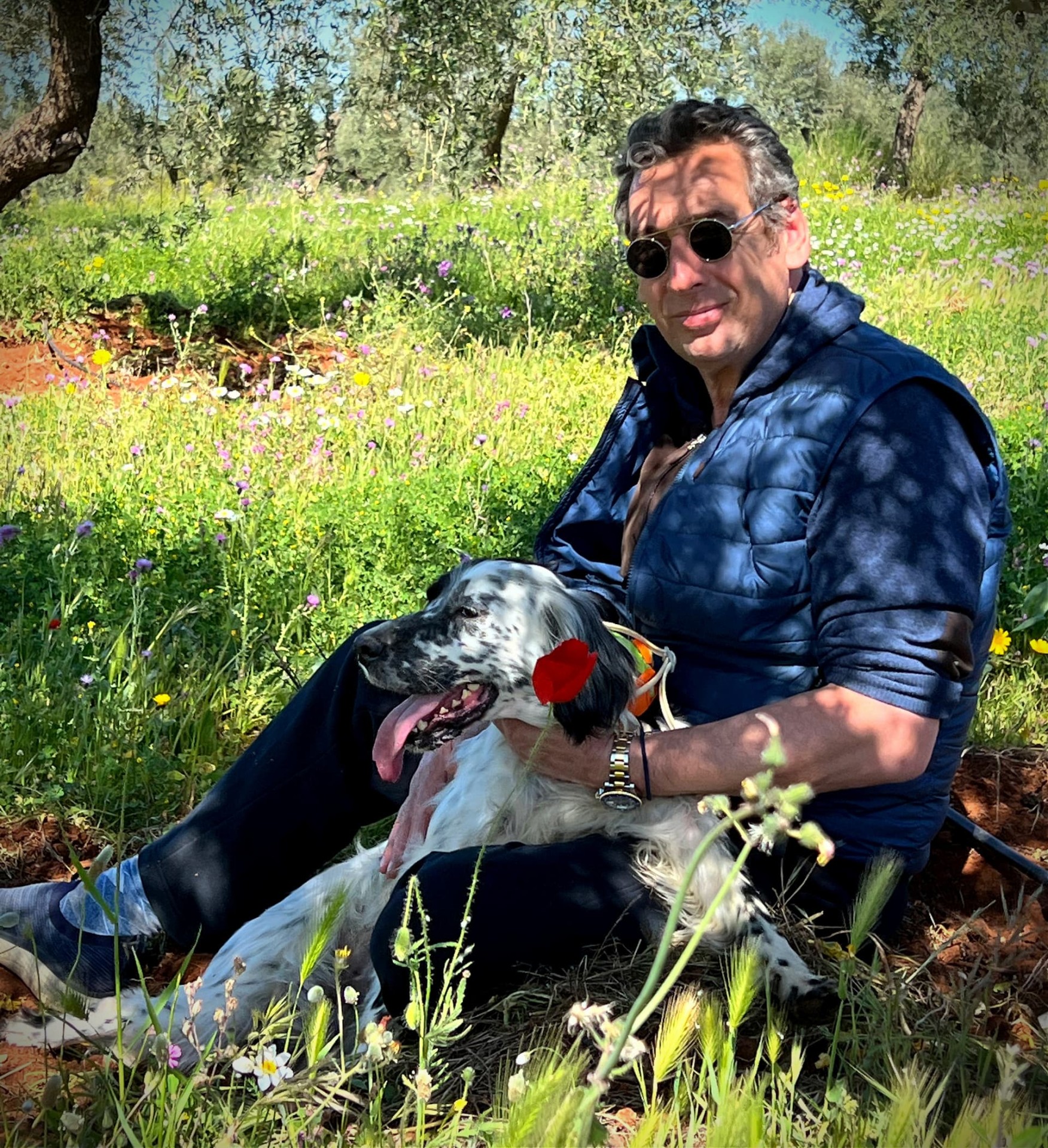
Salah Ben Ayed
“If all of this is happening, it is because of our love for nature. About 40 of our 100 hectares are forest land. We banned hunting there and made some water available to the animals living there. You might find some of those birds only in our forest,” Ayed noted.
Today, Domaine Adonis EVOOs are organically produced. It did not start that way.
“In 2016, we tested conventional farming with pesticides and other chemicals. But we soon realized that such conventional approach is not good for nature. When I talk about nature, I talk of birds, boars, insects and so on,” Ayed explained.
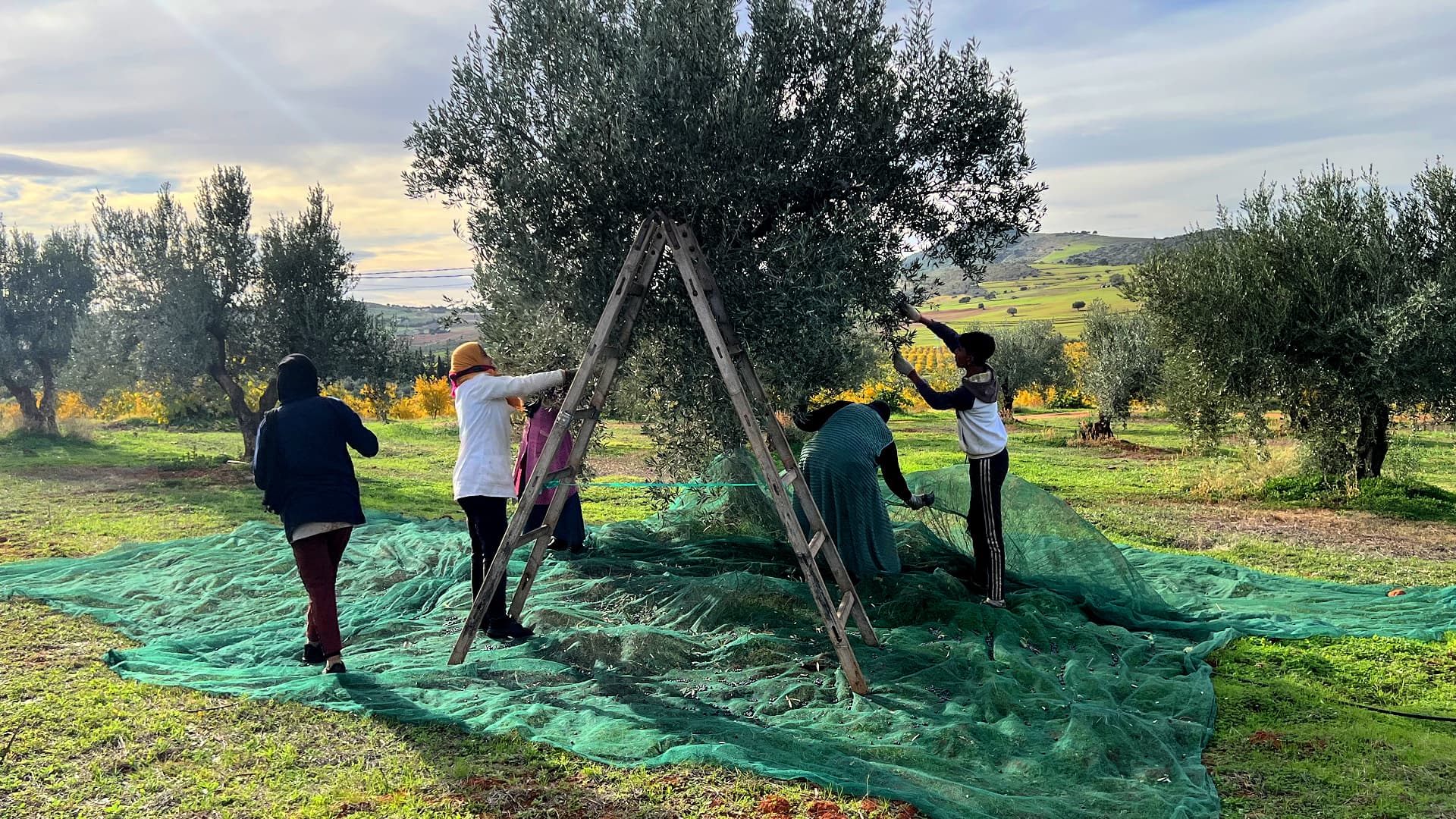
Harvest at Domaine Adonis
“That year, we realized that water for irrigation or rainfall was mixing up with the chemical compounds. Such mixture was then being absorbed by the local water-hungry fauna. When we understood that, our approach changed radically. There are birds coming on our trees to drink,” Ayed recalled.
Since its first commercial harvest in 2019, Domaine Adonis has obtained the organic certification released by a sole Italy-based operator. “Every year, we get some on-site investigation, there is reporting to do and so on. Our customers eat a healthier olive oil,” he added.
A few years after planting the new olive trees, Domaine Adonis bought its olive oil mill, which Ayed directly operates.
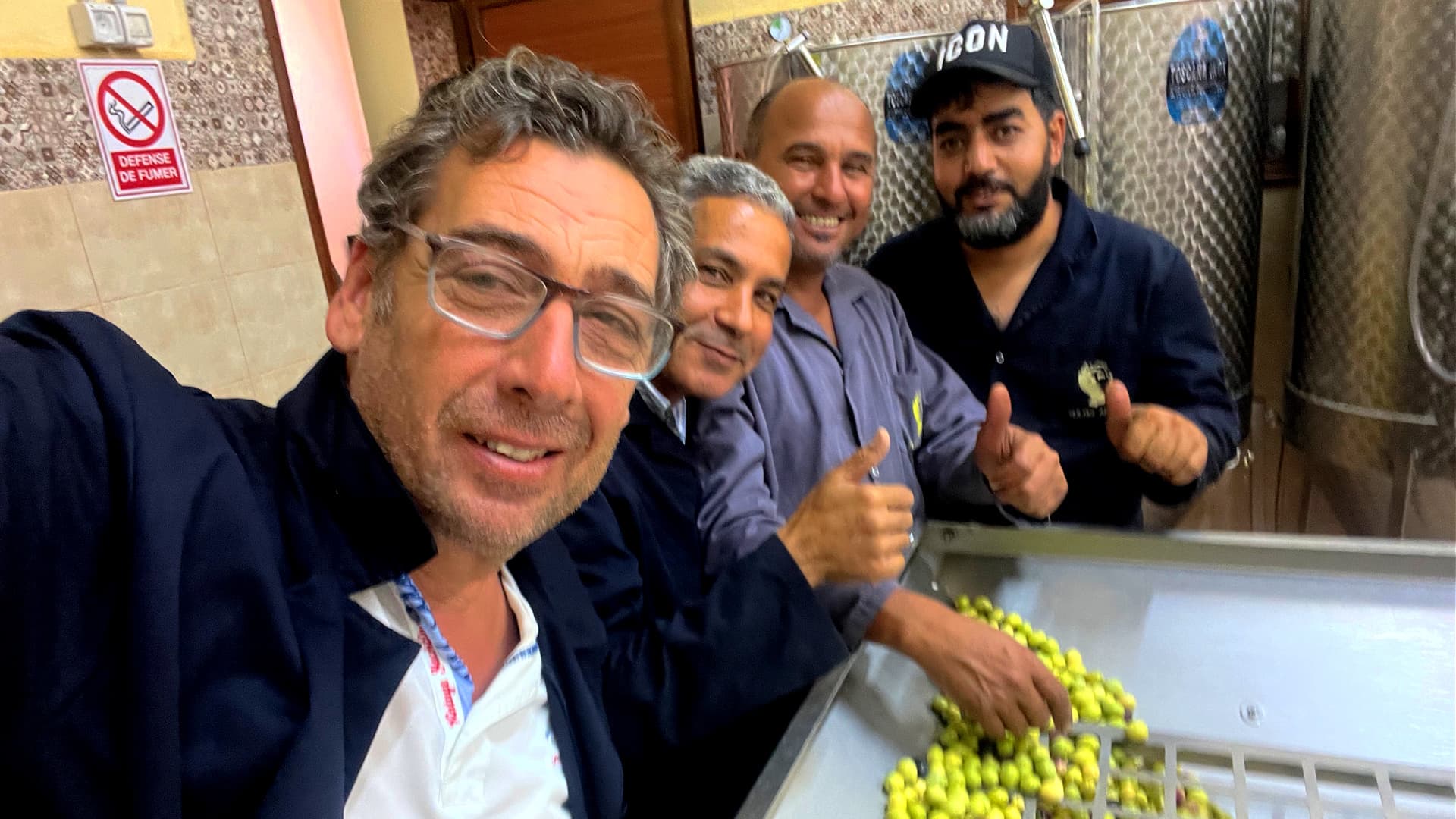
“In 2021/2022, we had our greatest result so far with 15,000 liters of olive oil. In the current season, we reached 9,000, but in a matter of years, we expect to reach 20,000 as the trees grow,” he said.
“I do operate the olive mill, and while it is a challenging task to operate it in the best possible way, the true challenge comes after the harvest. And that is the sale price of our EVOOs,” he added.
Ayed underlined how producing high-quality extra virgin olive oil requires hard work in the fields all year. To that effort, electricity and fuel costs must be added. The olive oil market does not easily account for these costs.
“It is highly problematic to place our EVOOs at a price which one might consider balanced. We cannot sell one liter of high-quality olive oil at €4 or €5,” he explained.
Bulk sales dominate the olive oil market in Tunisia, and while olive oil is a staple product of the local cuisine, expenditure for quality EVOOs is limited.
“Most of those who consume olive oil do not really know much about its quality. And that is true in Tunisia but it is the same in many other countries,” Ayed stressed.
See Also: Olive Oil Education Programs“Other costs that should be considered in determining a fair price come from the uncertainties of the climate as well as the alternate bearing seasons of the olive trees, which make many trees deprived of olives in off-years,” Ayed noted.
While some production hiccups might be estimated, some cannot be entirely predicted. The Mediterranean mega-drought that crippled olive farming in the western Mediterranean Basin throughout the last season represents an example of one such extraordinary event.
See Also: Study: Climate Change Is Making Droughts More Frequent and Severe“We are not seeing and did not see any rainfall for so long, a situation which nobody here has ever seen before,” Ayed noted. Given its effects on olive yields, rainfall scarcity represents a high operating cost.
“That is why we export, as we are looking for a fair price for our products. We do not export large quantities, but the price is fair. We sold in Malaysia, Saudi Arabia and will soon be selling in South Korea as well,” Ayed noted.
“A fair income is indispensable to make this project work. I would even prefer not to sell part of our EVOOs should that support a fair price,” he explained.