A Higher Calling for Award-Winning Producers in Italy
Committed to innovation and the environment, first-time NYIOCC winners know the future depends on the choices made today.
Part of our continuing special coverage of the 2021 NYIOOC World Olive Oil Competition.
Extra virgin olive oil producers from 28 countries won a record-high 790 awards at the 2021 NYIOOC World Olive Oil Competition.
While many were repeat winners, plenty of first-time entrants were also recognized at the world’s most prestigious olive oil quality competition.
Our goal is to obtain a good product but also make sure that the generations of our children can benefit from our work and enjoy a healthy planet,
For the newcomers to the NYIOOC, producing high-quality olive oils is not simply an end in itself. These award-winning farmers are committed to protecting the environment by promoting biodiversity and the care of the land.
They are socio-culturally engaged and create networks, looking into the future without losing sight of their roots and using technology as a means to make the world a healthier place.
“More than just an agricultural production, ours is a cultural and ethical project,” said Pietro Barachini, the co-founder of iOlive with Dario Gronchi, which earned a Silver Award at the NYIOOC. “This recognition confirms we are heading in the right direction.”
Barachini and Gronchi founded iOlive as a digital traceability project based on blockchain technology that aims to guarantee the origin and quality of extra virgin olive oil.
See Also: The Best Olive Oils from Italy“Italy is the country with the largest number of olive varieties, and we aim to preserve and expand this incredible biodiversity,” added Barachini, who runs a historic nursery in Pescia, in the province of Pistoia.
For years, the producers behind iOlive have been committed to raising awareness of the importance of agricultural sustainability and its central role in high-quality olive oil production. When Barachini met his future associate, the two immediately found common ground.
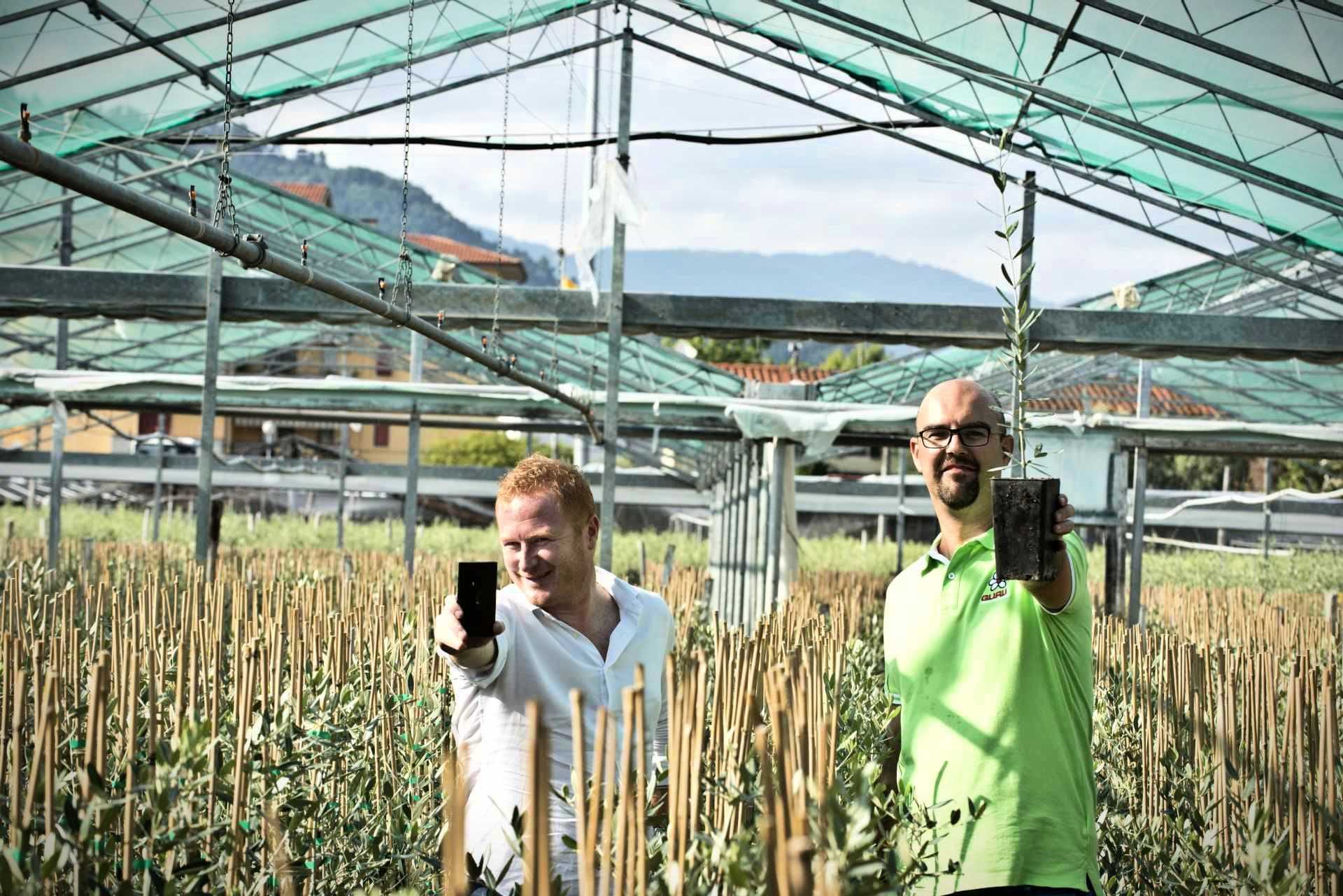
Photo: Dario Gronchi and Pietro Barachini
“We believe in the potential of digital technologies to facilitate the work of quality producers,” said Gronchi, who comes from the renewable energy sector. “And we think that quality cannot be separated from the environment care.”
His parents, Marcello and Brunella, support the two entrepreneurs in taking care of more than 1,500 olive trees in Bolgheri and another 500 in Gabbro, in the province of Livorno.
“Recently, we added three hectares of land including an old mill, and there is a plan to plant another 1,200 olive trees,” Gronchi said.
As their traceability project developed, the creators of iOlive started producing extra virgin olive oil with typical Tuscan varieties – Moraiolo, Leccino, Razzo, Pendolino and Maurino – and their main goal is to expand production with many others.
“The preservation of biodiversity is not only about the varieties we use to produce extra virgin olive oils,” Barachini said. “It implies the conservation of landscape and the communication of the history and traditions of a territory. Thus, promoting biodiversity involves our ethical and cultural patrimony.”
Slightly more than 700 kilometers south of Tuscany, the founders of Evo Sicily share a similar view about the role of sustainability and cultural preservation in olive oil production.
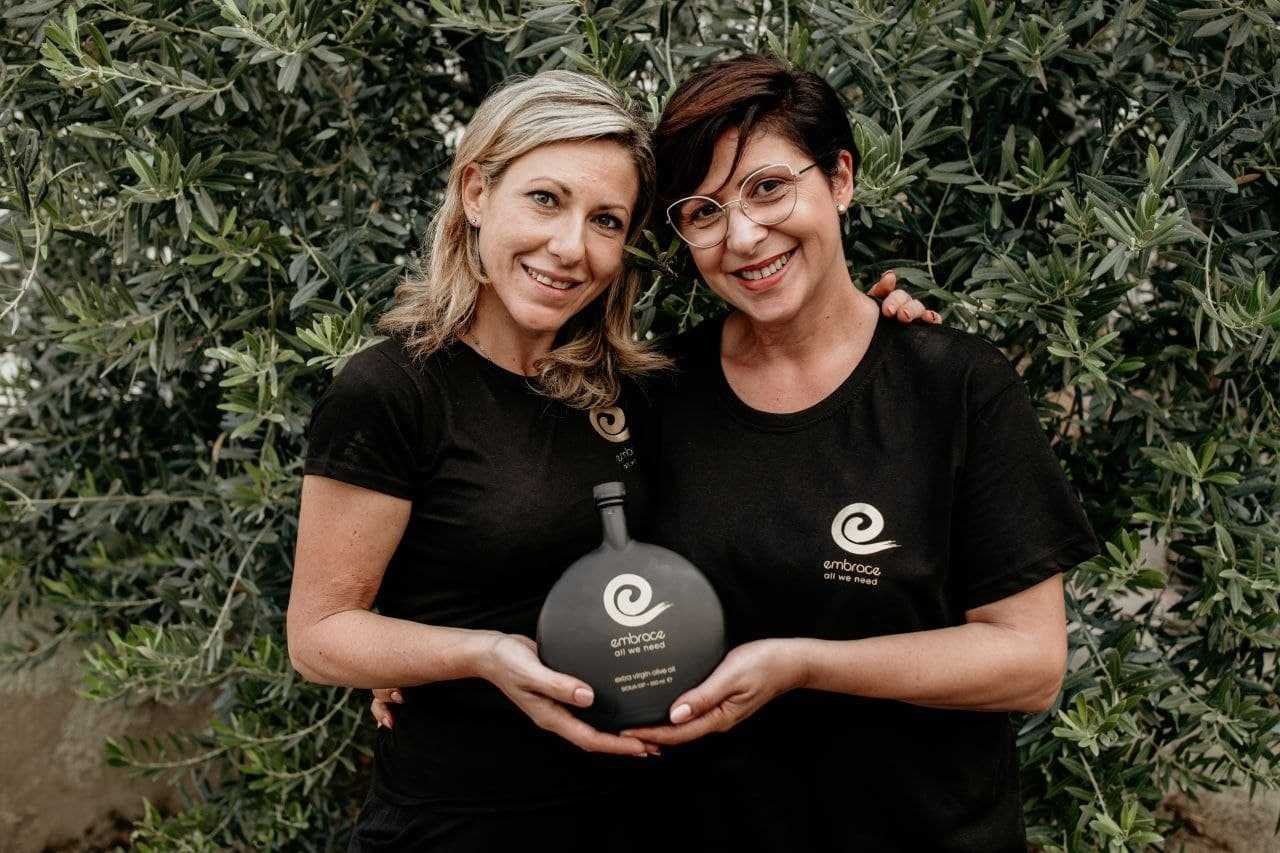
Photo: Carmen Bonfante and Giusy Gambini
“We are very happy for this recognition from the panel of the NYIOOC,” Carmen Bonfante said after receiving a Silver Award for Embrace. “We have chosen our brand name for his universal significance, and, with this clear message of openness, we are ready to cross the Italian borders.”
In Campobello di Mazara, in western Sicily, about 1,000 olive trees, several of which are a century old, are spread over five hectares of land in the Archaeological Park of Selinunte.
The grove is located in the area of the Cave di Cusa – an ancient stone quarry that provided material for the construction of the Acropolis of the village – where Nocellara del Belice trees, flanked by some Biancolilla used as pollinators, thrive and give life to the Sicilia PGI monovarietal.
“The award has been a wonderful surprise,” co-founder Giusy Gambini said. “Our company was formed recently, in 2019, and we immediately had to deal with the Covid-19 pandemic, but we did not lose courage, and indeed, we gave our best to obtain a good product.”
Last year, the two entrepreneurs donated part of the proceeds from sales of Embrace to the Civil Protection in support of the national health structures.
Along with having a positive impact on the community, the producers behind Evo Sicily also do their best to protect the environment.
“We are aware that our work can have an impact on the environment,” Bonfante said. “So it was natural for us to focus on sustainability, and recently we obtained the Friends of the Earth certification for the sustainable method we apply throughout the entire production chain, from harvesting to packaging.”
“Our goal is to obtain a good product but also make sure that the generations of our children can benefit from our work and enjoy a healthy planet,” she added.
Located just south of Tuscany in the region of Lazio, environmental preservation is also the focus of Alessandra Nicolai, who earned a Gold Award for her A1980.
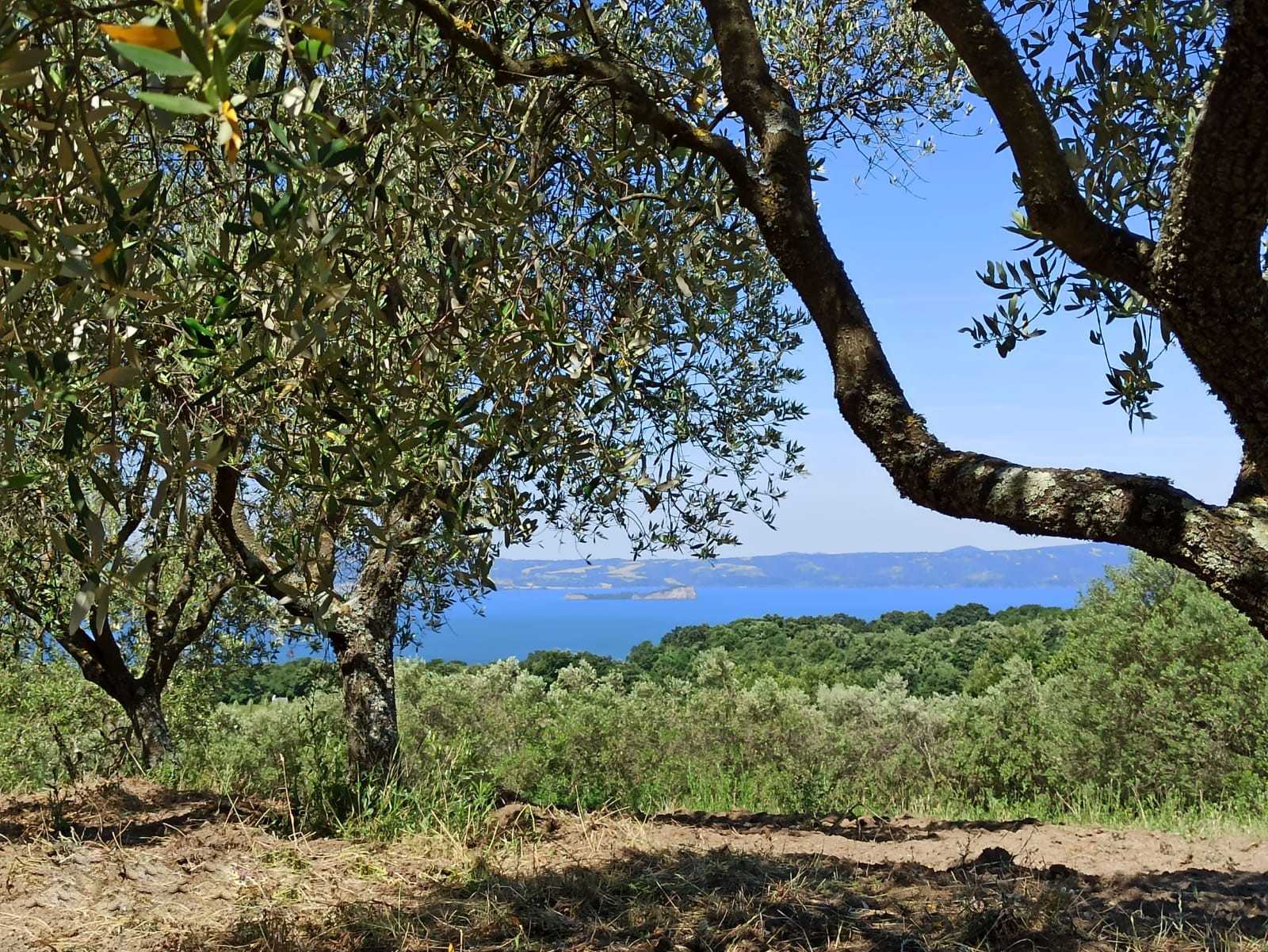
Photo: Alessandra Nicolai
“It was a great emotion to receive this recognition, which allows us to communicate our quality at an international level,” said Nicolai, who just a few years ago took the reins of the family farm.
In Montefiascone, on the southeastern banks of Lake Bolsena, she manages an organic company with the help of her husband, Marco Crisostomi.
“My father, Valerio, who now supports us in the management of the grove, decided to convert to organic farming 20 years ago,” she said. “He had a far-sighted approach, and now I shared his vision of good agricultural practices as well as respect for our land.”
Before becoming a farmer, Nicolai worked in an office, but one day felt the desire to go back to nature and dedicate herself to the olive trees planted by her grandparents.
“It was the best choice I could make,” she said. “I live on the land where my crops grow, and I am the first consumer of my products. So every day, I live the experience that healthy products can only come from healthy land.”
Composed of 900 Leccino, Moraiolo, Frantoio, Caninese, and Pendolino trees, Nicolai’s grove is spread over five hectares, which retained the original extensive planting pattern.
After the historical frosts of the last century, this setup made it possible to plant new trees, while maintaining a distance of six meters by six meters and eight meters by 10 meters between them.
At the heart of the orchard, a panoramic terrace overlooking the lake is dedicated to tasting and hospitality.
“Indeed, our goal is to spread the culture of high-quality extra virgin olive oil,” Nicolai concluded.
In Impruneta, near Florence, Fattoria di Triboli was founded in 2018 by a group of professionals with different skills who have teamed up with the “purpose is to contribute to a more responsible society.”
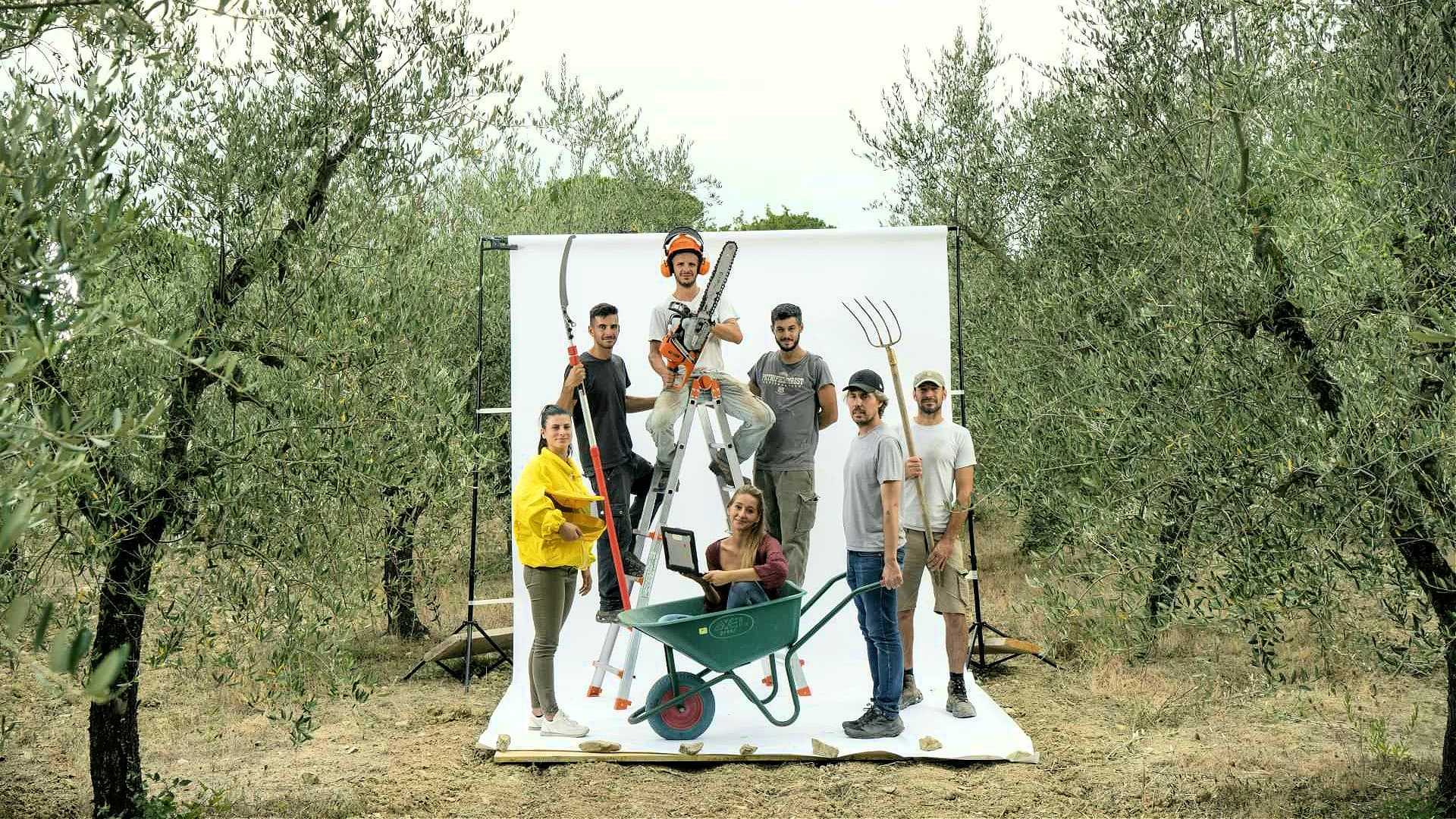
Photo: Fattoria di Triboli
The 15-hectare organically-managed olive grove is the core of their 100-hectare property, which also includes a large wooded area and a lake.
“This is a wonderful recognition that pushes us to do even better,” Luigi Viscardi, the company’s managing director, said after receiving a Gold Award for a blend of Frantoio, Moraiolo, Leccino and Pendolino olives.
“We wish to constantly improve ourselves and reach excellence in every aspect of our activity,” he added.
This far-reaching approach is based on a strong commitment to research and scientific studies and collaborations with institutions.
“Alongside the Blekinge Institute of Technology in Sweden, we have developed a strategic plan to achieve environmental, social and economic sustainability for our farm,” Viscardi said.
He and his team pay attention to the environmental compatibility of the entire production chain, starting from the adoption of regenerative agriculture practices, which are aimed at improving the health and vitality of the soil, to the use of stainless steel bottles which are completely recyclable.
“We feel a great responsibility for our land, and we are focused on improving its biodiversity,” Viscardi said, emphasizing that they are reintroducing autochthonous and rarely cultivated olives, such as the Madonna dell’Impruneta variety.
The clay soils in the hilly Tuscan region allow for the ideal development of 4,800 olive trees, of which 1,100 were planted over the past two years.
“With the goal to make high quality, we are aiming to add land and expand our production with native Tuscan olive varieties,” Viscardi said. “This is a demanding job, but it gives us great satisfaction that pushes us to continue with a constant focus on our sustainability goals.”