Europe Edition of Olive Oil Times Sommelier Program Concludes in the Netherlands
Twenty-one professionals completed the Olive Oil Times Sommelier Certification Program, learning about sensory analysis, production, and health benefits.
Twenty-one olive oil professionals and enthusiasts have completed the debut Olive Oil Times Sommelier Certification Program – Europe edition, co-organized with the Olive Oil Academy in ‘s‑Hertogenbosch, about 80 kilometers south of Amsterdam.
Students spent the week-long course examining the sensory analysis of olive oil, best practices in farming and production, health benefits, nutrition, culinary applications, and quality assurance.
I enrolled in the course to deepen my knowledge of the extra virgin olive oil industry and to gain expert advice and industry analyses from leading professionals in the field.
An interdisciplinary and international team of renowned experts led the rigorous program, which incorporated tastings of more than 100 olive oil samples from every producing region.
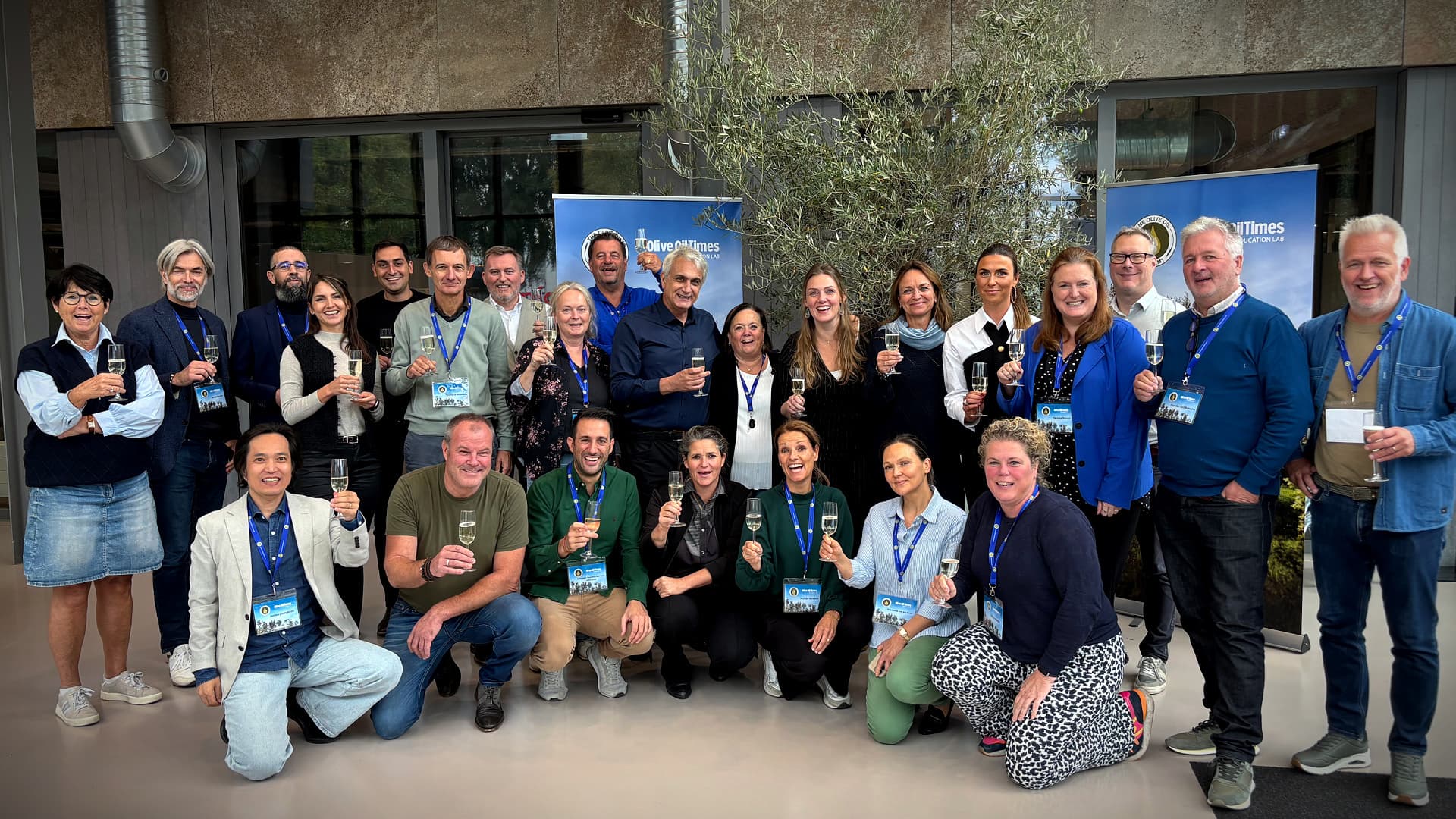
The first edition of the Sommelier Certification Program – Europe concluded in the Netherlands.
Among the attendees was Mariska Stoots, who decided to enroll in the course after beginning work as a commercial manager for specialty retailer Oil & Vinegar in the Netherlands.
See Also: Postira Symposium Honors Leaders of Adriatic Olive Oil Renaissance“The course really exceeded my expectations. It was much more extensive than I had imagined,” she said.
“One of my favorite [parts was] Simon Poole’s lessons, which covered the health benefits of extra virgin olive oil and how it works in combination with the Mediterranean diet,” Stoots added. “I also really like the interaction with the other students and teachers who came from all around the world.”

Mariska Stoots
Stoots said that she will share what she has learned in the course with colleagues and customers at Oil & Vinegar, and continue to practice tasting olive oils to hone her newly acquired organoleptic assessment skills.
“Only a few people know what extra virgin olive oil should really taste like (and that is not what you will find in the supermarket). And much more can be explained about the unbelievable health benefits,” she said.
“In my personal life, I will use olive oil even more and continue to educate family and friends about good quality olive oil,” Stoots added.
While Strooks drove for just 40 minutes to reach the course each day, other participants came from much farther afield, including Joseph Mavrolefterou.
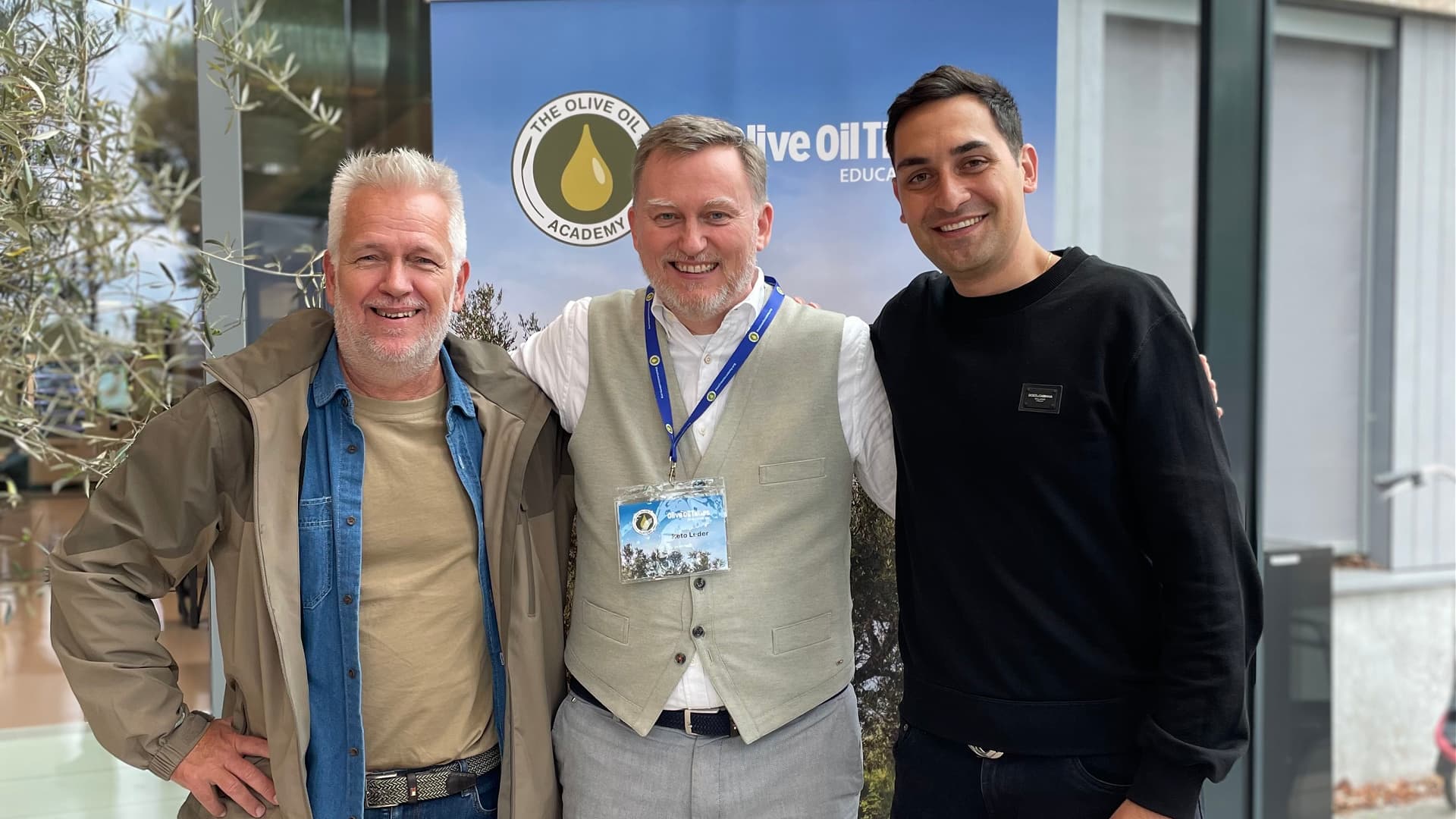
Joseph Mavrolefterou (right) networking with his classmates
“My family and I own an olive grove in the Fleurieu Peninsula, South Australia, comprising approximately 900 olive trees,” he said. “I enrolled in the course to deepen my knowledge of the extra virgin olive oil industry and to gain expert advice and industry analyses from leading professionals in the field.”
“Additionally, my intent is to expand and enhance our family production of quality extra virgin olive oil, making this course an important step toward achieving that goal,” Mavrolefterou added.
The course also exceeded Mavrolefterou’s expectations, with the producer praising the balance of classroom instruction and practical tasting sessions, as well as the diverse range of international experts retained to instruct on every aspect of the olive oil world.
“One of the most surprising revelations was the general lack of awareness and understanding that many people have about extra virgin olive oil and what distinguishes a high-quality extra virgin olive oil from the rest,” he said. “It surprises me how much the industry can improve with a little consumer education.”
Mavrolefterou plans to utilize his newly acquired knowledge to develop the family olive grove further and plant new olive varieties.
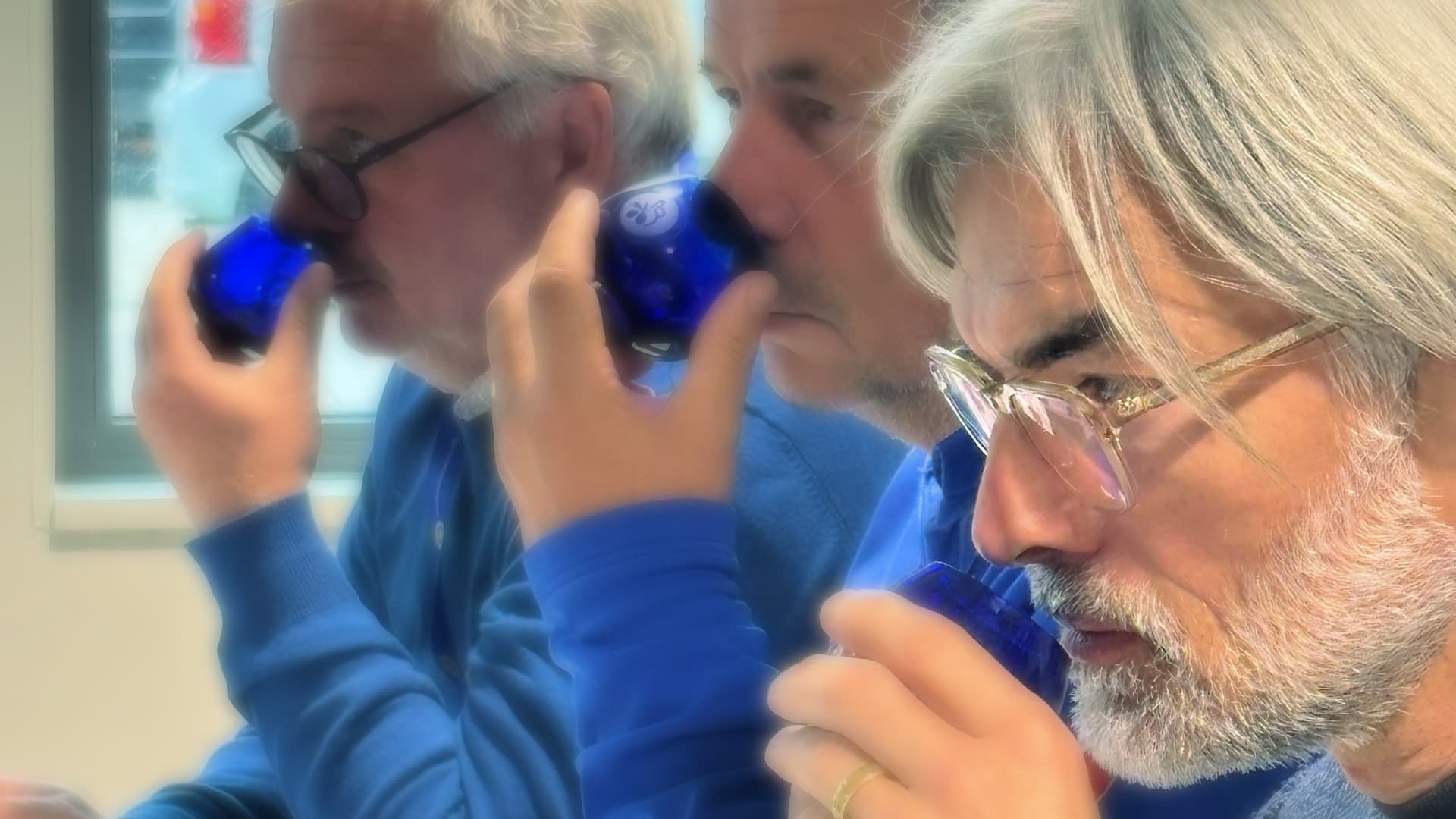
Participants analyzed over 100 olive oils from every olive oil-producing region in the world.
“Moreover, I aim to educate others about the extraordinary health benefits of extra virgin olive oil,” he said. “Additionally, I intend to implement advanced production techniques that I learned, ensuring our grove meets the highest standards of quality and sustainability.”
Fellow producer Luuk Calboo, who traveled from Zeewolde, near Amsterdam, also signed up for the course to increase his knowledge about olive oil production and tasting.
“We have had an olive grove in the South of France for many years to produce extra virgin olive oil,” he said. “We intend to organize olive oil tastings as well to increase the knowledge of honest and quality olive oil and its health benefits amongst consumers.”
Calboo lauded the diversity and depth of knowledge of the course instructors, adding that “a whole new world” was opened up to him during the tasting portion of the course.
“The sensory evaluation training, classification and grading is quite a complex, well-structured and substantiated program,” he said. “We will organize our own olive oil tasting and food pairing program in the Netherlands to educate, train and share as much of the knowledge as possible.”
Along with retailers and producers, one professional joined the course to help his new distribution business and foment olive oil culture in South Korea.

James Oh Youngki
James Oh Youngki flew to the course from Seoul. “It was a long trip, but worth it because I could join people from around the world who share the same passion for olive oil,” he said.
Along with the methodical and thorough approach to olive oil tasting, Youngki said he especially enjoyed the sense of community during the course.
”The technical knowledge was very valuable, but what surprised me most was the sense of community,:” he said. “Through Olive Oil Times, I was able to connect with producers, tasters, and professionals from many countries. I realized this certification is not only about studying, but also about connection and building an international career. It was both encouraging and motivating for me.”
Youngki plans to use his newly acquired tasting knowledge to run courses in his native South Korea and promote olive oil culture in the increasingly popular destination for global exporters.
“The course gave me a systematic way of tasting that I didn’t have before,” he said. “One moment I really remember is when I identified the smell of artichoke for the first time—something I could not experience in Korea. Small discoveries like this made me realize how diverse olive oil can be.“
“I plan to organize tasting classes where people can directly experience both the positive and negative attributes of oils,” Youngki added. “I also want to work with health and wellness communities to share the benefits of extra virgin olive oil.”
Pre-enrollment is now open for the Sommelier Certificate Program in London, from March 9th to 13th, and the flagship program in New York City, from June 8th to 12th — as well as next year’s edition in the Netherlands.