Project in Greece Converts Olive Cultivation Into a Climate Management Tool
For four years, the oLIVE CLIMA Project in Greece has tackled challenges posed by climate change in the Mediterranean by introducing innovative techniques to convert olive cultivation into a climate management tool.
Since October 2012, olive groves in the most fertile prefectures of Heraklion (E.A.S Peza), Lassithi (E.A.S. Mirabello) and Messinia (O.P. Nileas) in Southern Greece have partaken of an ecological experiment under the auspices of the European Union.
Most techniques are indeed applicable and reap immediate, visible, and positive financial benefits.
The oLIVE CLIMA Project has been an effort to guide the Greek agricultural sector toward effectively tackling the most dramatic challenges climate change poses on the wider Mediterranean region by converting olive cultivation into a climate management tool.
With a budget of €3.65 million (funded by the Life Program of the EU), oLIVE CLIMA set the environmental bar high from the outset, and saw positive results in the process, as three of its chief scientists explained to Olive Oil Times.
The project aims to reduce greenhouse gases emissions, increase carbon dioxide capture, reverse the trend of soil organic matter losses, boost fertility and water retention in olive grove soil, provide farmers and consumers with a transparent information system about the environmental performance of food production processes, lower the overall olive oil production cost and create added value from the standardization of climate-friendly products.
Forty parcels for each pilot area (120 in total) in both irrigated and arid conditions in the selected prefectures saw the implementation of totally new cultivation practices.
“We began with organic matter capturing,” said Georgios Koubouris, a researcher at oLIVE CLIMA and at the Greek Institute of Olive Tree, Subtropical Plants and Viticulture. “We recycled the wood produced from tree pruning to use it as mulch or nutrition material, and utilized olive oil mill by-products with land application, either directly or after composting derived from either the process of olive growing or olive oil production.”
“Then, we tried to capture carbon dioxide from the atmosphere and transfer it to plants through photosynthesis, plus store it in plant tissue and soil by modifying the olive grove flora or the pruning of olive trees.”
“Finally, we experimented with conservation practices of organic matter, and this through the zero use of tillage in order to limit erosion and destruction of organic matter and improve the soil water storage capacity.”
Over four years since the program kicked off, the techniques employed to boost green olive oil production in the regions bore fruit.
“What was confirmed is that most techniques are indeed applicable and reap immediate, visible, and positive financial benefits,” said George Michalopoulos, agronomist at oLIVE CLIMA and owner of Rodaxagrom an environmental and agriculture consultancy company.
“Modified pruning and non-cultivation systems are good examples. Others, such as winter sowing, will be assessed over the long term, probably over a decade, while techniques like composting will need a larger scale implementation.
“Also, we saw that some practices require more specialized equipment, for example, olive mill waste water (OMW) dispersion or crushing, especially with regard to the production of pellets. We should stress that we found all these practices to assist the environment in a multitude of ways, climate change battle aside. They boost water economy, biodiversity, soil fertility, prevent erosion and many many more.”
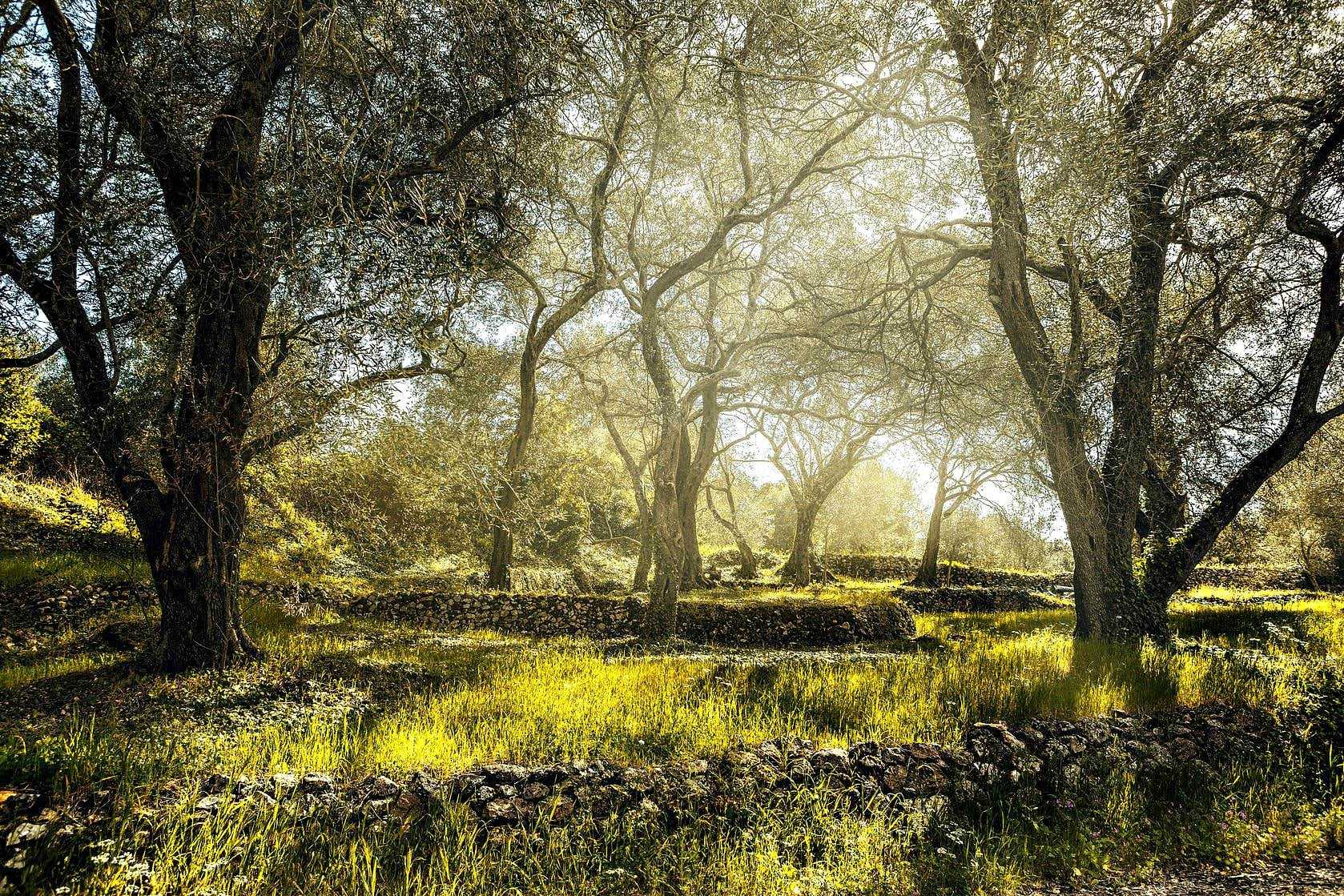
As for the attitudes of crisis-stricken local farmers toward innovative green practices, Koubouris said that they welcomed some of the new practices like composting, special pruning, non-cultivation, or winter sowing. OMW dispersion required authorization, and with the aid of oLIVE CLIMA this technique was instituted in Greece.
At this point, Dora Paschali, an environmental engineer at oLIVE CLIMA and at the Development Agency of Eastern Thessaloniki’s Local Authorities-ANATOLIKI SA, stressed that one of the main project goals was to free farmers from importing products like nitrogenous fertilizers. “This certainly made the crisis more sufferable,” said Paschali.
“It is not only farmers. Citizens and consumers have sensed climate change on a more personal level. They react, they take measures, they adjust,” elaborated Michalopoulos. And olive oil cultivation enters the equation at this exact point.
“In November 2016, the EU acknowledged that olive products are the only food staples in the world worthy of carbon footprint credits by the EU ‘s Product Environmental Footprint (PEF),” Michalopoulos noted.