



Spanish Bottlers Advised to Demand Taste Tests
Spanish bottling companies have been advised to request taste panel results along with the chemical analyses to ensure their products comply with standards.

Orange-colored olive oil is likely rancid and of poor quality, as confirmed by consumers and experts alike. The International Olive Council established standards for olive oil quality, including the use of a panel test to determine if a product can be labeled as extra virgin, placing responsibility on bottling and exporting companies to ensure the products meet these standards.
There are many shades of good extra virgin olive oil. It can range from light yellow to a bright green. However, when it is orange, it is most likely rancid.
We caught up with shoppers in a large Seville supermarket to ask their opinion of the hundreds of jugs of orange-colored olive oil on offer. “There is something wrong with that oil. I would not buy it,” one woman told Olive Oil Times. They couldn’t exactly pinpoint the problem but consumers did recognize it was likely of poor quality.
When we spoke with the store manager, he was unaware that the olive oil could be rancid. He told us that his company had informed him that the olive oil was fine. He went on to explain that it changes to an orange hue from the sunlight.
He was right. The olive oil that was on the shelves closest to the light had a higher orange intensity. Unfortunately, he lacked knowledge on quality control and was misinformed on the labeling standards that the product was now clearly violating.
After purchasing three of the most ‘rancid-looking’ olive oils labeled as extra virgin and informally tasting them with other experts, it was evident the products were not just rancid but they also possessed faults such as muddy sediment and winey, clearly not extra virgin.
The International Olive Council (IOC) has established standards and guidelines for “panel test,” a method that classifies olive oil grades by implementing 8 to 12 trained tasting experts. To date, this is still the best and most cost-effective procedure to measure organoleptic quality. When a panel is unanimous that an olive oil has a specific fault, the product cannot be labeled as extra virgin. This method is applicable to all olive oils that are produced in IOC member countries.
Who is liable for a product that is labeled as extra virgin olive oil but does not pass these standards? Perhaps, the supermarket plays a role in the product being rancid by not following instructions to keep it away from the light. However, much of the responsibility lies with the bottling and exporting companies.
Recently, bottling companies in Spain have found themselves under increased scrutiny regarding the panel test, and it is raising legal issues that are worrying many bottling companies.
According to AgroNegocios, the board of directors of Anierac (National Association for Industrial Bottling and Refineries of Edible Oil) and Asoliva (Spanish Association for Industrial and Commercial Exporters of Olive Oil) spoke out confirming that, “the bottling companies have a responsibility to ensure that the products they are bottling and selling correspond with the characteristics presented in the label.”
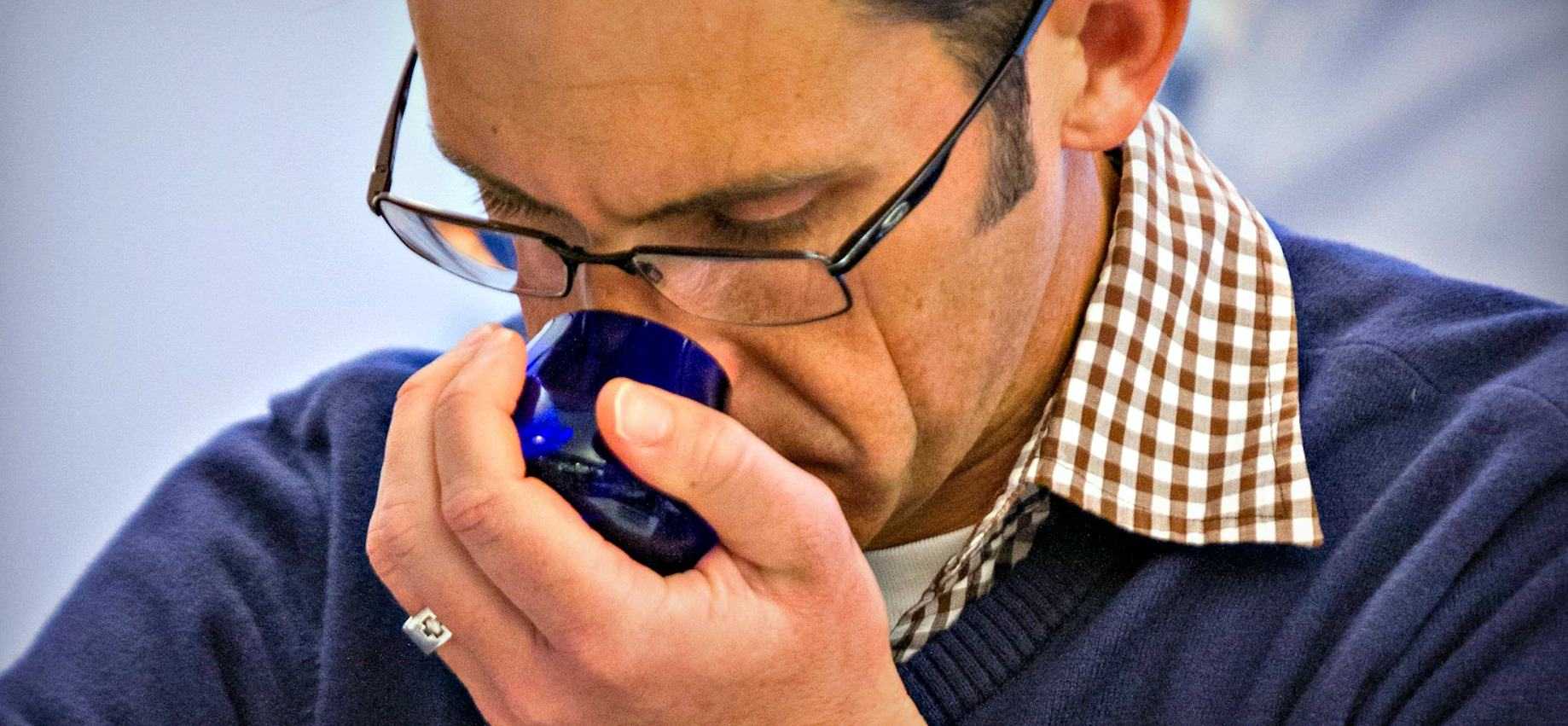
The board of directors advised these companies to request a recent certificate (no more than three months old) carried out by an accredited laboratory from all of their providers. The certificate, they explained, should include results for both the physicochemical and organoleptic (panel) tests.
The subjectivity of the panel test has also been under a perpetual debate within the olive oil sector. Perhaps, Anuncia Carpio, a top Spanish taster explained the importance of the panel test best: “To get rid of the test would ultimately hurt the producers as well as bottling companies. It would give free reign to large distributors. If these large companies are able to play with prices and volumes now, I can’t imagine what they could do without an organoleptic analysis.”
Related Articles
Mar. 30, 2026
On Menorca, an Olive Oil Identity Shaped by Soil, Sea and Wind
The producer Son Felip is drawing attention to a distinctive Menorcan olive oil profile shaped by regenerative farming, island conditions and a long-term commitment to biodiversity.
Apr. 23, 2025
Spain Moves to Mitigate Impacts of New U.S. Tariffs
Spain's Minister of Agriculture reassured agri-food producers about potential impact of US tariffs, emphasizing EU collaboration and market diversification.

Nov. 26, 2025
Spain Asks U.S. to Remove Olive Oil Tariffs
Spain’s economy minister has asked the U.S. to exempt olive oil from its new 15 percent tariff, warning that the measure risks deepening pressures on producers and distorting the world’s second-largest olive oil market.
Apr. 23, 2025
This 185-Year-Old Spanish Olive Oil Co. Keeps Innovating to Meet the Moment
Sucesores de Hermanos López continue to look at market trends and adopt the latest technology and practices to maintain award-winning quality.

Aug. 5, 2025
Debate Over Solar Plant Construction in Andalusian Olive Groves Intensifies
Solar developers and regional authorities insist the the mega-plants are necessary to help Spain meet its ambitious renewable energy goals. Olive farmers disagree.

Jun. 19, 2025
In Potoci, a Tasting Room Signals a New Era for Bosnian Olive Oil
Bosnia and Herzegovina's olive oil industry is on the rise, with the opening of the country's first olive oil tasting room and efforts to promote quality and international recognition.
May. 6, 2025
Producers in Spain Cap Strong Harvest with Quality Awards
Spain's olive industry thrived in 2025, producing 1.41 million metric tons and winning 93 awards at the NYIOOC World Olive Oil Competition.

Mar. 30, 2026
Trade Agreements Extend Europe’s Food Quality Rules Beyond Its Borders
By embedding geographical indications into major trade agreements, the European Union is extending a regulatory model that ties food quality to origin, production methods and traceability.