Mendozan Producer Zuccardi Champions Local Arauco Variety on World Stage
The Mendoza, Argentina-based producer sees a growing demand for Arauco’s health benefits and taste profile.
The Zuccardi family is on a mission to promote Argentina’s native Arauco variety at home and abroad.
The third-generation winemakers began producing olive oil 20 years ago at the foot of the Andes Mountains in the Maipú department of the province of Mendoza and have already become a reference point for the region.
“We chose to start producing oils from this variety 20 years ago because of its very high-quality potential,” said Miguel Zuccardi, who runs the company’s olive oil operations.
See Also: Producer Profiles“Although it is a variety mainly intended for the production of table olives, we chose it from the beginning of our project,” he added. “Not everyone knows the history of this variety, which was introduced in South America around 1550 and is currently not present in the Mediterranean basin, its area of origin.”
The Arauco monovarietal is a noticeably bitter oil with notes of fresh green aromas and flavors.
“It is a variety with late ripening and generally has a high level of polyphenols,” Zuccardi said. “And the aromatic profile always reminds one of tomato, tomato leaf and cut grass.”
However, the olives are milled into a comparatively challenging paste, resulting in lower oil yields than many commercial varieties.

While the Arauco variety poses unique challenges, Zuccardi said the resulting olive oil is worth the extra work. (Photo: Familia Zuccardi)
“It is a variety with a lower industrial yield, and there are varieties that perform better than Arauco,” Zuccardi said. “One always has to work with the decanter a little slower to get a good extraction. It also depends a lot on the humidity management of the year at the harvest time.”
“Still, it is a variety that works in the mill,” he added. “Keep in mind that if it were a variety that was not agronomically sound, it would not have been maintained in the region for more than 400 years.”
Over the past 20 years, Familia Zuccardi has planted 60 hectares of Auraco and 260 hectares of Picual, Coratina, Genovesa, Arbosa and Korneiki; all planted traditionally or at medium density.
“We’re not growing at super-intensive for now,” Zuccardi confirmed. “We are looking for varieties that give us a qualitative difference, which interests us most.”
Indeed, that qualitative difference stood out at the 2024 NYIOOC World Olive Oil Competition, where Familia Zuccardi earned a Gold Award for its organic medium Arauco monovarietal submitted by the prolific identifier of quality producers Manicaretti Italian Food Importers.
“We are very happy to obtain this recognition at NYIOOC,” Zuccardi said. “We believe that it is good to bring the oils from our region to this prestigious competition and spread the word about our Arauco variety.”
The award came on the heels of a challenging harvest in Mendoza and across the rest of Argentina.
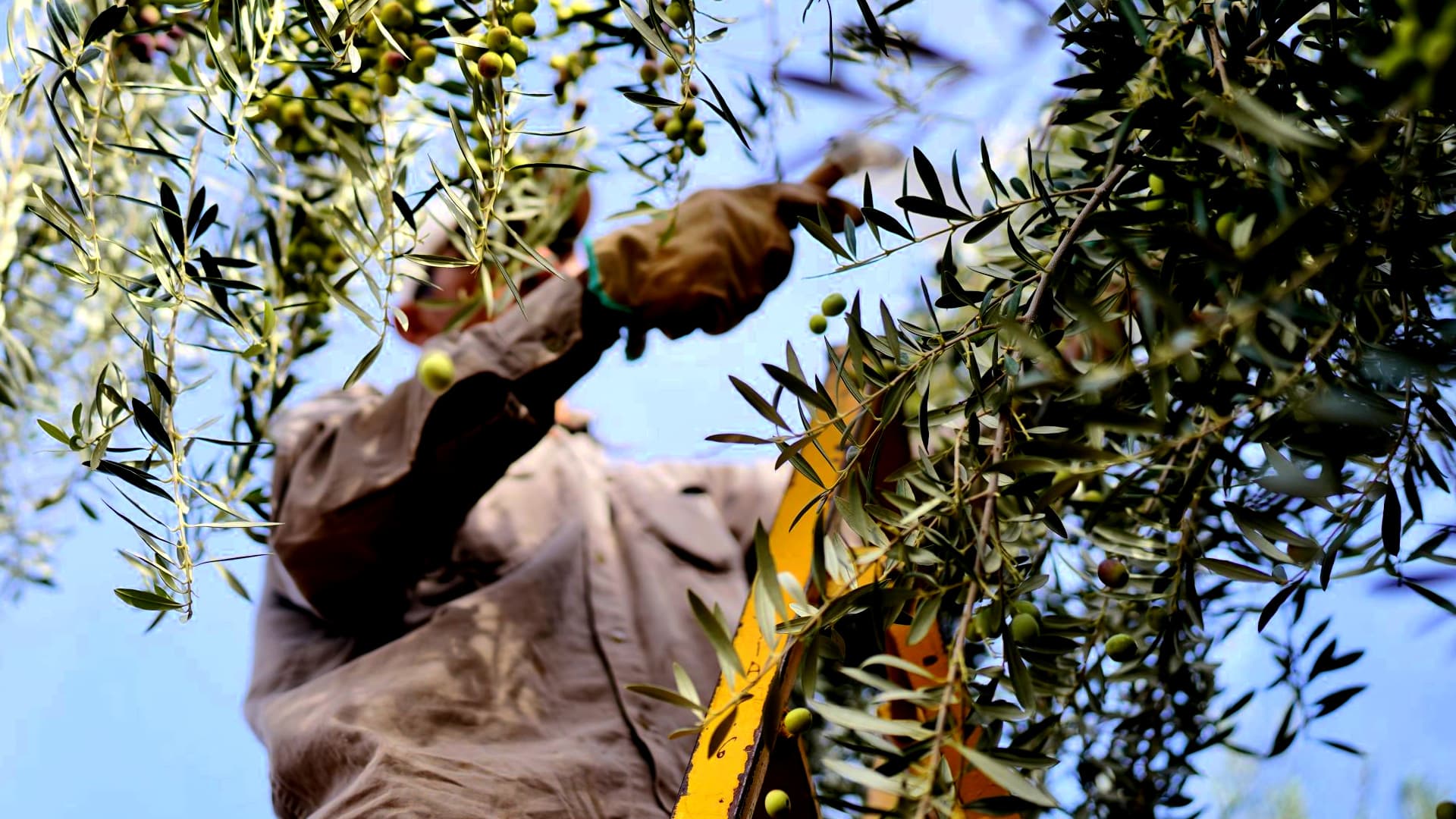
Zuccardi anticiaptes a production rebound after a disappointing 2024 harvest. (Photo: Familia Zuccardi)
“The harvest in Mendoza has been rather low during 2024,” Zuccardi confirmed. “Mainly due to some frosts in June 2023 [which damaged the trees as they were about to blossom] and the fluctuations in olive production.”
Familia Zuccardi begins the harvest early, starting with Genovesa by the second week of March and continuing through the other varieties to finish before the start of June.
“Here in Mendoza, which is a high-altitude desert, the occurrence of frost is always a risk, so early harvests are necessary,” Zuccardi said.
Looking ahead to 2025, Zuccardi anticipates a production rebound due to abundant flowering in the olive groves and plenty of snow in the mountains during the winter (from June to August in the Southern Hemisphere).
“The spring began with more abundant flowering that we hope will come to fruition,” he said. “Luckily, we have had a winter with good snowfall in the Andes, which is decisive in water availability and aquifers recharging in a desert region such as Mendoza.”
“On the other hand, the desert conditions of our region allow us to carry out certified organic agriculture on 100 percent of the surface that we cultivate,” Zuccardi added.
Mendoza has an arid climate and receives about 300 milliliters of precipitation annually. However, Zuccardi said he has noticed decreasing snowpacks in the Andes over the years, which means less runoff in the summer to recharge the underground aquifer upon which the olive groves are located.
This apparent impact of climate change and rising electricity costs due to recent government reforms has made irrigation management an essential part of the business.
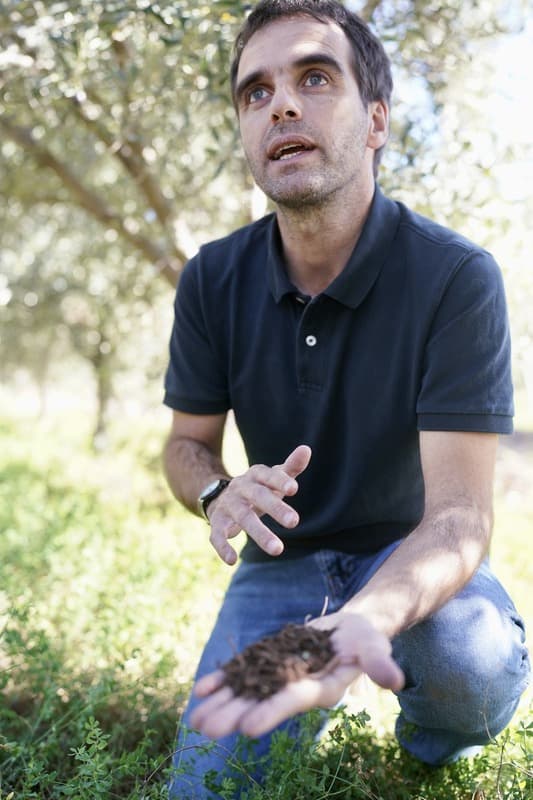
Miguel Zuccardi joined the family business 20 years ago and now runs the olive oil segment. (Photo: Familia Zuccardi)
“Irrigation management is key,” he said. “If one looks at the trend of the last 15 years, we have had a decrease in the snowfall in the mountain range. This year, luckily, has been a normal year with better snowfall.”
Another challenge has been Argentina’s persistent inflation, which has eaten away at consumers’ purchasing power over the years. Still, Zuccardi said Argentina remains the company’s primary market.
“Our main market today is Argentina because the distribution of our wine allows us to reach different marketing channels, taking advantage of our commercial structure,” he said. Indeed, restaurants and cafes across Buenos Aires offer Familia Zuccardi olive oils to clients.
While the local market remains the company’s main focus, Familia Zuccardi also exports to Brazil, China, Japan and the United States (through Manicaretti).
“Brazil is our main potential market,” Zuccardi said. “It is an important market with a lot of cultural proximity.”
“Our market share in the United States is still very small, but we understand that winning awards helps promote our oils and sales,” he added.
Familia Zuccardi’s significant tourism offerings have helped them build a loyal customer base in Brazil, which has direct flights from São Paulo to Mendoza.
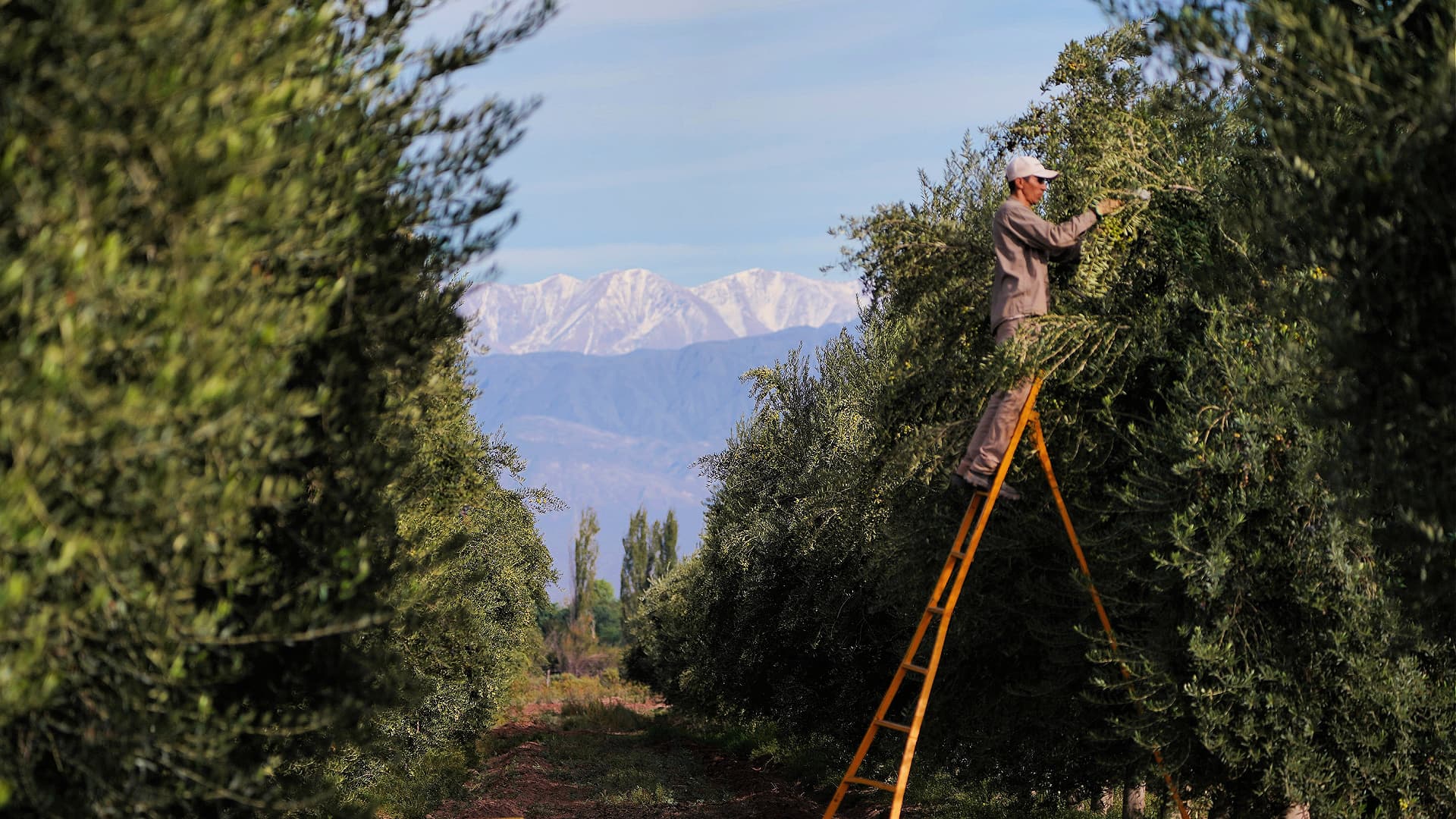
Tourism to Mendoza has introduced countless Argentines and Brazilians to the Arauco variety and others. (Photo: Familia Zuccardi)
“Mendoza has a wine and gastronomic tourism industry that has grown significantly in recent years,” Zuccardi said. “We receive many visitors from Brazil, and this allows many people who visit Mendoza from Brazil to appreciate and understand the quality of the olive oil here.”
The family’s main tourism offerings include three restaurants, including its olive oil-centric Pan y Oliva (“Bread and Olive”). Combined, Zuccardi said the company receives 90,000 visitors annually.
“We also have cooking classes, and if you come during the harvest season, you can make your own olive oil blend,” he said. “There are also programs where you can take a bike tour through the olive grove.”
While many producers in the country have forsaken the domestic market, instead focussing on exports to the United States and Europe, Zuccardi believes there is latent potential in Argentina.
“The market for quality olive oil is growing,” he said. “The extent to which people understand quality, they understand that for extra virgin olive oil to be good for their health, it also has to be high-quality. It has to be fresh. This is generating a growing market.”
“For me, the market is exciting,” Zuccardi concluded. “Argentina is still small, but consumers are interested in learning about olive oil.”