Passion, Research Inspire the Award-Winning Quality of Cantasole
Arianna De Marco focuses on sustainable farming and high-quality extra virgin olive oil production to overcome the challenges of farming in Puglia.
A few miles from the coast of Puglia, south of Brindisi, centuries-old olive trees surround the 12th-century Masseria Flaminio.
This is the heart of the De Marco family estate, the producers behind Cantasole, a medium Biancolilla which earned a Gold Award at the 2023 NYIOOC World Olive Oil Competition.
Working with the olive trees means living with them over the course of days and seasons… when you really live it, it becomes addictive.
“One day, my grandfather Nicola told me that, in the past, when these ancient trees were younger, the olive harvest was carried out solely by women,” founder Arianna De Marco said.
“While picking the fruits, they sang to cheer up and brighten the olive grove,” she added. “This is how the name Cantasole – which joins Italian words meaning ‘sing’ (canta) and ‘sun’ (sole) – came to me. It clearly expresses the bliss that we feel in doing our work.”
See Also: Producer ProfilesThe olive grove was established in 1885 by her great-grandfather, Vincenzo, who originally planned to create a winery.
“He was, however, a great lover of olive trees. So, in addition to the vines, he started to plant hundreds of Cellina di Nardò olives,” De Marco said. “They are still the core of our farm and are invaluable to me because they were planted by him. Then my grandfather worked with them, and now my father Fabrizio and I care for them.”
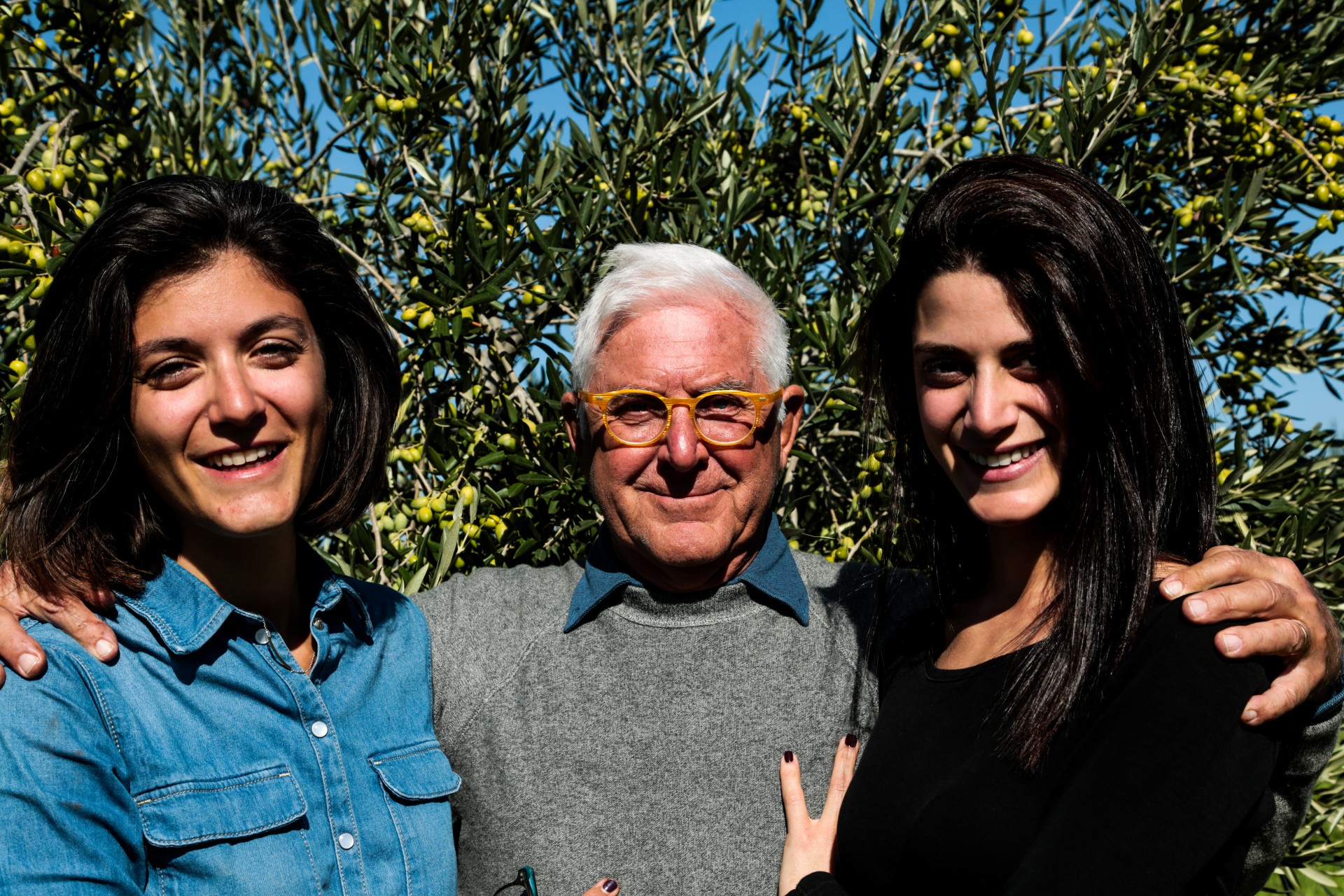
Arianna De Marco with her father Fabrizio and her sister Ludovica.
“Today, for me, working with the olive trees means living with them over the course of days and seasons,” she added. “It means figuring out what they need. Enjoying them in winter when they are dormant, and in spring, contemplating the vegetative restart with new leaves and flowers.”
“Then waiting for the fruits, and, finally, harvesting,” De Marco continued. “Then taking charge of pruning again, and so on, throughout their whole life cycle that, when you really live it, becomes addictive.”
De Marco created the Cantasole brand in 2016 when she carried out her first harvest. At the time, she had other professional and life plans.
After studying economics and business, she earned a Master’s degree in innovation and business strategies, moving from Rome to Utrecht in the Netherlands, then to Grenoble, France.
“When I finished the Master’s, I had to write my thesis, and I decided to approach the subject of innovation in agriculture because I could easily find all the necessary information,” she said.
“I returned to the farm to accomplish the task and planned to go back abroad,” De Marco added. “In the end, I stayed because before finishing my paper, I had already developed my brand, attended a tasting course and started studying how to make a quality product. I immediately fell in love with high quality, and I focused on it.”
The estate stretches over 180 hectares with about 30,000 trees, of which 120 hectares are covered with ancient olive trees. The remaining 60 hectares include a dozen varieties such as Coratina, Peranzana, Biancolilla, Cima di Melfi, Leccino, Frantoio, Arbequina, Picholine and Nociara, which were planted over the past 30 years.
The company also has a vineyard of native Negramaro, Primitivo and Susumaniello varieties, managed by De Marco’s sister, Ludovica.
“We can rely on a wide choice of olive varieties, but I have a preference for some of them,” she said. “For example, the mild Biancolilla, the Peranzana that is our medium fruity, and the more intense Coratina, which also have given us great satisfaction over the years at the NYIOOC.”
“I am also fond of our plants of Cellina di Nardò, a variety on the verge of extinction,” De Marco added. “To safeguard it, as soon as I took over the company’s management, I threw myself into research.”
The grove is located on a plain halfway between Brindisi and Lecce, an area severely affected by Xylella fastidiosa, which threatens Cellina, one the most susceptible varieties to this bacterium strain. De Marco has been involved for several years in the search for a solution to this issue.
“We are collaborating with four different research centers,” she said. “Not only do we want to protect our centuries-old trees, but we also contribute to reaching the fastest possible solution for what became a major problem for many.”
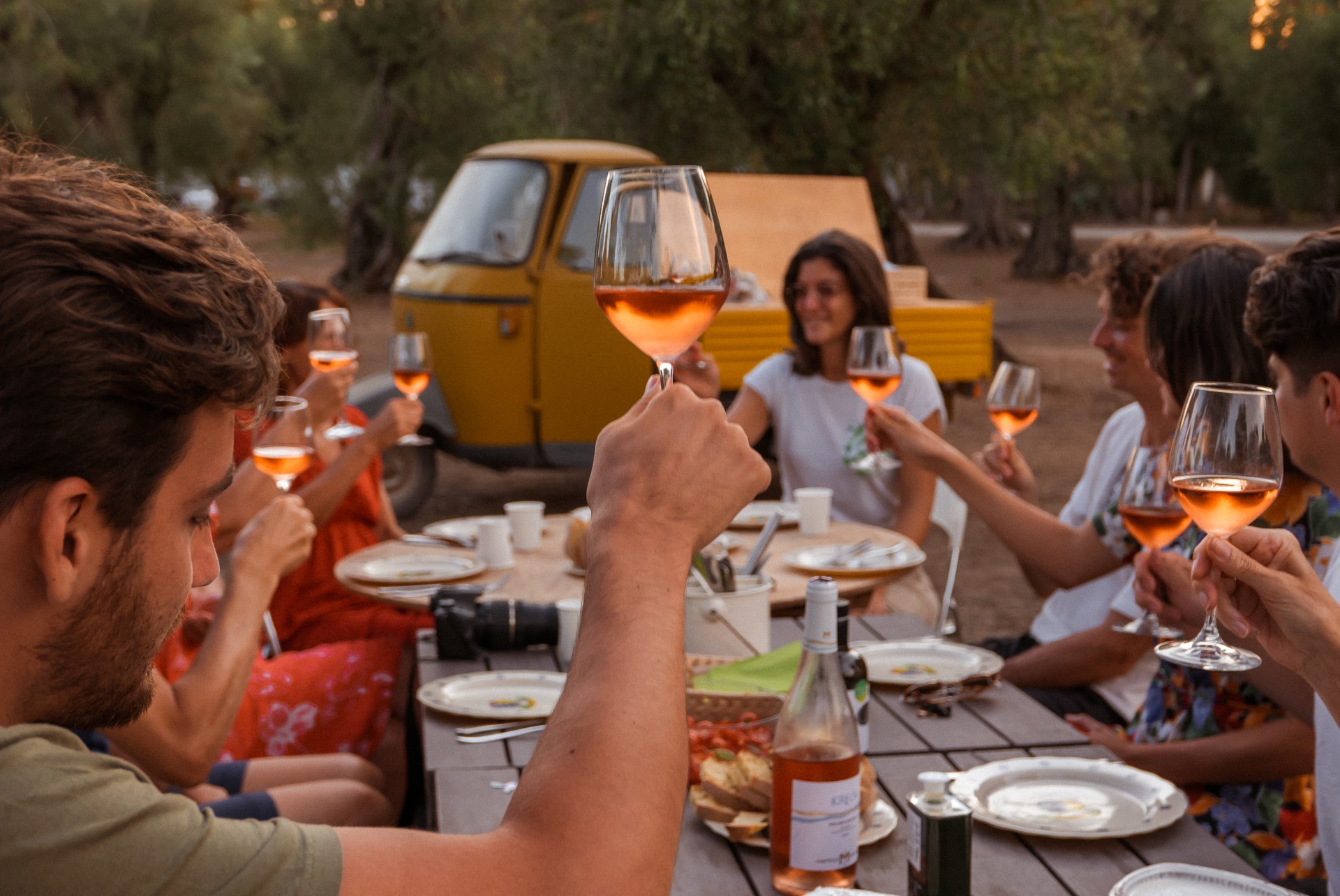
An olive oil tasting guided by Arianna De Marco
Overall, De Marco is committed to pursuing environmentally aware olive farming.
“We are carrying out a precision agriculture project to optimize the management of treatments in the grove, which is now in conversion to obtain the organic certification,” she said.
Moreover, De Marco is dedicated to spreading the extra virgin olive oil culture – in the warmer months, she organizes guided tastings in the estate.
“I call them experiences,” she said. “What I love most is talking about olive oil and spreading the knowledge of quality. I believe that there is still so much to do in this sense and that education on quality is fundamental to create awareness.”
When she guides a tasting with newcomers, besides her oils, she always adds another with defects.
“The comparison between a high-quality product and a poor one is important,” she said. “The participants perceive the difference, making them more aware of what quality is.”
“I also like to see how tastes vary from one person to another,” she added. “Taste is such a personal thing, and for this reason, we produce different oils.”
“I do tastings with people from so many countries and cultures, and I note that each of them, also according to the background, appreciates different flavors,” De Marco continued. “No matter what they like, my goal is to guide them towards quality.”
The tasting experiences conclude at the end of the summer and the approach of the harvest, the culmination of the intense year of work. The fruits of the youngest trees, collected using shakers with umbrellas of different measures, are delivered to the mill within five hours and immediately pressed.
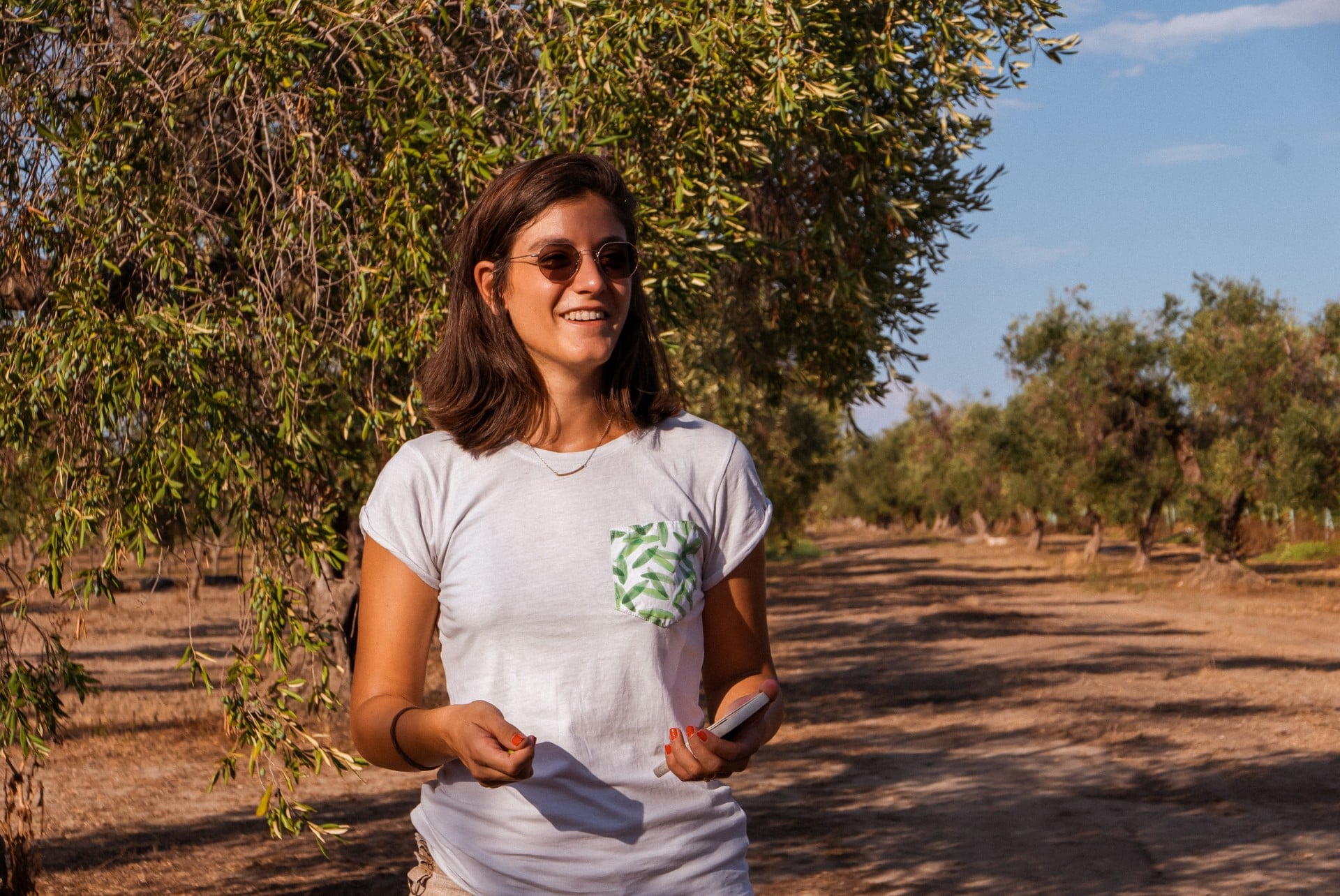
Arianna De Marco
“We rely on the latest generation milling technology that reuses the byproducts to generate energy,” De Marco said. “We believe that adopting a sustainable production method is of fundamental importance, especially when tackling the climate challenges ahead.”
Last summer, Puglia suffered an intense drought that caused a production decrease, and the company experienced difficulties in managing the plant water stress.
“I think it will be helpful to deepen the knowledge of the olive varieties to understand which are the less sensitive to water shortages,” De Marco said. “I believe that there is still much to be done, and we have many projects in the pipeline with a constant focus on improving ourselves.”
Despite the challenges posed in recent years by the Covid-19 pandemic, extreme weather and economic challenges, De Marco successfully continues her focus on promoting high-quality extra virgin olive oil.
“Our oil gives you emotions even just smelling it,” she said. “And this is everything to us. This is the highlight of a great journey that makes it all worthwhile. This pushes me to keep going with this work, to wake up every morning with dedication and go into the grove among our precious olive trees.”