Award-Winning Producer Seeks Investors for Underground Mill
Tamia’s Pietro Re conceived an ultramodern, multi-purpose and sustainable mill — and he’s looking for backers.
“Modern facilities for olive oil production require careful planning and the contribution of multidisciplinary competencies,” Pietro Re said when asked about the starting points of the latest project for the Italian producer, Tamia.
Experience in production and state-of-the-art technology, combined with rural wisdom and respect of territory conveyed the concept of this plan.
“Their capabilities must cover several aspects including the cleanliness of the location, the safety and well-being of operators and the usability and functionality of spaces, in addition to environmental conditions which favor the preservation of raw material and an optimum execution of the entire production process.”
After a market survey a few years ago, Tamía started with the idea to offer an organic extra virgin olive oil produced in the attractive and still little-known territory embraced by the hills of Tuscia.
Re and his collaborators choose a name which comes from an Etruscan word used to define home or something domestic, and combined it with a thumbprint logo to represent the traceability of their product.
After establishing the packaging and market positioning, they carried out the first harvest in 2013, immediately reaching excellence and earning many awards including a Best in Class at the 2014 New York International Olive Oil Competition with Tamía Gold Organic, another Gold in 2015, and two Gold Awards with Tamía Iron Organic and Tamía Green Organic.
“Today, after four years of activity and an annual growth of at least 100 percent, our extra virgin olive oils are on the shelves of high-end restaurants and resorts throughout the world,” Re remarked. “Enthusiasts appreciate our products due to their excellent quality-price ratio, and the time has come to equip ourselves with a high-level structure where we can work in comfort, in full respect of the environment, and where we can develop activities dedicated to customers and guests.”
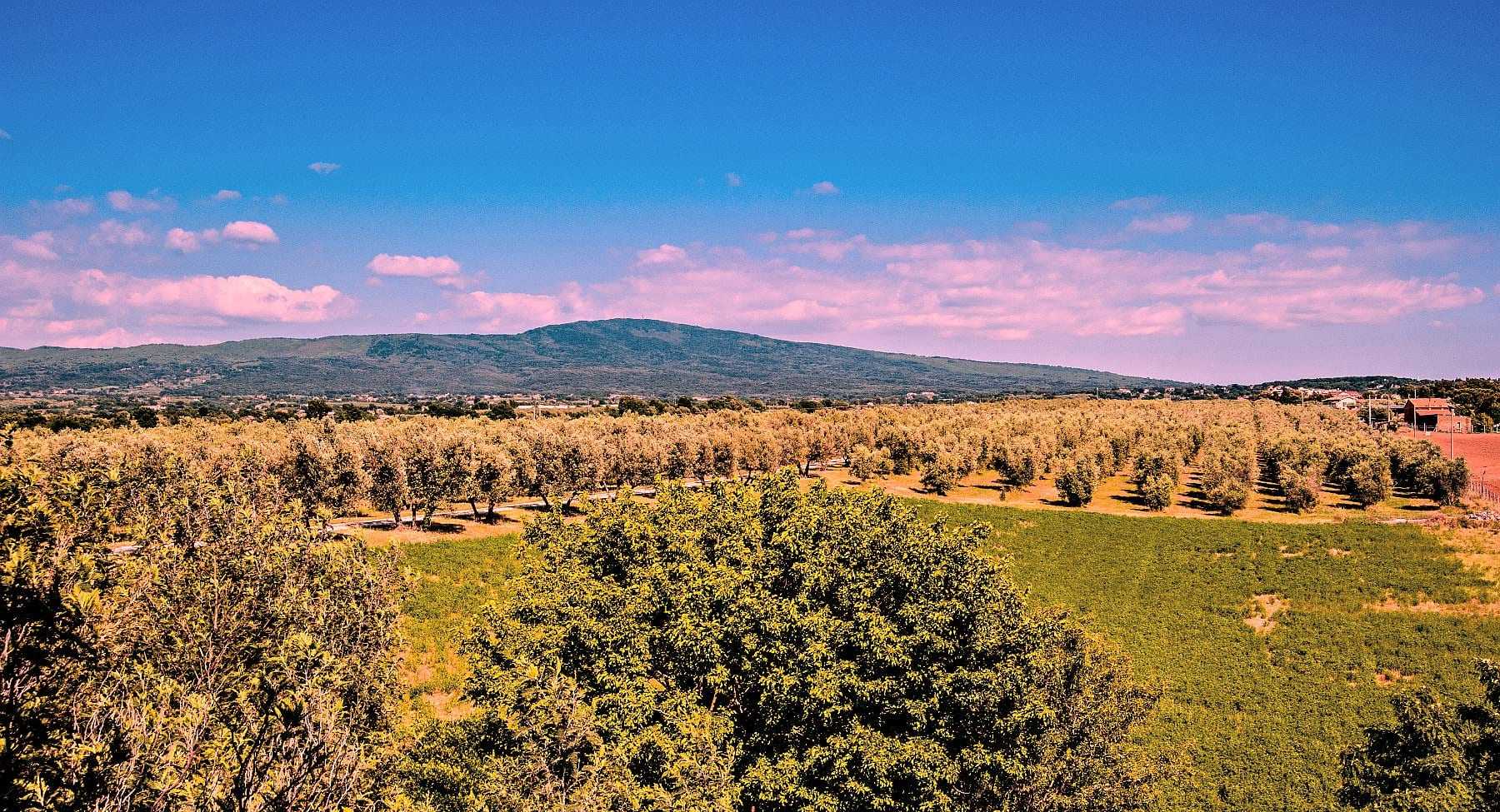
Tamia olive groves by Maurizio Di Giovancarlo, Tuscia Fotografia
The company is now planning to build a new mill that will include rooms for accommodation and overnight stays, a section dedicated to events and tastings, coworking areas linked to a commercial space for direct sales, and a section devoted to educational courses.
“We already started to work on this last aspect in another structure, and in February we will give the second course on the smart use of high-quality extra virgin olive oil in the food industry,” said Re, explaining that in the new structure, Tamía’s team will train food industry operators how to recognize, use, promote and monetize high-quality extra virgin olive oil within their businesses.
But the most interesting thing about the project is that the mill will be subterranean.
The Italian architects Carlo Celleno and Antonio de Paolis who designed the structure were inspired not only by ancient mills discovered in Italy, Portugal and Chile but above all by the 3,000-year-old Etruscan hypogean structures found not far from the olive groves. Re devised an ambitious project that should be “beautiful, multifunctional, respectful of the environment and local traditions and which fascinatingly connects origins to future, tradition to innovation.”
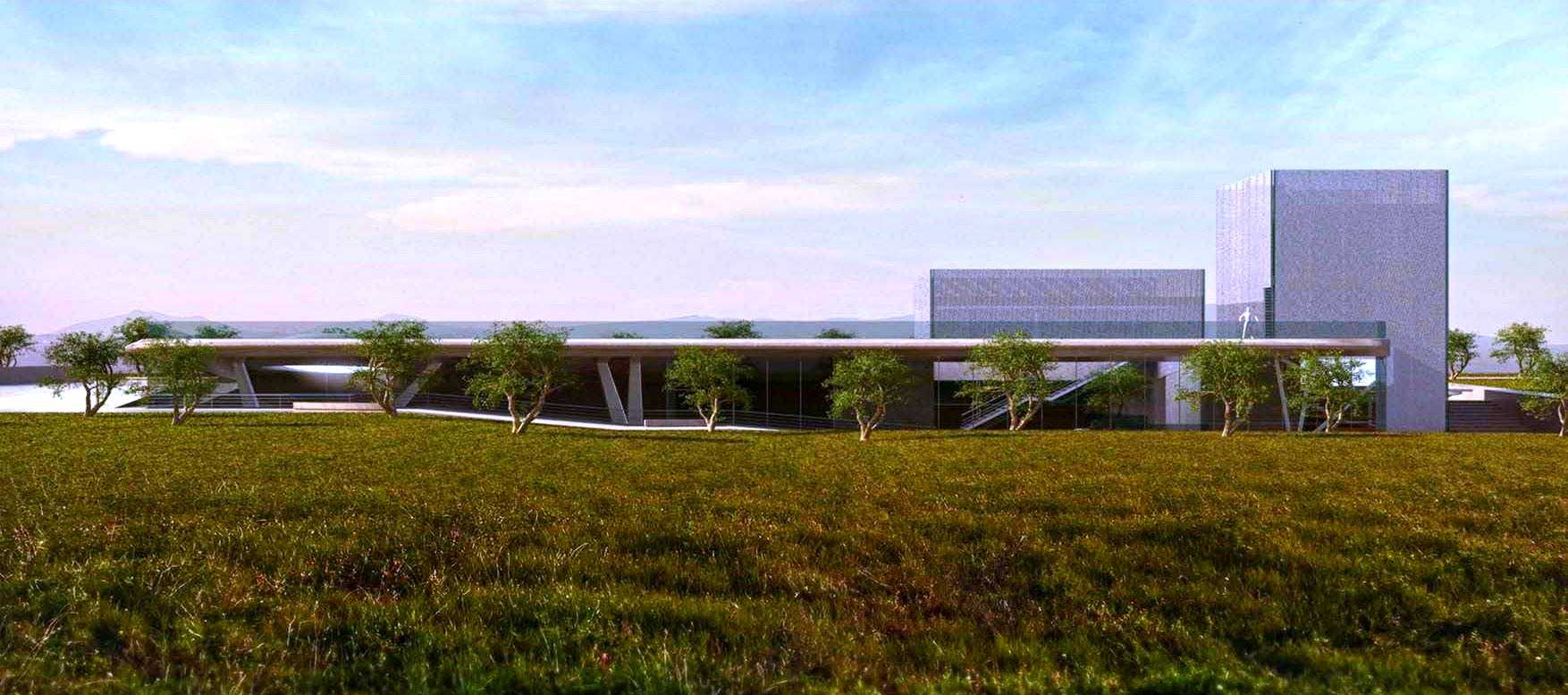
A rendering of the multi-functional structure including a mill by the architects Carlo Celleno and Antonio de Paolis
Here, the olive trees benefit from a favorable position and good features of the terrain: a 300-meter altitude (984 feet), and a flat soil that facilitates operations and promotes fertility thanks to the nearby Lake Vico, which was formed in a volcanic crater that has enriched ground throughout the ages.
“My business partner Carlo’s grandmother told me that soil is so fertile that when they planted the vineyard and positioned the passone by simply sticking it in the soil, it began to sprout,” Re recalled, referring to a wooden pole obtained from the pruning remains of olive trees which in the old days was positioned at both ends of the rows of vines.
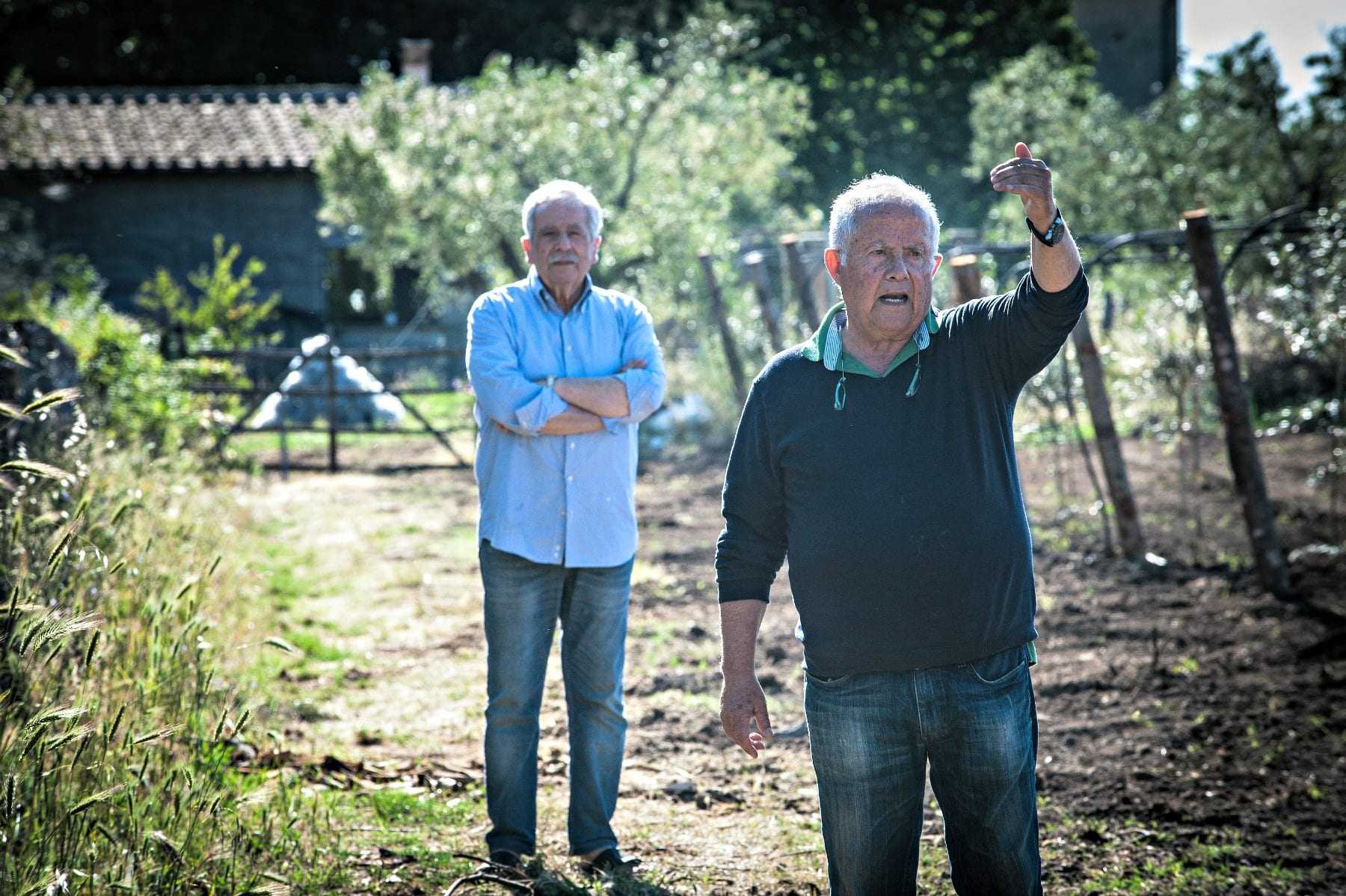
Angelo Antonio and Francesco Delle Monache by Maurizio Di Giovancarlo, Tuscia Fotografia
Despite the severe drought of the past few weeks, and that the olive grove is non-irrigated, the plants of Caninese, Frantoio, Leccino and Moraiolo were flourishing and the olives looked good.
Then, Re brought me into the company offices, which were now in the old farmhouse. “Tamía would never have existed without the cultural heritage of Sergio Delle Monache’s organic farm, which was already awarded in the 1930s for the excellent quality of olive oil,” he pointed out, showing me the old awards of a time when real quality was a privilege of only a select few. “Sergio’s son, Francesco Delle Monache is now the president of the company, and has made an essential contribution to building Tamía’s success.”
“Experience in production and state-of-the-art technology, combined with rural wisdom and respect of territory conveyed the concept of this plan,” Re considered, pointing out that the new mill will be completely sustainable, with the lowest environmental impact.
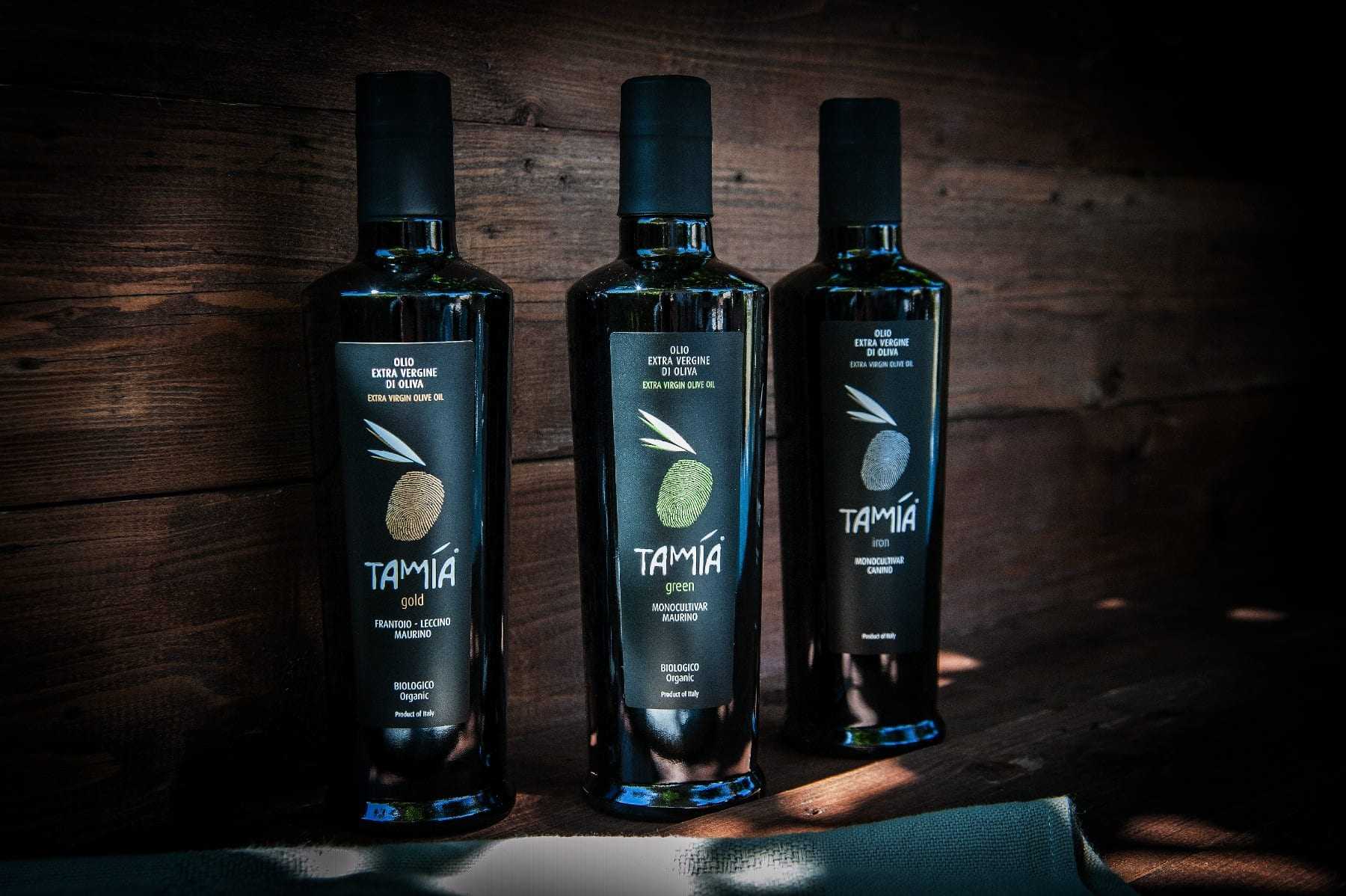
Gold, Green and Iron by Maurizio Di Giovancarlo, Tuscia Fotografia
Tamia is seeking investors for the next phase of the company’s ambitious journey.
When asked why someone would invest in the enterprise, Re said that, in addition to participating in the capital increase of the company, investors can count on the beautiful territory of Tuscia, which has so much to offer and still remains to be discovered.
Crossed by the ancient Via Francigena, it is rich in thermal waters, woods, rivers, mountains with trails for biking, hiking and Nordic walking; moreover, it is close to the port of Civitavecchia, which is the most important hub for maritime transport in Italy with more than 2 million cruisers and visitors every year, and to Rome and its airports.
As the sun was going down, we drove to a fascinating place in the heart of Vetralla and it was like we were caught in a time warp. Here, in a grotte (a grotto equipped with kilns), the Etruscan art of clay pots lives again thanks to the hands of Angelo Ricci, who recovered the activity of his grandfather known as Checco Lallo, and now creates fine and elegant terracotta artifacts, branded one by one with a sign reminiscent of the ancient vocation of this territory: a tiny stylized olive branch.