Crafting Award-Winning Olive Oil in the Shadow of Mount Fuji
Hundreds of kilometers away from Japan’s central olive-growing hub, one producer has braved the elements to produce unique extra virgin olive oil.
A farming village in the vicinity of Fujieda, Japan, is home to educational and environmental projects while also being the source of some of the country’s finest extra virgin olive oil.
Near Mount Fuji in Shizuoka prefecture, CREA Farm began its journey as an olive oil producer in 2013.
Its Coratina monovarietal has repeatedly triumphed at the NYIOOC World Olive Oil Competition, having won six Gold and Silver Awards since 2019, including a Gold Award in 2025.
Many believed this environment to be unsuitable. With few precedents for olive cultivation in our region, every step… has been a series of ongoing challenges and discoveries.
“We believe our olive oil stands out because of our unwavering passion and meticulous attention to detail, pushing beyond the natural limitations of Japan as an olive-growing region,” Tatsuya Okumura, the company’s managing director, told Olive Oil Times.
While a few regions of Japan enjoy a Mediterranean-like climate, including the southern part of the archipelago, the climate in most of the country is often challenging for olive growers.
“Shizuoka is blessed with fertile soil and clean air, but at the same time we face heavy rains, typhoons and humid summers,” Okumura said. “To adapt, we paid attention from the beginning to what lies unseen underground, ensuring that olive trees could develop strong roots.”
See Also: Producer Profiles“In addition, we practice sustainable methods such as pruning to improve ventilation and carefully monitoring pests,” Okumura said. “Still, the unpredictability of the weather due to climate change remains a major challenge.”
Despite the challenges, Olumura is looking forward to the upcoming 2025/26 harvest with optimism.
“Each season brings new challenges, but also a great sense of progress. Due to abnormal weather, this year’s yield is expected to be slightly lower than last year, but the oil quality looks very promising,” Okumura said.
“We anticipate producing oils with a beautiful balance of freshness, fruitiness and bitterness. And we are truly excited to share them,” he added.
While there is an ongoing effort in Japan to cultivate more olive trees, Okumura said the sector faces several growing pains that have also affected CREA Farm.
“Ensuring enough labor during the busy harvest season is a challenge shared across agriculture,” he said. “Yet each of these experiences has taught us resilience, the ability to remain strong and flexible. With every year, we feel we are growing together with our trees.”
While Shizuoka prefecture is well known for its agriculture, olive oil production began only recently.
The first olive trees in Japan were planted over a century ago in Shodoshima and Kagoshima, regions in the southern part of the country with a more Mediterranean climate.
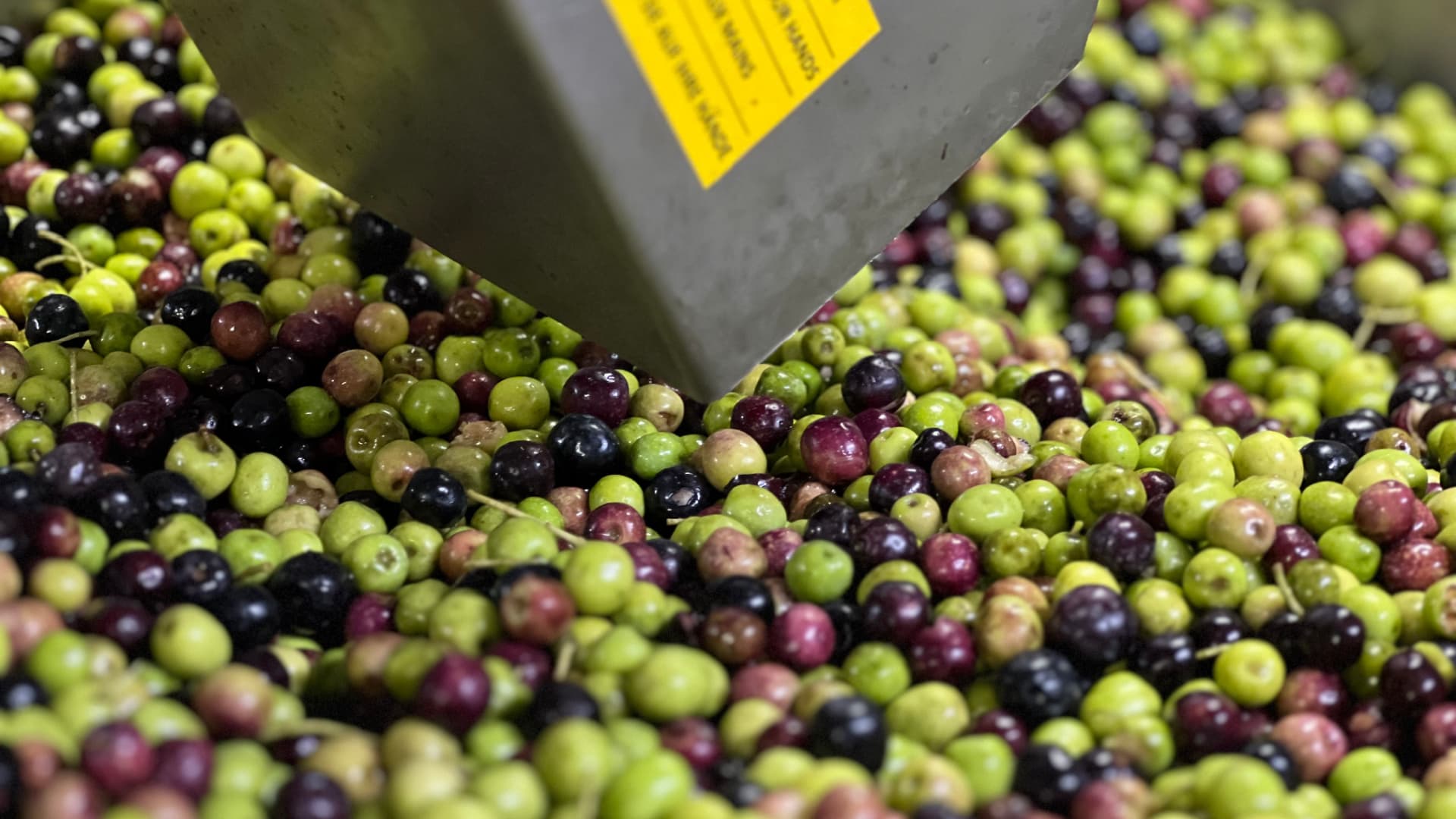
CREA Farm earned a Gold Award at the 2025 NYIOOC World Olive Oil Competition for a Coratina monovarietal, its sixth overall. (Photo: CREA Farm)
“Many believed this environment to be unsuitable. With few precedents for olive cultivation in our region, every step, from establishing our growing techniques to training staff and refining the harvest-to-press timeline, has been a series of ongoing challenges and discoveries,” he noted.
According to CREA Farm, cultivating olives and producing olive oil in such challenging conditions ultimately reflected the Japanese spirit of craftsmanship and showcased the natural beauty of the land.
“Our goal, though, was also to build a place where people’s smiles could gather,” Okumura said, hinting at the social and cultural initiatives of the company.
The project aligns with Shizuoka’s rural revitalization efforts, transforming idle farmland into productive orchards and inviting visitors to experience olive cultivation in the foothills of Mount Fuji.
Growing Coratina olive trees was not a casual choice. The globally praised Apulian olive variety paired perfectly with the flavors typical of the Japanese tradition.
See Also: Tracking the Rise of Olive Oil in Japan“We chose the Coratina variety because of its bold character, rich fruitiness and pleasant bitterness,” Okumura said. “These qualities harmonize beautifully with Japanese cuisine, from sashimi and grilled vegetables to miso soup.”
Over the years, CREA Farm tested many other cultivars, and today the company grows 12 different varieties, including Picual, Arbequina and Hojiblanca. The company cultivates about 3,000 olive trees spread over six hectares.
“Each of them adds a unique expression to our olive oils,” Okumura said. “While we plan to increase the number of trees gradually, our focus remains quality over quantity. We aim to nurture each tree carefully so that every drop of olive oil embodies authenticity and integrity.”
Over the years, the company has increasingly emphasized its focus on quality.
“In the early days, simply growing healthy trees was our greatest challenge. Now, with more confidence in our cultivation techniques, we are focusing on producing higher-quality oils and sharing our story with the world,” Okumura said.
In the words of the company, CREA Farm is not only about growing olives. What began as a plan to revive abandoned farmland has evolved into a model that combines agriculture, community engagement, and environmental responsibility.
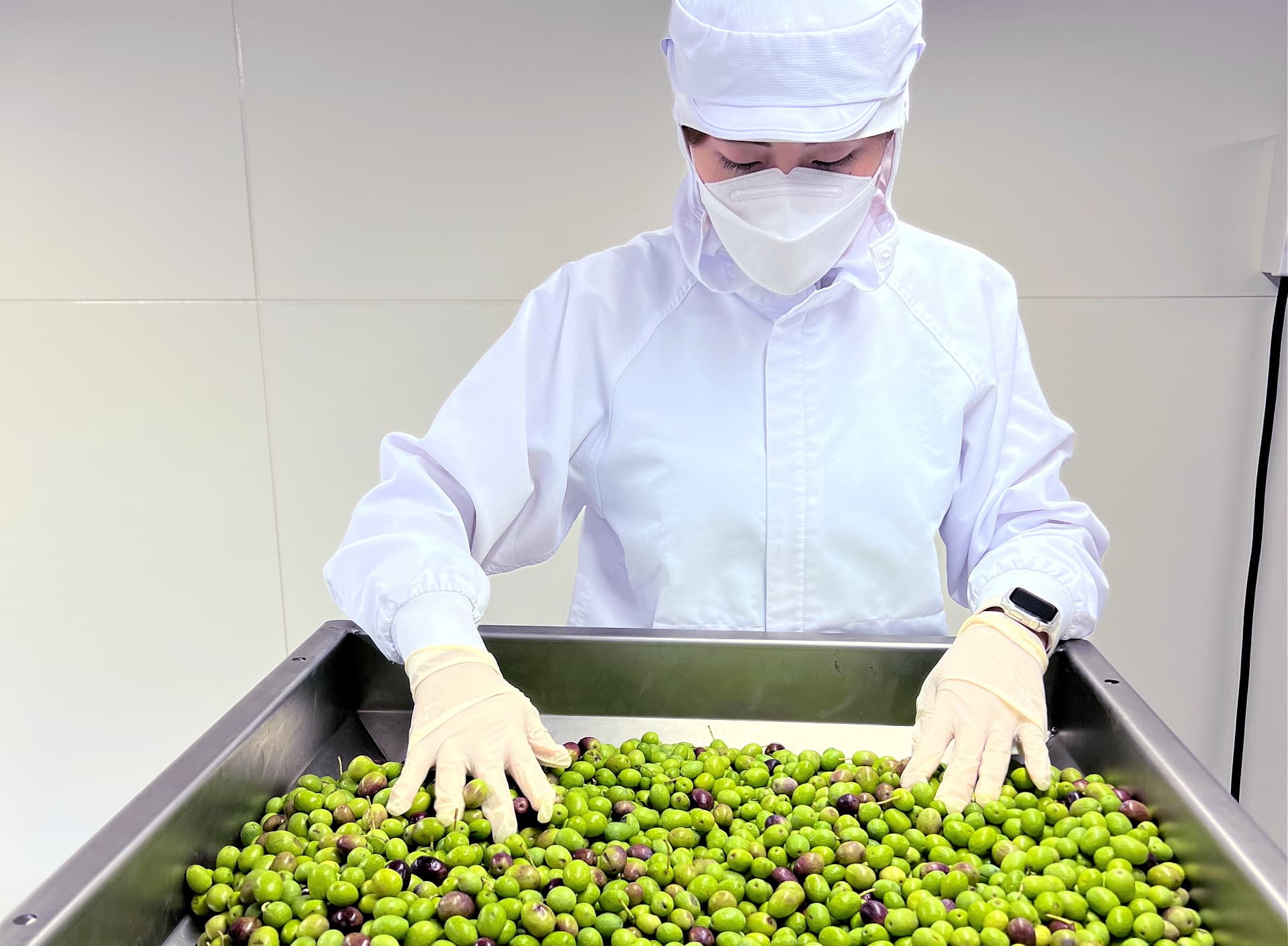
Milling is a critical step in CREA Farm’s mission to prioritize quality over quantity. (Photo: CREA Farm)
On land once left idle, the company has planted olive trees and herbs, avoiding fences and heavy structures to preserve the natural landscape.
Old farmhouses and unused real estate have been renovated for workshops, kitchens and gardens rather than replaced.
After the harvest, nothing is wasted: olive pomace becomes fertilizer or animal feed, while olive branches are reused in community craft activities such as wreath-making.
CREA Farm’s café and restaurant rely on seasonal and locally sourced ingredients, often grown directly on site, with an emphasis on reducing food waste and showcasing simple, natural flavors. The company also markets jams, honey, flavored oils, spices and canned goods.
Additionally, the farm invites residents and volunteers to participate in caring for the orchard.
Through what it calls a “learn, grow, eat, buy” approach, CREA Farm encourages people to participate in workshops, gardening, cooking classes, and tastings, fostering a deeper understanding of sustainable food culture.
“Looking ahead, CREA Farm aims not only to be a producer of olive oil but also to contribute to increasing community exchange and to become a cultural bridge that introduces Japanese olive oil to the world,” Okumura concluded.