New ‘Ultra Virgin’ Label Aims to Unite Dalmatia’s Olive Oil Elite
Dalmatia’s top producers have joined forces to establish Ultra Virgin, a new quality category that rewards olive oils exceeding extra virgin criteria in chemical and sensory standards.
Dalmatia produces 85 percent of Croatia’s olive oil. In other words, one out of every five bottles of Croatian olive oil sold — including exports — comes from this region.
“The quality of most Dalmatian oils is also beyond question,” said Ante Vulin, an award-winning producer from Pakoštane.
At the NYIOOC World Olive Oil Competition, the largest and most prestigious olive oil quality contest, Croatian producers won a total of 125 awards — including 65 Gold and 21 Silver Awards for Dalmatian oils. By comparison, producers from Istria, another leading olive-growing region, earned 34 Gold and 3 Silver Awards.
“We have tradition, quality, an excellent terroir, indigenous varieties, and skilled producers — yet as a region, we are not united and we still lack a common brand,” said Tomislav Duvnjak, owner of the family estate and Olive Oil Center Sveti Ivan in Vodice, northern Dalmatia.
Birth of the “Ultra Virgin” Initiative
The discussion on how to overcome this situation was publicly presented for the first time during a panel at the recent International Symposium on Olive Oils of Croatia and the Adriatic Coast, held in Postira on the island of Brač. The symposium, organized by Olive Oil Times in collaboration with the Postira Tourism Board, brought together over 150 experts from 10 countries.

Nedjeljko Jusup moderates the panel discussion “Oleum Primum Adriaticum: Defining a New Tier in Premium Olive Oil Branding” at the International Symposium on Olive Oils of Croatia and the Adriatic Coast
Ten days later, on October 1 in Novigrad near Zadar, the founding assembly of the Oleum Primum Dalmaticum Club took place. The club’s Statute and Brand Rulebook define how products of the highest class — Ultra Virgin — will be certified and promoted. These are premium oils that surpass even the extra virgin category in chemical and sensory properties.
A Stricter Standard of Excellence
Unlike standard extra virgin olive oils, which may contain up to 0.8 grams of free fatty acids (as oleic acid) per 100 grams of oil, Ultra Virgin oils must meet far stricter standards. They are obtained exclusively from healthy, undamaged olives by mechanical means. Harvesting must be done manually or with small handheld shakers, and processing must occur on the same day.
An oil may be monovarietal, from at least 80 percent of a Dalmatian variety, or a blend, where Dalmatian varieties make up more than half, according to the rulebook. Each variety must be processed and labeled separately, and clearly identified on the packaging of monovarietal oils. Authorized Croatian laboratories conduct all chemical analyses.
Ultra Virgin oils contain no more than 0.4 grams of free fatty acids per 100 grams of oil, and their peroxide value must be lower than six. The total polyphenol content must exceed 300 milligrams per kilogram, determined by spectrophotometric analysis. For reference, the European Commission recognizes olive oils with more than 250 milligrams of polyphenols per kilogram as having beneficial health properties.
Sensory characteristics are equally demanding: fruitiness, pungency, and bitterness must each reach at least three on the tasting scale, while the total median score must be at least ten — placing Ultra Virgin oils among medium to intensely fruity oils.
The concept recognizes that many Croatian producers already make top-quality olive oils that lack adequate legal categorization. The Ultra Virgin designation acknowledges oils that significantly exceed extra virgin criteria.
Certification and Recognition
Producers can qualify for the Ultra Virgin category by meeting all laboratory and sensory requirements and demonstrating consistent excellence in production. Those who also achieve recognition at major international competitions, earn medals at Noćnjak — Dalmatia’s leading olive oil fair — or hold certificates from public health institutions may further strengthen their standing.
After all conditions are met and quality tests are successfully passed, the Club issues an Ultra Virgin Certificate confirming the oil’s inclusion in the category. Certified oils may display the protected Ultra Virgin logo on packaging and promotional materials, and receive visibility through the Club’s marketing activities and its member associations.
“Our primary goal,” say the Club’s founders, “is to motivate producers to specialize in the highest possible quality of olive oil production. We also want to give consumers an easy way to recognize and choose superior oils.” For consumers, the Ultra Virgin label and Club logo will serve as a guarantee of consistently excellent quality. Each bottle will include a barcode allowing verification of authenticity.
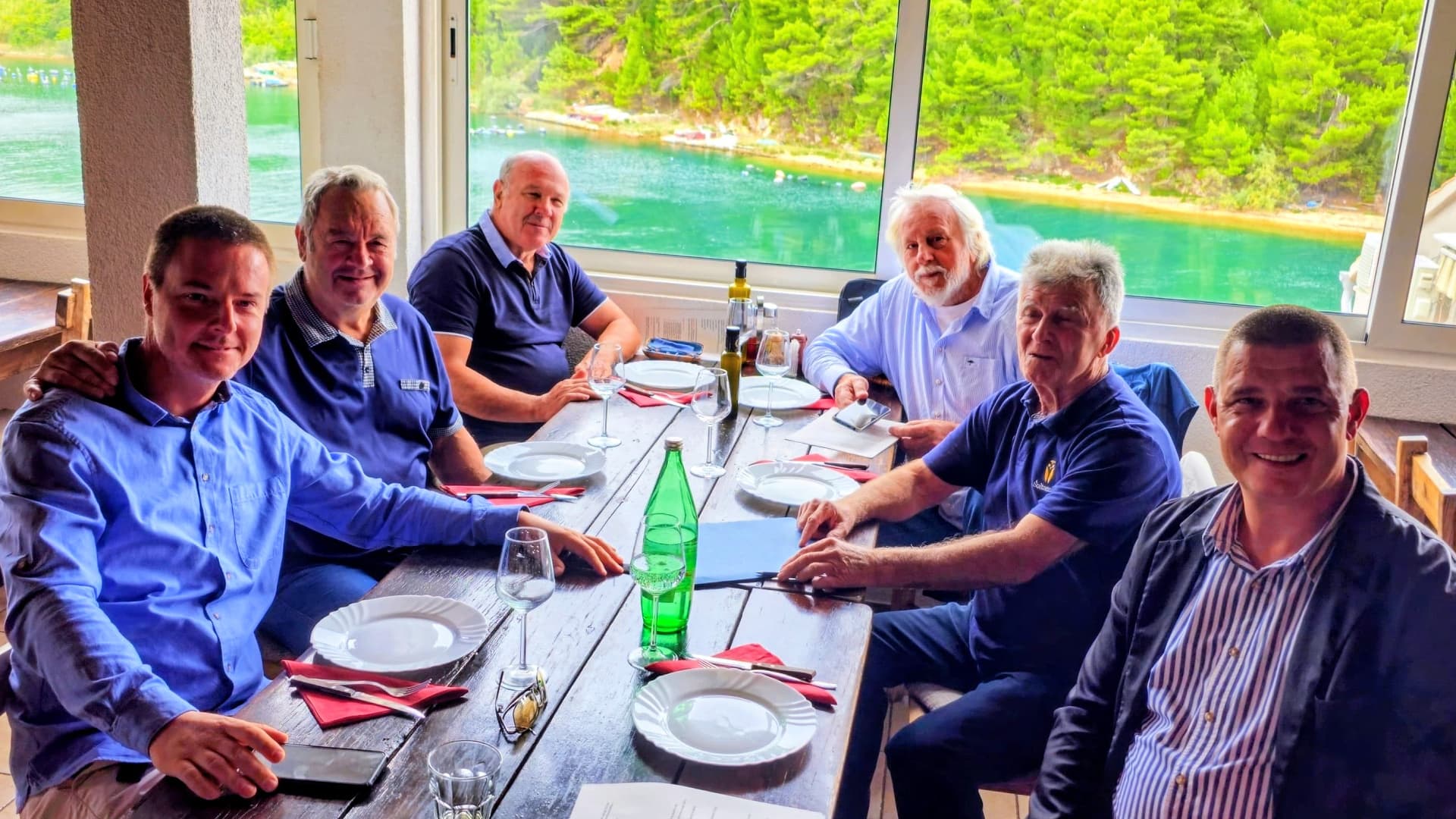
Founders of the Oleum Primum Dalmaticum Club and the Ultra Virgin brand
The primary beneficiaries of this new classification will be discerning consumers and lovers of premium olive oil, as well as small, ambitious producers dedicated to excellence.
Broader Impact
Croatia is already gaining international recognition through numerous awards for its olive oils. By supporting this branding initiative, the country will further strengthen the global association between Croatia and olive oil. The project is expected to bring both promotional and economic benefits to the state and to top producers, explain the founders of the Oleum Primum Dalmaticum Club and creators of the Ultra Virgin brand.
After adopting the Club’s Statute and rules, members held their inaugural meeting. Domagoj Živković — an acclaimed producer from Šibenik, recipient of the Olive Oil Times Champion of Excellence award for promoting indigenous varieties and educating young olive growers — was unanimously elected president. Vice President Dr. Ivica Vlatković is widely regarded as both one of Croatia’s top physicians and one of its best olive oil producers. The secretary, Zlatko Burić, is the oldest organic olive grower on the island of Šolta. With his wife Anka, he tends 150 Šoltanka and 100 Oblica trees, spending every free moment in their beautiful grove overlooking Vis. A former engineer and educator, Burić also chairs the Golden Šoltanka association of local growers.
Other founders include Krešimir Uroda, an IT professional turned olive farmer; Ivica Ljubenkov, president of the Croatian Olive Growers and Millers Association; Bernardin Peroš, professor emeritus and former university dean from Split who now manages 220 trees; and Ranko Surjan, president of the Vela Luka Olive Growers Association on Korčula, who runs a tasting room and exports his award-winning Lastovka oils worldwide. The Club’s board includes Domagoj Živković, Ivica Vlatković, Zlatko Burić, Bernardin Peroš, and Krešimir Uroda.
A New Standard for Dalmatian Olive Oil
All emphasized the importance of promoting Dalmatia’s finest olive oils across the region’s four counties. “The fundamental goal is to introduce a new category for olive oils that stand out for their exceptional quality and character, under the unofficial name ‘Ultra Virgin,’” said Burić.
Club president Domagoj Živković added, “Through promotion and market recognition, we want to give consumers an easy choice between average and high-quality oils like Ultra Virgin. At the same time, we aim to encourage Dalmatian producers to continuously improve their knowledge and skills in producing the best possible oils — especially from our native varieties.”