Extra Virgin Territories You Might Not Know
Some lesser-known regions give life to high-quality extra virgin olive oils with unexpected characteristics.
I am quite sure that when we hear of Trentino-Alto Adige/South Tyrol, most of us think of speck, strudel, and Muller-Thurgau. The same happens with the denomination of Veneto Valpolicella, which recalls some good red wines. Despite this, it should surprise no one that some portions of these two regions are devoted to the cultivation of olive trees and the production of great extra virgin olive oils.
I am glad when people open the bottle of my oil and get excited.
There is a part of the province of Trento which is tempered by the mitigating effects of Lake Garda and enjoys a sub-Mediterranean climate with moderately cold winters and hot summers, ideal conditions for growing olive trees up to an altitude of 300 meters (984.2 ft).
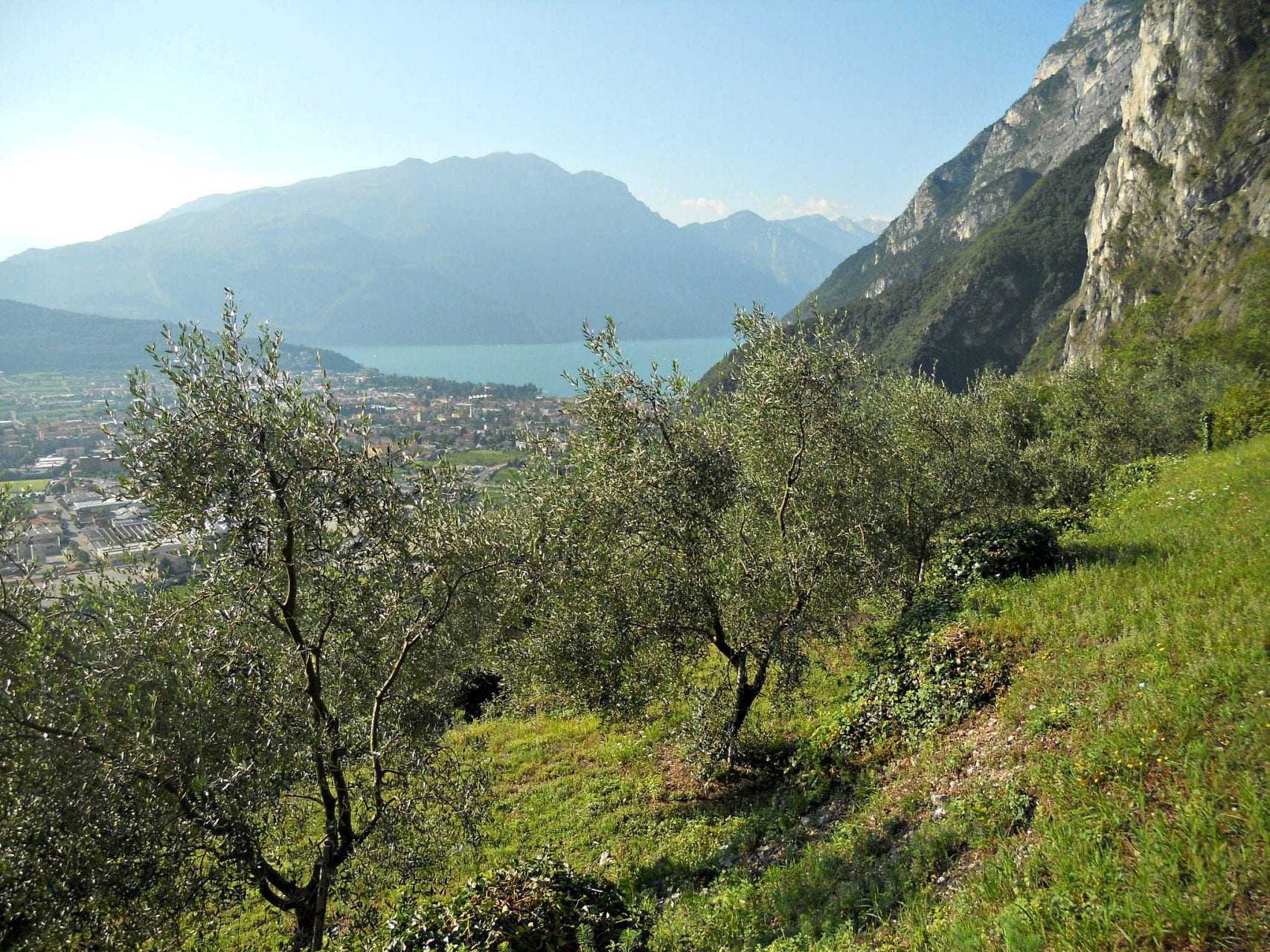
Olio Cru’s olive groves in Arco, Trento
A few miles from the northern shores of the lake, in the territories of Arco, Bolognano and Massone, lush olive groves give life to 7c, an olive oil producer and three-time Gold Award winner at the New York International Olive Oil Competition (including one Best in Class in 2016).
“2,000 plants, mostly Casaliva, lie on the slopes of the hill overlooking the town of Arco, partly rooted on terraces and partly flourishing on the rough hillside,” said the head of manufacturing, Massimo Azzolini. “The challenging terrain makes harvest complex, and even though we can use mechanical facilitators in some plots, a large part of work is by hand,” he pointed out.
Harvest usually starts in the last week of October; the liquid gold that comes out is light-to-medium fruity, moderately spicy and bitter, with hints of almond, artichoke, and grass. “Part of our product is made with de-pitted olives that must be picked when they are at least 70 percent green,” Azzolini explained, adding that the harvest must be anticipated to catch fruits at the beginning of veraison, in order to obtain a product characterized by decisive pungency and fruitiness.
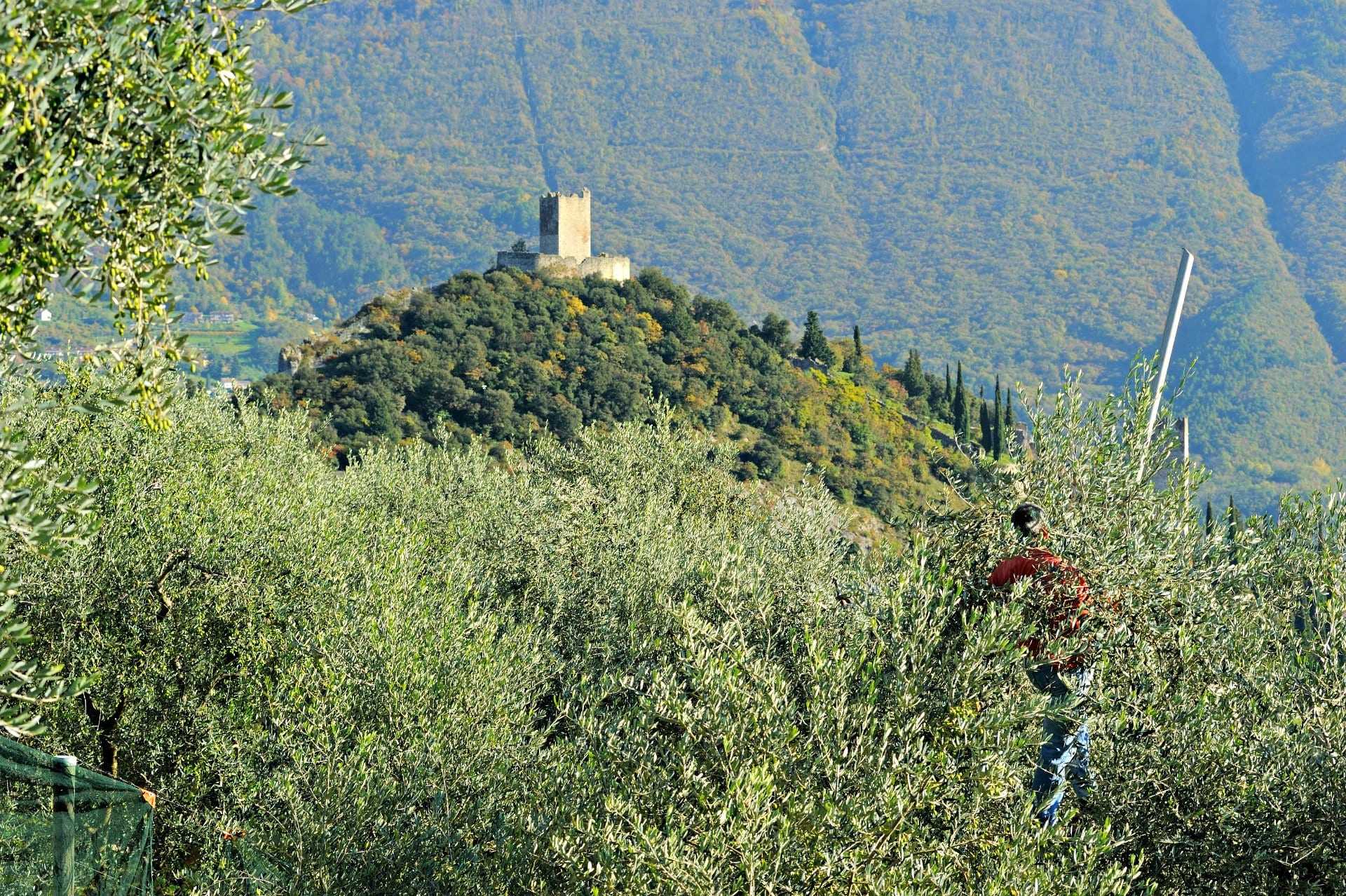
Olio Cru
As we move to Veneto, Valpolicella is the protected designation of origin of an extra virgin olive oil produced in the area situated on the right side of the Adige river. Monica Vaccarella manages 1.5 hectares (3.7 acres) of olive grove with 500 plants at an altitude of 400 meters (1,312 feet), in Avesa, between the Val Borago and the Val Gavina.
Two steps away from Verona, the native varieties Grignano and Favarol flank the more widespread Frantoio, Pendolino, Leccino and Leccio del Corno. “I produce two blends, of which the Veneto Valpolicella PDO is my flagship,” said Vaccarella, as she explained that she combines 60 percent of local cultivars with the other ones in accordance with the product specification of the protected denomination of origin which requires that at least half of the extra virgin olive oil consists of native types.

Monica Vaccarella during harvest
“These two local varieties make the oil enjoyable, while the early harvest gives energy to it and allows the taste to expand with formidable bitterness and pungency,” our producer said while describing her extra virgin olive oil with aromas of white fruit, grass and basil.
The olive trees were planted by her father Angelo 27 years ago, and she started to manage the olive grove in 2010. They carry out a so-called balanced pruning which helps to avoid biological alternation of high and low yields. “It is a painstaking and draining work which takes two months since we operate on the smallest branches,” Vaccarella revealed.
However, the flat landscape facilitates harvest and in one day they can collect 800 to 1,000 kilograms (1,764-2,205 pounds) of olives. “We crush them within 6 hours, that is the only way to get the most out of the fruits and reach such a low level of acidity,” she remarked. “I am glad when people open the bottle of my oil and get excited.”