Mount Etna, Sicily’s Gentle Giant That Nourishes Olive Trees
Despite a recent eruptive episode, Mount Etna’s effusive activity was never a threat for people living on its slopes and contributed over the ages to the development of olive tree cultivation.
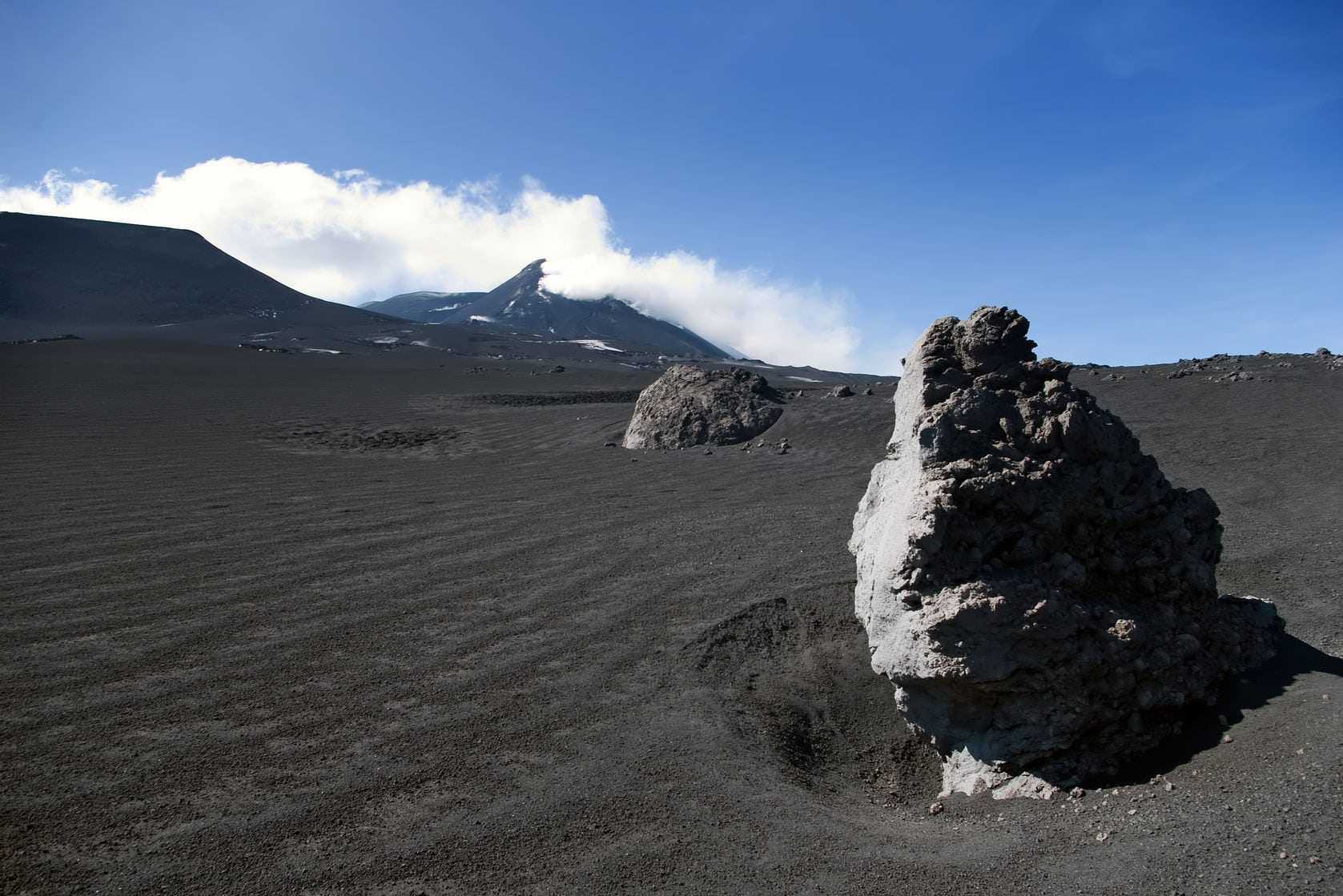
Mount Etna, Europe’s highest and most active volcano, recently put on a show with an eruptive episode which took place in the area between the Southeast Crater (SEC) and the New Southeast Crater (NSEC), as reported by the National Institute of Geophysics and Volcanology – Osservatorio Etneo (INGV-OE).
The volcanic soil gives great vigor to olive trees, from whose fruits we obtain a high-quality extra virgin olive with notes of tomato, artichoke, almond and herbs.
On March 16, one day after the start of the eruptive activity, a group of people including tourists, volcanologists and a BBC crew, were caught off guard by a phreatic-magmatic explosion, due to contact of lava with snow. Fortunately, they suffered only minor injuries and a big fright.
“Violent explosion at the contact between flowing lava and thick snow on Etna about one hour ago. A few people injured, I received a bruise on my head but am generally fine and having a good, well-deserved beer at this moment!” a researcher at INGV-OE, Boris Behncke, posted on his Facebook page.
With rare exceptions, the effusive activity of Etna, characterized mostly by the emission of lava flows, does not represent a threat to the lives of the roughly 900,000 people living on its slopes, the INGV-OE noted.
The volcano has meanwhile created favorable conditions for agricultural activities: the cultivar Nocellara Etnea thrives at the foot of the volcano.
“Over the centuries, the presence of Mount Etna has influenced lives and the environment,” said Giusi Russo, who manages the Oleificio Russo with her husband, Alessandro Roccella. “Lava and lapilli degraded into a black, dusty and fertile soil, due to high mineral content,” she explained.
Lava and other pyroclastic products such as lapilli, ashes and slags enrich the ground where the olive trees’ roots are embedded. According to the Geological Map of Italy, abundant minerals such as plagioclase, augite and olivine, which are rich in silica, sodium, calcium, aluminum, iron and magnesium, encourage the rich development of plants.

“In this context, the Nocellara Etnea constitutes 95-96 percent of the olive trees grown along the slopes of Mount Etna,” Roccella pointed out. “The volcanic soil gives great vigor to olive trees, from whose fruits we obtain a high-quality extra virgin olive with notes of tomato, artichoke, almond and herbs.”
Their 900 olive trees are located at 600 meters above sea level, in the town of Belpasso, which was destroyed by an eruptive event in 1669. In the same area, their mill has been constructed on the ancient lava flow.
“In our mill, we also crush olives from other manufacturers of the area,” said Roccella. “Our work is artisanal and harvesting is carried out by hand, since the terrain is often rough and spaces are limited; despite the territory ruggedness, olives are crushed in a few hours from harvest to guarantee the quality of product.”
Olive trees grow here on small terraces retained by singular and enchanting rubble walls made of black lava stones. Over millennia, the people of Mount Etna have built these fascinating structures to make work and life easier at the foot of the gentle giant.