



Tunisian Officials See Bright Future for Local Olive Oil Industry
While producers face plenty of challenges, especially from climate change, Tunisian olive oil exports continue to gain ground in international markets.
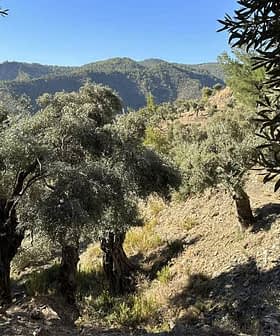
 Photo: Bulla Reggia
Tunisia has significantly expanded its olive grove surface area over the past decade, leading to an increase in olive oil production and exports. The country is focusing on increasing the production of bottled and organic olive oil to add value to its exports and promote awareness of the health benefits of olive oil internationally.
The ongoing efforts to expand Tunisian olive oil production have led the country to significantly increase the number of olive groves in the last decades, boosting exports.
Tunisia’s National Olive Oil Office (ONH) said the olive grove surface area has expanded from 1,743,000 hectares in 2011 to 1,960,000 in 2022.
Our main goal is how to add value to the exports. That is also why we are focused on the growth of bottled olive oil and organic olive exports. This is how it will develop.
“We expect further relevant increases in the overall surface in the next three years,” Hamed Daly Hassen, the chief executive of the ONH, told Olive Oil Times.
According to ONH, Tunisia produced an annual average of 205,000 tons of olive oil over the past decade, approximately seven percent of all global production. From 2001 to 2010, annual average yields were about 137,000 tons.
See Also:Rising Prices Expose Untapped Potential for Tunisian Exports“One of the relevant drivers of Tunisian production growth is the planting of new olive groves,” Hassen said. “The other key is climate change and how it affects traditional olive growing in the country.”
Hassen said approximately 93 percent of Tunisian olive groves are rainfed. “This means that they are highly affected by the drought,” he said. “In the last three years, the phenomenon has been affecting the crops in areas such as Sfax, where most Tunisian olive production is located.”
Additionally, a large percentage of rainfed olive trees in the country are at least 100 years old. Their yield is not comparable to younger trees’ production potential.
“The rejuvenation of olive crops is one of the problems producers face,” Fahd Ben Ameur, the marketing manager of the Tunisian olive oil exporter Bulla Regia, told Olive Oil Times.
He indicated that water scarcity has exacerbated the effects of the olive trees’ natural alternate bearing cycle.
“It is easy to notice,” Ben Ameur said. “In low years, when rainfall is scarce, almost 40 percent of production comes from the few irrigated groves in the country. In a plentiful season, their contribution is reduced to less than 10 percent.”
According to the ONH, Tunisian olive oil consumption remains well below its potential, limited to 30,000 to 35,000 tons per annum. ONH officials said this is mostly due to the price of olive oil and the competition from cheaper oils available on the market.
Increasing consumer awareness about olive oil’s health benefits is the goal of current ONH efforts to promote the product, along with adding value to the rising profile of Tunisian olive oil on international markets.
As a result of low domestic consumption, the country exports the vast majority of its production. On average, Tunisia exported 175,000 tons annually in the last 10 years, making it one of the most relevant global olive oil exporters.
One of the keys to the country’s export growth is the investment in olive oil quality over the last 30 years. The ONH said only 30 percent of the olive oil produced in the country was at extra virgin grade in 1990. Now, this figure exceeds 70 percent.
Since the export sector expanded to private-owned companies in 1996, foreign shipments have grown.
“One of the relevant trends we are noticing in the last decade is the exponential growth of branded bottled olive oil, whereas the traditional Tunisian exports still happen in bulk,” Ben Ameur said. “Many believe the future of Tunisian olive oil is in the bottled product.”
ONH and local organizations have long pushed for growth in branded and bottled olive oil exports, as this contributes to a higher value for the product on the international market.
“Annual growth for bottled olive oil production in the country in the last decade is around 10 percent,” Hassen said.
Organic olive oil exports are also on the rise. “Organic production in 2021 exceeded 105,000 tons, and it represented 44 percent of the country’s production,” Hassen said. “It was 10 percent back in 2012, “Hassen said. “In 2021, 28 percent of olive oil exports were organic.”
The ONH said in the current crop year, about 30,000 tons of packaged olive oil was exported from an estimated 190,000 tons of production. “That shows that the efforts of both public institutions and private companies are paying out,” the ONH said.
“Our main goal is how to add value to the exports,” Hassen added. “That is also why we are focused on the growth of bottled olive oil and organic olive exports. This is how it will develop.”
Hassen noted how the efforts to expand packaged olive oil and increase its percentage of exports started in 2007.
“The efforts went ahead despite several difficulties, mainly related to the high volatility of olive oil prices in the international markets and the increase in national production costs,” Hassen said.
While the United States and Canada remain two of the most relevant destinations for Tunisian olive oil exports, a significant portion crossed the Mediterranean to the European Union. The key is the duty-free agreement, which covers up to 56,700 tons of Tunisian exports.
“That quota was completely used in the last few years as demand grew from European importers, mostly Spanish and Italian,” Hassen noted.
According to the ONH, the agreement with the European Union should be revised, given Tunisian olive oil quality.
“In 2016, the European Parliament adopted a regulation that replaced monthly quotas with an annual quota,” Hassen said.
“This decision increased flexibility for European operators to maximize their duty-free olive oil imports from Tunisia, but it does not facilitate the development of added value Tunisian olive oil,” he concluded.
Share this article
Related Articles
Sep. 13, 2025
Olive Oil Production in Leading Countries Forecast to Fall to 2.65 Million Tons
Experts project lower but still significant olive oil production in 2025/26 across Mediterranean countries, with price fluctuations and climate playing key roles.

Jan. 28, 2025
Moroccan Producers Face Third Straight Year of Declining Production
Olive oil production is expected to fall to 90,000 metric tons, resulting in rapidly rising prices and fears of a shortage.

Mar. 28, 2025
Brazil Removes Tariffs on European Olive Oil Imports
Brazilian officials decided to lower tariffs from nine percent to mitigate the impact of rising prices in South America’s largest country.
Nov. 4, 2025
Drought and Low Yields Push Jordan to Explore Olive Oil Imports
With output expected to fall by half due to drought and natural yield cycles, Jordan faces rising olive oil prices and supply shortages.

Oct. 28, 2025
UK Consumers Seek Value as Prices Reach Record Highs
Surging retail prices are reshaping Britain’s cooking-oil habits, pushing shoppers toward supermarket extra virgin olive oils and prompting fresh debate over substitutes.
Dec. 1, 2025
Spanish Farmers Urge Halt to Tunisian Olive Oil Imports Amid Traceability Concerns
Spain’s COAG farmers’ union is urging an immediate suspension of Tunisian olive oil imports, warning that large untraced volumes are entering the EU market and distorting prices.
May. 30, 2025
Turkish Table Olive Exports Set to Reach Record-High $250 Million
Turkish table olive exports are expected to reach a record high of $250 million in the 2024/25 crop year, with increased demand and production.
Dec. 16, 2024
Turkey’s Olive Sector Aims for Record $1B in Exports
Olive oil and table olive exports could bring $1 billion to Turkish producers. However, previous export bans have hampered efforts.