Are Olive Seeds the Next Superfood?
A Spanish olive oil manufacturer is exploring alternative uses for the products usually thrown away. As it turns out, olive seeds boast a range of healthful properties than could be used in beauty products, foods, supplements and more.
Spanish olive company Grupo Elayo is pioneering new uses for previously discarded olive byproducts by extracting seeds from olive pits using special optical sorting technology, for possible pharmaceutical, food and cosmetic applications.
The company, based in Spain’s Jaèn region, was founded just five years ago by engineer and economist Josè Maria Olmo Peinado, who has years of experience in the industry. With olive seeds being found to contain impressive antioxidant and polyphenol qualities, Peinado hopes it could be the next big superfood to hit the market.
According to Raschid Stoffel, Grupo Elayo’s Business Development Director, the decision to research the use of olive seeds began through the company’s experience in olive farming in general.
While they primarily produce olive oils and olive oil pearls (or caviar), the vision of the company is to turn tradition into innovation by developing a greater understanding of the olive tree as a whole and the sector processes involved in production. The company explores byproducts of the traditional olive oil extraction process, including its skins, pits and more.
In particular, olive seeds caught the eye of Grupo Elayo researchers, as they contain high concentrations of polyphenols and antioxidants, with an additionally high level of quality dietary fiber.
In order to access the seeds within the pits (and its sought after bioactive components), the seeds undergo a rigorous cleaning and sorting process, which is facilitated by a partnering company called Buhler Sortex. This company offers optical sorting solutions, which are necessary to sort seeds from pits and its fragments on a large scale, as the color difference between the two is invisible to the naked eye.
Firstly, the pits are broken and conveyed to a sorting machine. Then an InGaAs (Indium Gallium Arsenide) camera uses a Short-Wavelength Infrared Range (SWIR) to detect the color differences between seeds, pits and fragments.
Only 25 tons of olives are needed to extract 1,250 kg of seeds, with less than one percent getting lost in the process, making it a highly viable and productive alternative to discarding olive pits as waste.
According to Stoffel, Grupo Elayo’s primary product concern is the olive seed, from which olive seed flour and olive seed oil are obtained after a pressing process.
The seed itself can be consumed as a topping for both sweet and savory baked goods, used in bread dough and even toasted and caramelized to create an unusual and healthy ice cream or chocolate topping.
The flour can used in place of normal flour or as a healthier breading for meats and potatoes or topping for salads, and the seed oil can be used as an even healthier alternative to conventional olive oil, and as an ingredient in soaps, creams and more, he said.
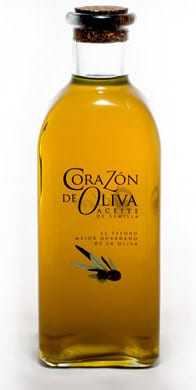
“Corazón de Oliva oil (olive oil heart) is an oil rich in oleic acid and linoleic acid, which stands out for its high content of bioactive compounds,” the company’s website claims, “among which are phenolic compounds and squalene which have been shown to have beneficial effects on health, prevention and treatment of different diseases.”